About 7 minutes to read
Hi, I'm Hiroshi.
What do you do with two hours at a crematorium?
Stare at your phone. Eat an onigiri. Sit quietly with the grief. That's usually how it goes.
My wife's father had just passed away, and we'd come to Himeji for the funeral. After the service, the cremation was underway — and we had about two hours to fill. My wife mentioned that apparently Beicho Katsura's grave was nearby. And Kenzo Takada's, too. "Why not go take a look?" said my brother-in-law.
Fine. Sure.
What I found was not a grave. It was India.
Who might enjoy reading this
- Anyone visiting Himeji who wants something beyond the castle
- People curious about Buddhist architecture, Indian culture, or postwar Japanese history
- Anyone who's had Gandhara stuck in their head and isn't sure why
Bottom line up front
A 10-minute walk northwest of Himeji Castle, there's an extraordinary Buddhist stupa called Nagoyama Reien Bussharitou. It is one of the most quietly spectacular things I've seen in Japan.
Table of Contents
- Back in Himeji After a Long Time
- Two Hours to Wait at the Crematorium
- What I Found Was Beyond Anything I Expected
- Elephants Spouting Water — And Why They're Here
- Inside the Stupa
- Mount Sumeru — The Center of the Buddhist Universe
- Two Famous Graves: A Rakugo Master and a Fashion Legend
- Why Is There a Buddhist Stupa in a Himeji City Cemetery?
- Practical Info for Visitors
- Life Encounters You
Back in Himeji After a Long Time
On the shinkansen down from Tokyo, I watched the Kansai countryside roll past — Kyoto, then Osaka, then the flat coastal plains heading west.
Kyoto from the bullet train. It had been a while.
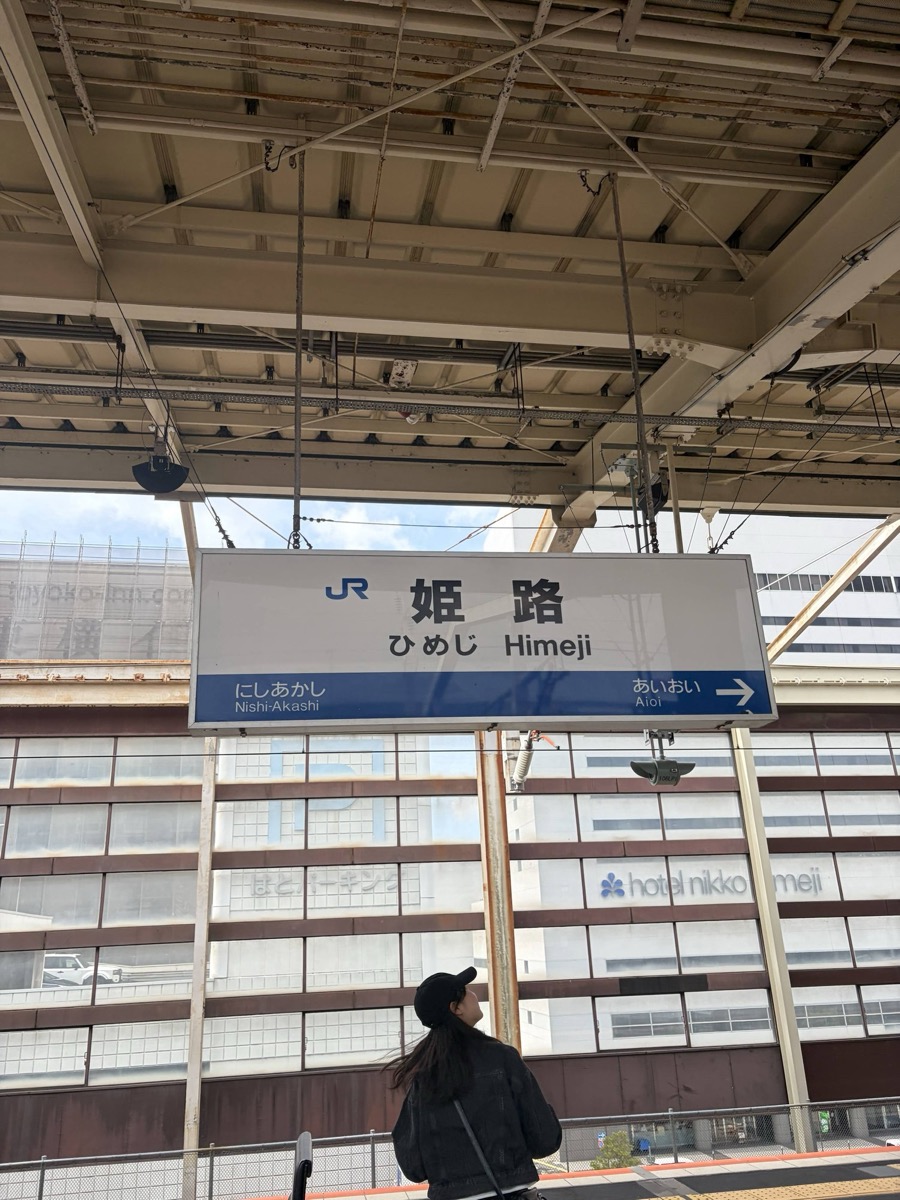
When I stepped off at Himeji, the station felt completely different from what I remembered — renovated, polished, very Instagram-ready. The old Kyoto Station used to have this wonderful wooden clutter to it. Now it's gone. I get why they do it. But there's something I quietly miss.
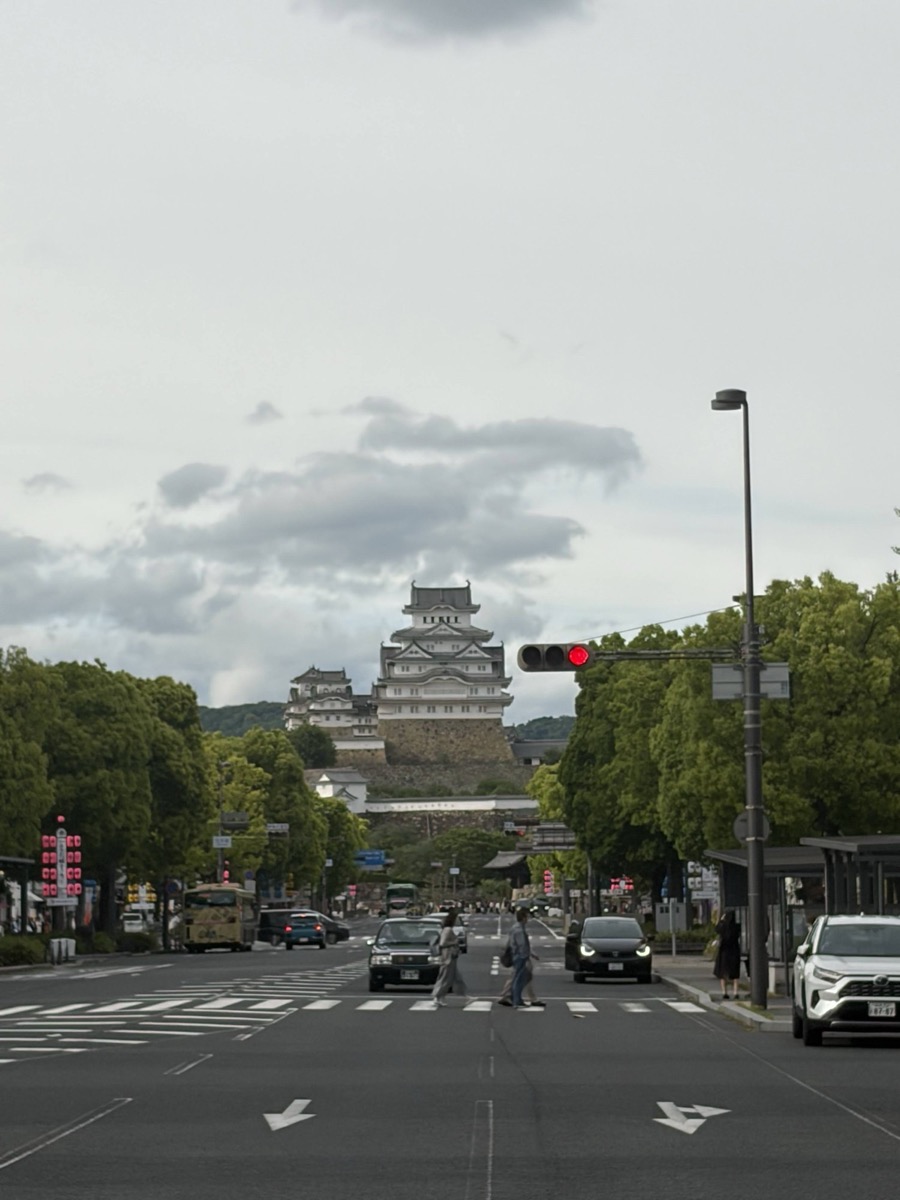
Himeji Castle was gleaming. It had been restored and looked almost too white — the kind of white that photographs perfectly. UNESCO World Heritage Site, genuinely worth visiting. But that's not the story I came here to tell.
Two Hours to Wait at the Crematorium
In Japan, cremation is standard after death. The process takes one to two hours, and family members wait nearby — sometimes in silence, sometimes with tea and onigiri, sometimes just scrolling through their phones without really seeing anything.
That's where we were when my wife said, "Apparently there's a famous rakugo performer buried right next door. And Kenzo Takada, too."
"Oh yeah?" I said. Honestly, I wasn't that interested.
But my brother-in-law was. "You've got time. Go look around." So the three of us went.
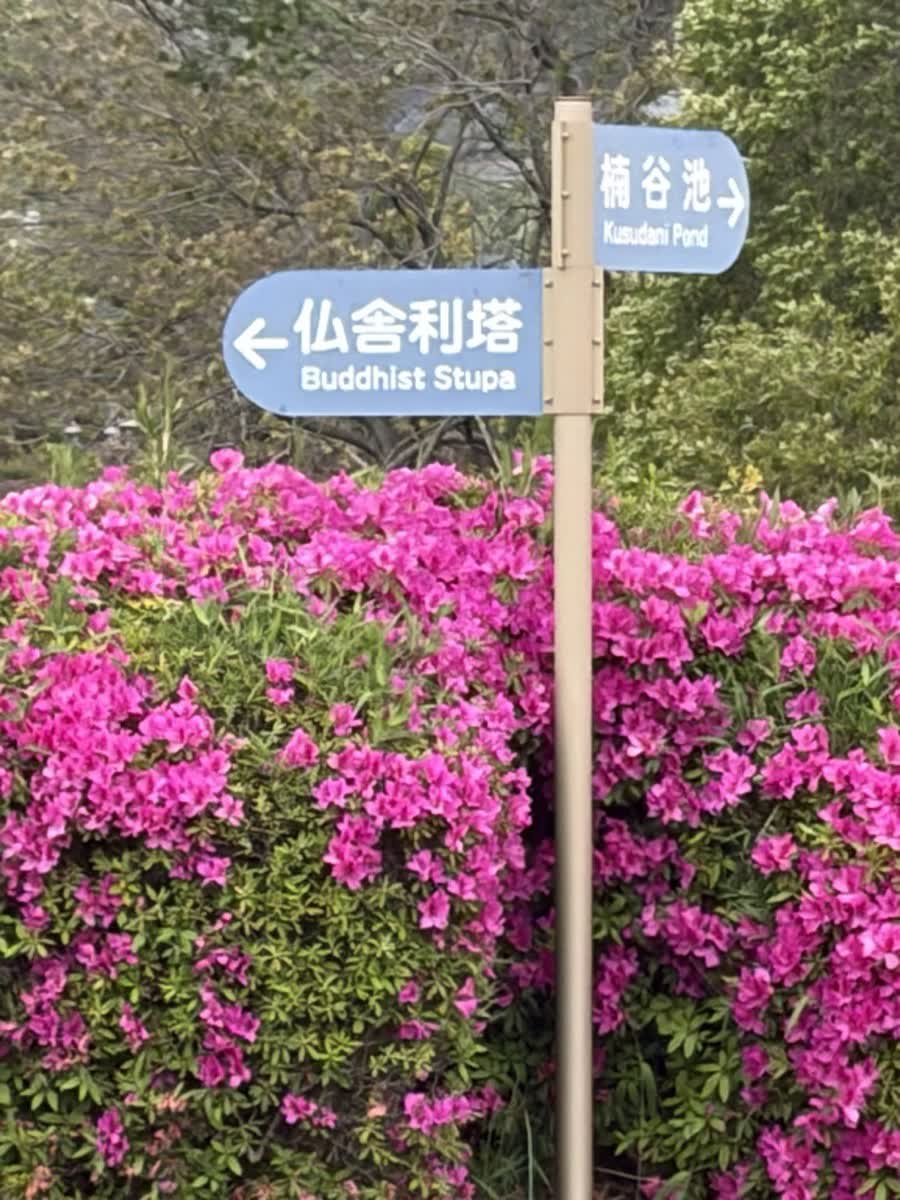
The azaleas were in full bloom. A sign pointed toward something called "仏舎利塔 / Buddhist Stupa." We followed it through the trees.
What I Found Was Beyond Anything I Expected
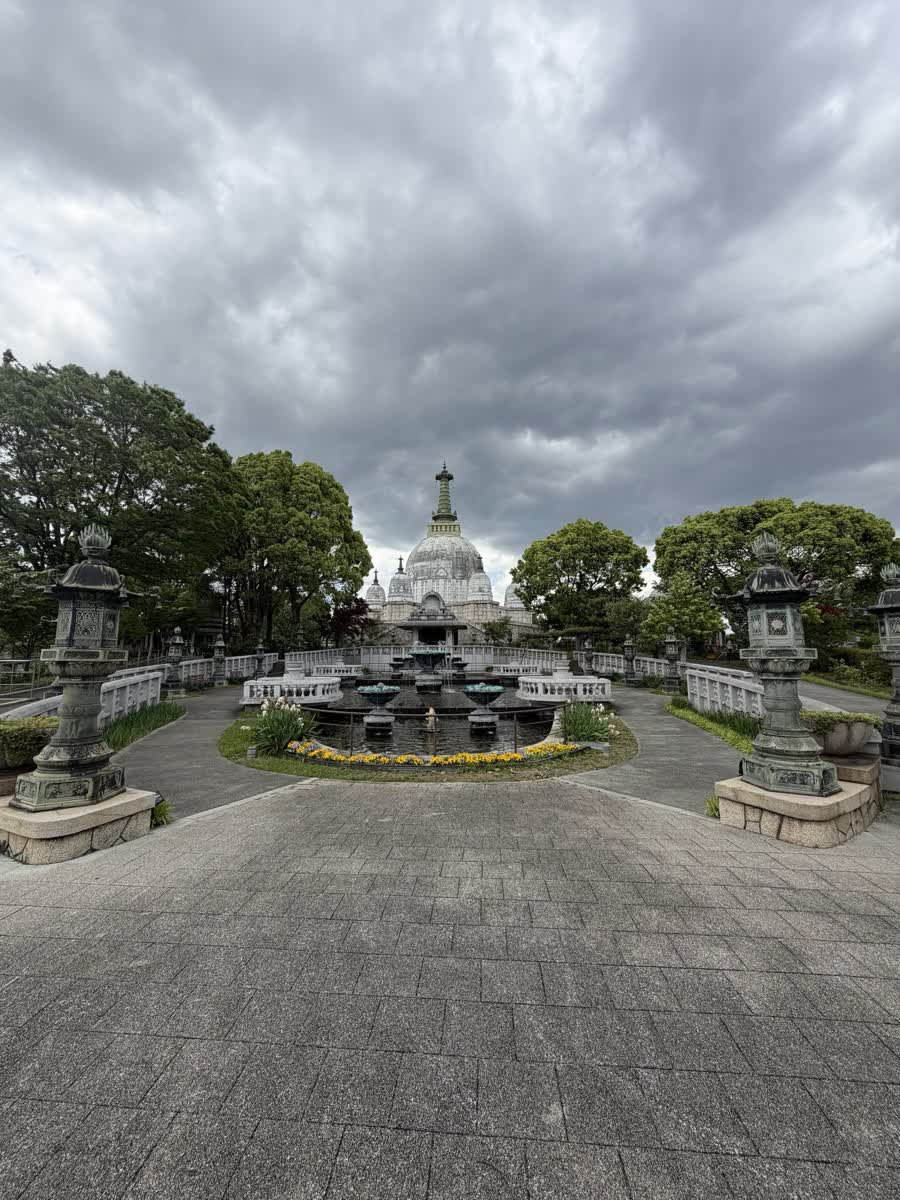
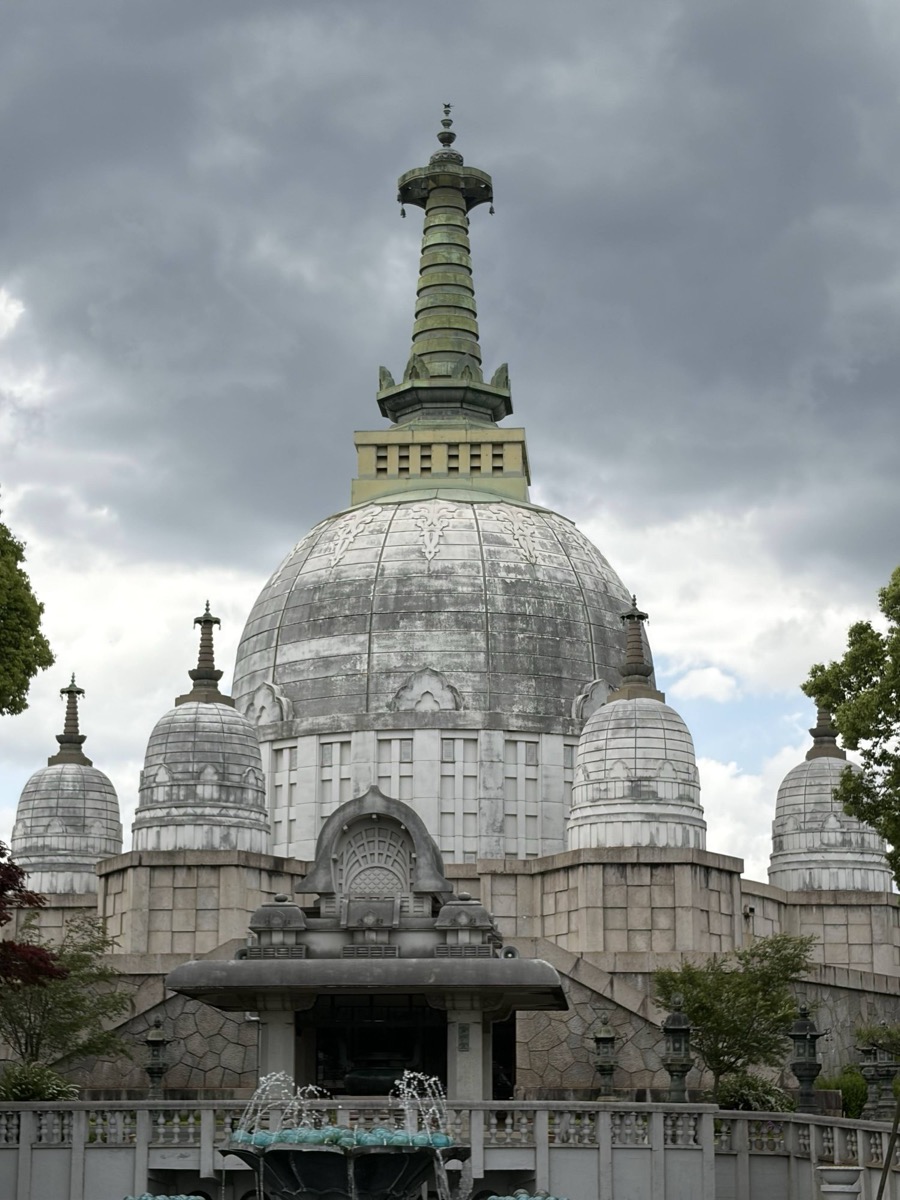
When we stepped out from the tree-lined path into the open plaza, all three of us went quiet.
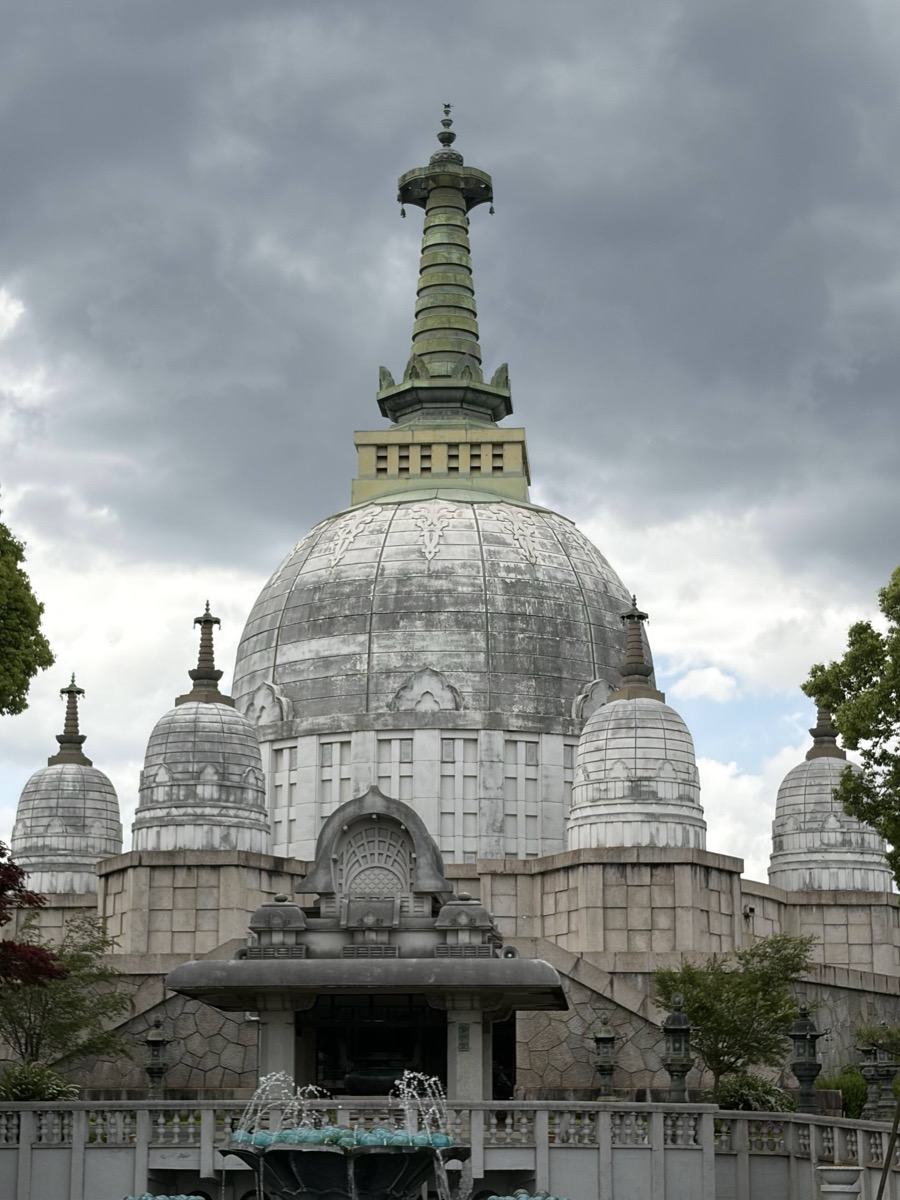
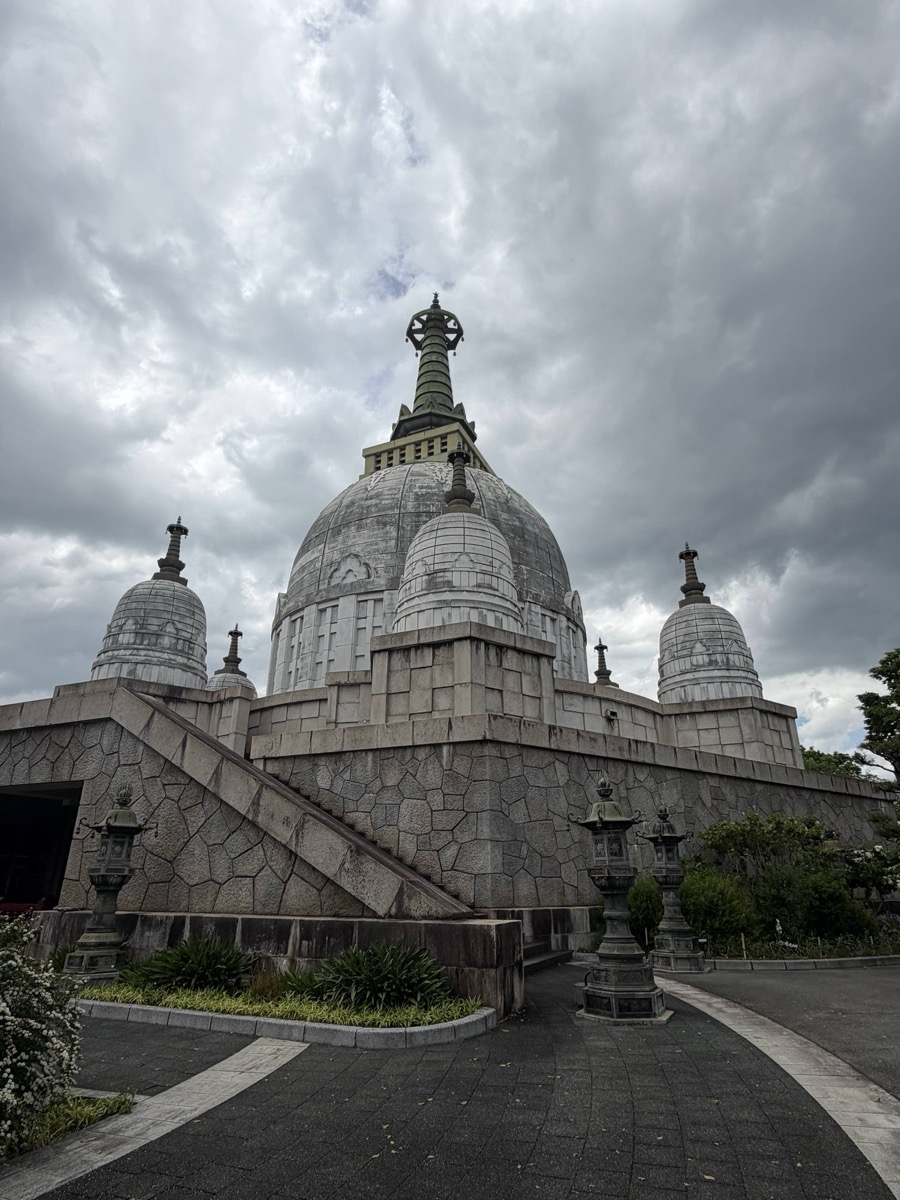
A massive white dome. A central tower about 38 meters tall. Six smaller domes arranged around it. Intricate stone carvings everywhere. An elephant fountain out front. The whole thing looked like it had been physically transported from ancient India and set down in a Himeji municipal cemetery.
One word came to mind: Gandhara.
If you grew up in Japan in the 1970s, "Gandhara" means one specific thing — a song by Godiego, the theme to a 1978 TV drama based on Journey to the West. Gandaara, gandaara, soko wa doko ka no — You know the one. It's stuck in my head at funerals, apparently.
I turned to my son and asked, "You know Gandhara?"
"Never heard of it," he said.
Right. 1978. He wasn't born. I felt my age in real time, standing in front of a Buddhist stupa.
The stupa from the front. Watch this first.
The Nagoyama Bussharitou was completed in 1960. Reinforced concrete, 38 meters tall, modeled on an ancient Indian stupa. Located within Nagoyama Reien — a municipal cemetery managed by the city of Himeji — about one kilometer northwest of Himeji Castle.
Elephants Spouting Water — And Why They're Here
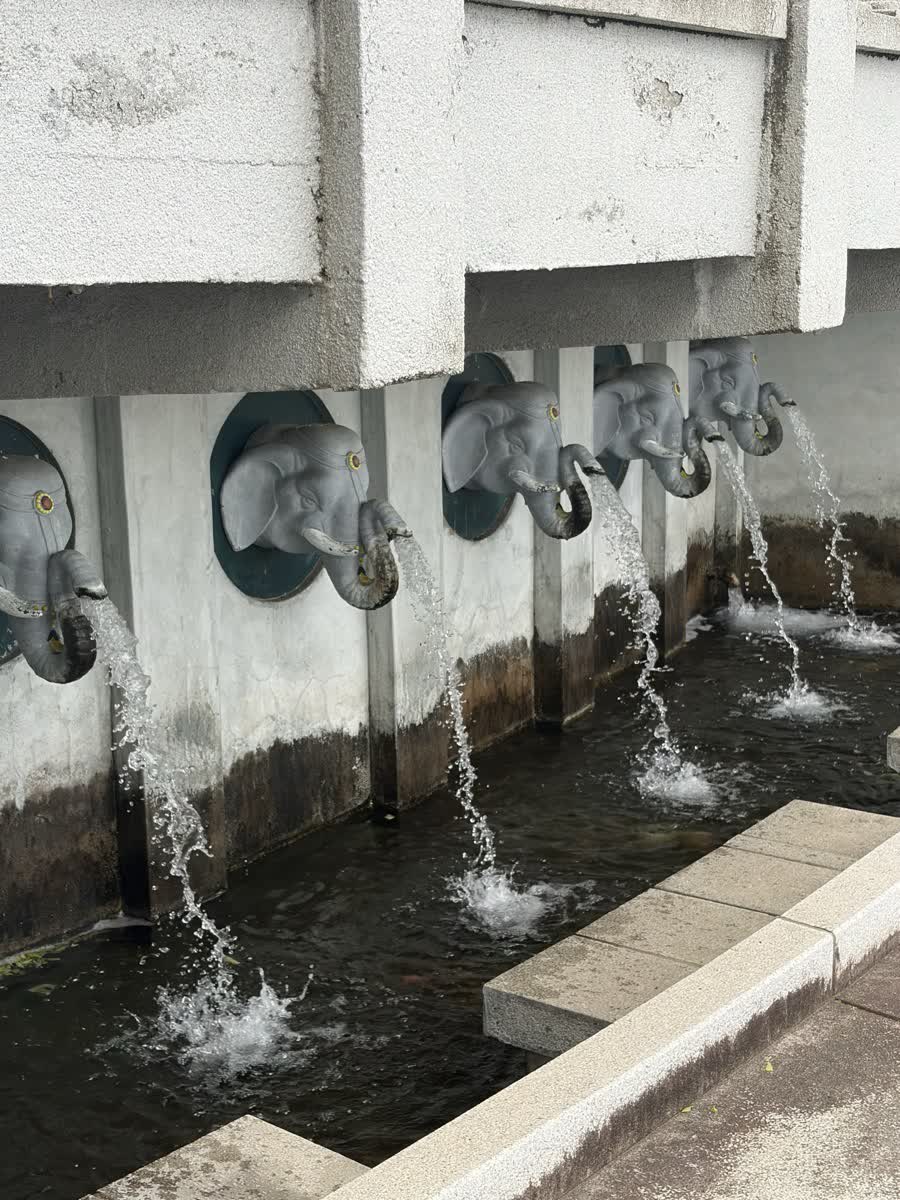
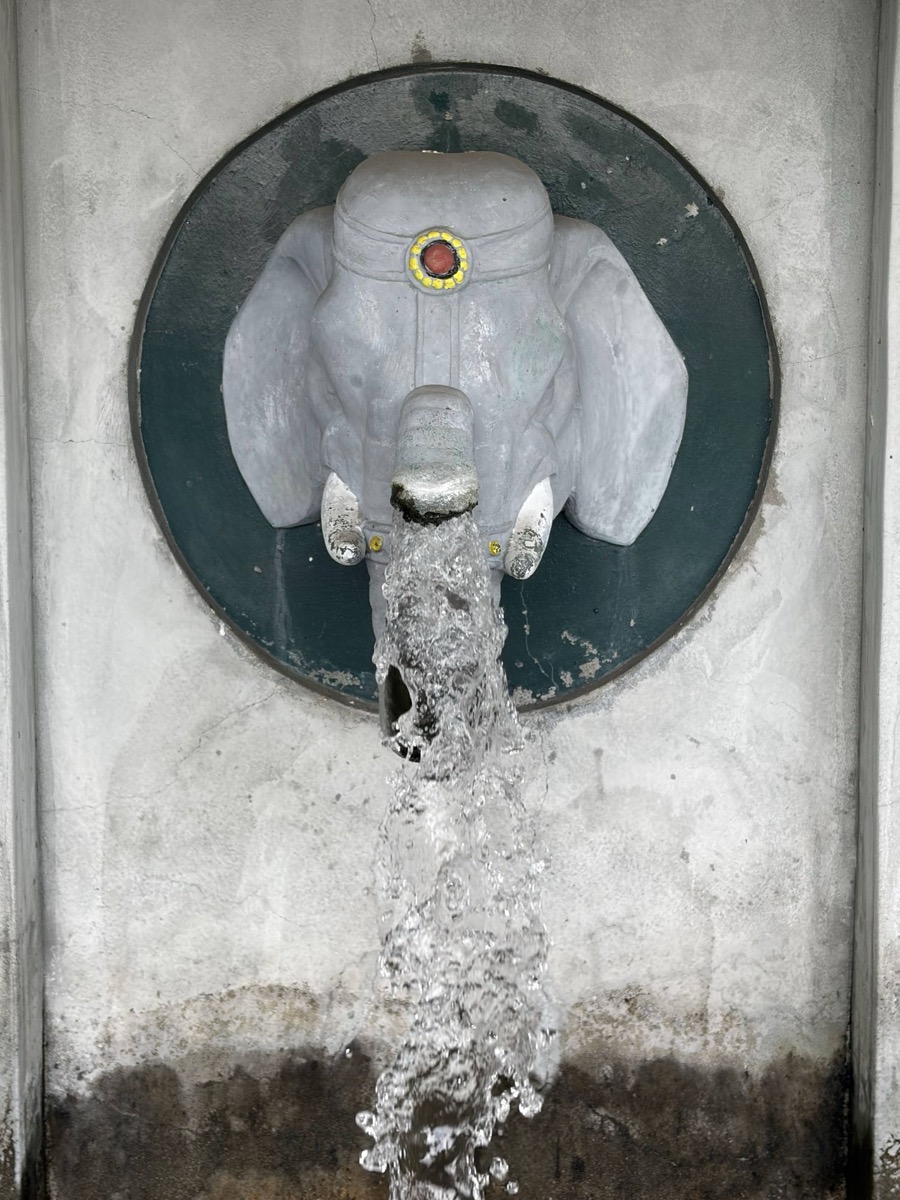
In front of the stupa: a wide reflecting pool, lined along the walls with a row of elephant head sculptures, each one shooting a stream of water from its upturned trunk.
"Why elephants?" I thought, walking closer.
Up close, each elephant has a red jewel and yellow bead ornament on its forehead. Detailed, clearly intentional. A nearby explanatory panel had the answer: according to Buddhist legend, Queen Maya — the mother of the Buddha — dreamed that a white elephant entered her womb, and conceived the Buddha from that dream. Placing elephants at a stupa housing the Buddha's relics is not decoration. It's theology.
Once I knew that, the fountain looked completely different. I explained this to my son. He said "Hmm." Exact same tone as when I said "Oh yeah?" to my wife about the famous graves. The family gene for polite indifference runs deep, apparently.
Inside the Stupa
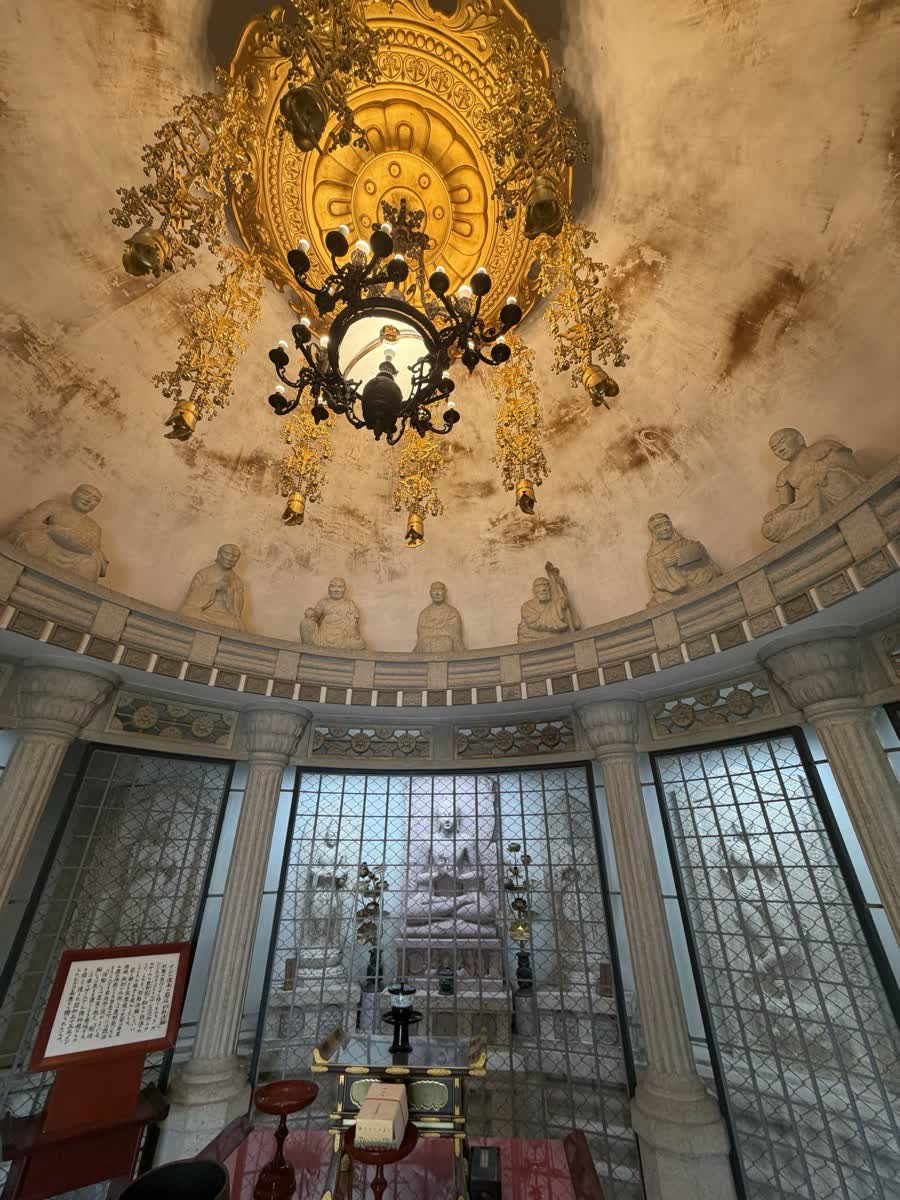
I was not prepared for what was inside.
An enormous gold-and-iron chandelier hanging from the ceiling. Stone Arhat statues — disciples of the Buddha — arranged in a full 360-degree circle around the inner dome. Through a latticed screen at the center: a white Buddha, standing quietly.
Outside, you feel like you're in India. Inside, you feel like you've walked into paradise.
The interior was completely restored between 2014 and 2015. The colors are vivid again. The architect clearly enjoyed himself designing this — there's a joyfulness to the excess of it all that I wasn't expecting in a cemetery.
A 360-degree walk around the stupa. You can see all six of the smaller domes.
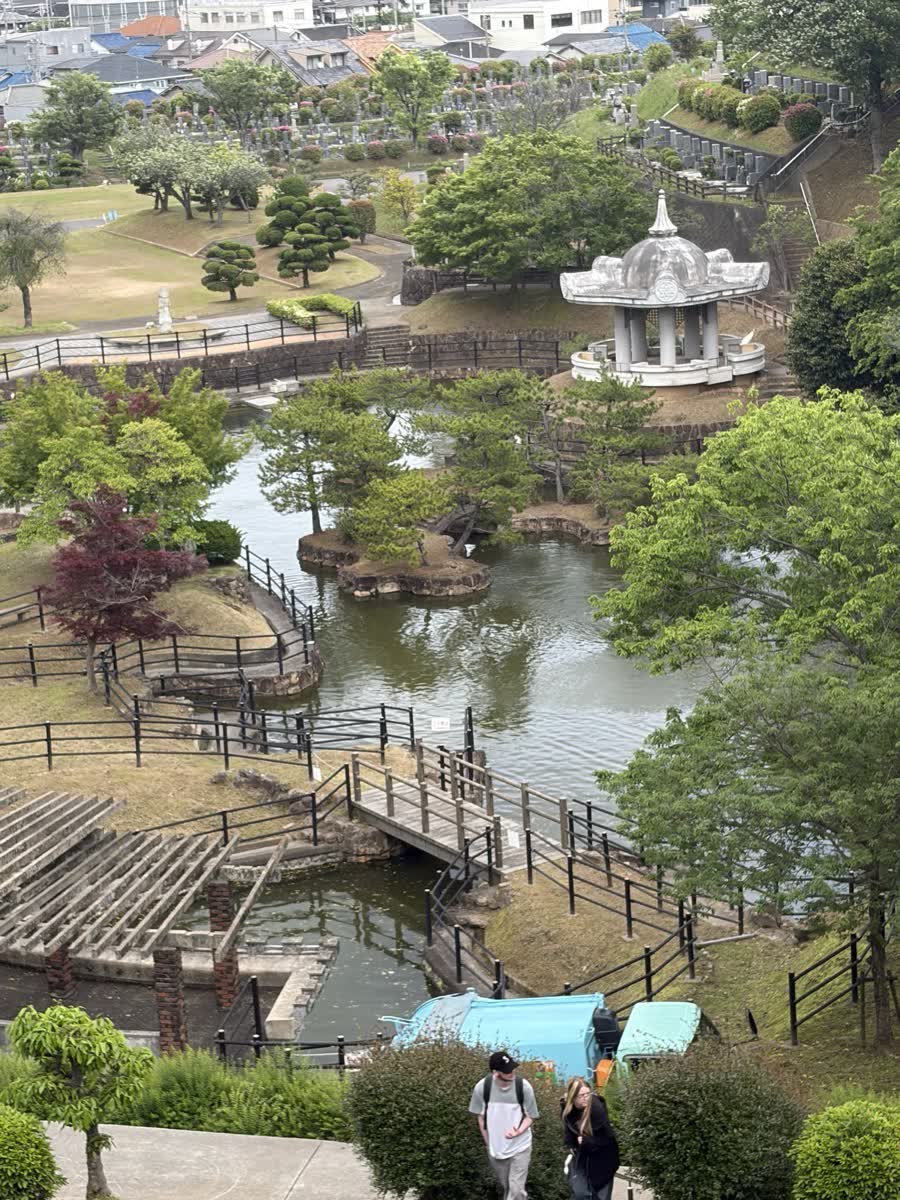
There's a balcony partway up the stupa where you can look out over the city. Green treetops, rooftops stretching to the horizon, and on a clear day apparently Himeji Castle is visible from here.
Mount Sumeru — The Center of the Buddhist Universe
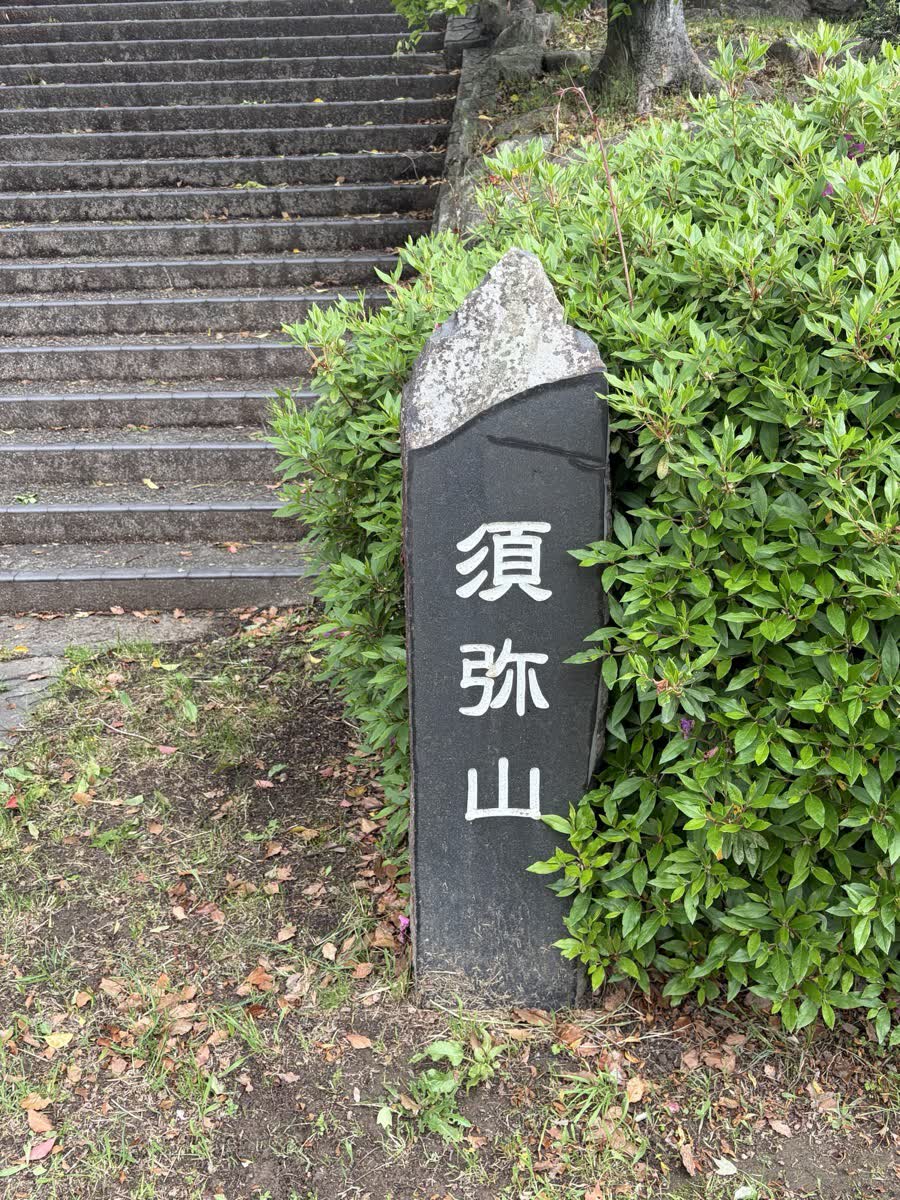
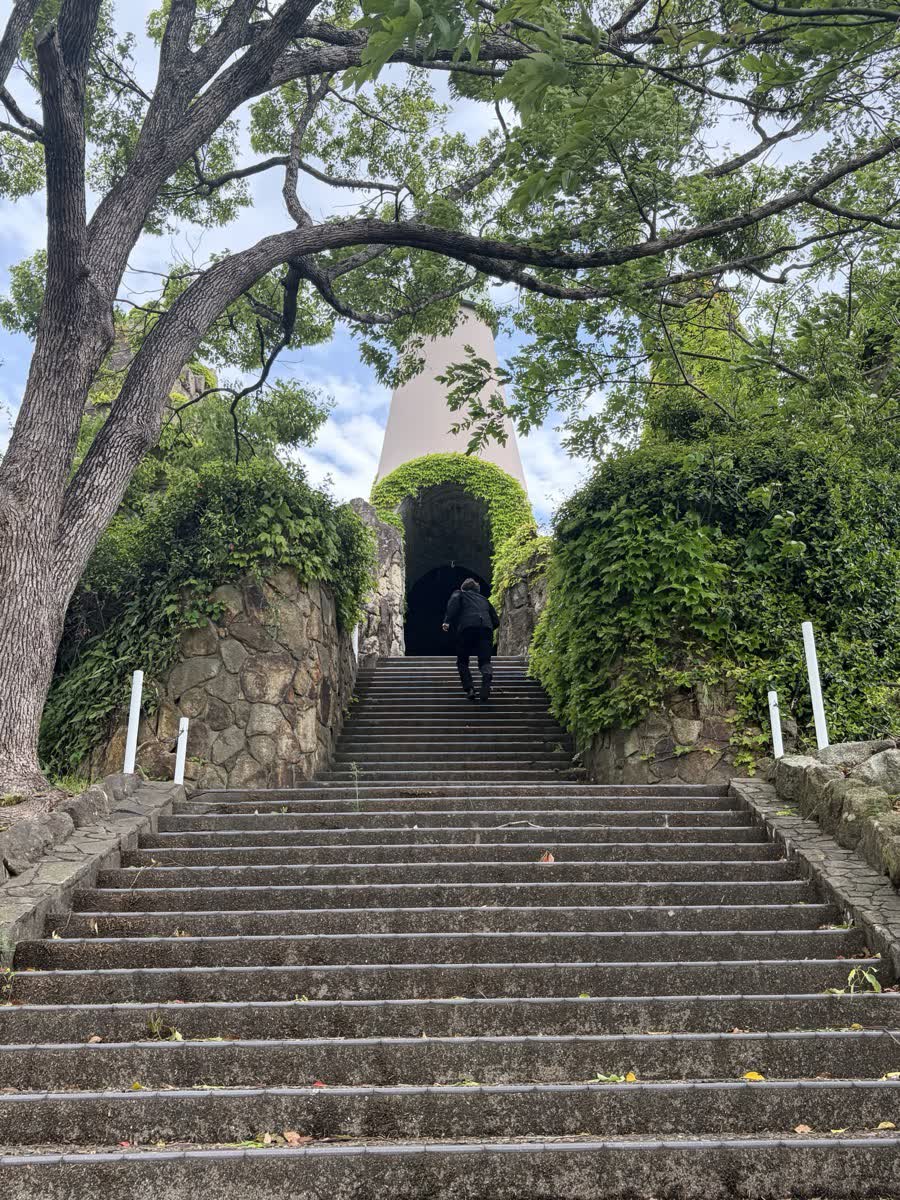
Further into the grounds, a black stone monument with the characters 須弥山 (Shumisen — Mount Sumeru). Stone steps disappearing upward into the trees behind it.
"Is this a trail?" I thought. Seemed unlikely in a city cemetery. We climbed anyway.
At the top: a small tower. Not a mountain. But along the staircase, there was a statue of the emaciated Buddha — Shakyamuni during his six years of ascetic practice. Gaunt, hollow-eyed, deep in meditation. Nothing like the serene, round-bellied figures I was used to seeing. I stopped and stared for a while.
I looked it up afterward: the tower at the top is apparently a water tank. Solemn stone structure on the outside, municipal infrastructure on the inside. Somehow knowing this made it more likeable.
Mount Sumeru is the mountain at the center of the Buddhist cosmos — the axis of the universe. The entire cemetery, I slowly realized, is a representation of the Buddhist world in miniature: the stupa housing the Buddha's relics, the elephant fountain with its ritual meaning, and now this cosmic mountain. Nothing is just decoration. Everything means something.
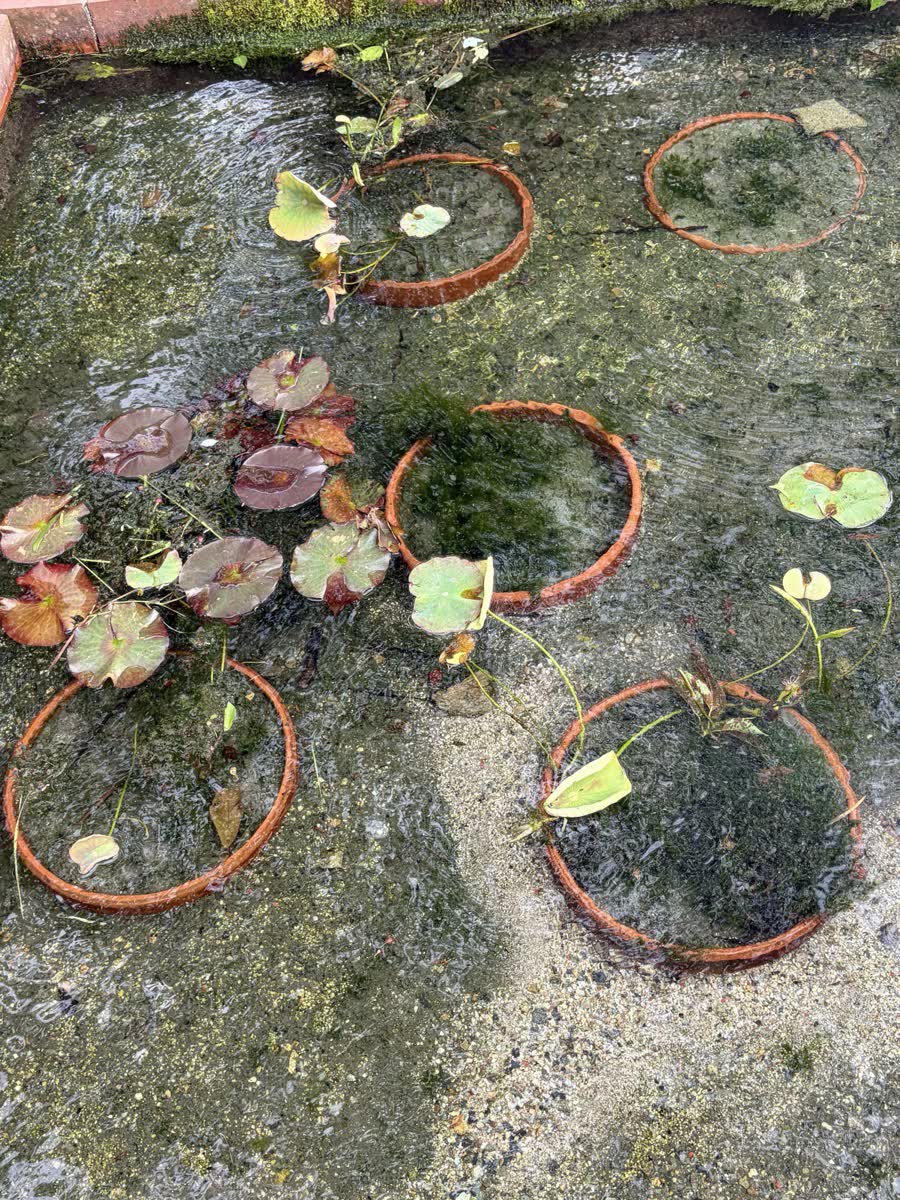
Near the Mount Sumeru entrance, a shallow water feature with ceramic rings, each holding what looked like lotus plants. In Buddhism, the lotus rises from muddy water to bloom clean — a symbol of enlightenment. Buddhist statues stand on lotus pedestals for exactly this reason. At this point, nothing in this cemetery surprised me anymore.
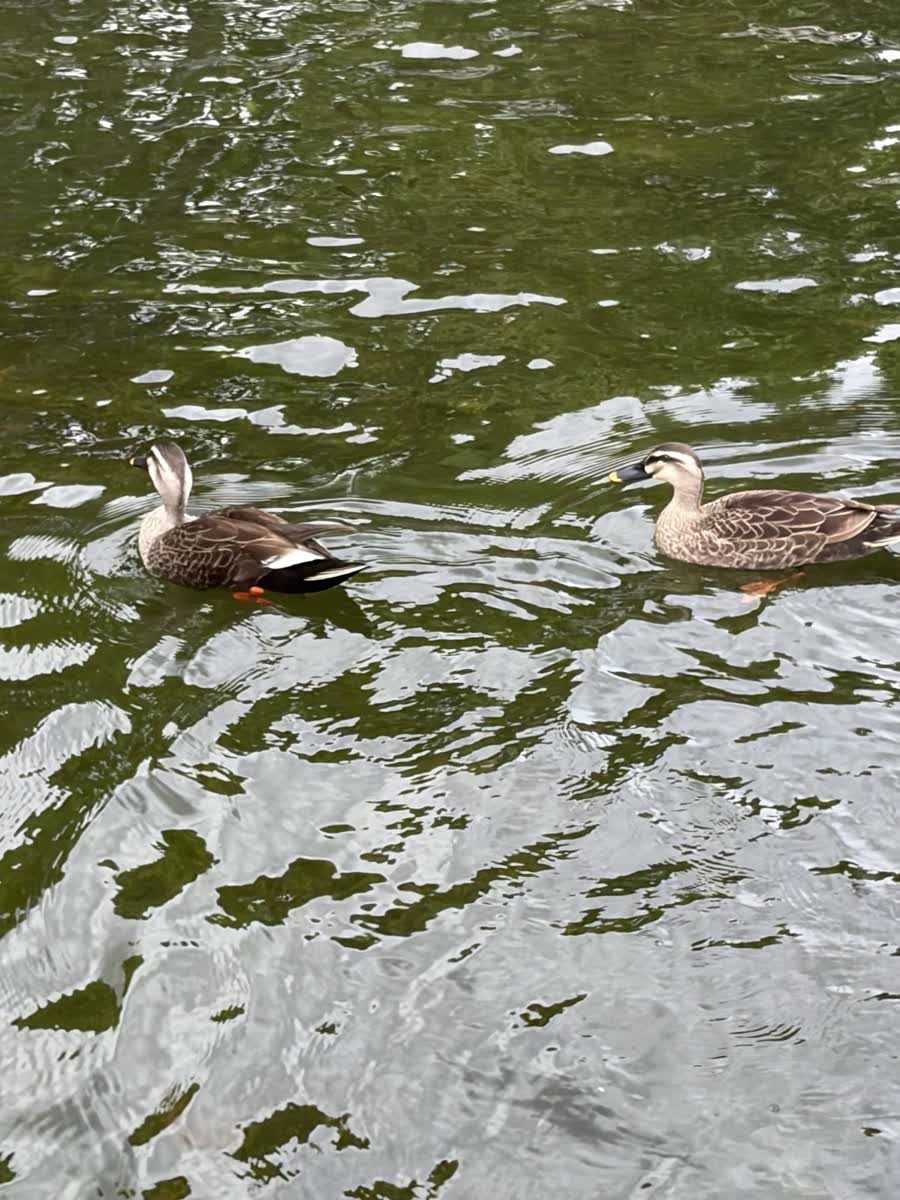
There was a duck, too. Floating peacefully. Completely at ease. I respected that.
Two Famous Graves: A Rakugo Master and a Fashion Legend
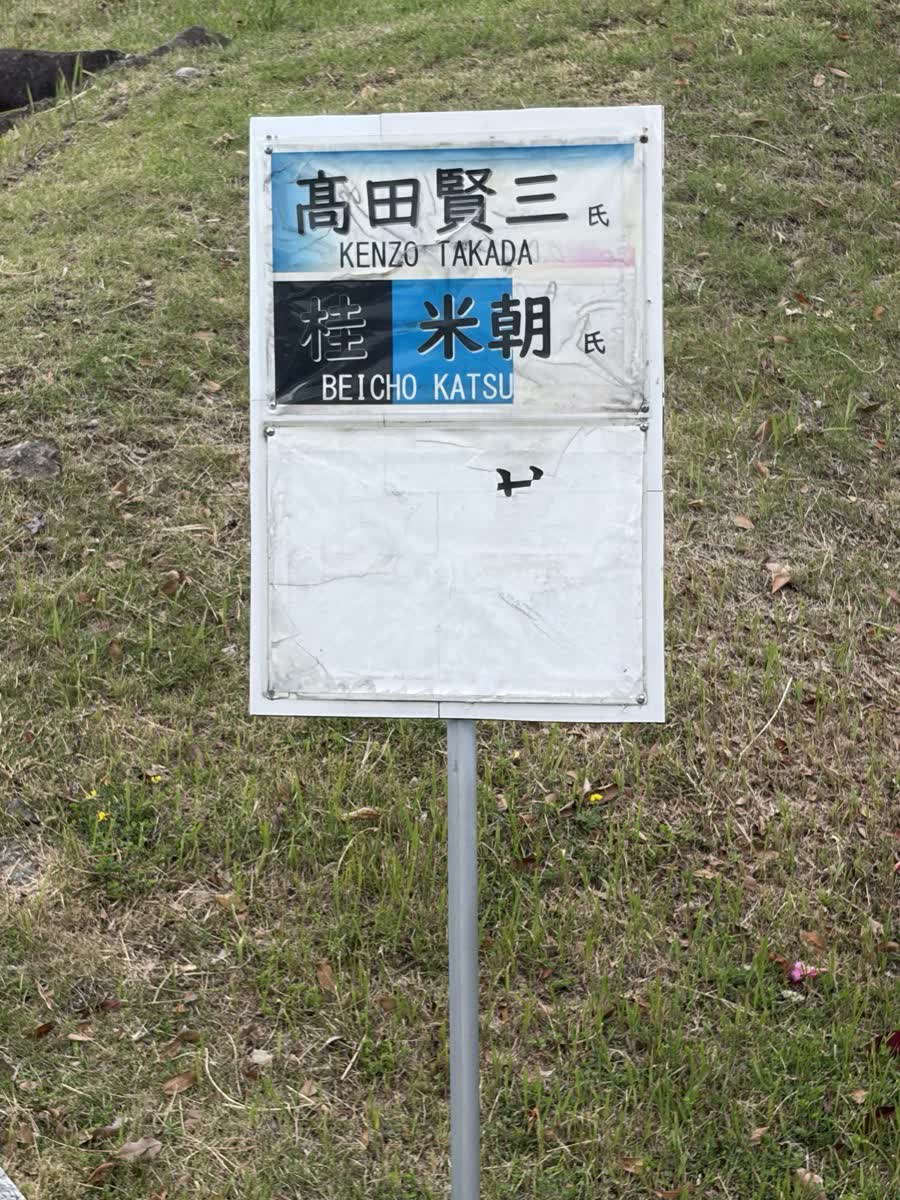
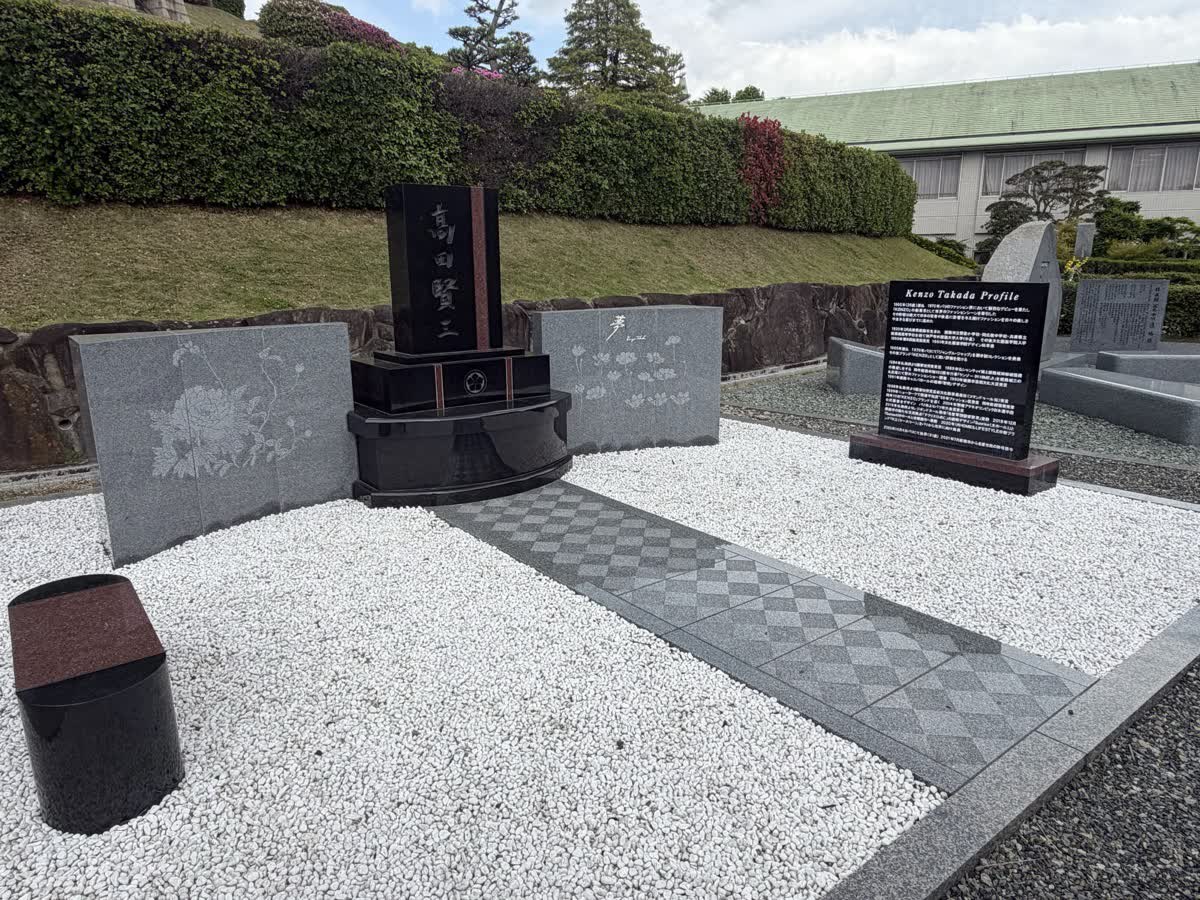
Kenzo Takada (1939–2020) was born in Himeji and went on to found the fashion brand KENZO in Paris in 1970 — one of the first Japanese designers to reach truly global fame. His grave features stone panels engraved with his handwritten character for yume ("dream"), alongside carved anemones, peonies, and rose hips — the flowers that ran through his whole career. Beautiful and elegant, even in a cemetery on a hillside.
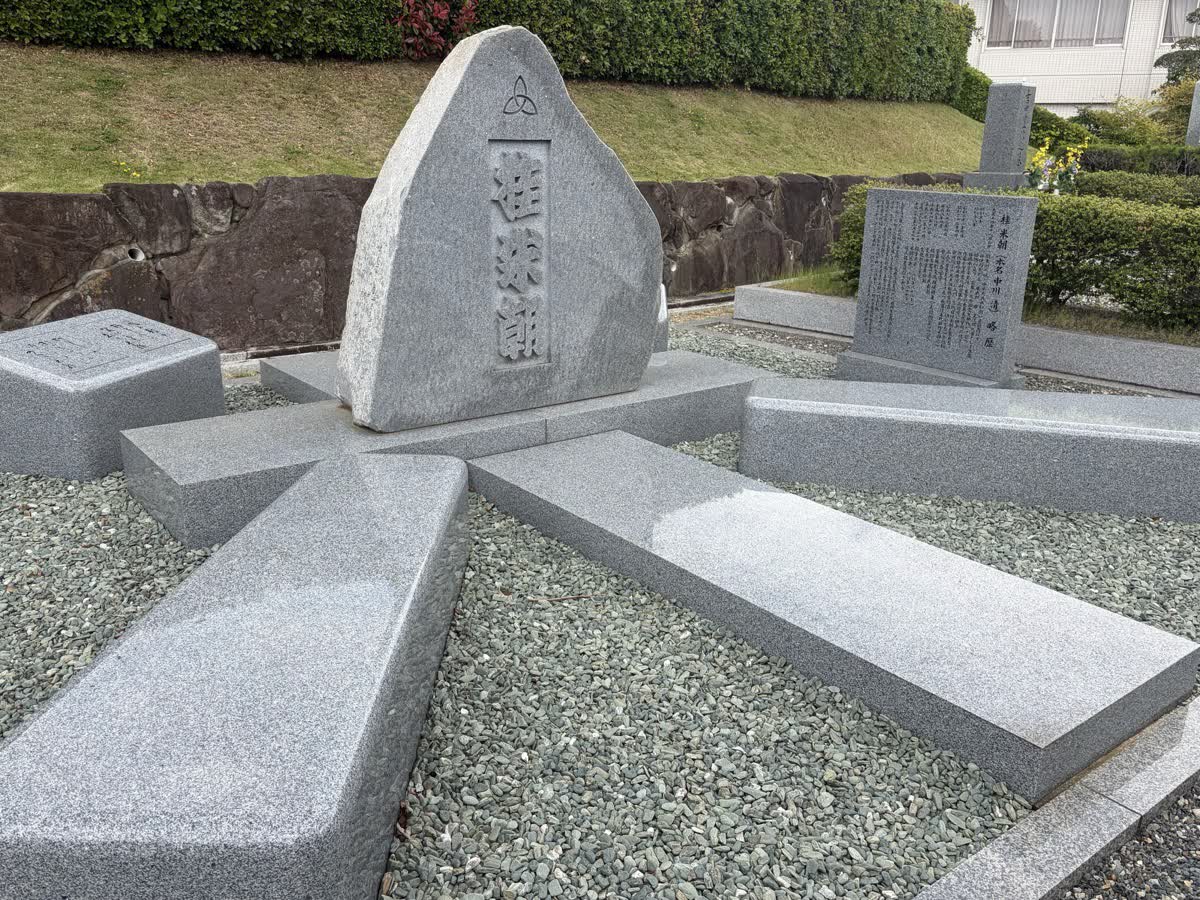
Beicho Katsura (1925–2015) was one of Japan's greatest rakugo performers — the solo comedic storytelling tradition that dates back to the Edo period. He was designated a Living National Treasure. His grave was designed so that the layout, viewed from above, forms the shape of the kanji 米 (kome, "rice") — the character in his name, Beicho (米朝). The explanatory panel mentions this proudly. You can feel his sense of humor from beyond the grave, honestly.
A fashion legend and a comedy legend, resting in the same hillside in Himeji. I didn't expect any of this when I got on the bullet train this morning.
Why Is There a Buddhist Stupa in a Himeji City Cemetery?
One word: Nehru.
In 1954 — nine years after the end of World War II — India's first Prime Minister, Jawaharlal Nehru, donated Buddhist relics (sarira: actual bone fragments of the historical Buddha) to the city of Himeji, "as a prayer for eternal peace and happiness of humanity." He made similar gifts to several Japanese cities during this period. The white stupa you see today was built to house those relics.
The architect, Minoru Ohoka, had an unusual path to this project. He was originally an architectural historian — an academic, not a builder. In 1949, he was present when a fire broke out at Horyuji Temple and destroyed its ancient wall murals, one of Japan's most precious cultural treasures. Though he was eventually cleared of responsibility, the experience changed him entirely. He spent the rest of his career designing Buddhist stupas in fire-resistant reinforced concrete. Nagoyama is considered his masterpiece.
Peace prayer. Wartime guilt. A scholar turned architect. A piece of the actual Buddha. All of that, in a city cemetery one kilometer from Himeji Castle.
Practical Info for Visitors
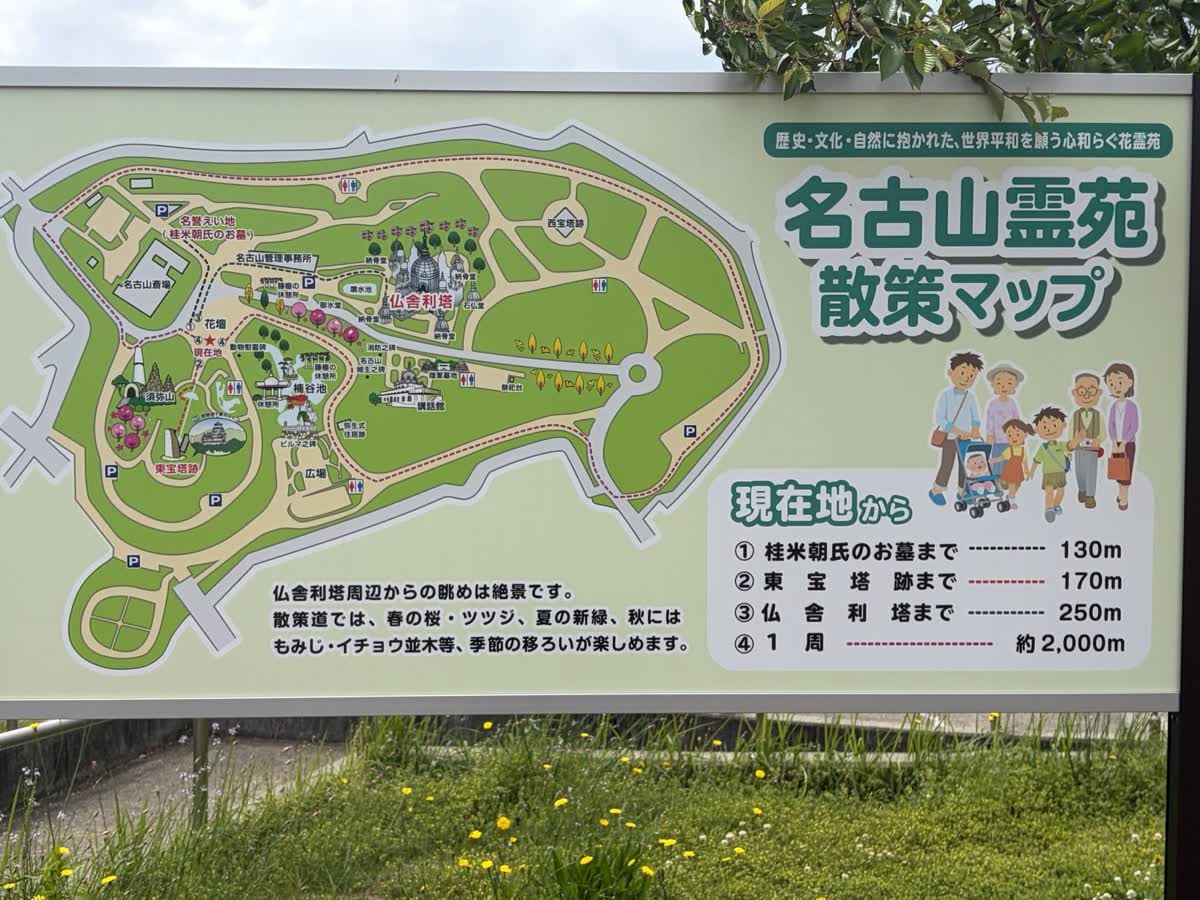
- Location: 14-1 Nagoyama-cho, Himeji City, Hyogo. About 1km northwest of Himeji Castle
- Getting there: 10–15 minutes by taxi from Himeji Station; bus also available
- Admission: Adults $1.70; Children $0.70 (interior included)
- Hours: 8:40 AM – 4:30 PM (until 6:00 PM during Obon, Aug 12–15)
- Night illumination: Until 10:00 PM
- Closed: December 29–31
- Seasons: Spring (cherry blossoms, azaleas) and autumn (ginkgo, maples) are especially good
- Adjacent: Nagoyama Crematorium is on the same grounds — if you find yourself waiting there, now you know what to do with the time
If you're visiting Himeji, add one kilometer to your itinerary after the castle. You'll find something completely different — and probably have Gandhara stuck in your head for the rest of the afternoon.
Life Encounters You
I came to Himeji to say goodbye to someone. While waiting, I walked into a place I'd never heard of, and found something I didn't know I needed to see.
There's a Japanese phrase I keep returning to: 人生はある日突然、出くわす — "Life suddenly encounters you." You don't always plan the moments that stay with you.
A 50-something man walking through a Himeji cemetery with Gandhara playing on a loop in his head, explaining elephant fountain symbolism to his uninterested son — from the outside, that's a strange picture. From the inside, it felt exactly right.
If you ever make it to Himeji — for any reason — give yourself the extra kilometer. The stupa will be there, quietly waiting.
Related articles