Reading time: about 8 minutes
Hi, this is Hiroshi from "Ramen, Beer, and Sometimes Blogging."
A weekday morning. I had a day off in lieu, my wife's part-time shift was off too. I was still nursing my coffee and mumbling "so, where should we go?" when she announced:
"Let's go to Mitsumine Shrine!"
Why? I thought. Apparently she'd seen it somewhere — supposedly one of the most powerful "power spots" in Japan. Hmm, I thought, and agreed. I wanted to bring Momiji, our Shiba Inu, but it turns out dogs aren't allowed on the shrine grounds. Sorry, Momiji...
Then I got in the car, punched the destination into Google Maps, and the screen delivered the news: travel time, about 3 hours. Wait — THREE hours?! What a hassle, I grumbled — and started driving anyway. Let me spoil the ending: it was worth it. Especially in summer.
Who this article is for
- People who want to know how long Mitsumine Shrine takes (parking lot to main hall, full loop)
- People wondering about summer temperatures and what to wear
- People checking whether dogs are allowed and what parking is like
The Answers First (measured on August 26, 2026)
Here are the answers up front. Not impressions — actual numbers from my visit.
| What you want to know | What I measured that day |
|---|---|
| How long does it take? | Parking lot to main hall: about 30 min on foot without detours. A relaxed full loop plus the museum: about 2 hours (arrived 11:10, back at 13:04) |
| Summer temperature? | On a day the lowlands hit about 95°F (35°C), the shrine was 77°F (25°C) at 11 a.m. (my car's thermometer). Elevation: 3,600 ft (1,100 m) |
| Are dogs allowed? | No — pets are not allowed on the grounds (I photographed the official sign; certified service dogs excepted) |
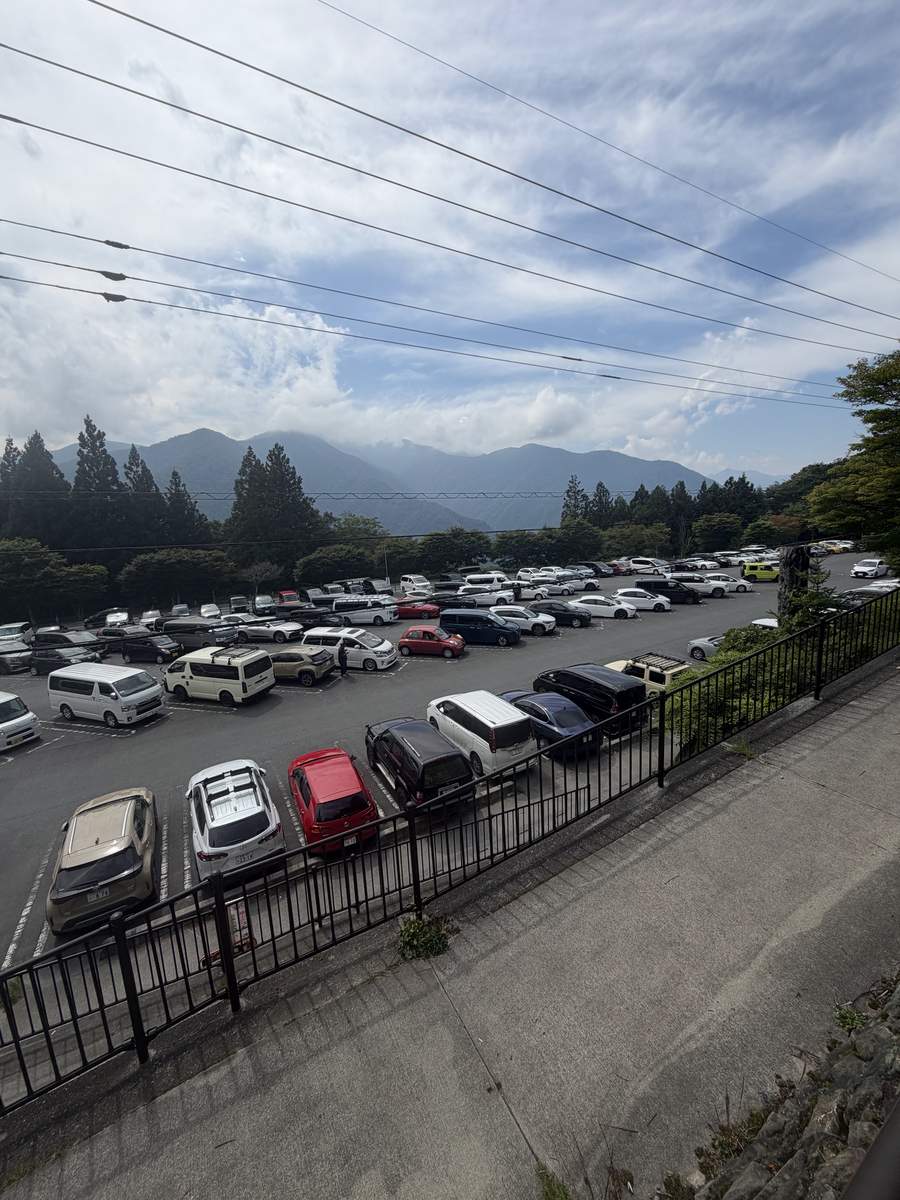
| Parking | Municipal lot, 520 yen (about $3.50) per car, usually 8:00–18:00. Quite full even on a weekday |
| Drive from the western Tokyo suburbs | About 3 hours each way. My wife and I took turns driving |
| Museum | Admission 300 yen (about $2). Japanese wolf pelt on display (no photos inside) |
Is it a real "power spot"? I can't say. What I can say: walking through cedar forest at 77°F in August will bring you back to life. Guaranteed.
Table of Contents
- How Long to Mitsumine Shrine? About 3 Hours by Car
- 77°F on a 95°F Day — Elevation 3,600 ft Is Another World
- Are Dogs Allowed? No — Here's the Sign
- Seeing a Japanese Wolf Pelt (Museum, 300 yen)
- Up the Cedar Path to the Gate and the Painted Main Hall
- The Dragon in the Paving Stones, the Matchmaking Tree, and the Wolf Shrine
- Branch Shrines from All Over Japan, the Yamato Takeru Statue, and the View
- The Loop Trail Is Wonderfully Cool — But I Nearly Wandered Onto a Mountain Trail
- Visitor Information
- Final Thoughts
How Long to Mitsumine Shrine? About 3 Hours by Car
Mitsumine Shrine sits deep in the mountains of Chichibu, Saitama Prefecture — not in the town itself, but at the top of a long, winding mountain road well beyond it. From the western suburbs of Tokyo it took us almost exactly 3 hours, just as Google Maps had warned. My wife and I traded off driving. My back hurt. At 50-something, a 3-hour drive stops being a road trip and starts being light manual labor.
We arrived at 11:10. Wandering around the parking lot, I discovered there's also a bus: from Seibu-Chichibu Station, the Seibu Kanko bus to "Mitsumine Jinja" takes about 80–90 minutes. It's a mountain route, so check the schedule on the day you go.
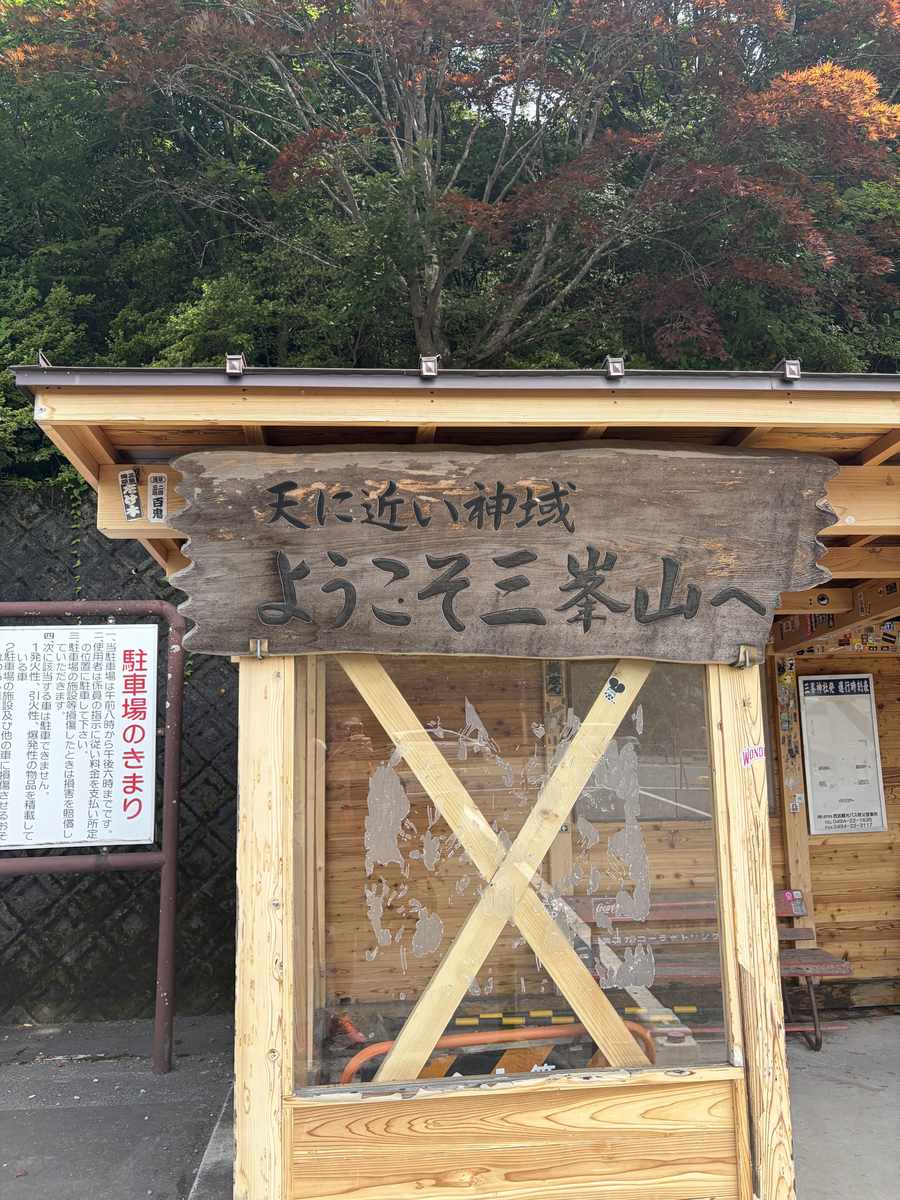
From the parking lot to the triple torii gate at the entrance is about a 15-minute walk, then another 15 minutes to the main hall — so roughly 30 minutes one way if you don't stop. We got pulled into the museum and read every sign on the mountain, so our full loop back to the car took exactly 2 hours (11:10 → 13:04).
77°F on a 95°F Day — Elevation 3,600 ft Is Another World
Down below, that day was a furnace. My phone showed our home area at 93–95°F (34–35°C). But the moment we pulled into the shrine parking lot, my car's outside thermometer read —
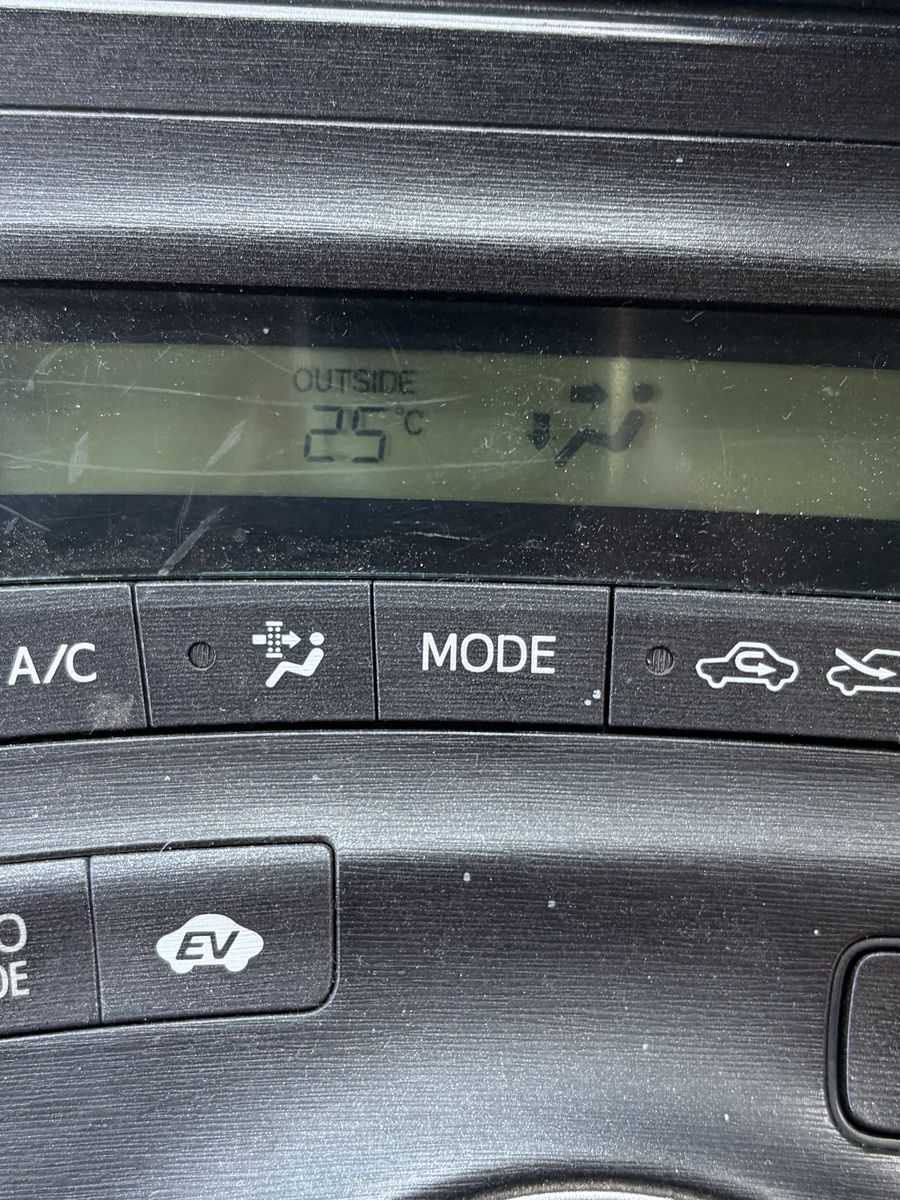

77°F. Cool, crisp, forest air.
That alone justified the trip. You open the car door and instantly know: this is different air. Three hours of driving, largely forgiven in a single breath. The place is a natural summer resort.
A visitor center sign we passed later explained why: elevation 1,100 meters (3,600 feet). In August, one light extra layer is plenty, and you can walk all you want without melting. For a summer shrine visit in Japan, conditions simply don't get better.
The flip side: winters up here are seriously cold, with icy roads that demand snow tires. Summer Mitsumine and winter Mitsumine are two entirely different destinations.
Are Dogs Allowed? No — Here's the Sign
We take our Shiba Inu Momiji nearly everywhere, but this time she stayed home. The rule is posted right there on site:
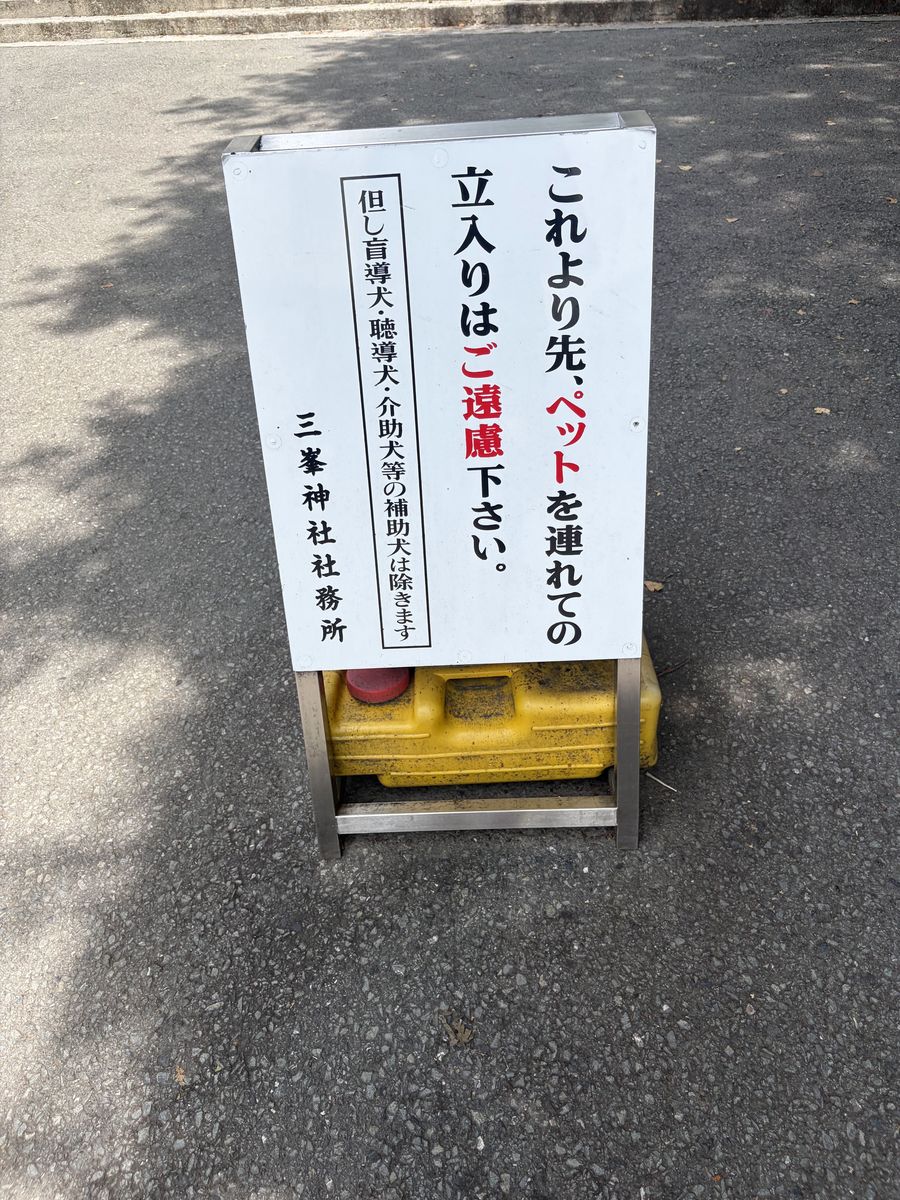
Since July 2019, Mitsumine Shrine has officially asked visitors not to bring pets onto the grounds. There's a twist of irony here: this shrine venerates the wolf (Oguchi-no-Makami) as its divine messenger, and it was once even known as a dog-friendly shrine. But the current rule is the rule. Service dogs are the only exception.
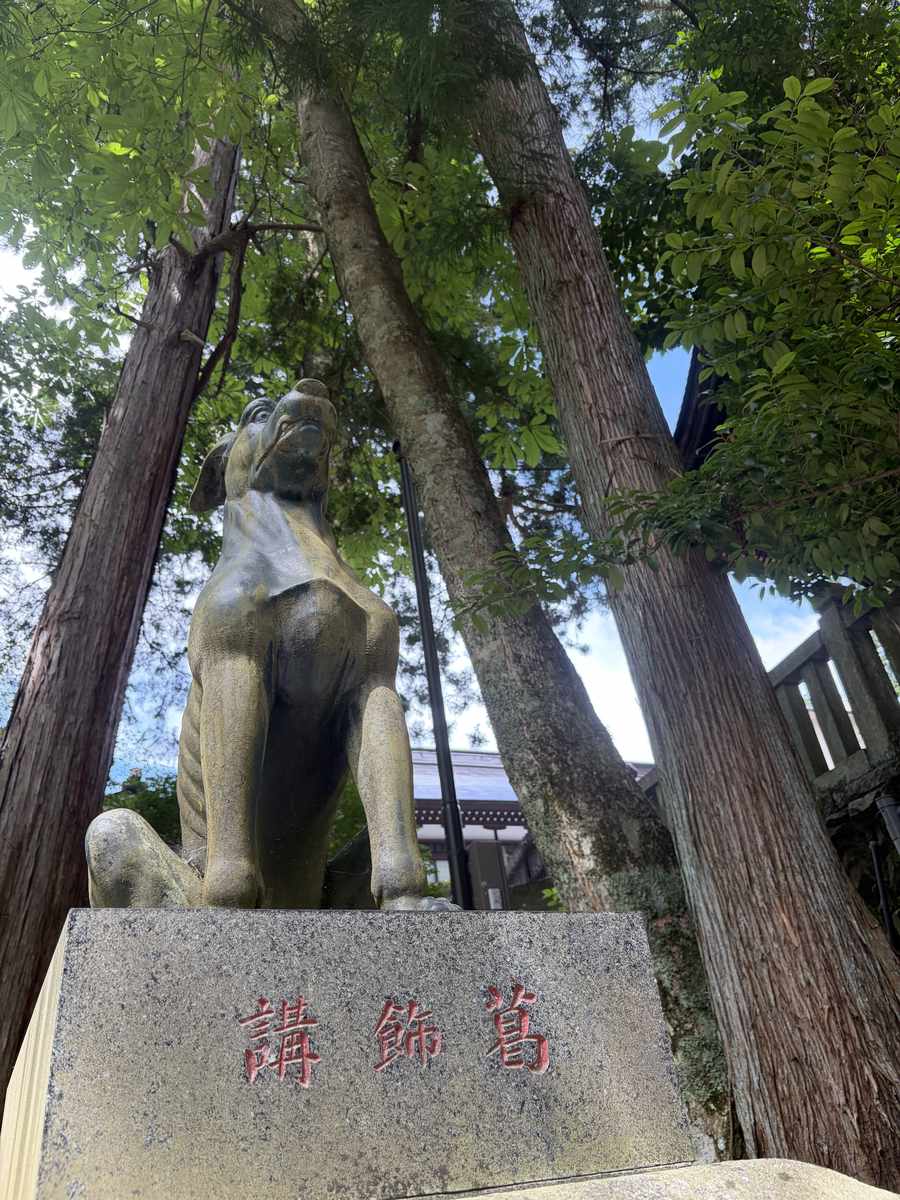
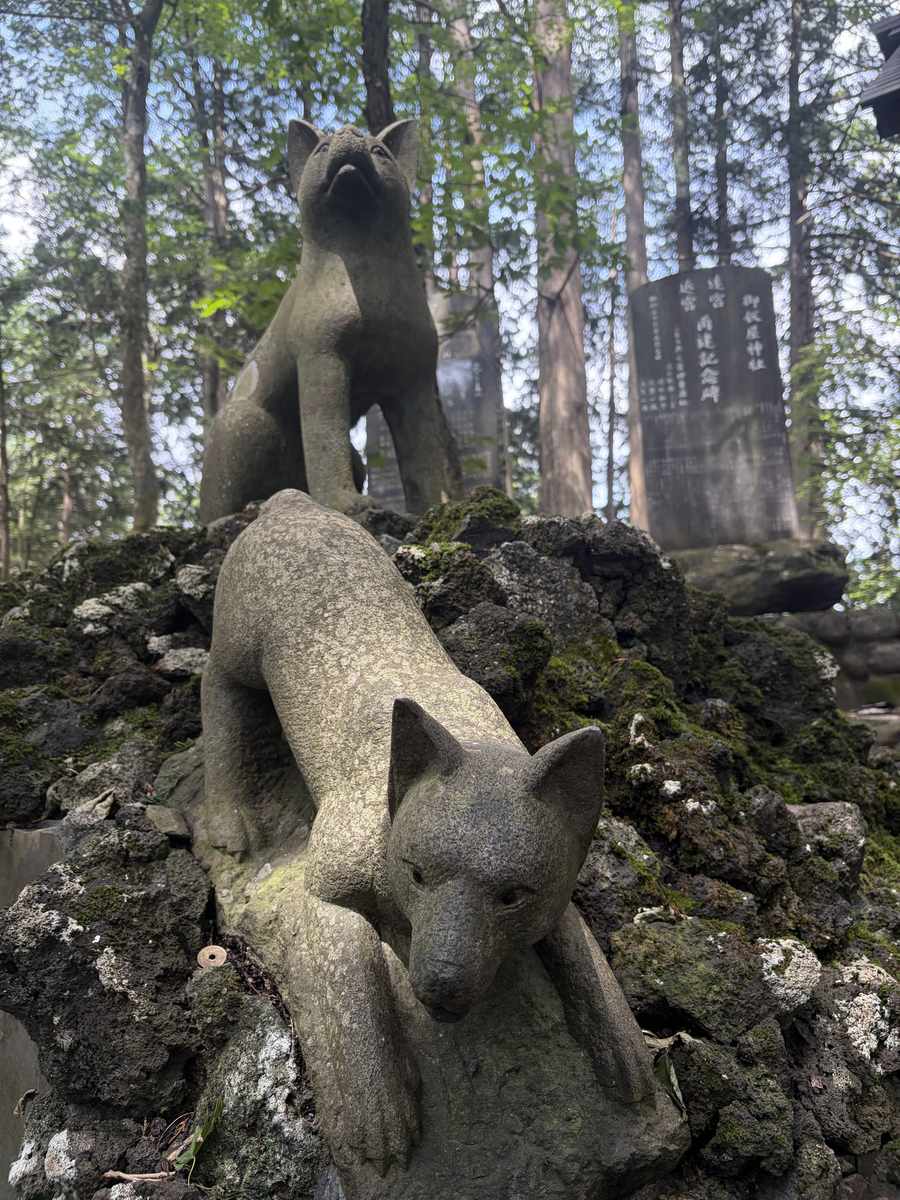
And here's the part I enjoyed: dogs can't come in, yet the grounds are full of wolves. Where an ordinary shrine posts a pair of guardian lion-dogs, Mitsumine posts stone wolves — lean, dignified, and slightly judgmental.
If you're looking for places where your dog IS welcome, my 10 dog-friendly parks and low mountains in Kanagawa and the free dog run at Umi no Koen in Yokohama will serve you better. Mitsumine is for the days your dog holds down the fort at home.
Seeing a Japanese Wolf Pelt (Museum, 300 yen)
Near the entrance to the approach path, a banner caught our eyes:
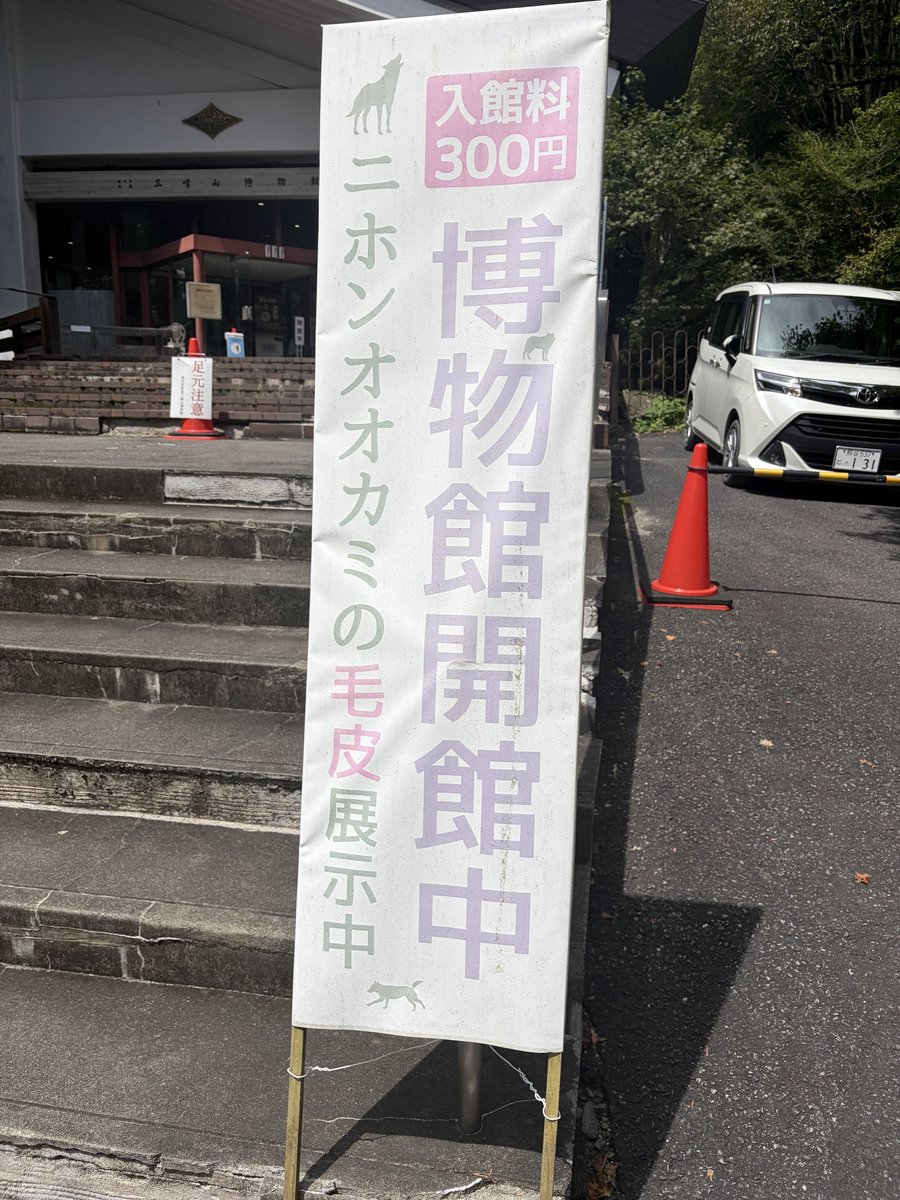
My wife was visibly intrigued. "Want to go in?" I asked. "Yes," she said.
Understand: this is a person whose answer to almost everything is a noncommittal "either way is fine." A clean, immediate "yes" meant she really wanted to see it. After enough years of marriage, one syllable carries a whole paragraph. Admission: 300 yen.
Inside were a pelt of the extinct Japanese wolf, a taxidermy mount of a continental gray wolf, and more. That gray wolf stopped me cold. It's closer to a tiger than a dog. The size is absurd — our Momiji would look like a newborn beside it. Meet one of these in the mountains and there's no contest; you simply lose. Massive.
I wanted photos, but photography isn't allowed inside, so words will have to carry this one. It's worth seeing in the flesh — well, in the fur. Took us about 20 minutes.
Up the Cedar Path to the Gate and the Painted Main Hall
Leaving the museum, we walked the approach path under towering cedars. The air in here is something else. The trees are tall, the shade is deep, the coolness settles on your skin. People love to say the air at this shrine "feels different." Sure — a cedar forest at 3,600 feet is bound to feel different, says the rational half of my brain. The other half doesn't care about the explanation. Feeling good is feeling good; the accounting is separate.
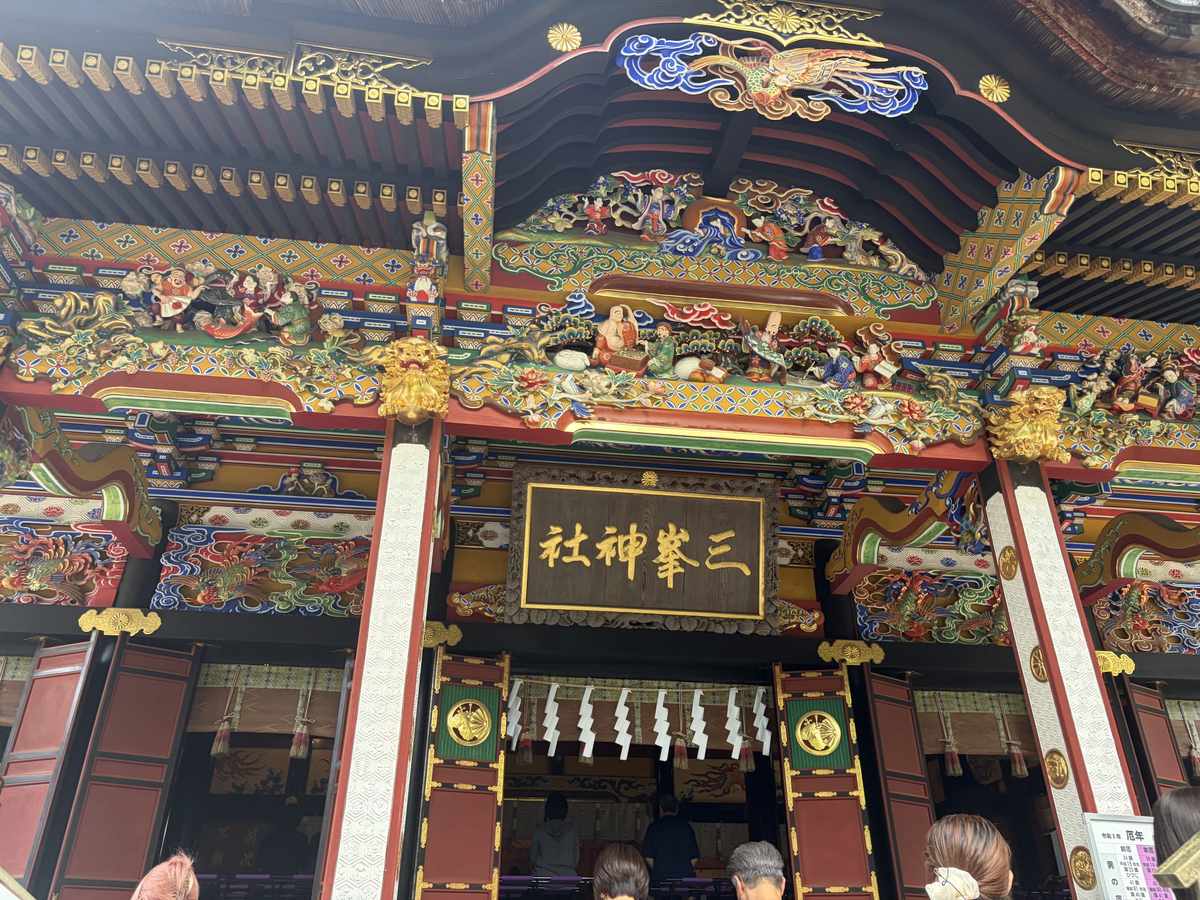
Soon the vermilion Zuishinmon gate appears. That red against all that green — "striking" doesn't cover it.
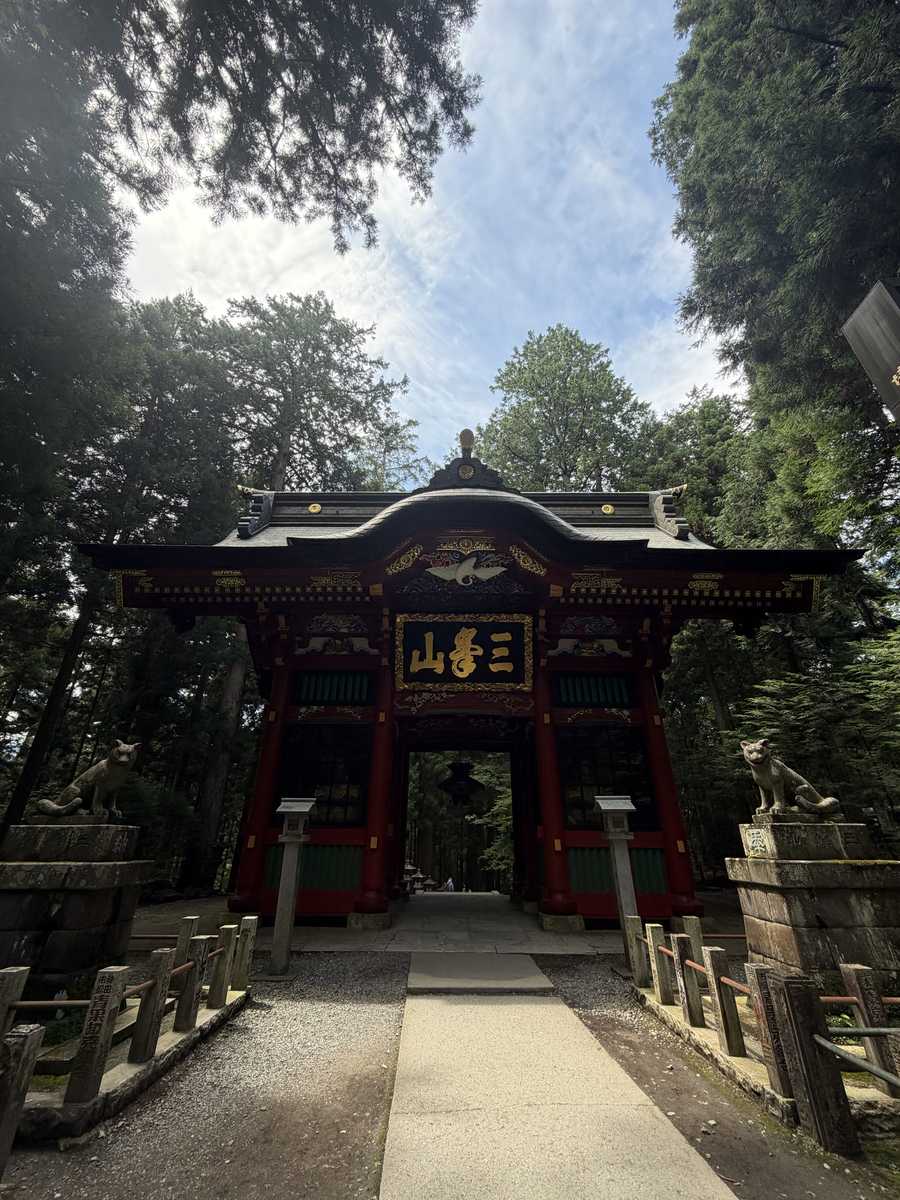
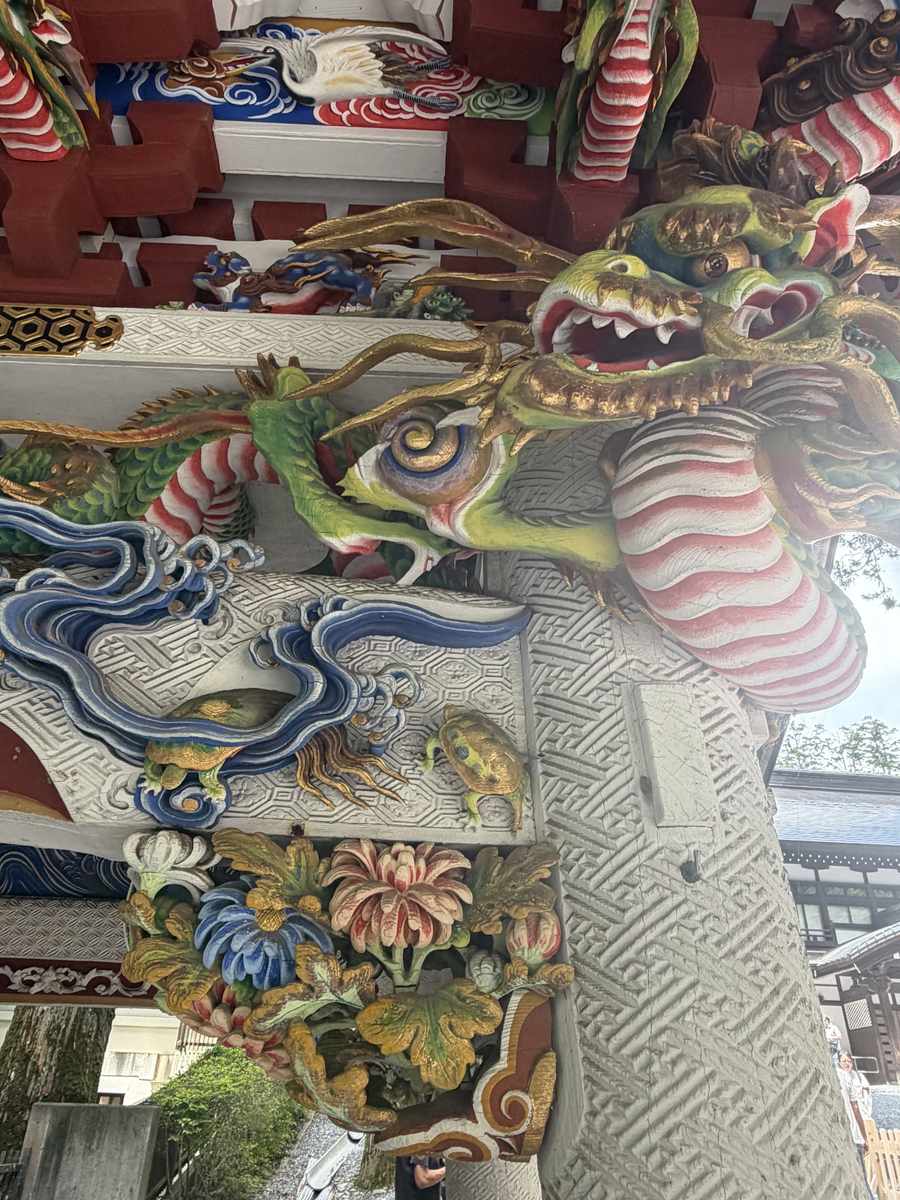
Then the main hall. The gate, the buildings — every surface is vividly, obsessively decorated. You could stare at the colors on the carved dragons all day. My wife and I stood there trading extremely 50-something observations: "Imagine repainting all this." "How many craftsmen would that even take?" When awe starts sounding like a household budget meeting, that's middle age.
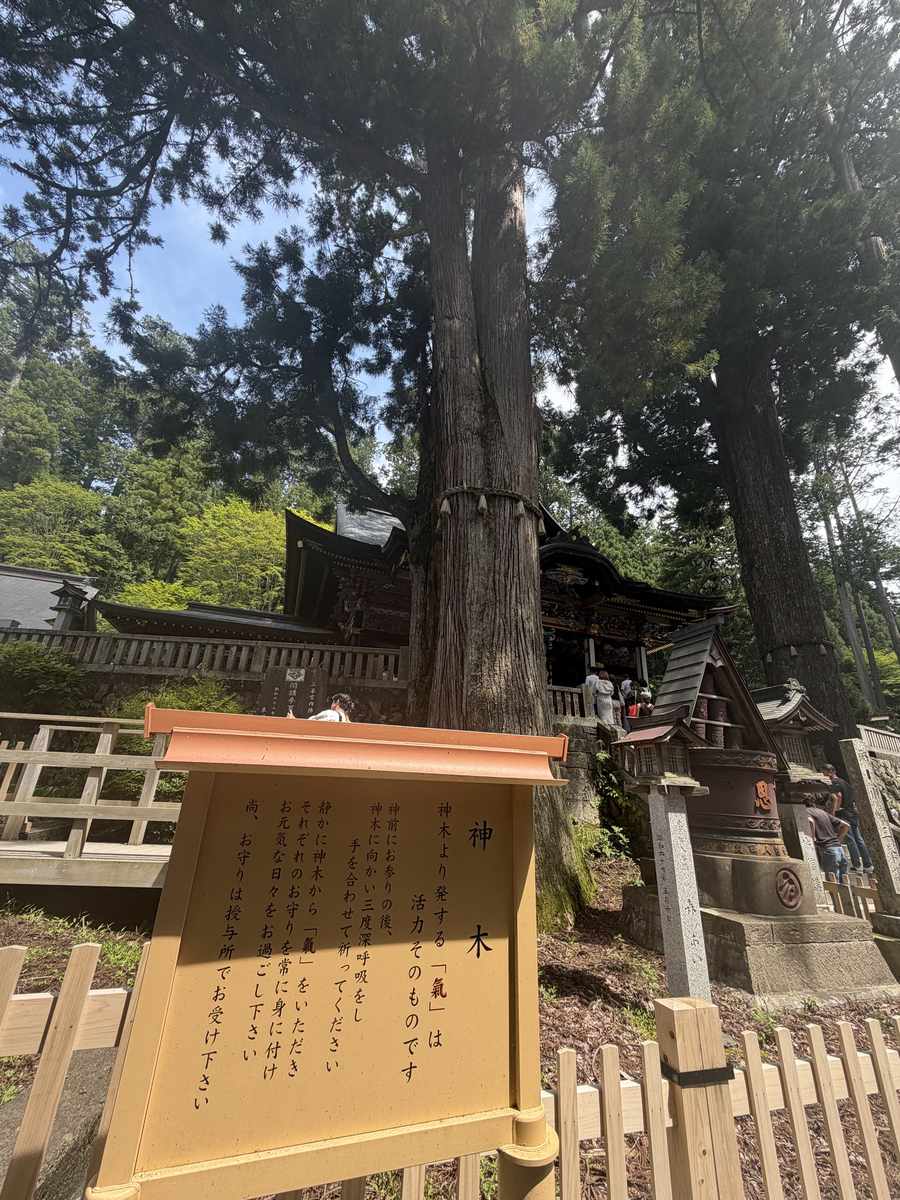
In front of the main hall stands the sacred tree — a giant cedar said to be about 800 years old. These days you don't touch it; you hold your palms toward it and receive its energy. I did. Can't verify the energy transfer. But standing before something 800 years old reframes your week nicely: whatever's been bothering you amounts to three days out of its eight centuries. That's a genuine service, if you ask me.
The Dragon in the Paving Stones, the Matchmaking Tree, and the Wolf Shrine
On the pavement in front of the main hall stands a sign bearing the character for "dragon," with a red arrow. In 2012, the image of a dragon is said to have emerged in the paving stone here. Visitors were taking turns peering at it. So did I.
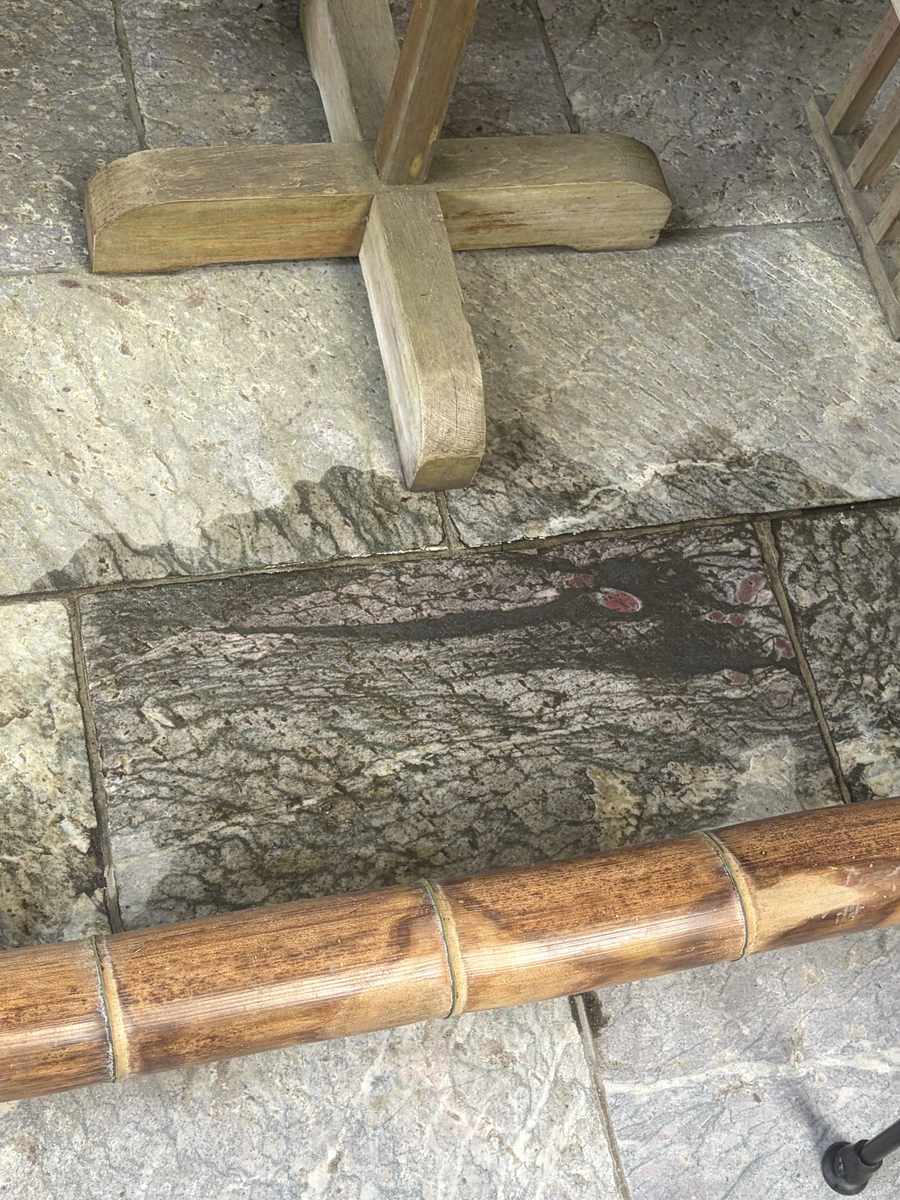
I took a photo, too. My hand hesitated for a second — is photographing something sacred okay? — but nothing said it wasn't. So I took exactly one, murmuring "thank you" inwardly as I pressed the button. Getting the distance right with sacred things is genuinely tricky. If there's a penalty, I assume it will show up in this article's page views.
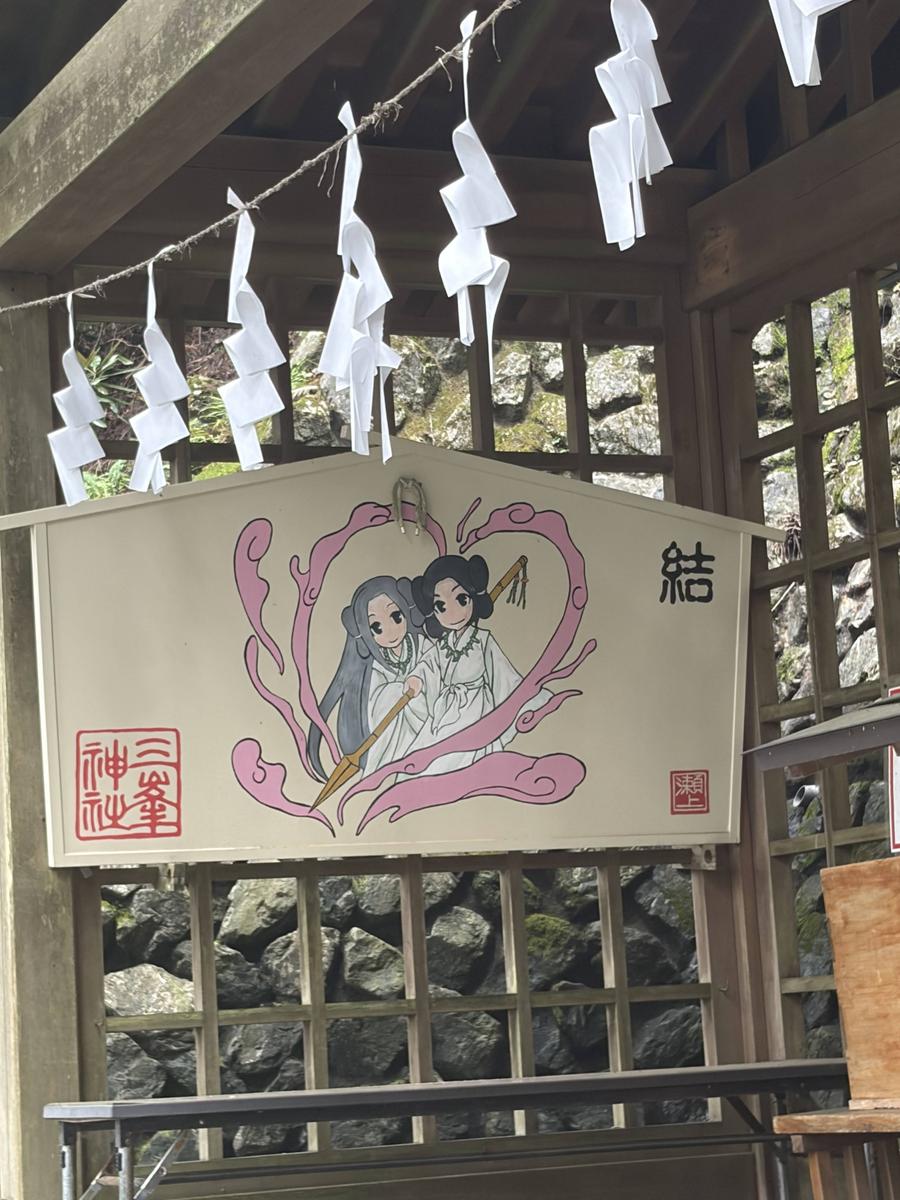
From there, on to the Enmusubi tree — a fir and a cypress growing side by side as if leaning on each other, a symbol of good matches and lasting bonds. Whether a couple closing in on their 30th anniversary needs fresh matchmaking is an open question, but I put in a request for the long haul anyway. Think of it as a contract renewal fee.
Further along is Okariya Shrine, dedicated to the wolf deity Oguchi-no-Makami. It stands quietly deep in the cedars — the polar opposite of the painted main hall, all stillness and stone. To me, it wore the truest "mountain shrine" face of anywhere on the grounds.
Branch Shrines from All Over Japan, the Yamato Takeru Statue, and the View
On the way back we found something delightful: a long row of small branch shrines representing shrines from all over Japan. There are a LOT of them. A little residential district of the gods.
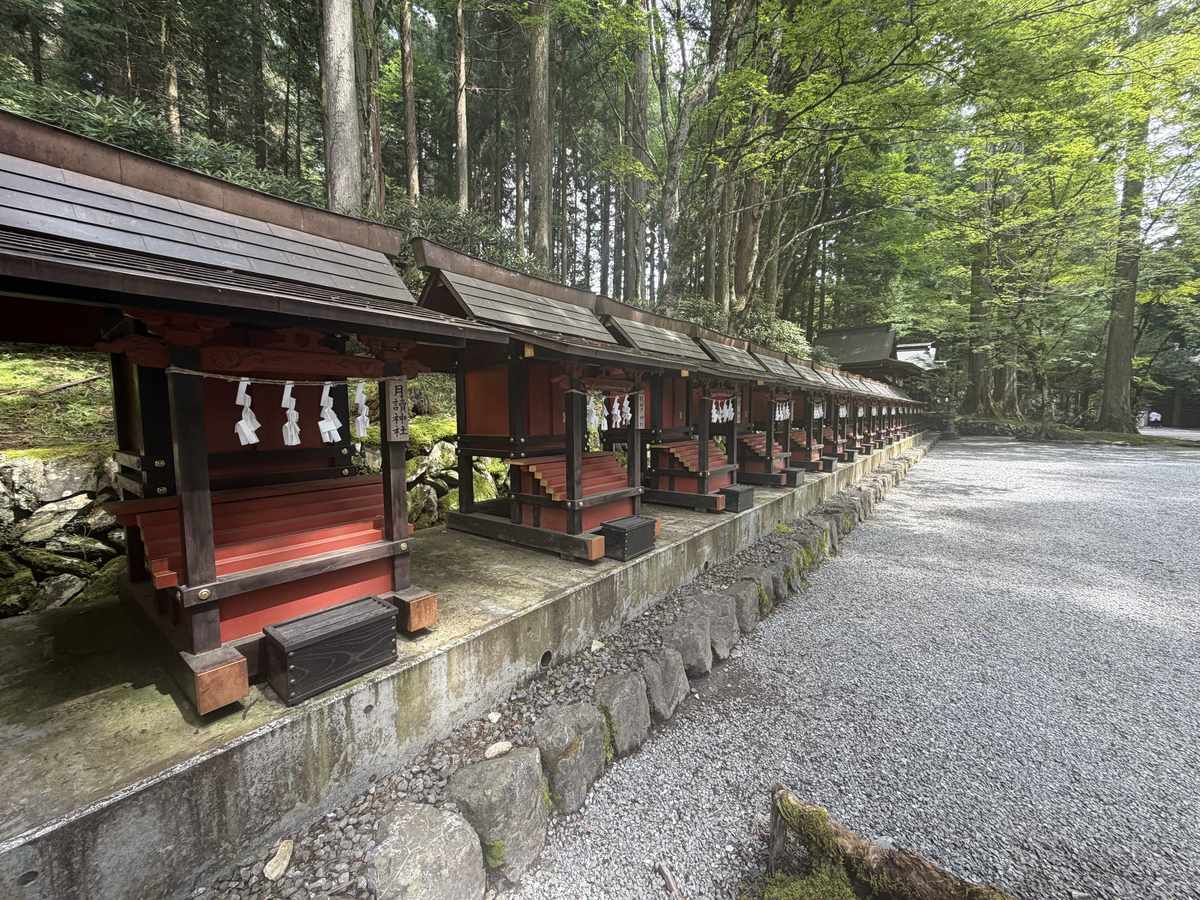
Scanning down the row, I found it: Oyama Shrine, the one from our own neighborhood. And here's the kicker — only Ise Grand Shrine and Oyama Shrine have noticeably bigger buildings than the rest. Our local shrine, given the same VIP treatment as Ise, the most venerable shrine in Japan. I felt weirdly proud, like a neighbor had made it big.
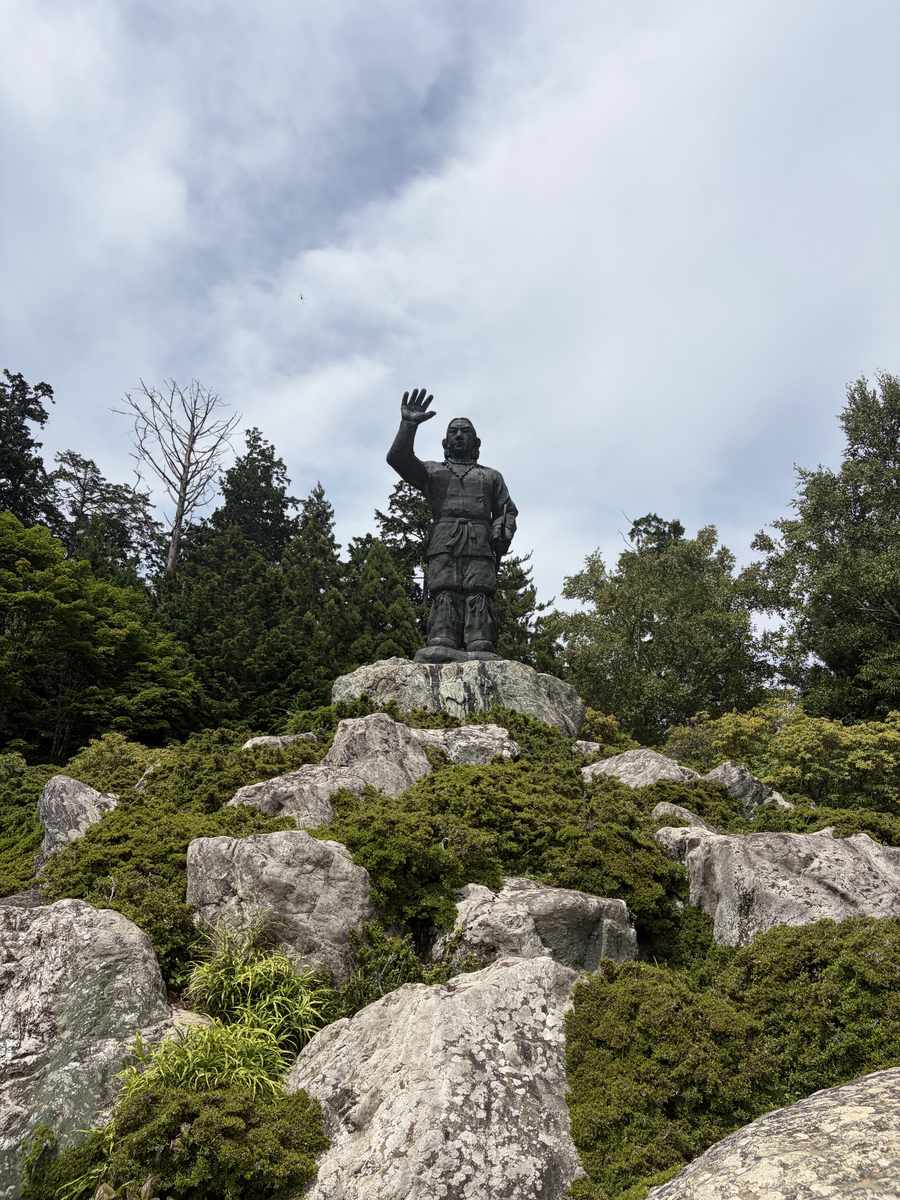
Nearby stands the bronze statue of Yamato Takeru, the legendary prince said to have founded the shrine. Look up at him and: big face. Big hands. Big everything. Legendary heroes are apparently not built to scale.
Then the Yohaiden — a worship platform built for venerating the inner shrine on Mt. Myoho-ga-take from afar. The view from here is superb: the Chichibu mountains folding away, ridge after ridge, into the distance. If I felt "power" anywhere on this mountain, it was here. I don't know the mechanism, but a great view works on you all by itself. Fifty-plus years of field testing behind that statement.
The Loop Trail Is Wonderfully Cool — But I Nearly Wandered Onto a Mountain Trail
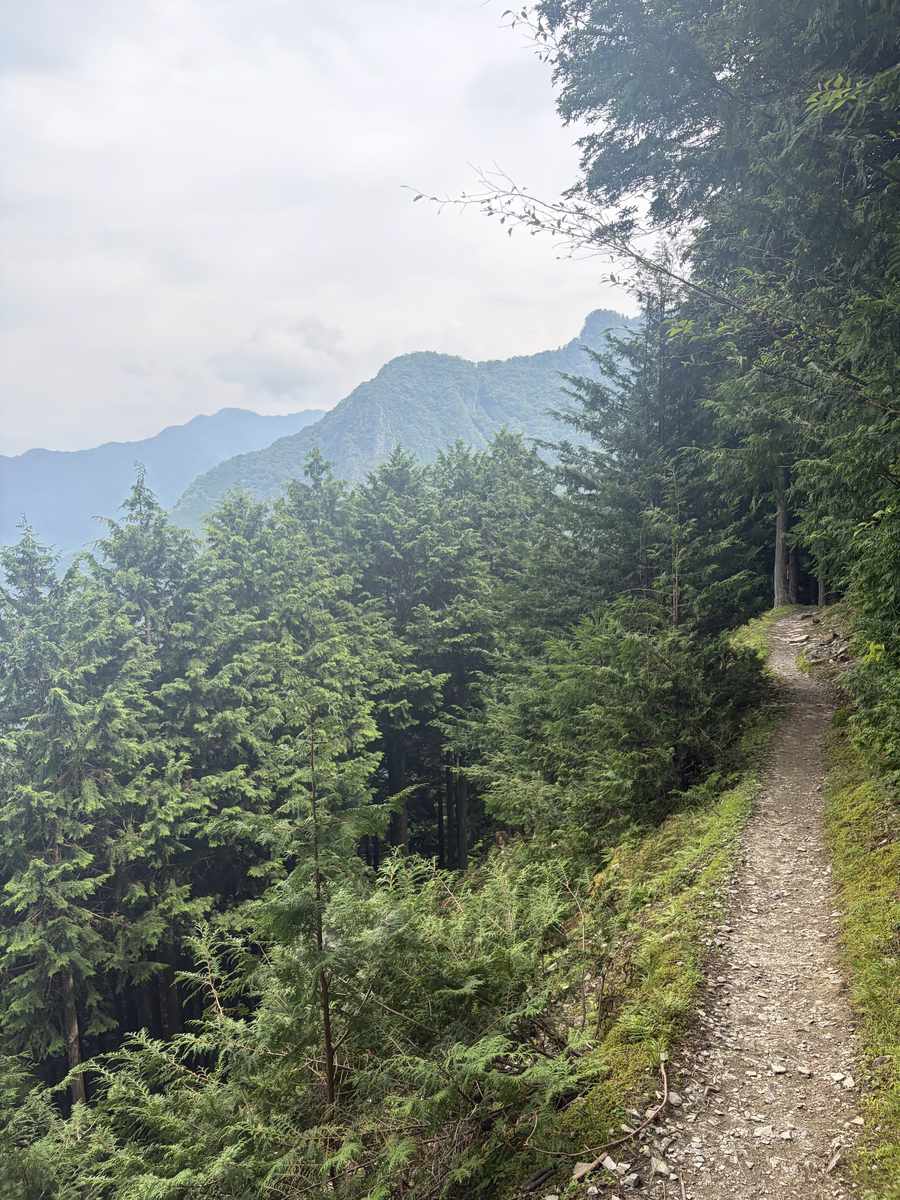
We headed back to the parking lot along the forest loop path. As you walk, a cool breeze slips through the cedars and past your ears. This is one of those things video carries better than prose:
And now, a safety note, brought to you by personal experience.
As we walked, people in hiking gear kept greeting us with cheerful hellos. What a polite crowd this shrine attracts, I thought warmly — until I read a trail marker and froze mid-step.
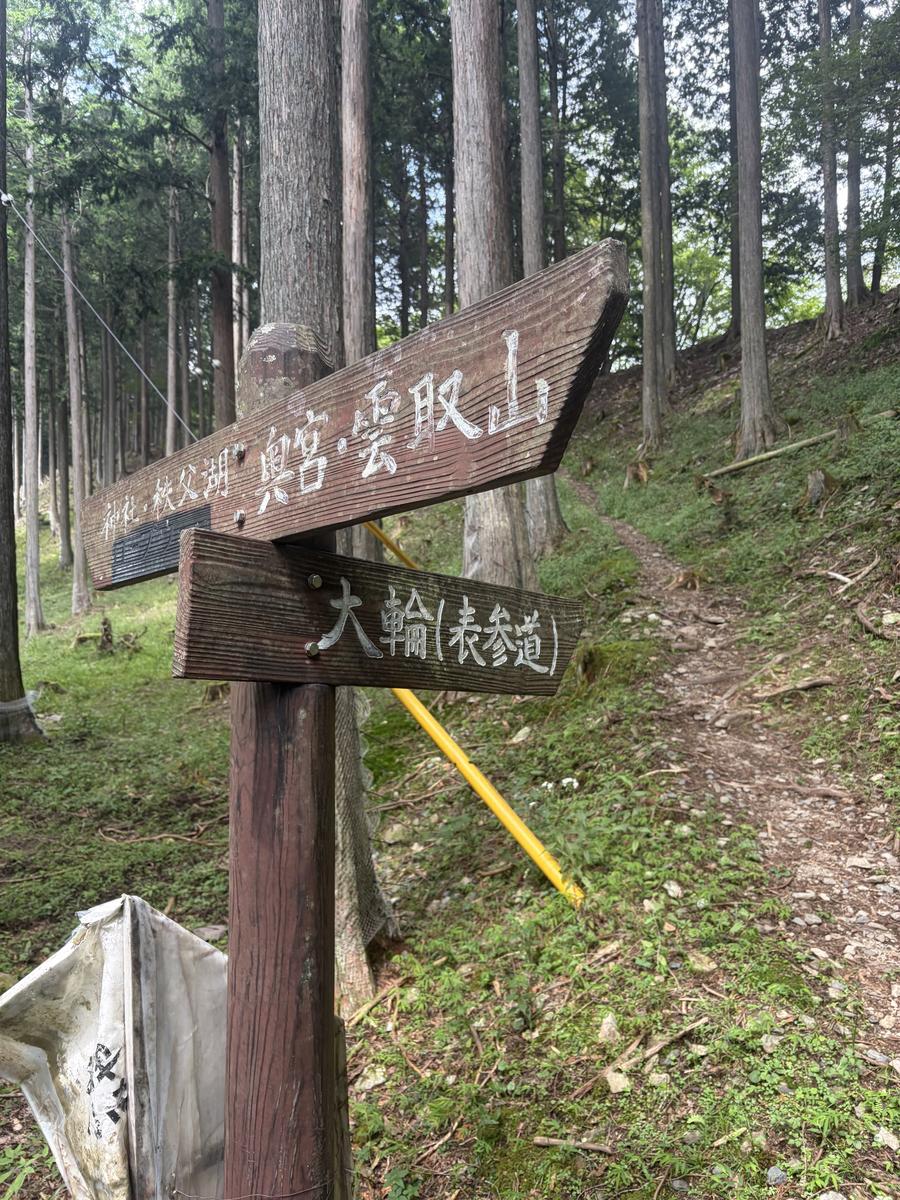
I was on the trail to Mt. Kumotori — Tokyo's highest peak, 2,017 m (6,617 ft). The polite people were mountain hikers, greeting a fellow hiker, as mountain etiquette requires. Of course they were polite. In sneakers, carrying nothing, I had been marching toward Tokyo's highest mountain. Read the trail markers at every junction between the loop path and the hiking trails. And here's a free rule of thumb: when the quality of the greetings suddenly improves, check your map.
One more note, and this one's serious: a bear was sighted on the inner shrine trail in June 2026, and the shrine now asks visitors not to hike it alone. The inner shrine route (rock faces and chain sections on Mt. Myoho-ga-take) is real mountaineering, not an extension of your shrine visit. Speaking as a man freshly humbled by a taxidermy wolf, I have exactly zero interest in underestimating these mountains. For casual visitors like us, paying respects from the Yohaiden platform is the right call.
13:04, back at the parking lot — packed with cars on a weekday. This place draws a crowd, I thought, as we set off on the 3-hour drive home. Naturally I picked up a beer at a convenience store along the way. My wife drove. Thank you, as always.
Visitor Information
| Name | Mitsumine Shrine (Mitsumine Jinja) |
| Address | 298-1 Mitsumine, Chichibu City, Saitama Prefecture (elevation ~1,100 m / 3,600 ft) |
| Access | Car: about 2 hours from Hanazono IC (Kan-Etsu Expressway) via Route 140 / Bus: Seibu Kanko Bus bound for "Mitsumine Jinja" from Seibu-Chichibu Station, about 80–90 min (mountain route — check same-day service) |
| Parking | Chichibu municipal lot: 520 yen per car, 210 yen per motorcycle. Usually 8:00–18:00. Expect heavy congestion on weekends (the city posts live camera and congestion info) |
| Fees | Grounds free. Prayer services 9:00–16:00, amulet office 9:00–17:00. Museum 300 yen |
| Dogs | Not allowed on the grounds (since July 2019, posted on site). Certified guide, hearing, and service dogs excepted |
| What to wear (summer) | About 10°C (18°F) cooler than the lowlands. Comfortable walking shoes + one light layer. Full hiking gear if attempting the inner shrine |
| Notes | Snow tires required in winter (icy roads). Bear sighted on the inner shrine trail in June 2026. The famous white "Ki" amulet has been suspended since 2018 (the regular version is available) |
| Official site | Mitsumine Shrine (Japanese) |
📍 Google Maps: Open Mitsumine Shrine in Google Maps
Final Thoughts
A day trip that began with my wife's sudden "Let's go to Mitsumine Shrine!" — six hours of driving for two hours on the mountain.
Did the power spot boost my fortune? Honestly, no idea. But consider the ledger: on a 95°F day I walked through 77°F cedar forest, held my palms up to an 800-year-old tree, got my jaw dropped by an impossibly large wolf, and accidentally set off toward Tokyo's highest peak in sneakers. I came home noticeably more alive than I left. Maybe that's all a power spot ever needs to be.
As for Momiji — I settled the debt with an extra-long walk that evening. If you travel with a dog, save Mitsumine for a day your dog stays home. Don't worry about the shrine: the wolves have the watch covered.