Reading time: about 7 minutes
Hi, this is Hiroshi from "Ramen, Beer, and Sometimes a Blog."
Oyamadairi Park is a Tokyo Metropolitan park straddling Machida and Hachioji, on a ridge in the Tama Hills. It's a short drive from our home, and I've been walking here with my Shiba Inu Momiji for years. A round trip along the ridge road is about 10 km, so it's a decent workout.
Tucked in the back of the park is a free dog run I'd been curious about for a while. I'd put it off because it's registration-only and that sounded like a hassle. Then I learned the registration is done entirely online, tried it, and it turned out to be surprisingly easy. So on September 8, on a cool afternoon after the rain, we finally went.
Spoiler: we lasted 15 minutes. Mosquitoes. Details below.
Who this article is for: anyone wondering how to register for Oyamadairi Park's dog run and how the PIN-code gate works, how far it is from the parking lot, and which area a Shiba Inu or other mid-size dog can use.
The Short Answer: Three Questions, Three Answers (Field-Checked September 8, 2026)
| Question | Answer |
|---|---|
| How do I register? | Apply online for the Tokyo Metropolitan 12-Park Dog Run Common Registration (there's no in-person desk). All you need is a photo of this fiscal year's rabies vaccination tag (the red plate for FY2026). Once approved, you get an email with the gate PIN and a PDF registration certificate — print it and carry it. I applied on September 3 and was inside on September 8. Registration and use are both free |
| How do I get there from the parking lot? | The official lot is at the Otagiri entrance: 23 spaces, free, 9:00–17:00. The dog run is on almost the opposite side of the park (behind the South Field, near the Tamasakai entrance): about an 8-minute walk with a flight of wooden stairs. By train, Tamasakai Station on the Keio Sagamihara Line is about a 10-minute walk from the dog-run side |
| Which area does a Shiba Inu use? | The small-dog area is for dogs under 6 kg. A Shiba goes in the medium/large-dog area. The ground is dirt and grass on a slope, with plenty of shade and a water tap. The rules banner says toys are allowed. But after rain, the mosquitoes are brutal |
Table of Contents
- Where Is the Dog Run? The Walk from the Parking Lot
- Online-Only Registration and the PIN-Code Gate
- Which Area for a Shiba? The 6 kg Line and the Rules Banner
- Inside: Dirt, Grass, Shade, a Water Tap and a Little Hut
- Beaten by Mosquitoes in 15 Minutes
- The Way Back: Ridge Road and the Sanctuary
- Spot Information
- Final Thoughts
Where Is the Dog Run? The Walk from the Parking Lot
Oyamadairi Park covers about 46 hectares on a ridge in the Tama Hills. Most of it is a "sanctuary" — a nature reserve closed to visitors — so the parts you can actually walk are the ridge road and the fields and trails around it. The dog run, officially "Wan-Wan Fureai Hiroba," sits behind the South Field on the north side of the park, near the Tamasakai entrance.
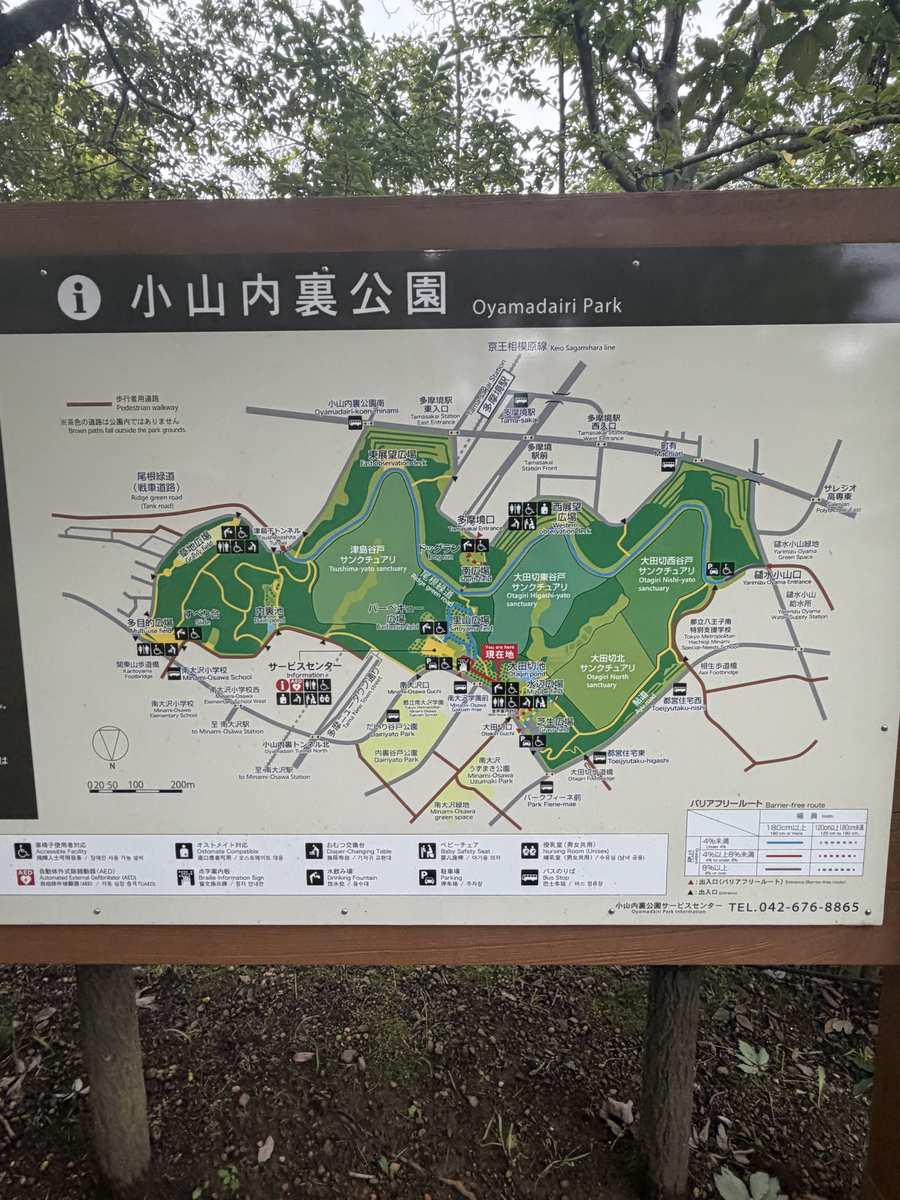
We drove. The official parking lot is at the Otagiri entrance: 23 spaces, free, open 9:00–17:00. I'd heard it fills up on weekends, but on a weekday just before 3 p.m. there was plenty of room. The catch is that this lot is on almost the opposite side of the park from the dog run.
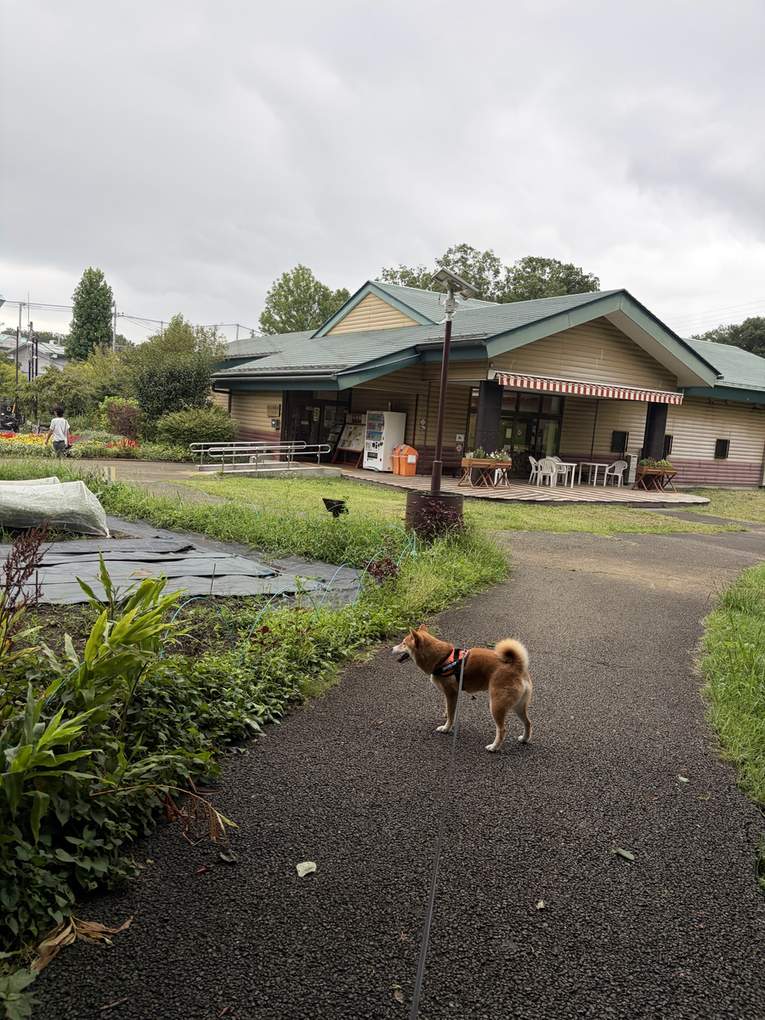
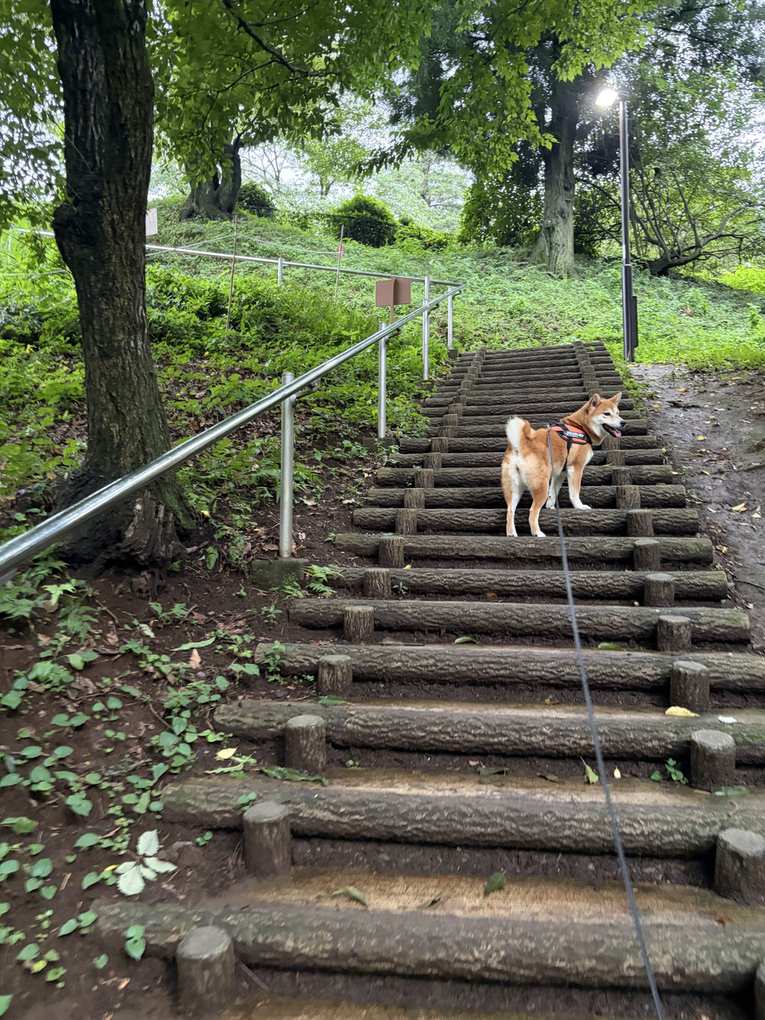
From the lot, we passed a building, climbed wooden stairs through the woods, came out on the ridge road, and reached the South Field. Going by the timestamps on my photos, it took 8 minutes from the parking lot to the dog run entrance. Because of the stairs, older dogs and older humans may prefer the longer, gentler route. If you come by train, Tamasakai Station on the Keio Sagamihara Line is about a 10-minute walk, and that side is closer to the dog run.
Online-Only Registration and the PIN-Code Gate
This is probably what you most want to know, so here it is step by step.
Since fiscal 2024, Oyamadairi's dog run has been part of the Tokyo Metropolitan 12-Park Dog Run Common Registration, and registration is online only. There's no desk to walk up to. What you need is a photo of this fiscal year's rabies vaccination tag — the red plate for FY2026. Last year's yellow plate won't be accepted.
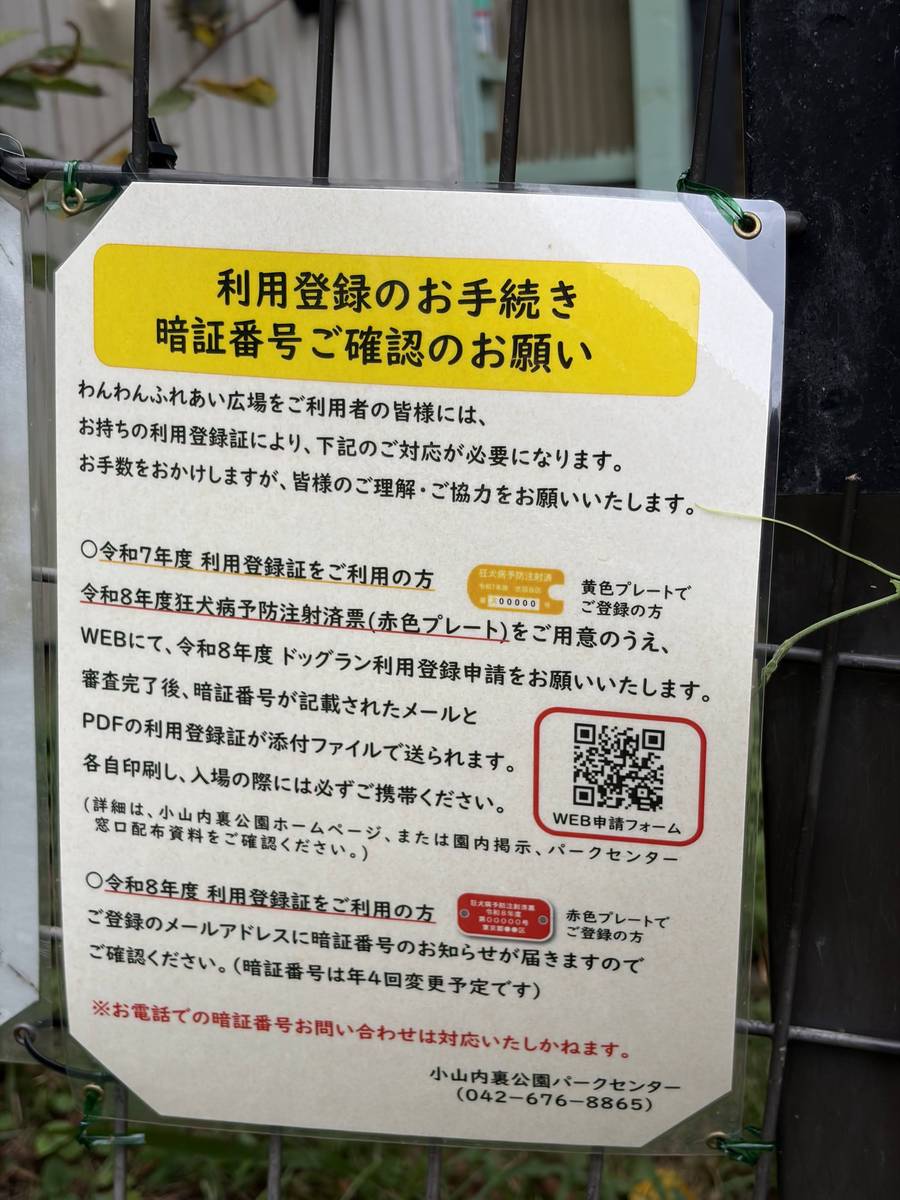
Once your application is approved, you receive an email containing the gate PIN and a PDF registration certificate. Print the certificate and carry it whenever you enter. According to the notice, the PIN is scheduled to change four times a year, and they don't give it out over the phone — so keep that email safe.
I applied on September 3 and was inside on September 8. Full disclosure: ChatGPT did most of the application for me. After being turned away twice for missing paperwork at Nanakuni Park Dog Run in Hachioji, an application I could finish from my couch felt like a gift.
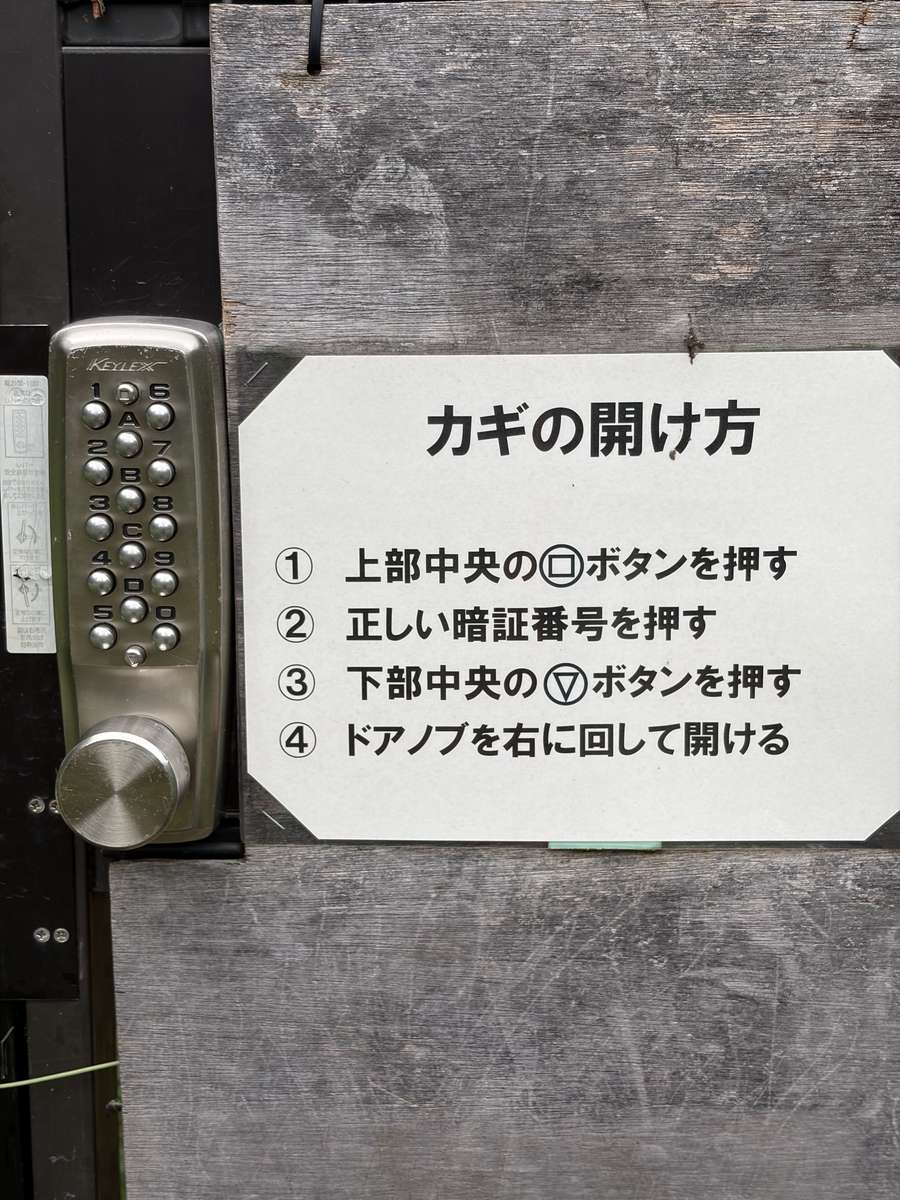
The gate has a keypad lock. The instructions are on the sign: 1) press the square button at the top center, 2) enter the PIN, 3) press the triangle button at the bottom center, 4) turn the knob to the right. Did exactly that, and it opened without fuss.
Which Area for a Shiba? The 6 kg Line and the Rules Banner
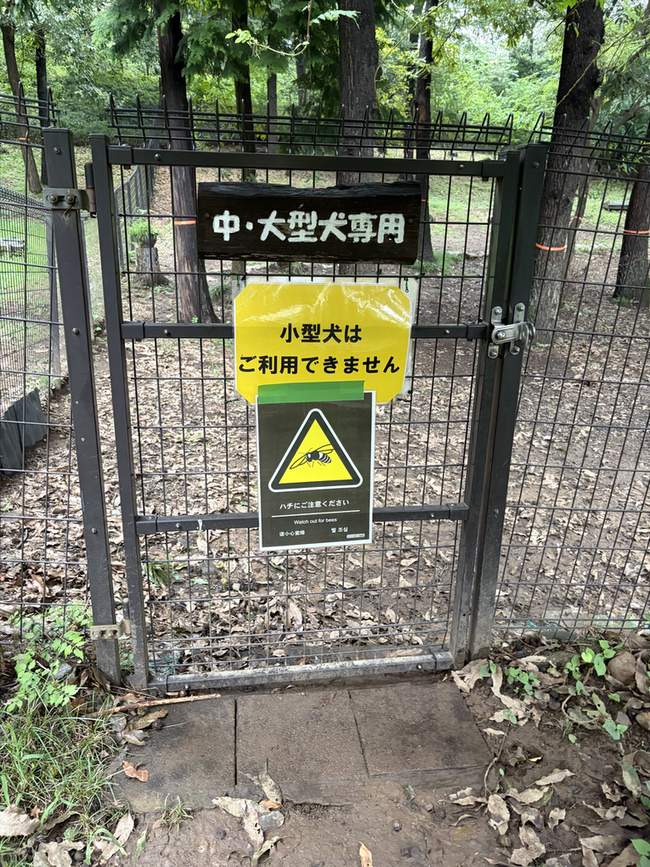
Inside there are two areas. The small-dog area is for dogs under 6 kg; everyone else uses the medium/large-dog area. Momiji is a Shiba of around 10 kg, so medium/large it was.
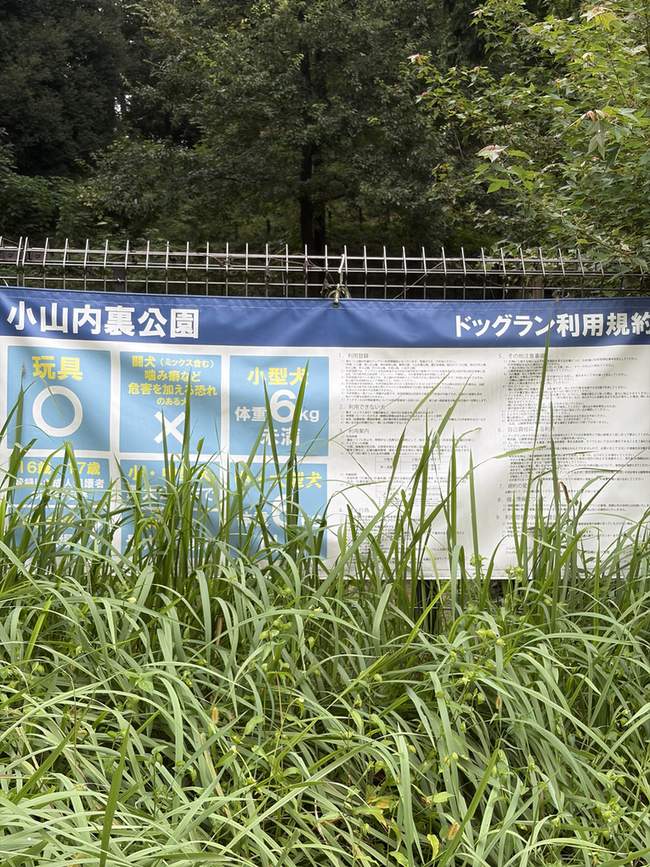
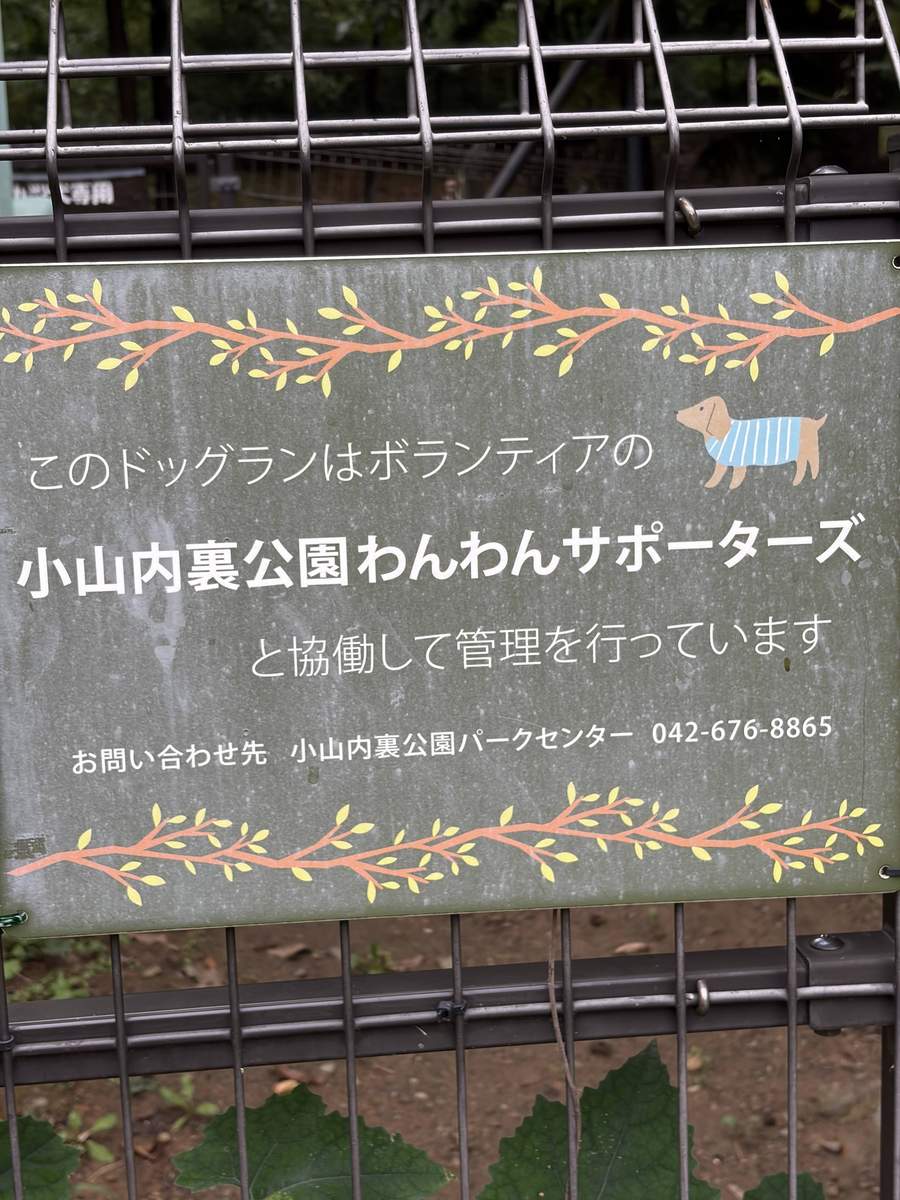
What caught my eye was the "Toys: OK" symbol. Some websites say toys are banned here, so I wasn't sure — but the banner on site shows a circle, which means allowed. Good news for a ball-obsessed Shiba. The banner also says 16- and 17-year-olds must be accompanied by a registered adult, and fighting breeds or dogs with a biting habit are not allowed.
Inside: Dirt, Grass, Shade, a Water Tap and a Little Hut
Inside, the existing trees have been left standing, with a grassy field and a dirt slope spread among them. It's not a flattened, engineered space — it's the hillside as it was. On a weekday afternoon there were no other dogs. We had the place to ourselves.
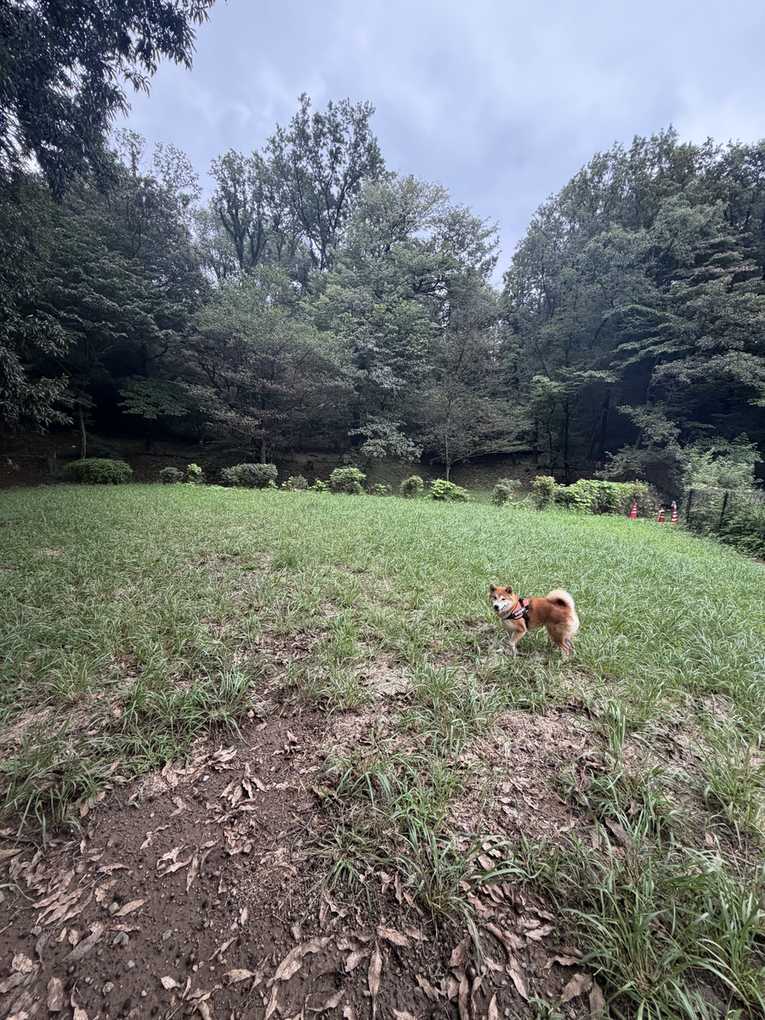
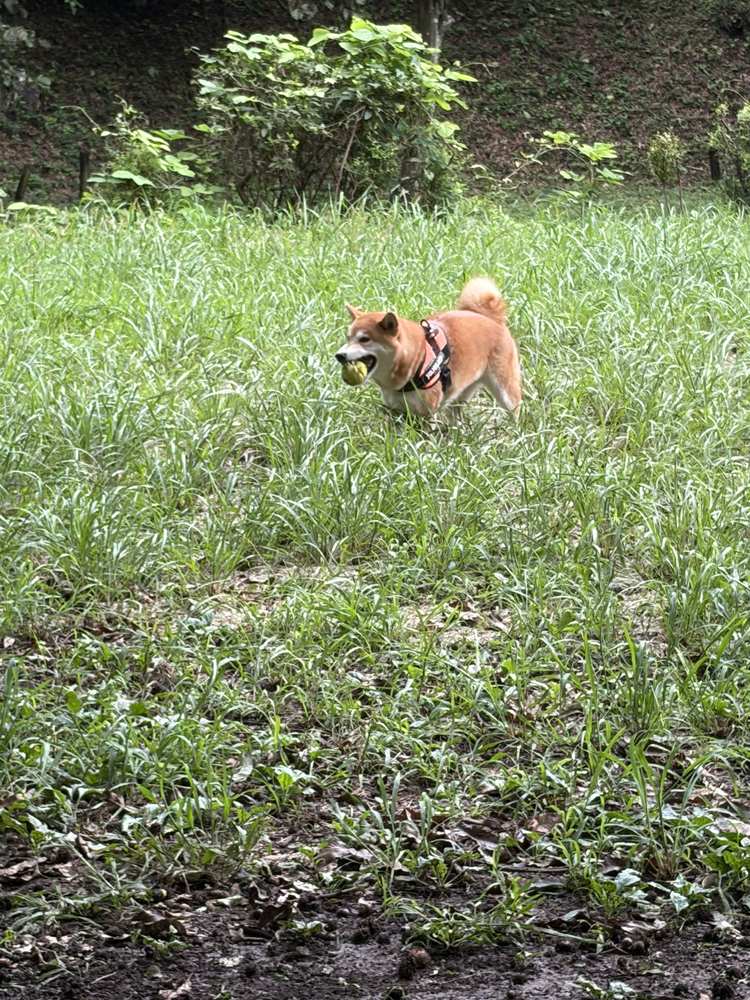
First, Momiji tearing around the grass. My wife threw the ball, Momiji chased it and came back, over and over. It was cool after the rain, and she looked like she was loving it.
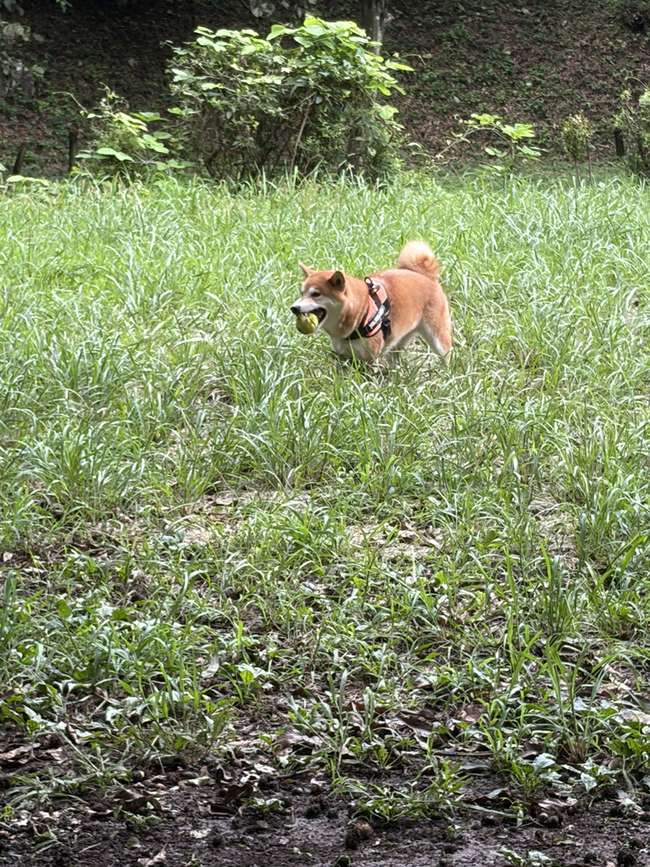
Beyond the grass is a dirt area among the trees, carpeted in fallen leaves. The smells must have been rich, because Momiji went exploring nose-down with the ball still in her mouth. The ground was damp after the rain — not quite muddy, but paws do get dirty.
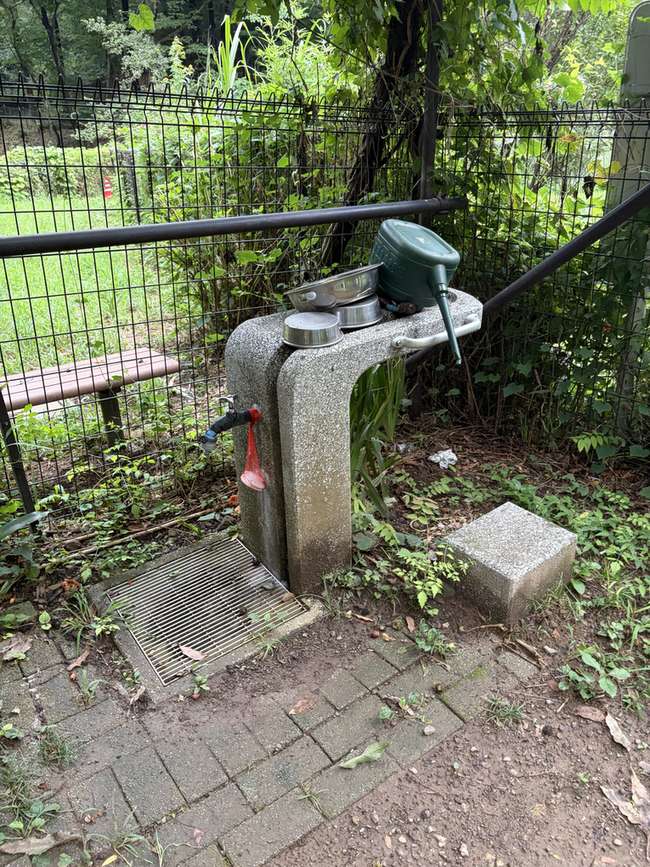
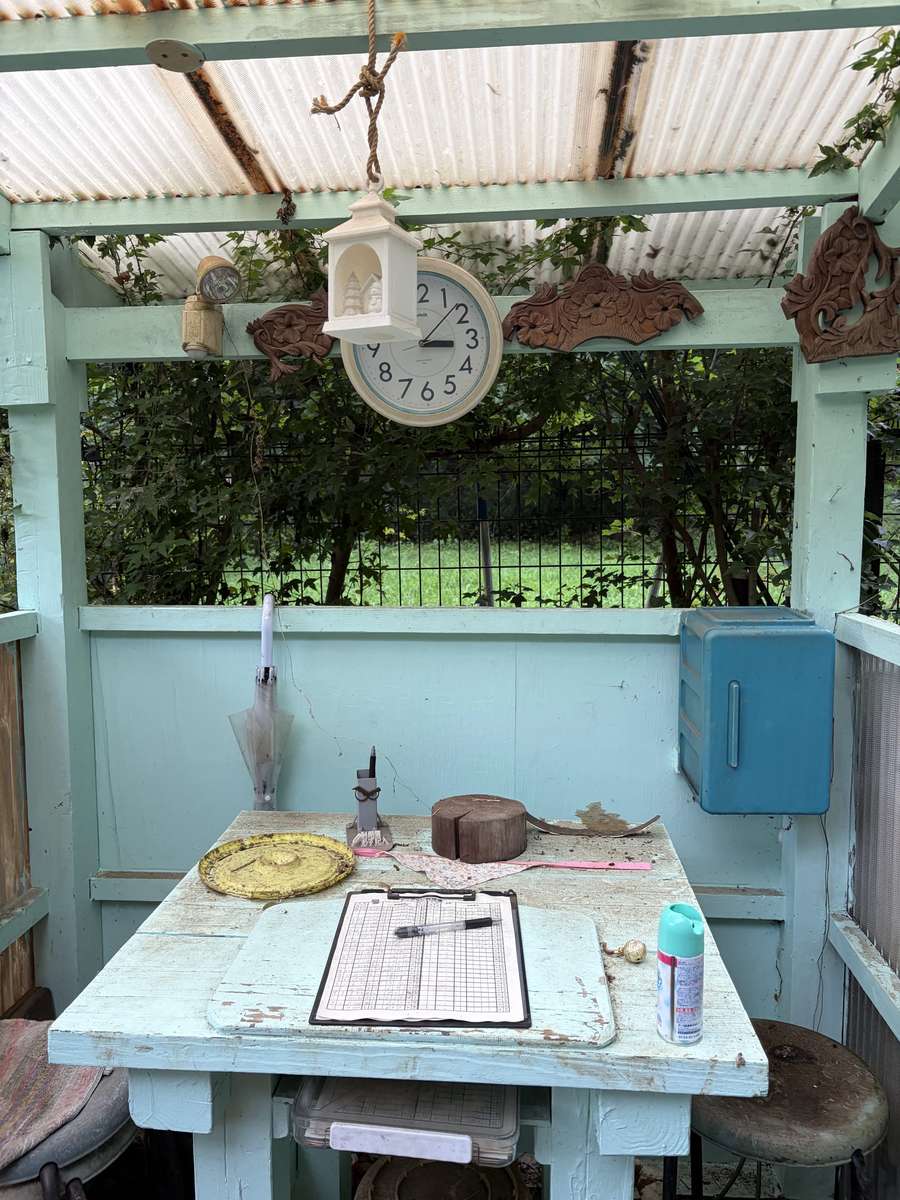
Facilities: the water station, a bench, and the little blue hut. No agility equipment. Nothing flashy, but you can feel the volunteers' care in the place. A lovely dog run. Up to this point.
Beaten by Mosquitoes in 15 Minutes
The rain had stopped, it was cool and pleasant, and I remember thinking, "No mosquitoes either, nice." Famous last words. I got absolutely eaten alive.
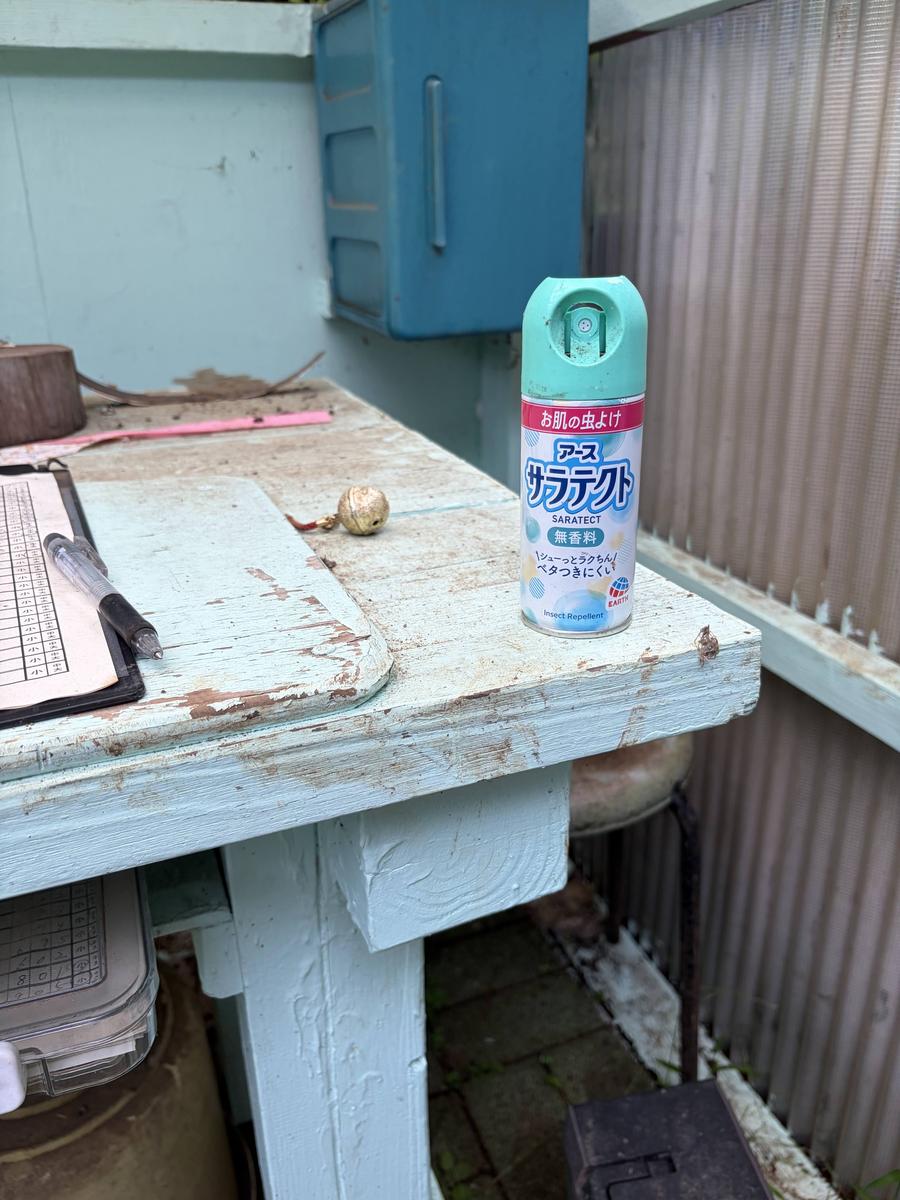
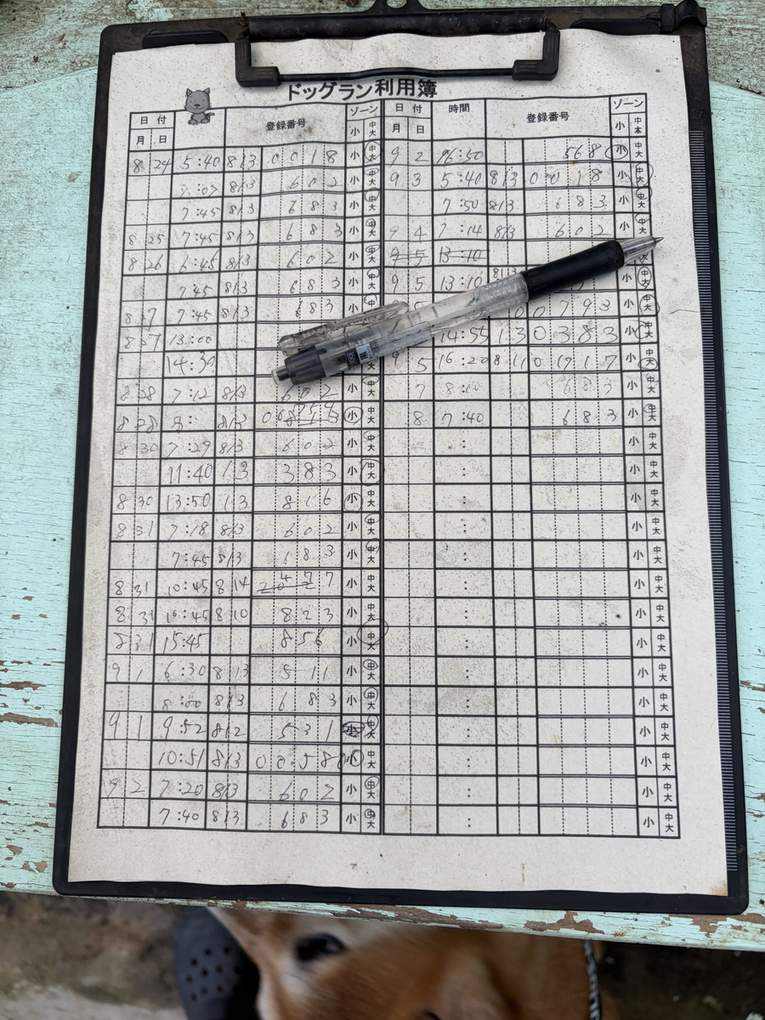
That's when the spray can on the desk made sense. A woodland, right after rain, at the end of summer: perfect mosquito conditions. I have a very low tolerance for itching, and I was knocked out almost immediately. Looking back at my photo timestamps, we left 15 minutes after entering.
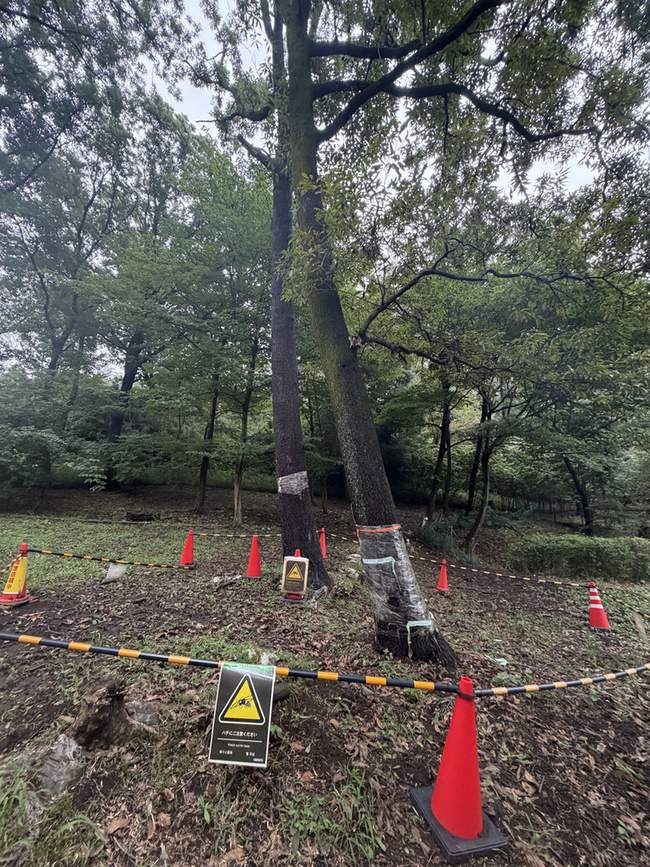
Momiji was clearly not done. Sorry, girl. Your old man just couldn't take it. We'll come back when the autumn leaves are falling. It is a sanctuary, after all — the mosquitoes are well protected too.
My advice: bring your own insect repellent, especially after rain and in summer. The abundant shade is this dog run's great strength, and the mosquitoes agree.
The Way Back: Ridge Road and the Sanctuary
We left the dog run, clipped the leash on, and headed back toward the car — a regular walk from here. To make up a little for Momiji's unfinished business, we took the long way.
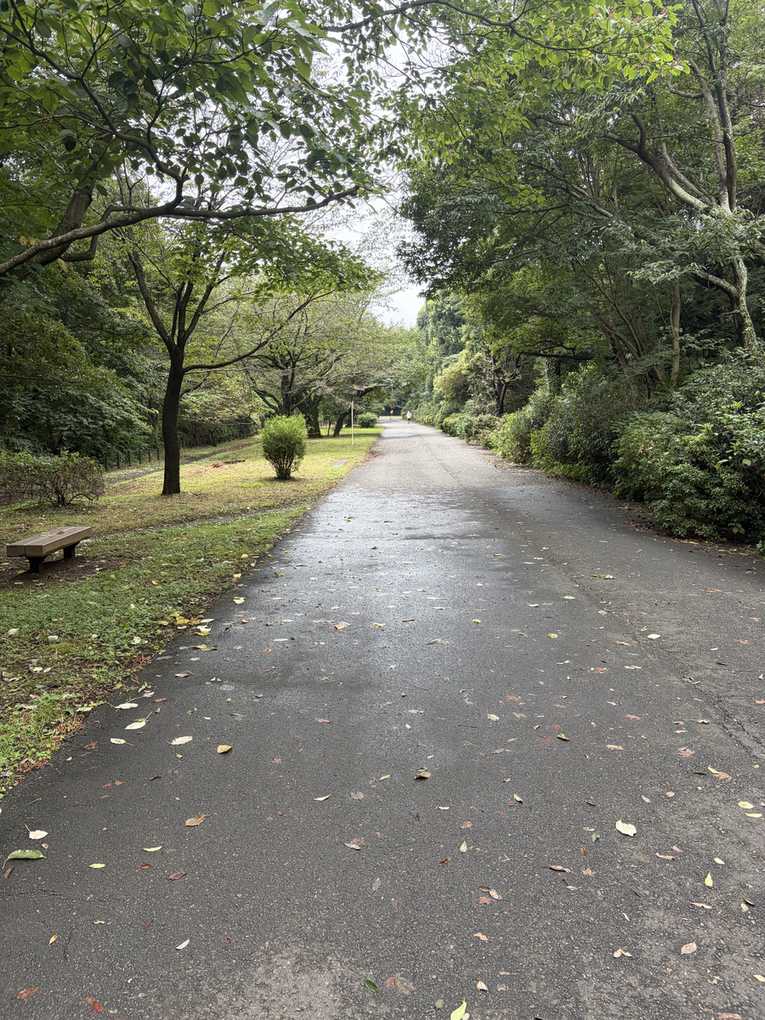
The ridge road was built during the war as a test track for tanks. It's wide, gently graded, and lined with cherry trees. A round trip is about 10 km, which is why it's my walking course. Joggers, cyclists and dog walkers share it at an easy pace.
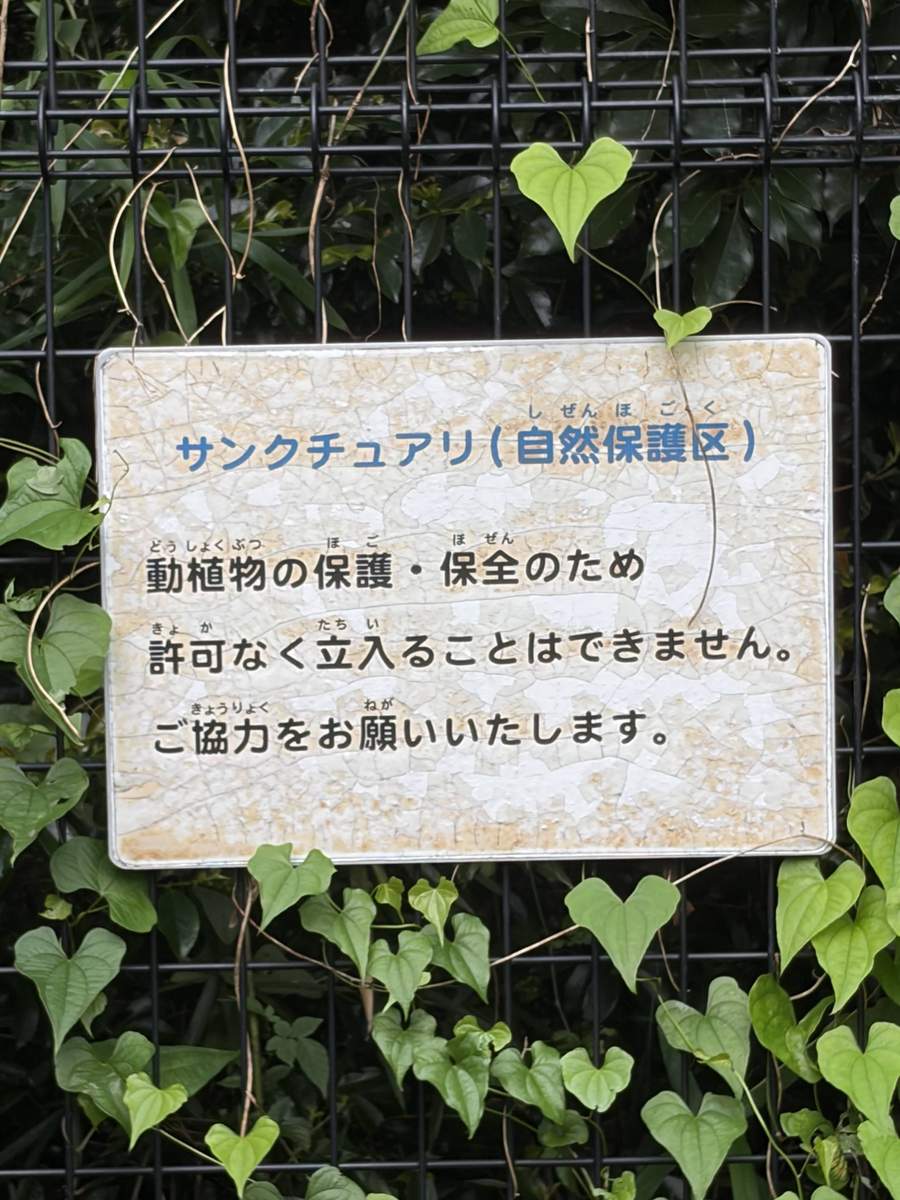
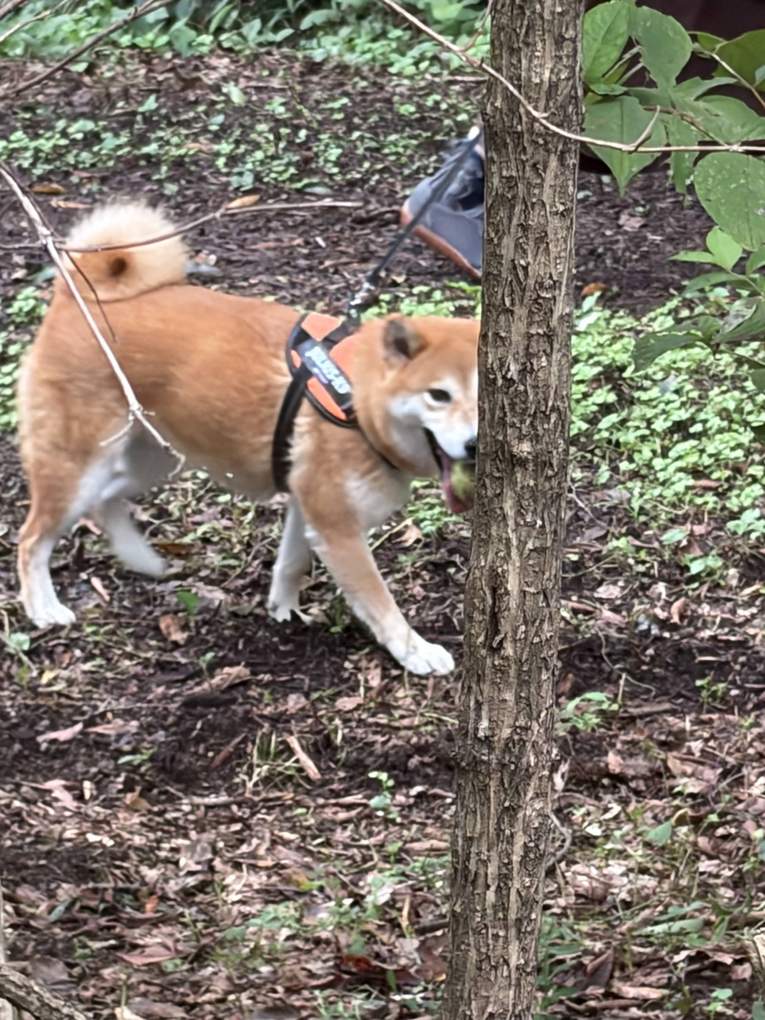
The trail through the woods is dirt and fallen leaves. Honestly, Momiji may have enjoyed this more than the dog run.
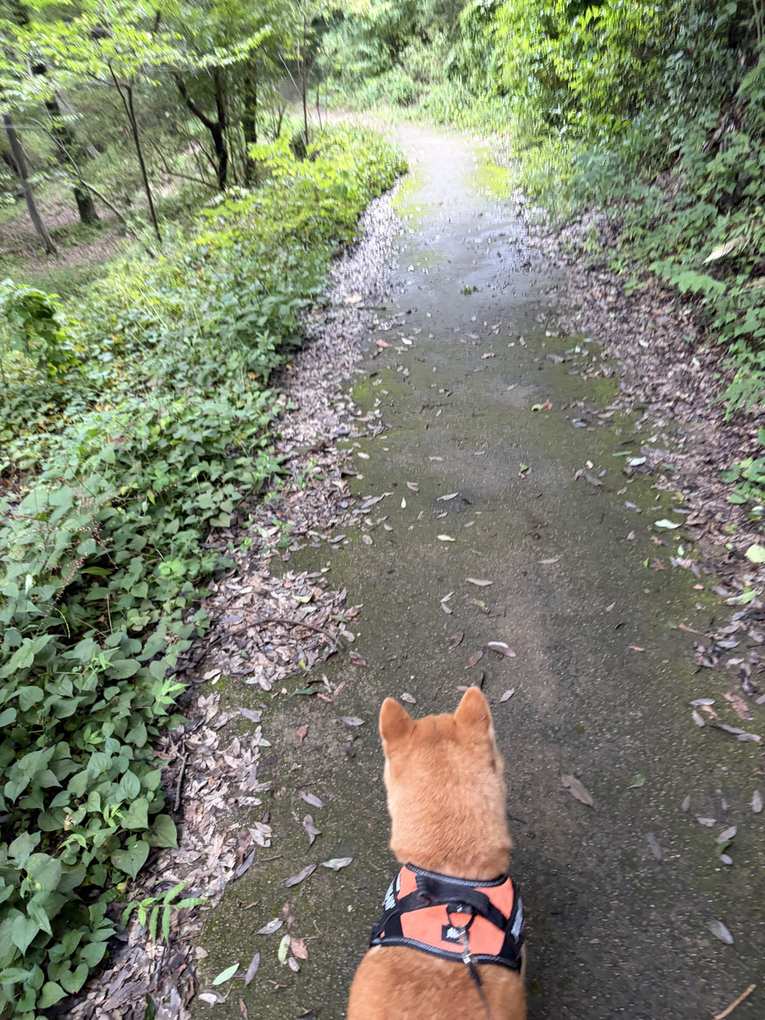
In the end we spent 40 minutes in the park, 15 of them in the dog run. Still, a walk through the woods after rain isn't a bad afternoon. I promised Momiji we'd be back.
Spot Information
| Item | Details |
|---|---|
| Name | Oyamadairi Park Dog Run (Wan-Wan Fureai Hiroba), a Tokyo Metropolitan park |
| Address | 4-4 Oyamagaoka, Machida, Tokyo (Park Center). The park spans Machida and Hachioji |
| Access | Train: about 10 min on foot from Tamasakai Station (Keio Sagamihara Line), on the dog-run side. Car: about 12 min from the Aihara IC on the Hachioji Bypass |
| Parking | Official lot: free, 23 spaces, 9:00–17:00 (Otagiri entrance). About 8 min on foot to the dog run, with stairs. If full, paid lots near Tamasakai Station |
| Fee | Free (registration is also free) |
| Hours | Dog run 9:00–17:00. The park itself is always open. Park Center closed Dec 29–Jan 3 |
| Dog policy | Dog run requires the Tokyo Metropolitan 12-Park Common Registration (online only): apply with a photo of the current fiscal year's rabies vaccination tag; a PDF certificate and the gate PIN arrive by email. Small-dog area under 6 kg; medium/large area for the rest. Leashed dogs welcome on park trails; the sanctuary is off-limits |
| Official info | Oyamadairi Park (Tokyo Metropolitan Park Association, Japanese) (Park Center Tel. 042-676-8865) |
📍 Google Maps: Open Oyamadairi Park Dog Run in Google Maps
Final Thoughts
Oyamadairi Park's dog run: online registration, a PIN-code gate, and natural woodland ground of dirt and grass inside. For free, there's nothing to complain about. Shibas use the medium/large area, toys are allowed per the banner, and it's an 8-minute walk with stairs from the parking lot. That's everything I wanted to know before going.
What I learned the hard way is that a woodland after rain is mosquito paradise. Bring repellent, and if you can, wait for cooler weather. When the leaves start falling, I'll be back — and this time I'll stay until Momiji says she's done.
One more thing: this registration is shared across 12 Tokyo Metropolitan parks. One application also gets you into the dog runs at Sakuragaoka Park, Jindai Botanical Garden and the rest, so those are next on the list. It's a very different dog run from the one at Yokohama's Umi-no-Koen we visited this summer — this one is all woods.