🕒 About 8 minutes to read.
Table of Contents
- 🌍 A Perfect Day for Touring in Okutama
- The Mysterious Dance at the Visitor Center
- Why Are These Old Guys Dressed as Women?
- A Tradition Dating Back to the Edo Period
- The Sunken Village and the People Who Still Dance
- How Dance Keeps the Hometown Alive
- Just a Random Stop, But──
- Sometimes, World-Class Culture Hides in the Hills
- 🌍 Final Thoughts: When Culture Quietly Moves the Heart
🌍 A Perfect Day for Touring in Okutama
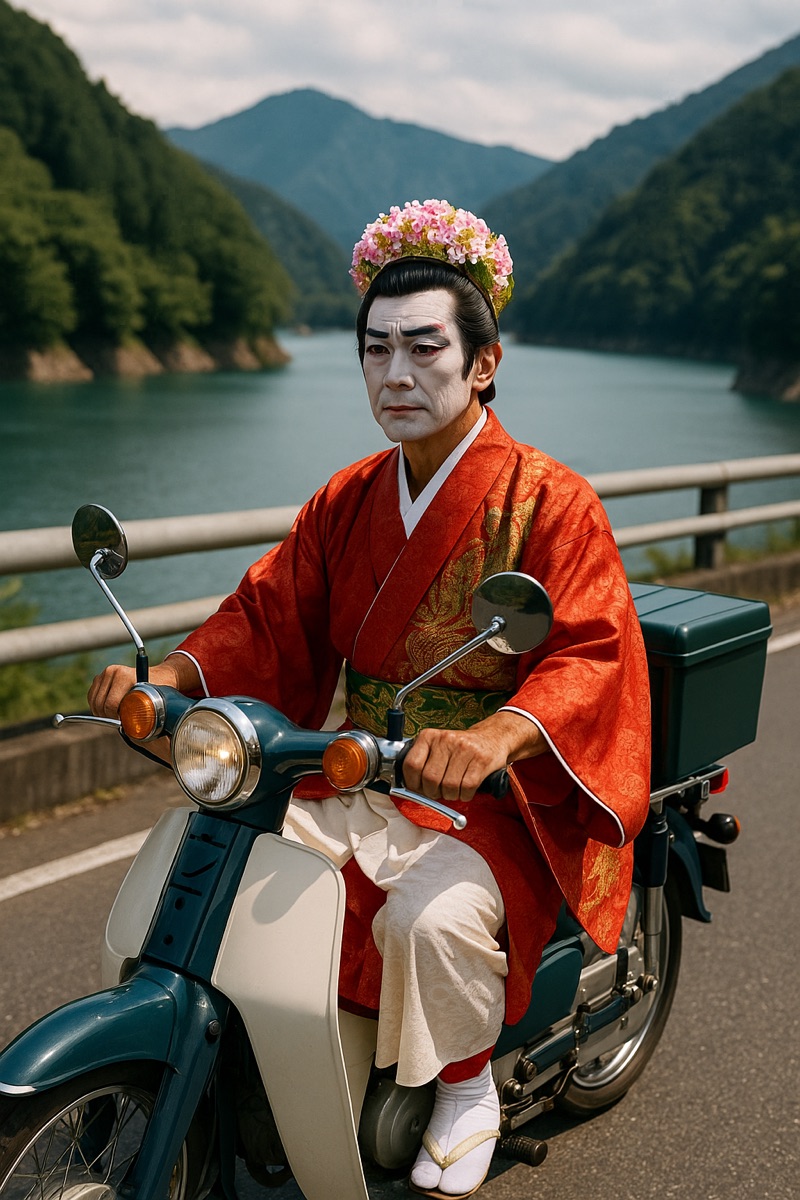
It was one of those days where the ride just felt perfect.
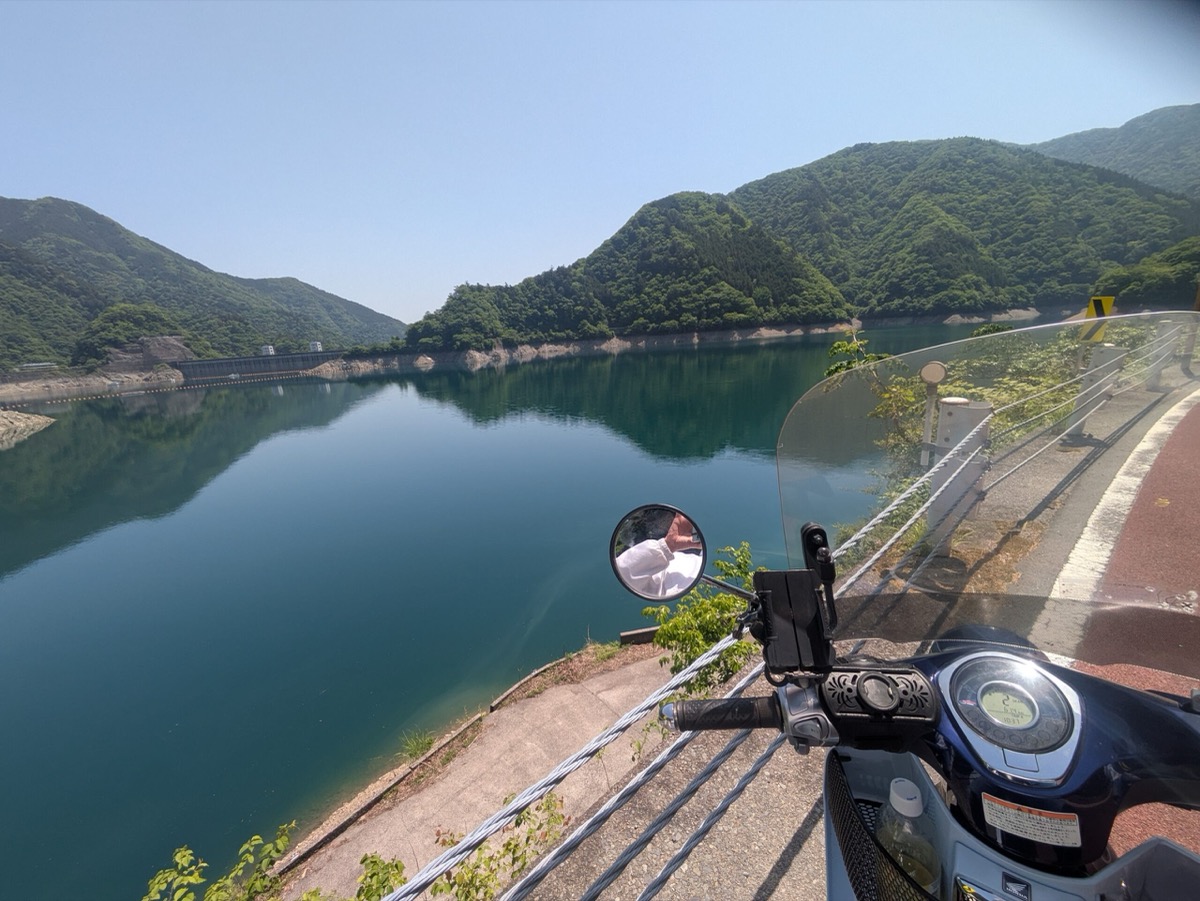
The air was fresh, the scenery stunning. My Super Cub glided smoothly through the mountain curves.
After crossing the Minetani Bridge and riding alongside the lake, I saw a sign: “Yama no Furusato Mura.”
I turned in, just thinking I’d check it out.
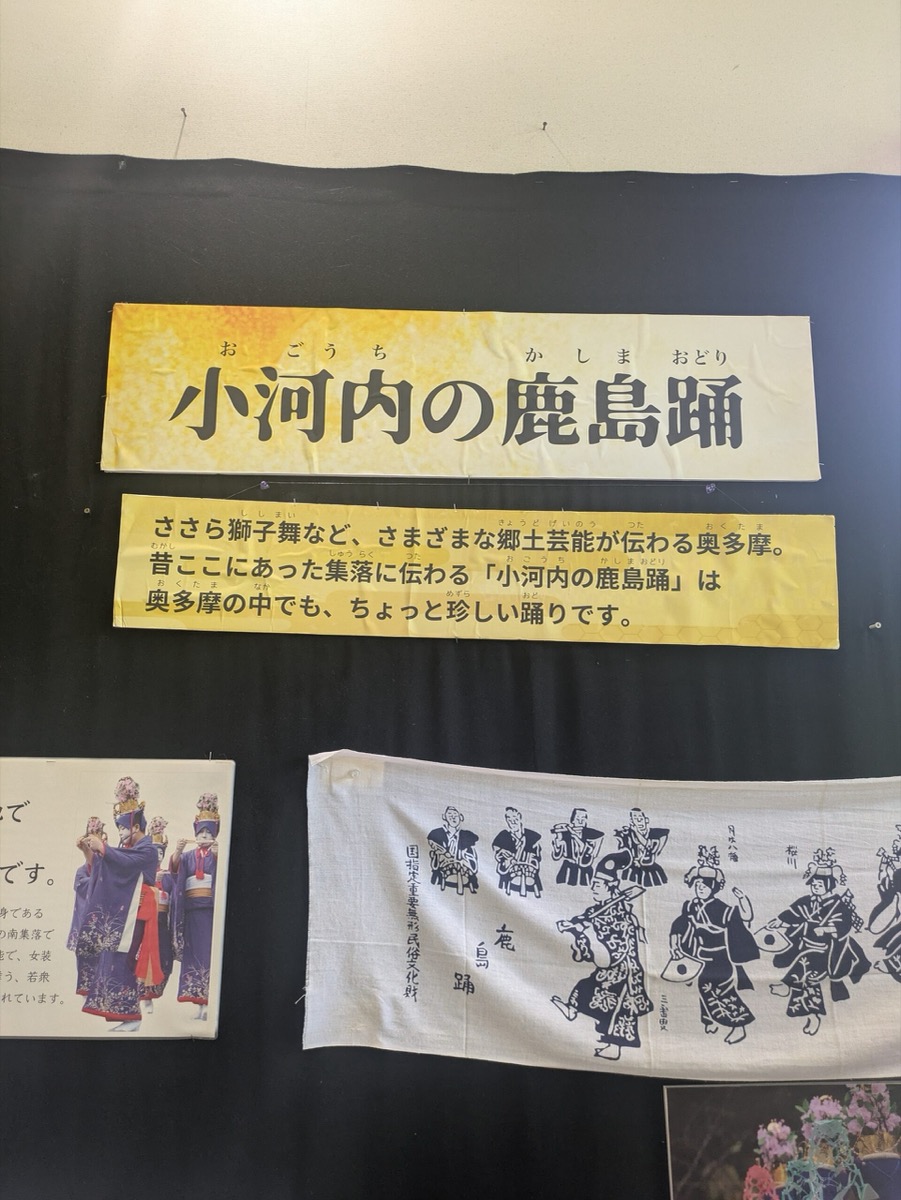
The Mysterious Dance at the Visitor Center
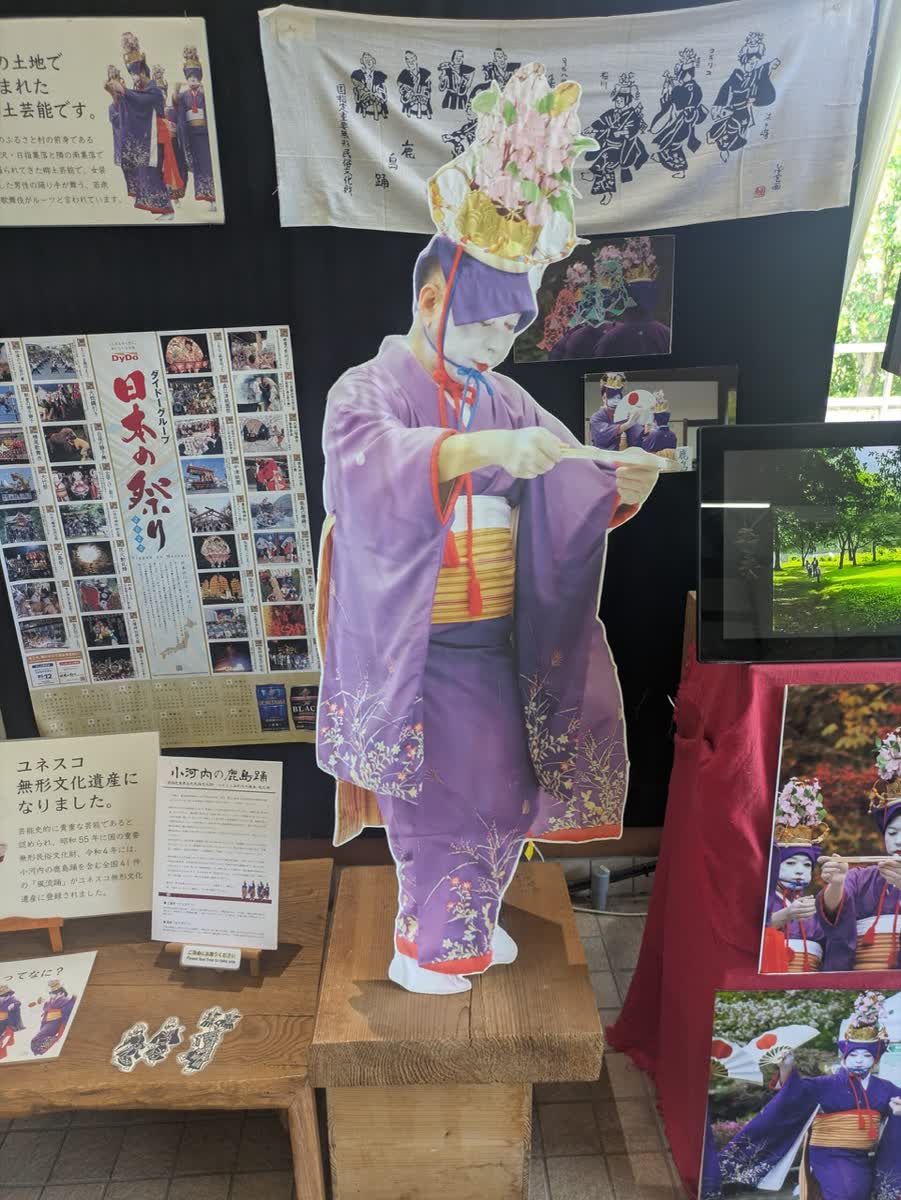
While browsing the exhibition, I noticed a strange photo:
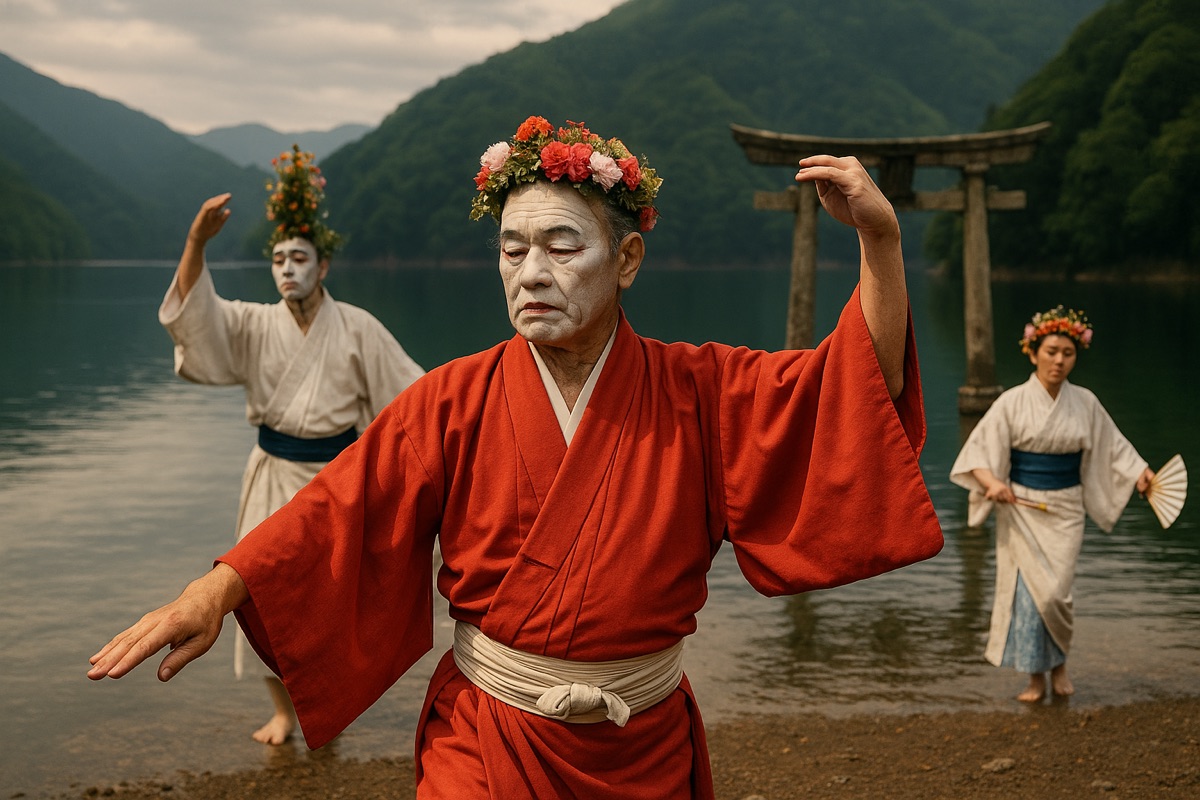
a man with a white-painted face, dressed in a bright red kimono, wearing a glittering crown.
“…Wait, that’s an old guy?”
At first, I honestly thought it was some eccentric hobby.
But the caption said it was taken in “Ogouchi,” and something about it being a local ritual.
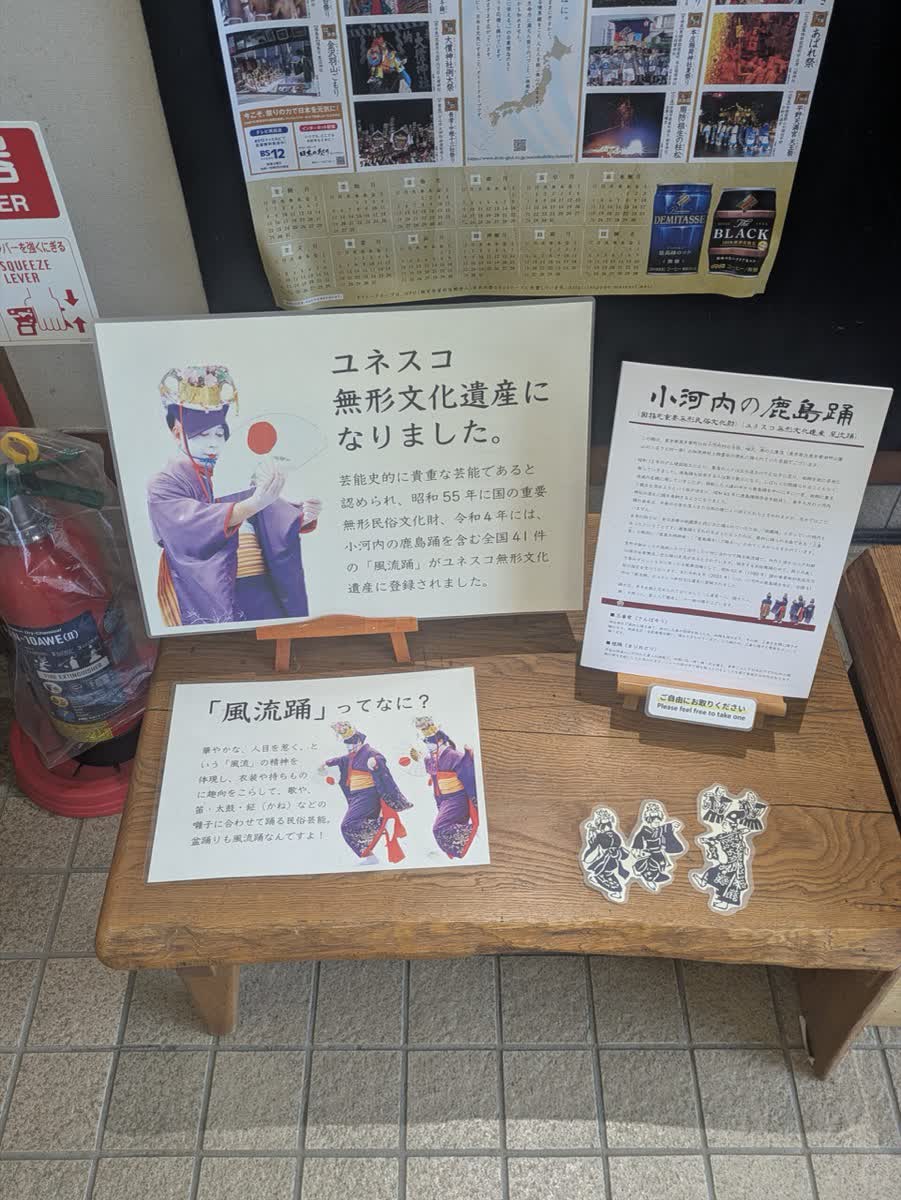
Then I saw the name: Kashima Odori.
It wasn’t just some obscure local dance—
It was officially recognized by the Japanese government as a Cultural Property, and even registered by UNESCO.
What? How was something so important… just sitting here in this quiet mountain center?
It felt like a hidden gem being neglected.
No posters. No videos. Just a few photos on the wall.
They call it “a culture Japan can be proud of,” but honestly, it looked like no one was paying attention.
I’d never heard of this dance before.
When I think of UNESCO traditions, I think of big names—Awa Odori, Eisa, stuff you see on TV or in the news.
But Kashima Odori? It wasn’t flashy at all. No wild crowds. No loud drums.
And yet…
I found myself wanting to see it in person.
If it’s really world-class, I want to feel what that means—
not in headlines, but in the quiet heartbeat of the people who dance it.
📺 Curious to see what Kashima Odori actually looks like?
👉 Watch the dance at the Ogouchi Shrine Festival – YouTube
You can feel the quiet power and gentle pride of the tradition in every movement.
It’s not flashy—but that’s exactly what makes it special.
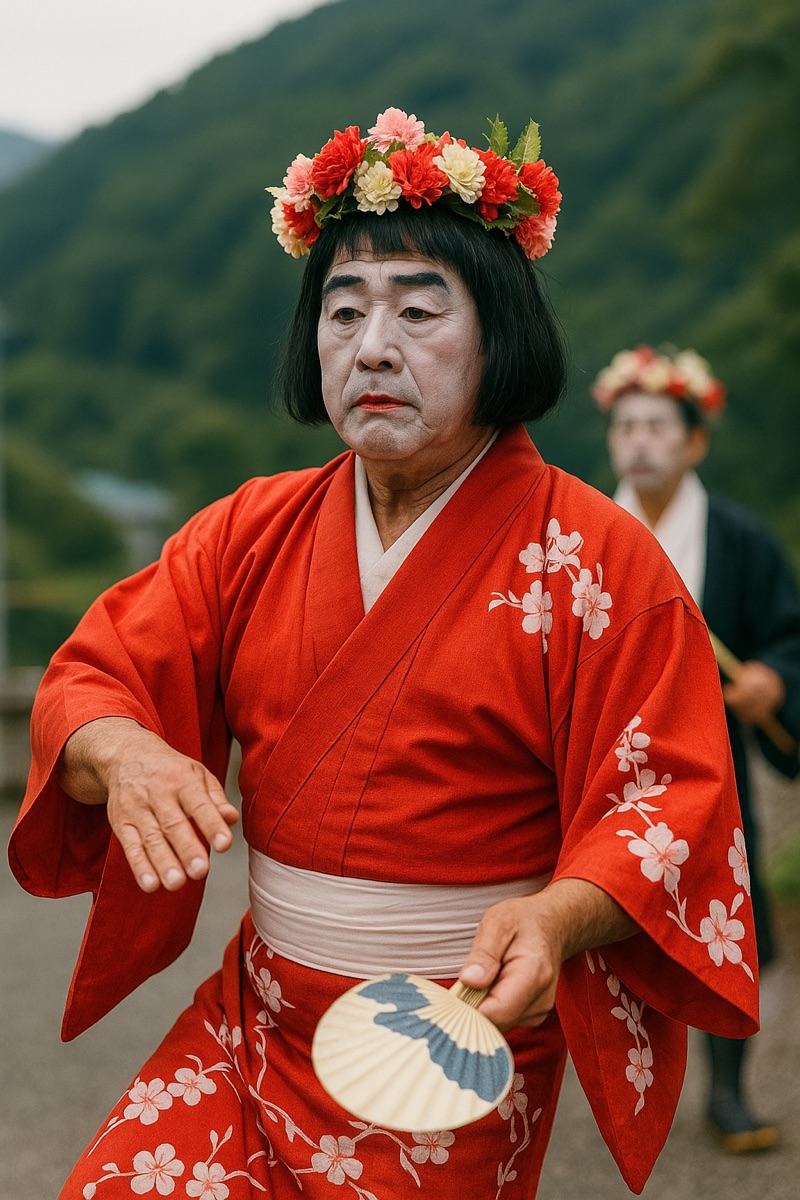
Why Are These Old Guys Dressed as Women?
I couldn’t shake the image, so I did some digging online.
Turns out, Kashima Odori has always been performed by men dressed as women.
That wasn’t just a quirky modern twist—it’s tradition.
The style goes all the way back to the Edo period and the world of kabuki.
Back then, women weren’t allowed on stage.
So boys and young men played female roles.
That theatrical style trickled down into regional festivals and somehow made its way to this quiet mountain village.
Still, I’ll be honest—seeing older guys in red kimono, their faces painted white, moving in slow motion… it looked kind of awkward.
No loud drums. No wild cheering.
Not exactly the kind of vibe you’d expect from something UNESCO-listed.
But maybe that’s exactly why it stuck with me.
It wasn’t flashy. It wasn’t polished.
But there was something about it that made me want to understand more.
Sometimes, the quietest things echo the loudest—
you just have to lean in close enough to hear them.
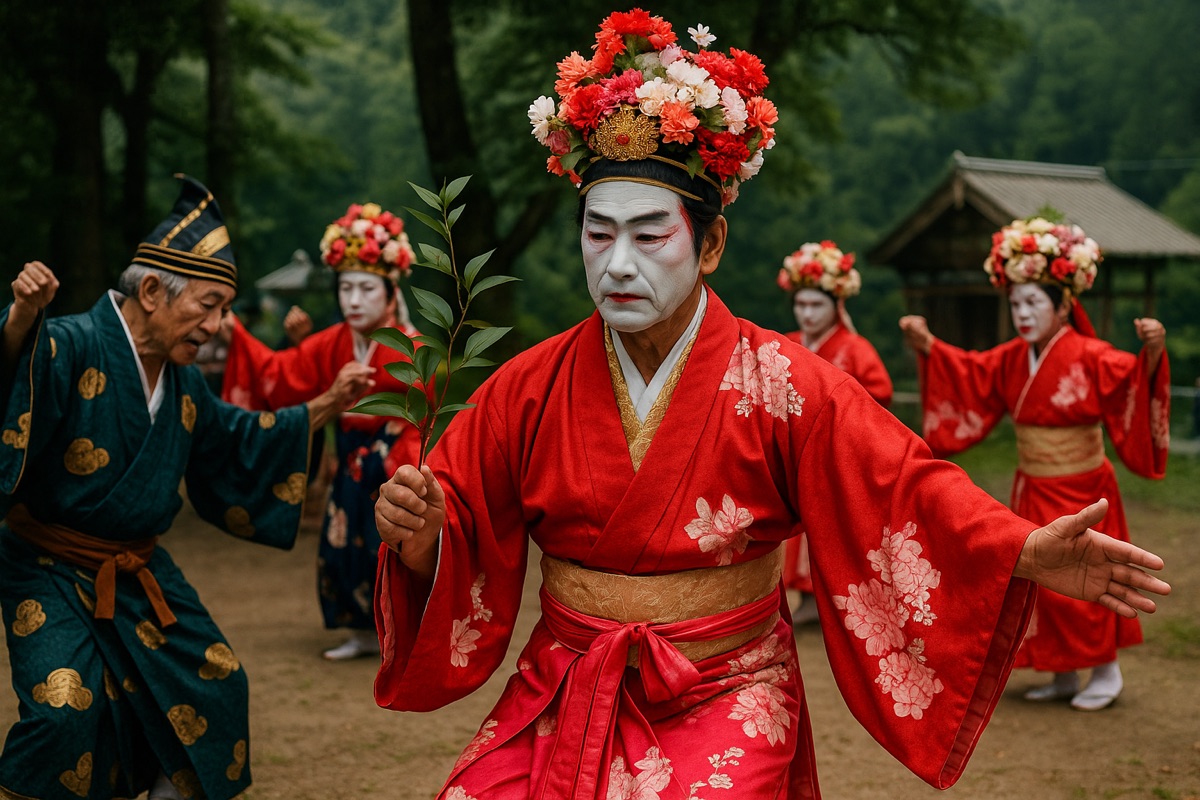
A Tradition Dating Back to the Edo Period
Digging deeper, I found that Kashima Odori goes all the way back to the early Edo period.
It was originally called Gion Odori, and over time, one line in the lyrics—“Let us dance the Kashima Odori”—gave the tradition its new name.
When I read “Gion Odori,” I froze.
Gion? Like, Kyoto’s Gion?
That’s my hometown.
I never imagined I’d hear that name up in the mountains of Okutama.
Some believe the dance was passed down by noble families who fled Kyoto.
Others say traveling monks spread it as they wandered across the country.
We may never know the full story.
But just the thought that a fragment of Kyoto’s ancient spirit survived here—quietly, tucked into this remote village—moved me.
The performance begins with Sanbasō, a ritual dance praying for a bountiful harvest.
It’s not just a show—it’s a greeting to the gods. A sign of respect before the celebration begins.
The final act, called Sanbyōshi, is more playful and flamboyant.
They spin in circles, whip their kimono sleeves through the air—it feels like a throwback to the old-school kabuki rebels.
Start with reverence. End with joy.
That’s the rhythm of the dance.
And it beautifully captures what a true village festival is all about.
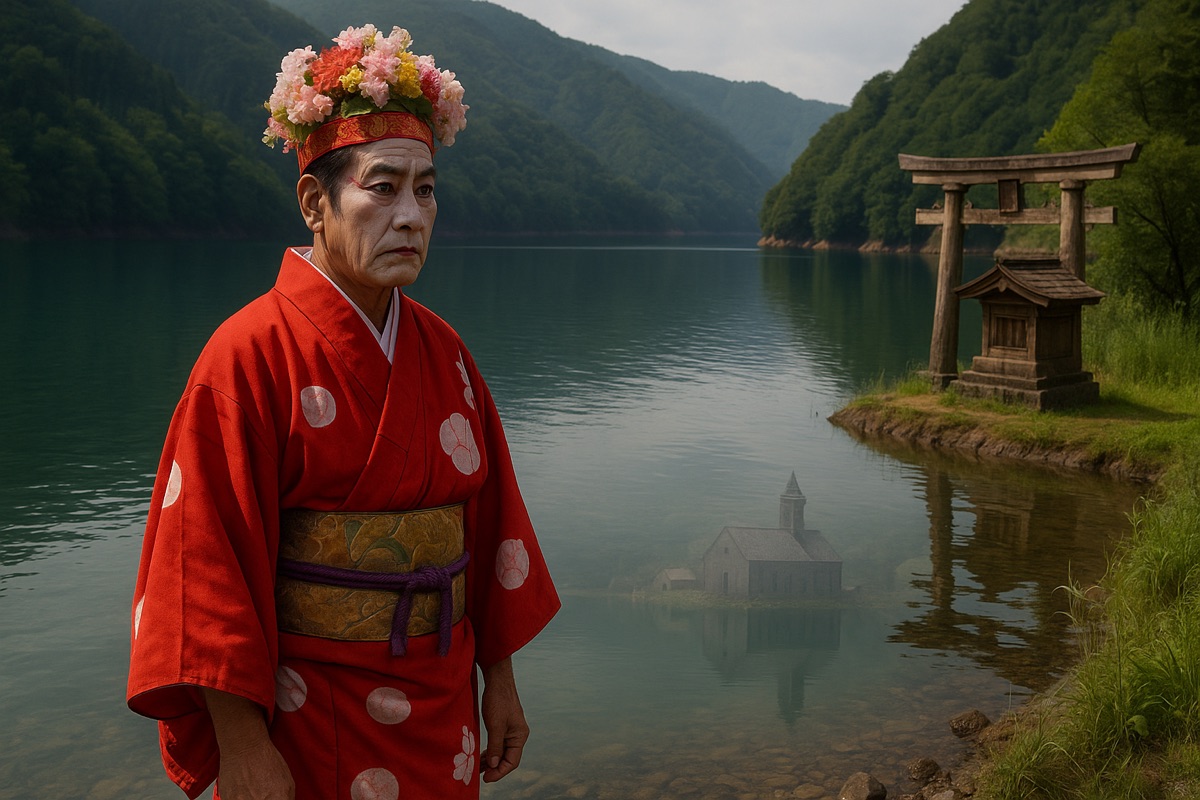
The Sunken Village and the People Who Still Dance
And then came the part that truly shook me.
The village where Kashima Odori was born—Ogouchi—
no longer exists on any map.
In the 1950s, it was submerged to make way for the construction of Ogouchi Dam.
The entire village—its homes, schools, shrines—was swallowed by the rising waters.
I felt a lump in my throat.
A place that survived for centuries… wiped out in the name of progress.
And yet, somehow, the dance remained.
Even though the village disappeared, the people didn’t forget.
Those who grew up there—or their children, or grandchildren—
they still gather in the mountains every September.
They come to perform the dance.
They come to remember.
They come to a place called Ogouchi Shrine, built near the lake’s edge.
It combines the spirits of the nine original shrines that once stood in the sunken village.
And that’s when it hit me:
These people don’t just return home.
They return through the dance.
It’s not just a tradition—it’s a reason.
A reason to come back.
A reason to stay connected.
A reason to keep something alive that water couldn’t drown.
That…
is power.
How Dance Keeps the Hometown Alive
Why was it the dance that survived?
Why not the buildings, or the roads, or the shrines?
The village was gone—sunken beneath a lake.
Its schools, its houses, its sacred places—all erased from sight.
And yet, the dance remained.
The people remained.
And through that dance… the village still breathes.
That’s when I realized something:
Tangible things vanish. But spirit endures.
And every year, Kashima Odori brings that spirit back to life.
People return—not to a place, but to a feeling.
A rhythm. A memory.
A shared promise that this place, and its soul, still matter.
You can lose your home.
You can lose your school.
You can even lose your parents.
But if there's something to come back to—even just a dance—
then you still have a way to find your roots.
Kashima Odori isn’t just a performance.
It’s a doorway.
A bridge that lets people return—
to where they came from,
to who they are.
Just a Random Stop, But──
Honestly, I had no plan.
I was just cruising on my Cub, enjoying the breeze, when I thought,
"Hey, there's a visitor center. Might as well take a peek."
That’s all it was. A pit stop.
But I didn’t expect it to stir so much in me.
What started as a laugh at men in face paint and red kimono
soon turned into a full-on research spiral.
I watched videos. I read articles.
And before I knew it, I was lost in a story I never knew existed.
A sunken village.
A dance that survived.
People who return, year after year, just to move in rhythm with their memories.
All from one random stop.
I left that center with the same wind on my face…
but something in the way I looked at the world had shifted.
Just a little.
Sometimes, you don’t need a grand plan.
You just need to pause in the right place—
and let the story find you.
Sometimes, World-Class Culture Hides in the Hills
When I hear “UNESCO-registered” or “Intangible Cultural Heritage,”
I picture something grand—
Kyoto’s Gion Festival, the Great Buddha of Nara…
major landmarks, spotlighted in guidebooks and glossy posters.
But the truly powerful things?
They often live quietly.
Hidden in the folds of the hills.
Whispered through tradition, not shouted from rooftops.
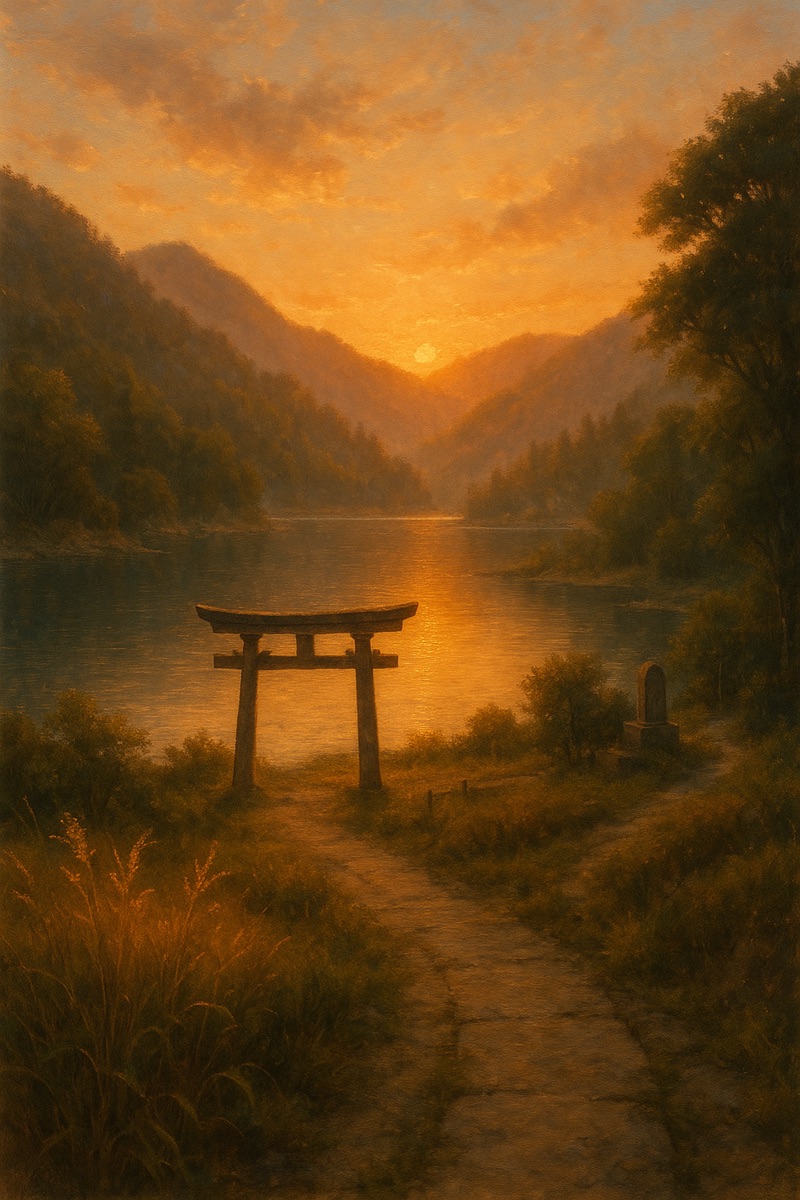
This one lived in the mountains of Okutama.
By a lake.
In a place where people once prayed, played, and built their lives.
A village now sunken beneath water.
But the dance remained.
And so did the people who kept it alive.
Every year, they return—not for a show, but for something deeper.
Even though the village is gone, its spirit breathes on.
You can’t see it in stone or wood.
But if you listen close, you can feel it in the rhythm.
In the footsteps.
In the silence between the beats.
And then I wondered…
Where is that place for me?
Maybe it’s that overgrown riverbank from my childhood,
where we played out Gundam battles with sticks and shouts.
Just a patch of grass to others—
but to us, it was everything.
We all carry places like that.
Tiny worlds we never really leave.

🌍 Final Thoughts: When Culture Quietly Moves the Heart
I stopped by without a plan.
And found the spirit of a village that has lived for over 400 years.
UNESCO heritage isn’t always loud or famous.
Sometimes, it hides in quiet places—
in ordinary scenery,
in rituals nearly forgotten.
Finding a tradition no one talks about...
somehow made me remember the little corners of my own past.
The places and feelings I thought I’d outgrown.
That was the day I met Kashima Odori.
And maybe…
it was also the day I re-met a small part of myself.
👀 You might also enjoy these stories:
🔸 🌸 A Slight Detour That Changed Everything
A reflection on how a small change in direction can lead to an entirely new perspective.
🔸 🐾 A Wild Moment in Okutama: My Dog and a Line of Monkeys
A gentle surprise in the wilds of Japan—featuring my dog, Momiji.
🔸 🌌 The Night a Red Book Stirred My Heart — A First-Gen Fan Reflects on Today’s Gundam
Quiet traditions sometimes speak louder than flashy headlines.