Read time: About 10 minutes
Hi, I'm Hiroshi.
Let me confess something first.
I went to the Riken Yamamoto exhibition, but I probably spent more time looking at the scenery outside than at the exhibition itself.
An architecture exhibition. A world-famous architect's exhibition.
And there I was, staring at the sea.
But later, when I looked into it, I realized that this may have been exactly the point of Riken Yamamoto's architecture.
That is the story.
Who this post is for
- People who are not architecture experts but still enjoy museums
- Anyone who sometimes realizes they do not know the name of the person next door
- Dog owners who feel a little guilty leaving their dog outside a museum
- People who have heard Riken Yamamoto won the Pritzker Prize but are not sure what makes him special
- Anyone who goes out with their spouse and somehow ends up walking separately
The answer first: Yokosuka Museum of Art at a glance (visited October 2025)
| Is it open? | Closed for renovation until around August 2026. Check the official closure notice before visiting |
| Time needed | About 1 hour for exhibitions + 30 minutes for the building and rooftop terrace. Plan on 1.5 hours |
| Architect | Riken Yamamoto, 2024 Pritzker Prize winner. The building itself is the main attraction |
| Parking | Underground parking lot on site (discounted with museum admission) |
| Dogs | Not allowed inside. A seaside walking path toward Kannonzaki is right next door |
| Location | Open in Google Maps — Kamoi, Yokosuka, near Kannonzaki Park (and not far from the Navy base) |
The short version
I think Riken Yamamoto was not only designing the shape of buildings. He was designing the way people connect with one another.
When you stand inside a museum he designed, you notice the landscape, the light, and the people before you start thinking about the architecture itself.
Apparently, that was not an accident.
Table of Contents
- Leaving Momiji in the Parking Lot
- The View Was Already Good Before We Reached the Entrance
- The Rooftop Floor Let Light Through
- Inside the Exhibition, I Honestly Looked at the Photos the Longest
- The Drawing Called LIVING IN THE CITY Stopped Me
- The Word Threshold Connected Everything
- GAZEBO: He Thought This Hard About His Own House?
- The Models Kept Scaling Up
- After Leaving the Museum, I Finally Understood
- In Closing
- Related Articles
Leaving Momiji in the Parking Lot
It was autumn 2025. I was heading to Yokosuka with my wife and our Shiba Inu, Momiji.
I was the one who had said, "Let's go somewhere." Momiji was excited in the car too, wearing that face dogs have when they know it is an outing.
Then we parked at Yokosuka Museum of Art, and I realized something.
Dogs cannot go in.
Momiji was still wagging her tail on the seat, looking as if to say, "What next? Where are we going?"
"Wait here for a bit, okay?"
It was a cool October day, and the temperature inside the car seemed safe, so we decided to let her wait for just a short time.
Of course, on a hot day or for a long time, that is absolutely something to avoid.
By the way, the parking lot was underground.
So Momiji was on underground standby.
Momiji curled up and fell asleep in about five seconds.
That was fast. Too fast.
Somehow, that made me feel even more guilty.
"We'll walk by the sea afterward. I promise."
No answer. She was already dreaming.

The View Was Already Good Before We Reached the Entrance
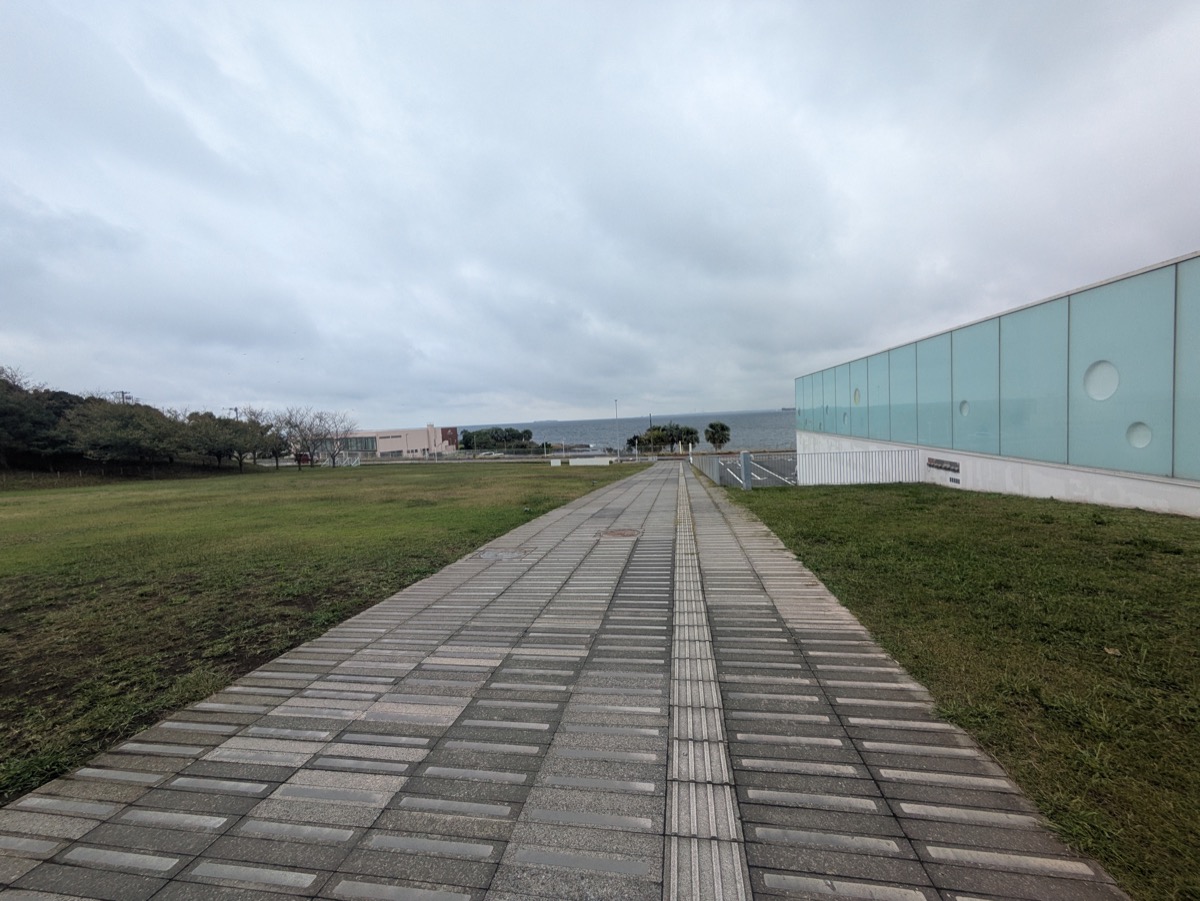
We walked across the lawn toward the museum.
The sea was visible. The sky was cloudy. The trees were moving in the wind.
"Honestly, this might already be enough," I thought.
We had not even reached the entrance yet.
The white, quiet building stood between the sea and the hills. It did not announce itself loudly. It did not have that "Look, I am a museum!" pressure.
I later learned that much of the building is buried into the ground, partly as a response to the coastal environment.
So that is why it does not try to stand out.
Come to think of it, the parking lot was underground too.
This museum really does tuck itself into the ground.
A building that was not trying to show off somehow made me more curious.
The Rooftop Floor Let Light Through
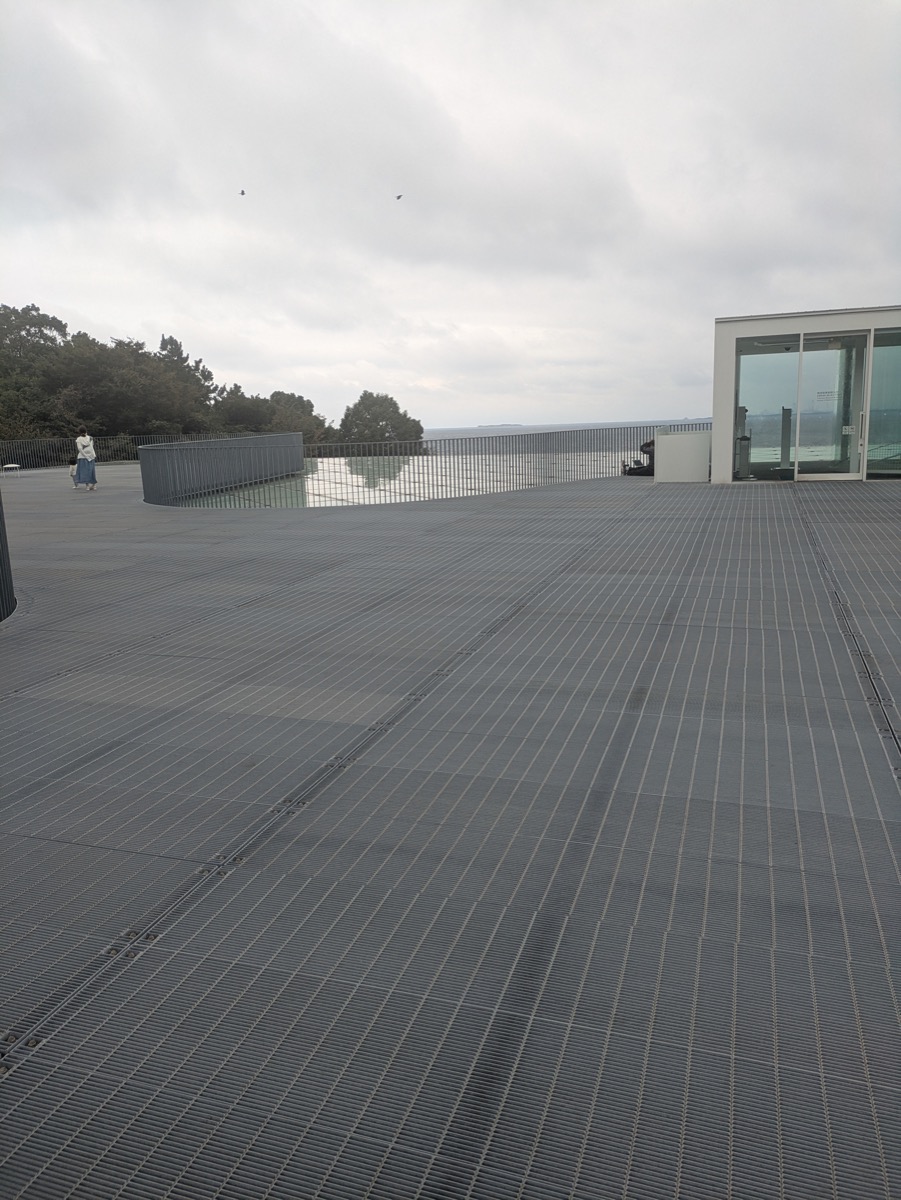
We went out onto the rooftop terrace.
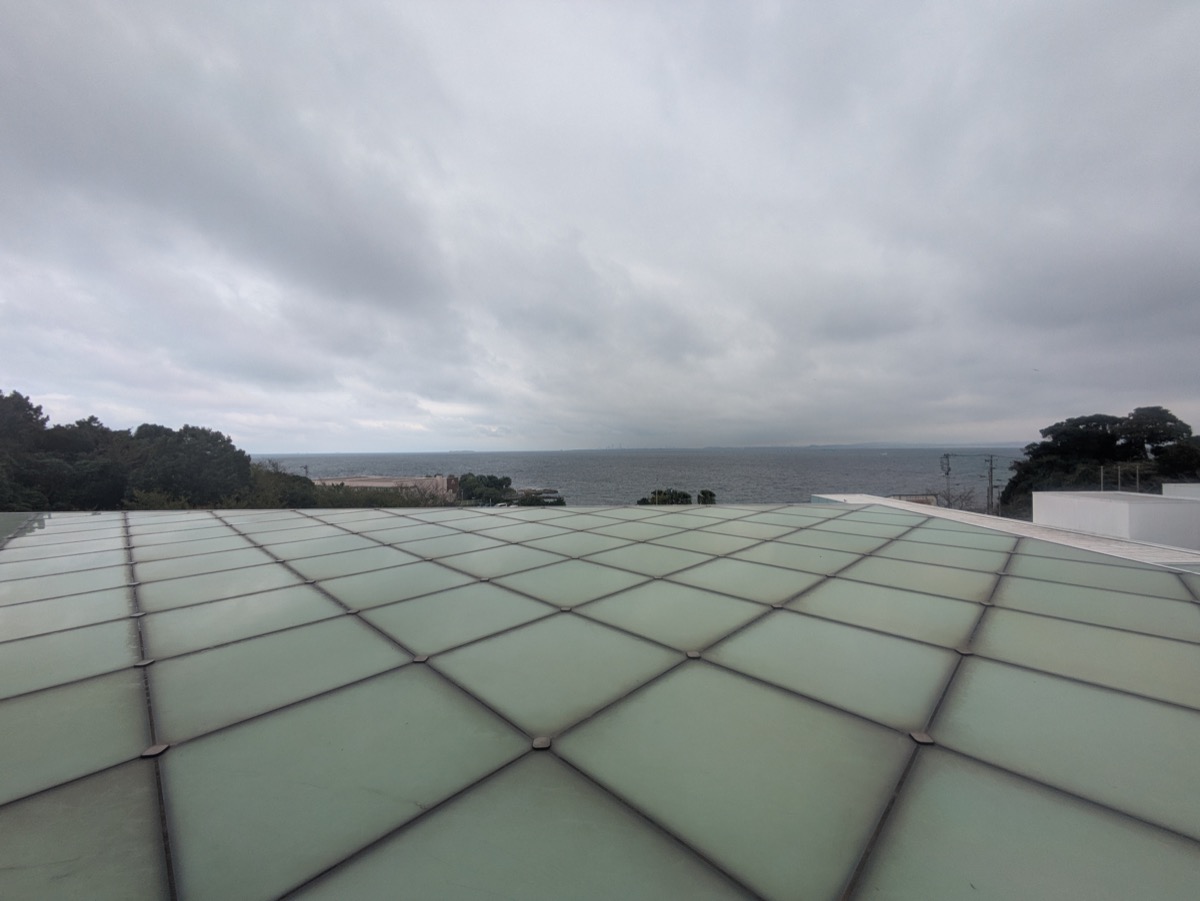
A gray grating floor stretched out toward the sea. The weather was cloudy, but that calm grayness felt right.
In another area, the floor beneath my feet was made of pale green translucent panels.
Light was passing through from below.
"This is a floor, but it lets light through."
I stepped on it. Nothing happened, of course. But it felt strange in a good way.
Later I learned that there is gallery space beneath those panels, and the rooftop is designed so natural light can reach the spaces below.
It felt as if the presence of people outside and the light falling from above were part of the museum experience.
I thought, "That's interesting." At that moment, I still did not really understand what it meant.

Inside the Exhibition, I Honestly Looked at the Photos the Longest
The exhibition title was Riken Yamamoto: Community and Architecture.
The words were written simply in blue on a white wall.
My wife said, "I'll look over there," and walked off in another direction.
I entered the gallery.

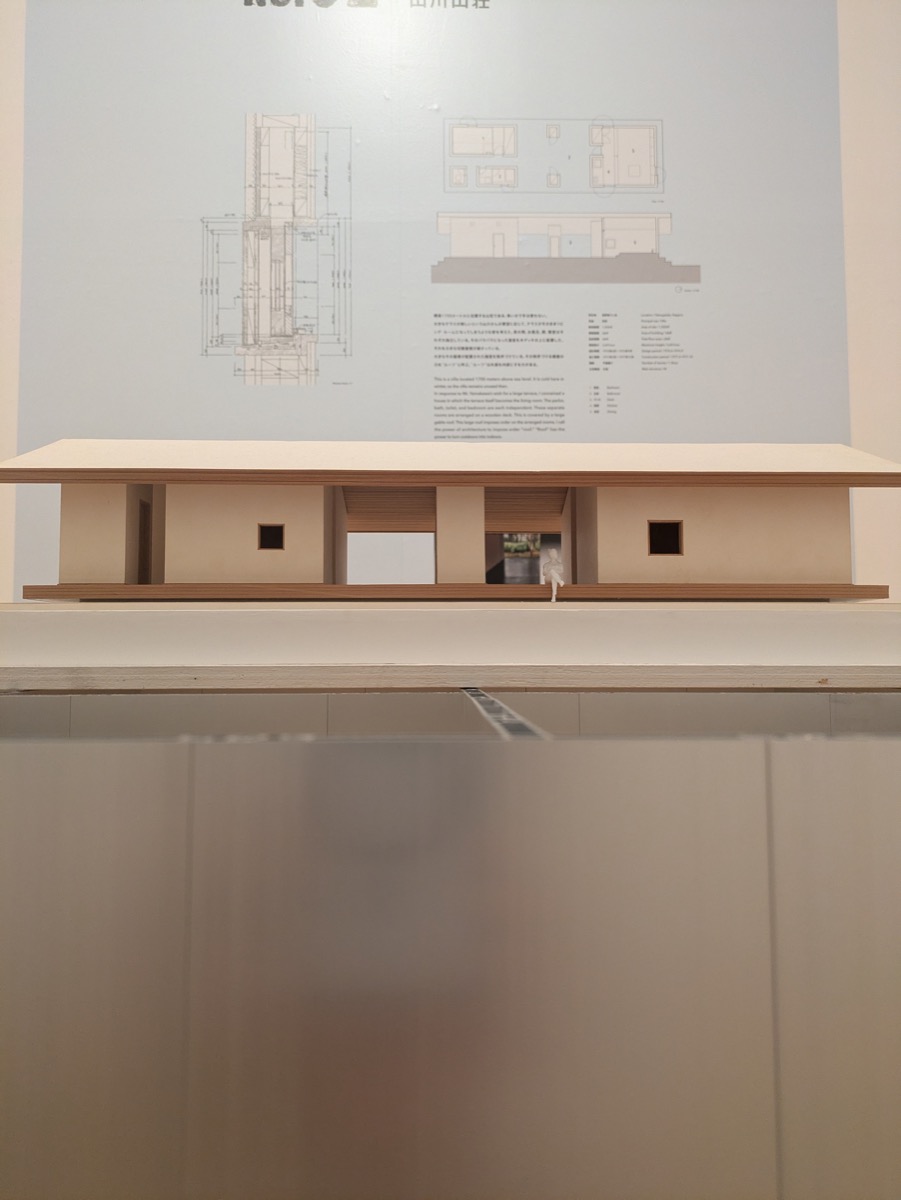
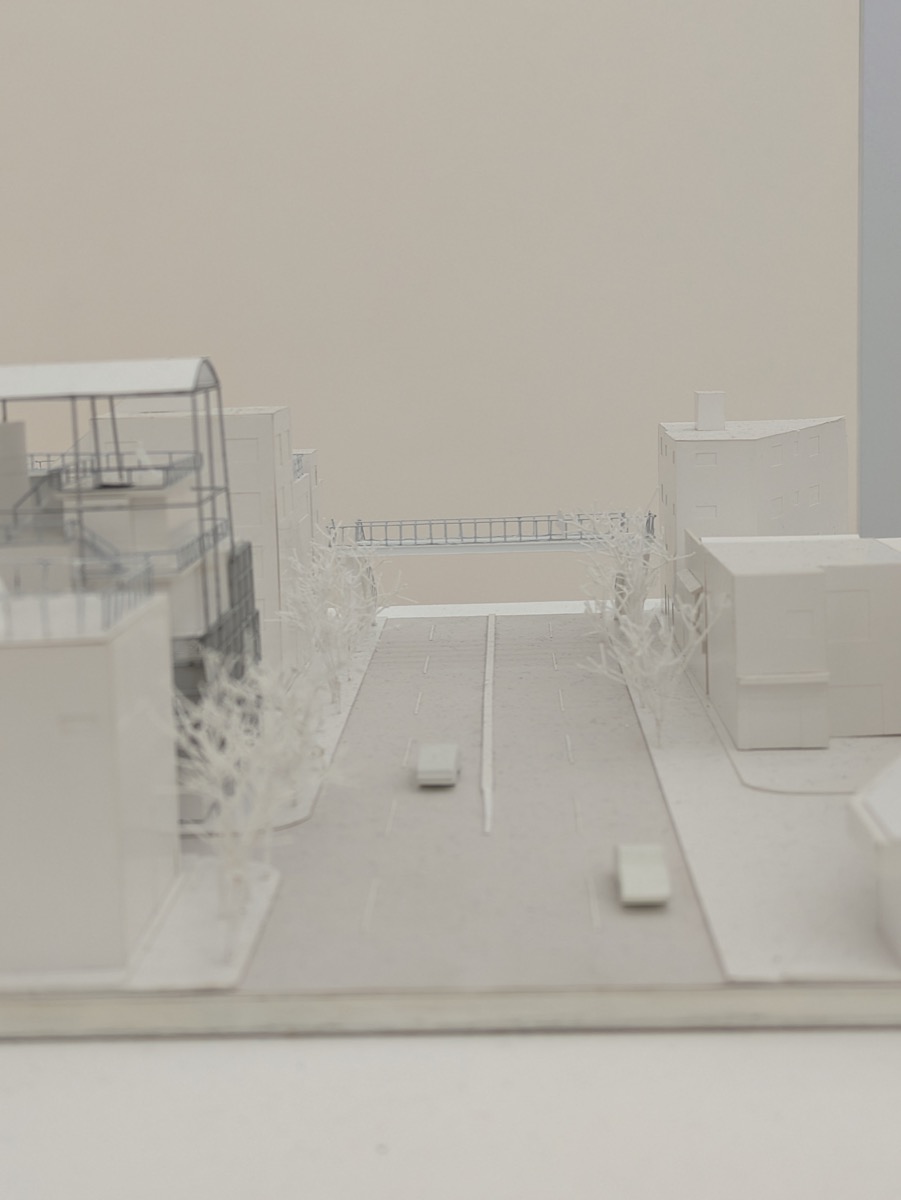
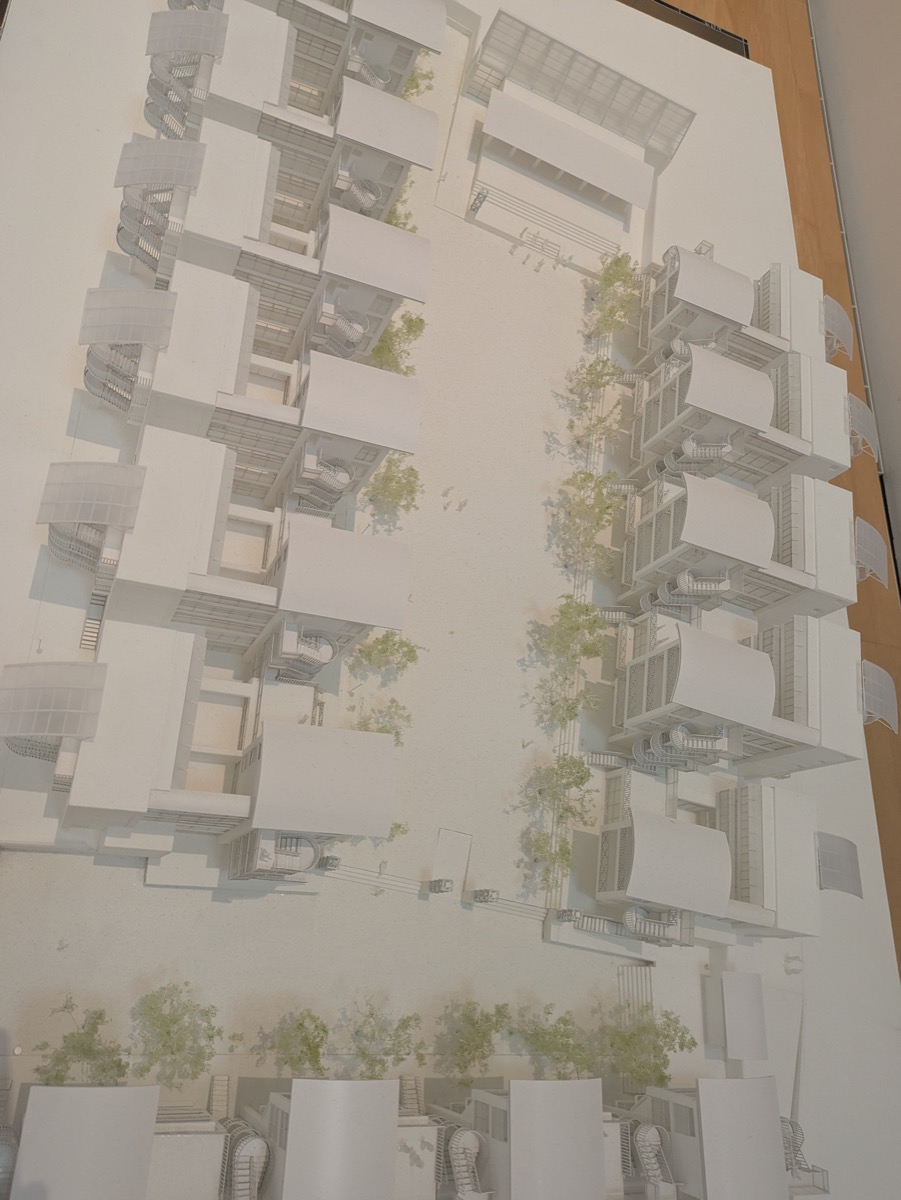
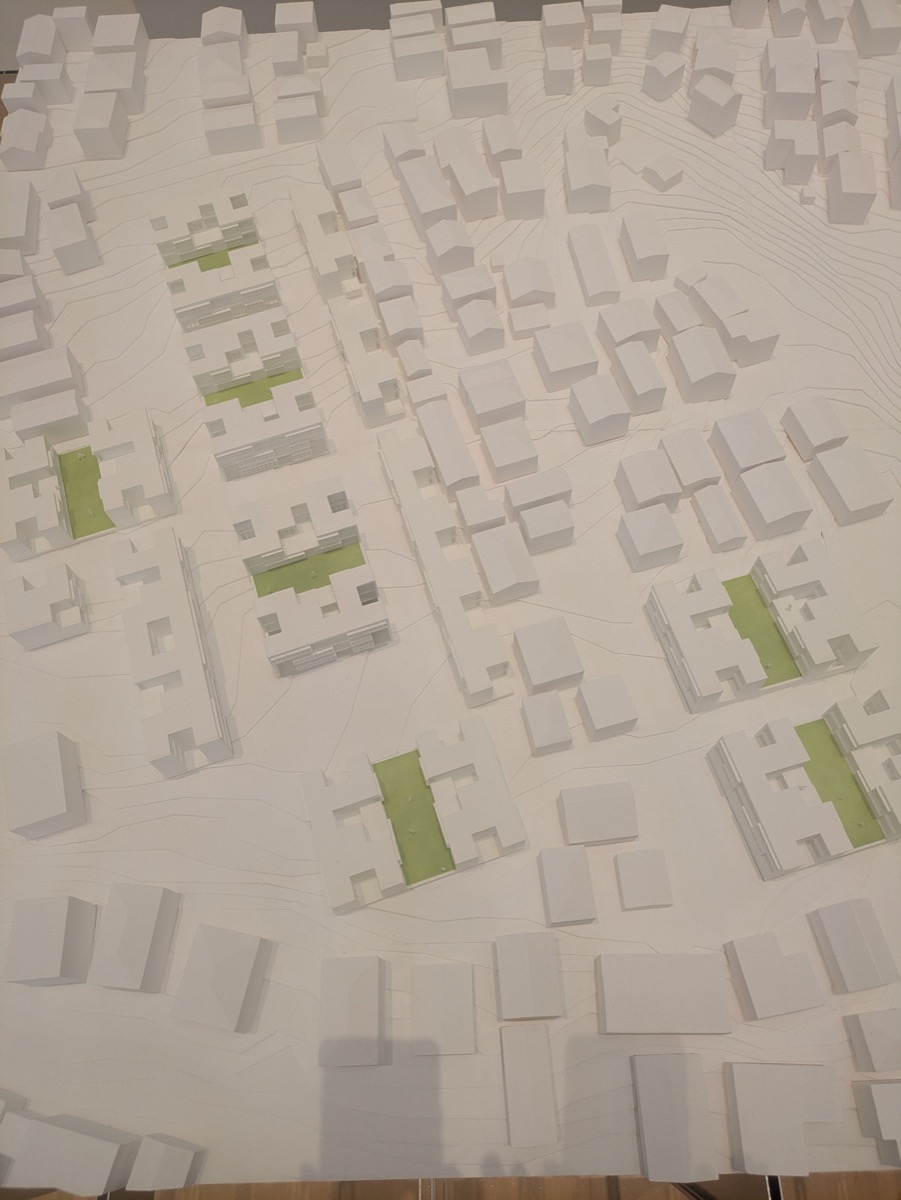
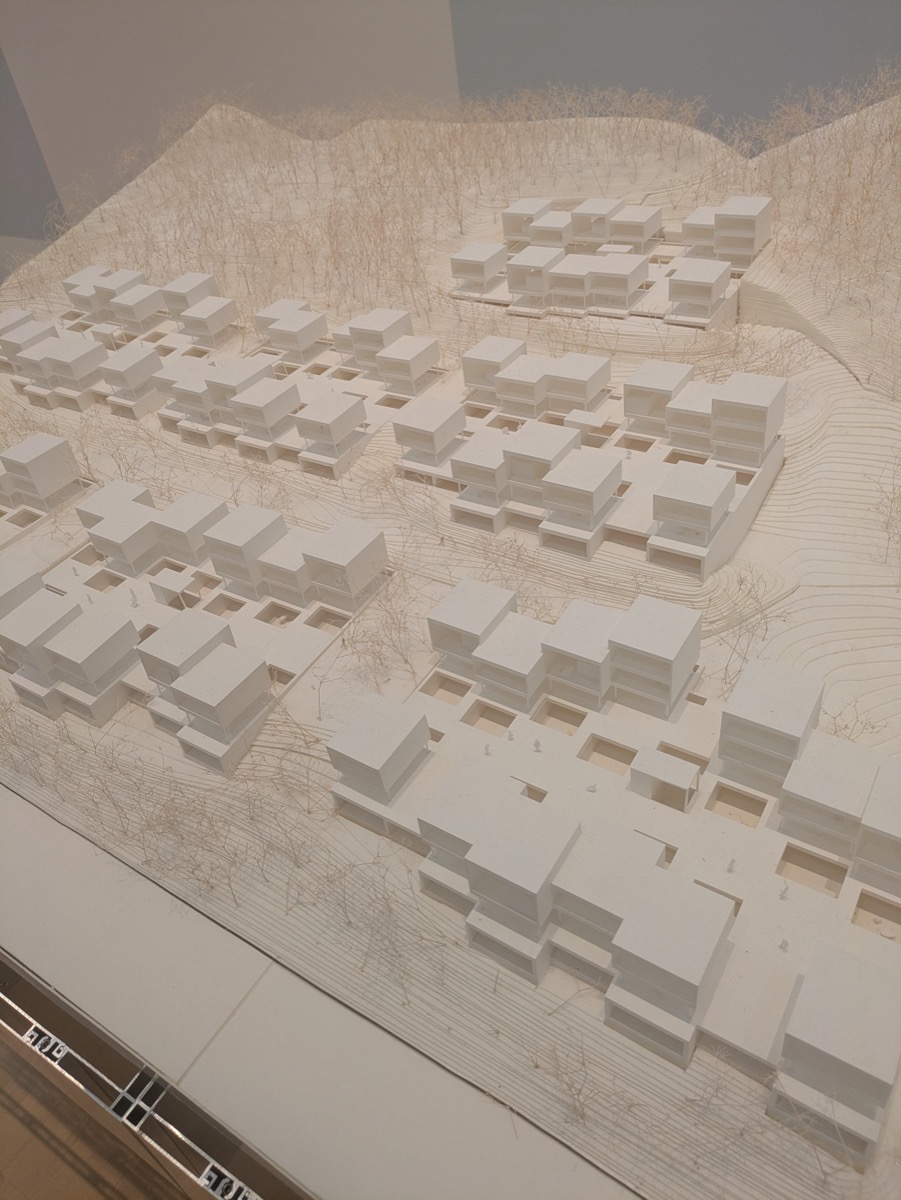
There were rows of small white architectural models.
"Wow, that's detailed."
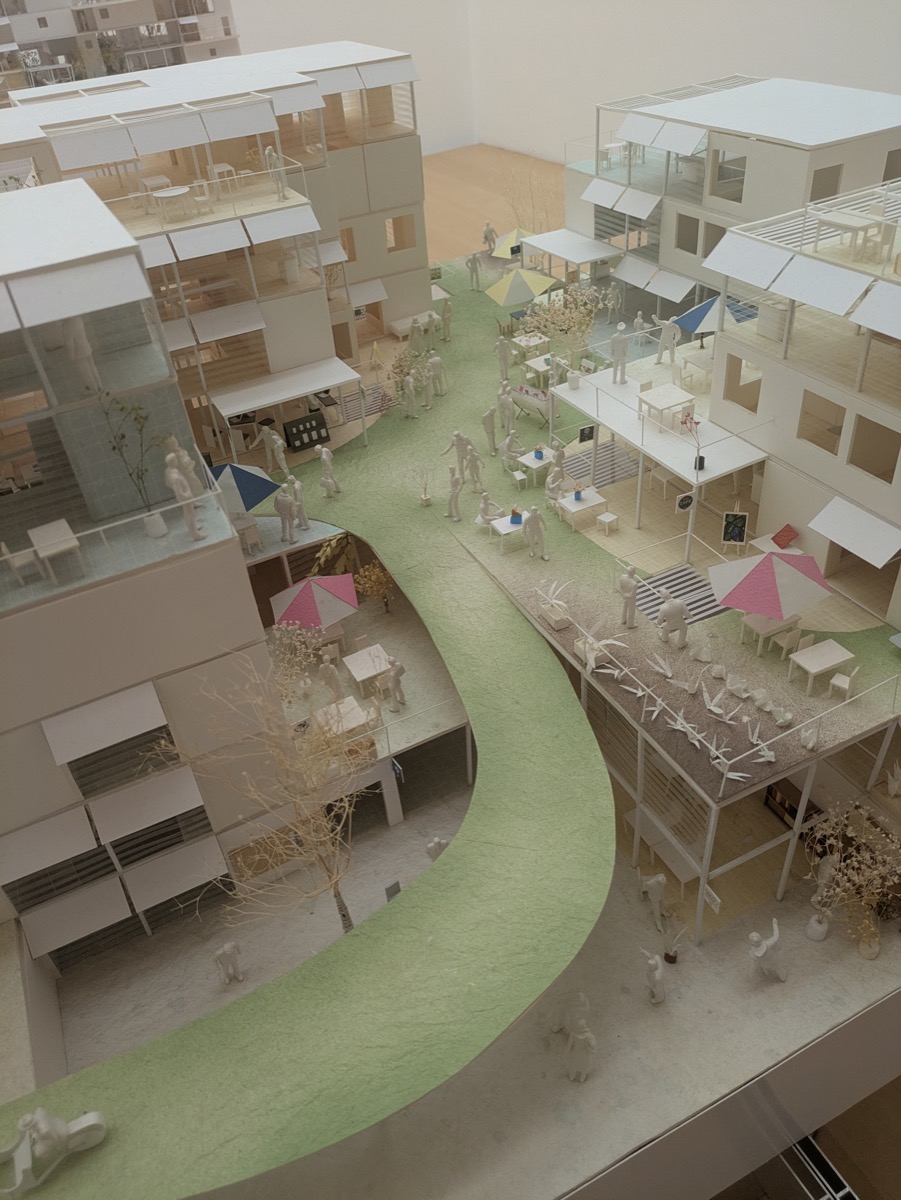
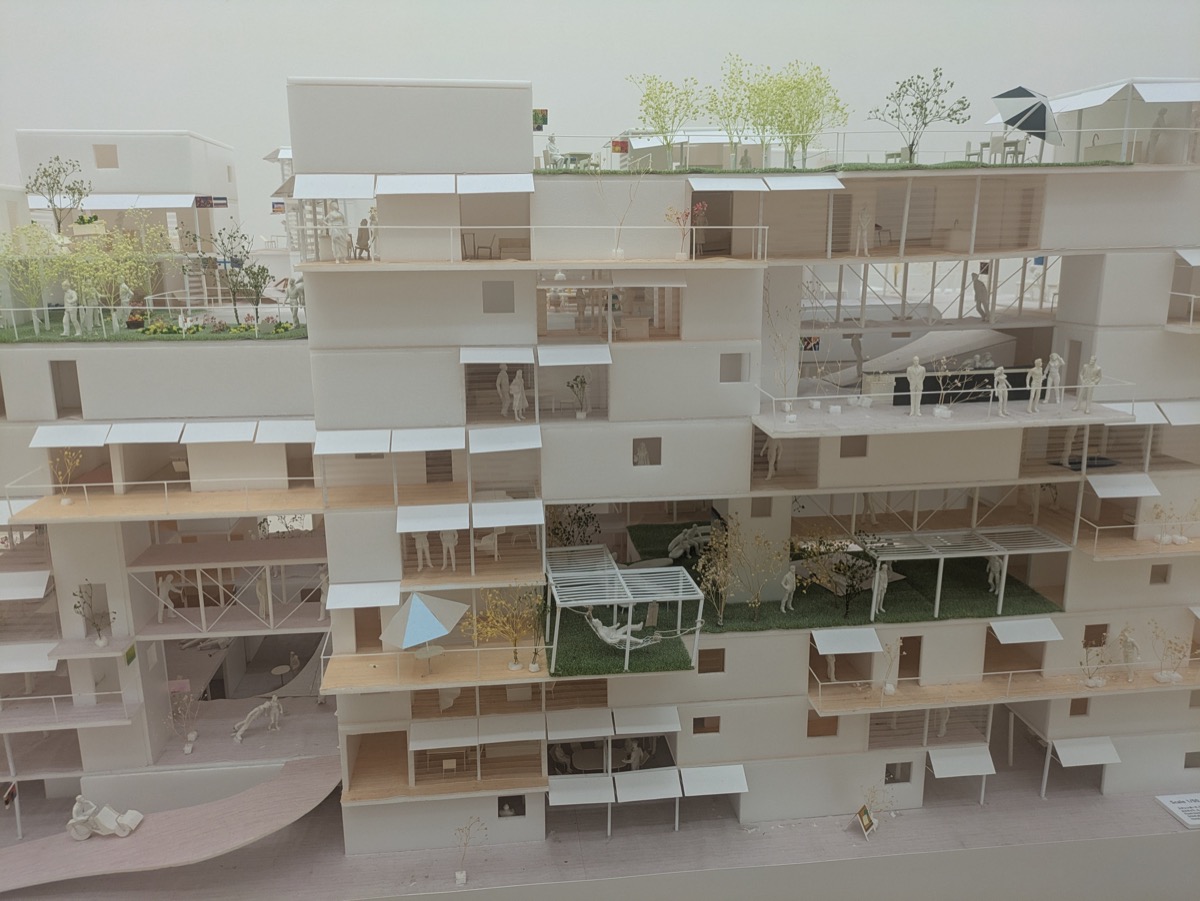
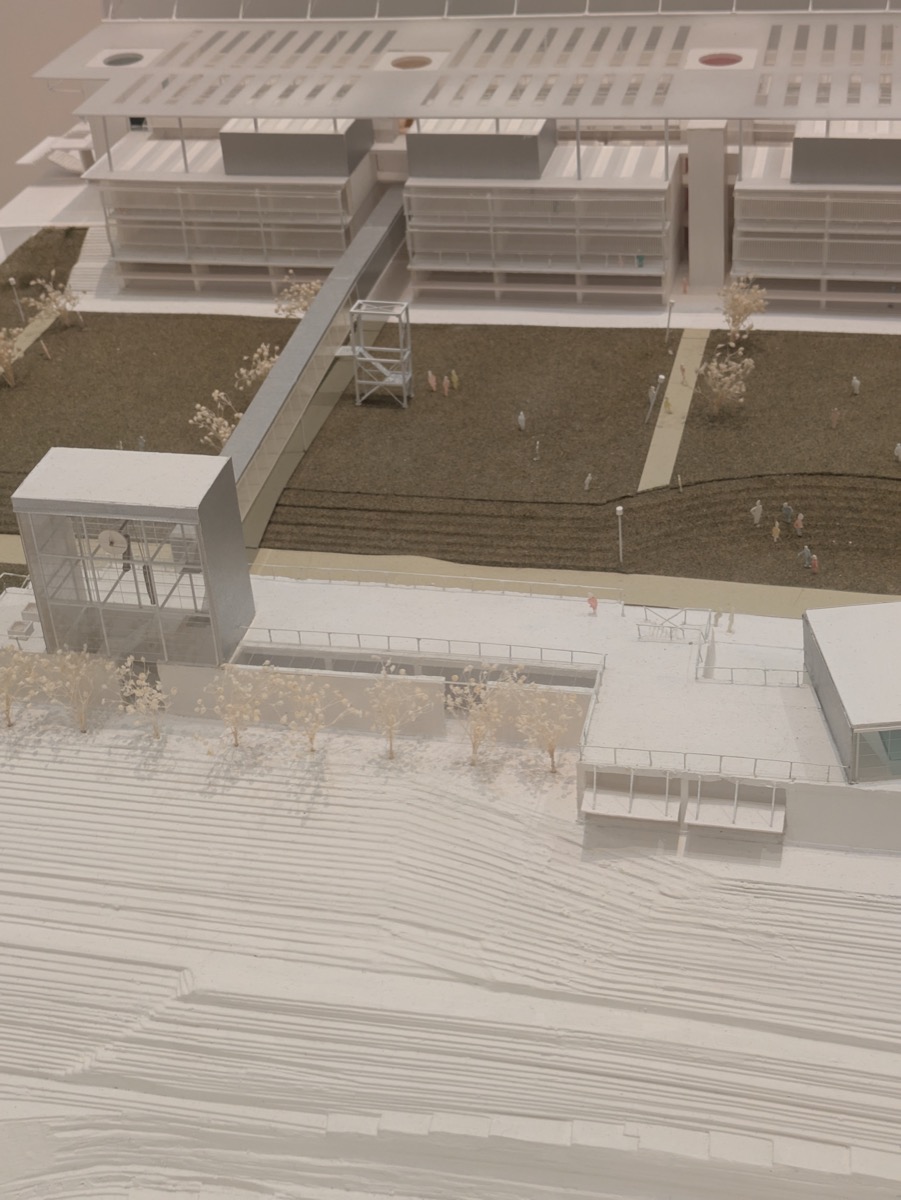
When I peered inside one model, I saw tiny people, maybe two centimeters tall. Two of them were in a hallway, sort of facing each other.
"Are they talking?"
That was when I thought, quite honestly, "You could charge admission just for these models."
You could feel the amount of handwork in each one.
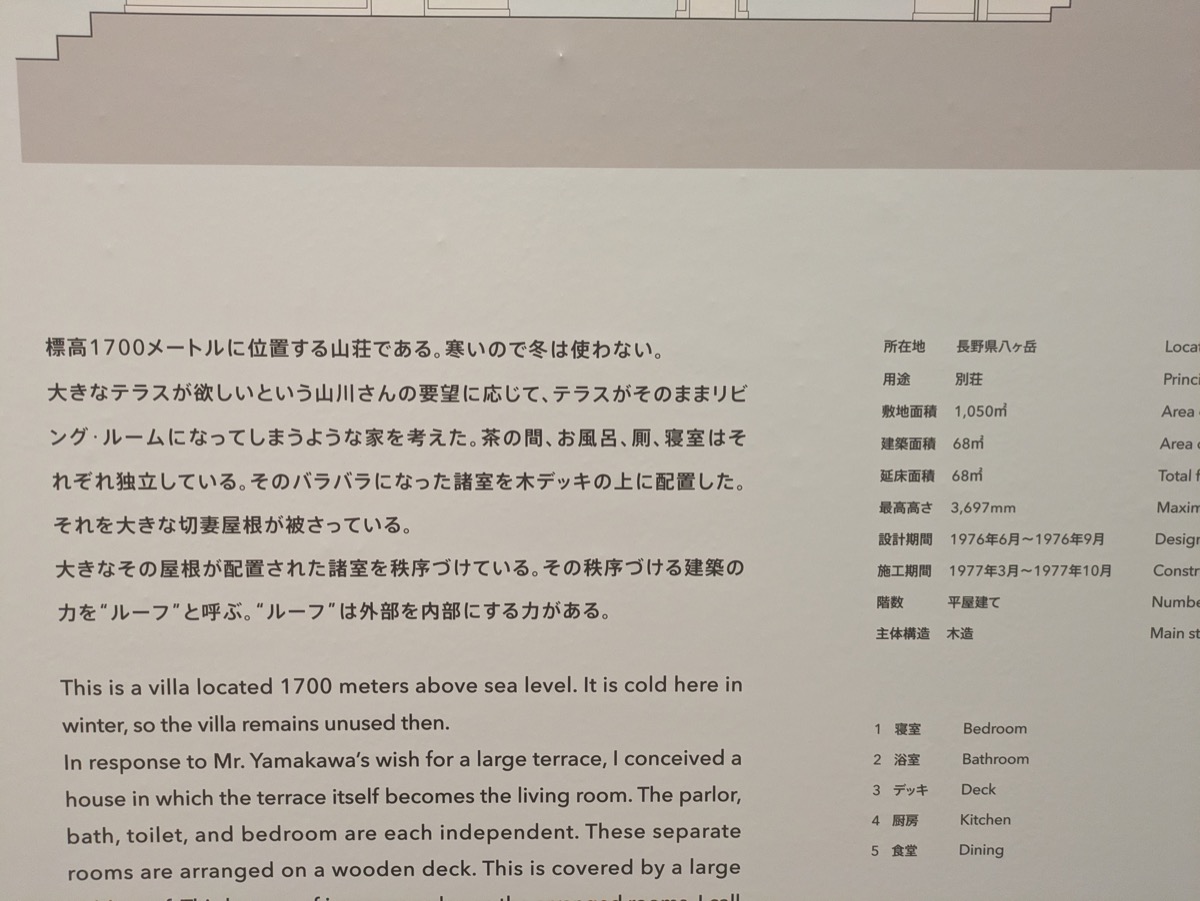
But if I am being honest, the things I looked at longest were not the models. They were the photos and images on the walls.
Photos of built projects. Sketches. Drawings.
The models showed me the inside of the architect's head. The photos showed me that people were actually living there.
"So people are here."
That landed more deeply than I expected.
The Drawing Called LIVING IN THE CITY Stopped Me
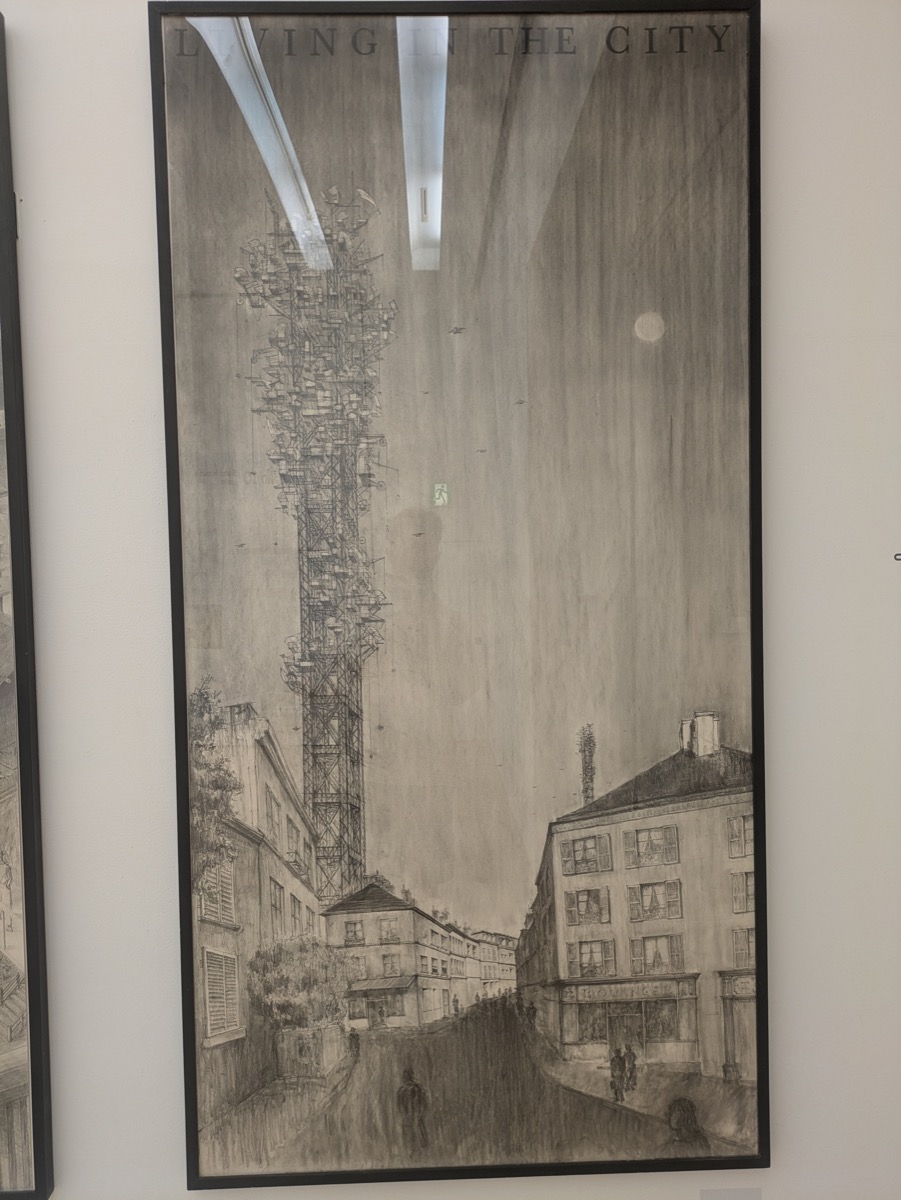
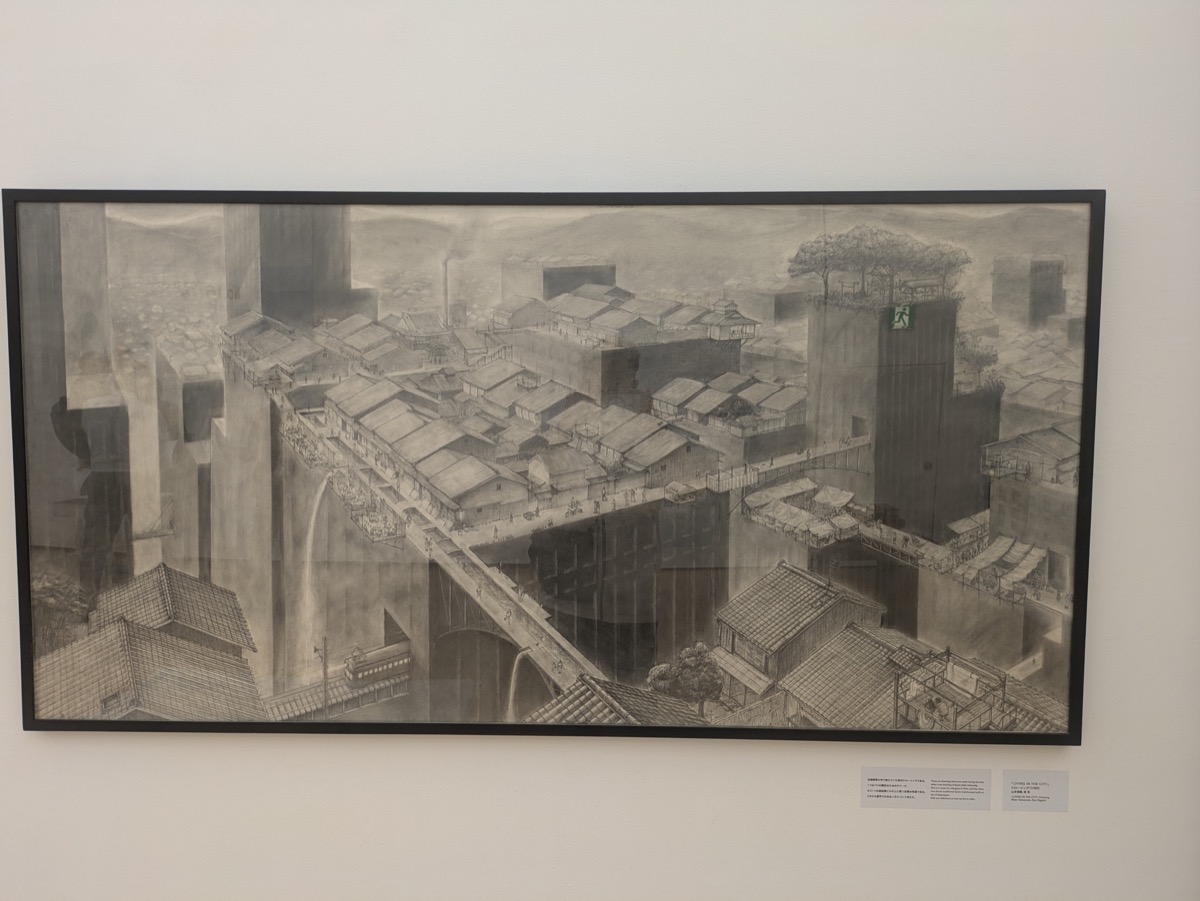
Beyond the photos, there was a framed drawing.
The title was LIVING IN THE CITY.
In a scene that felt like an old city, narrow towers and buildings overlapped and rose upward.
People were living there. Very high above the city.
"What is this? This is interesting."
It seemed to be Yamamoto's imagined drawing about what it means to live in a city.
Before thinking about the shape of the building, he was thinking about how people might live at different distances from one another.
That felt like the starting point.
The Word Threshold Connected Everything
As I kept looking through the exhibition, one keyword started to stand out.
Threshold.
The boundary between inside and outside.
Usually, I think of a threshold as a line. This side is inside. That side is outside.
But Yamamoto seemed to treat that boundary as a space.
Not a line. A place.
A place that is not fully inside and not fully outside. A terrace. A veranda. A slightly wider landing in a corridor.
People stop there. They see a neighbor. A small "good morning" happens.
What Yamamoto seemed to be aiming for was not architecture that shuts people away, but architecture that lets people connect gently.
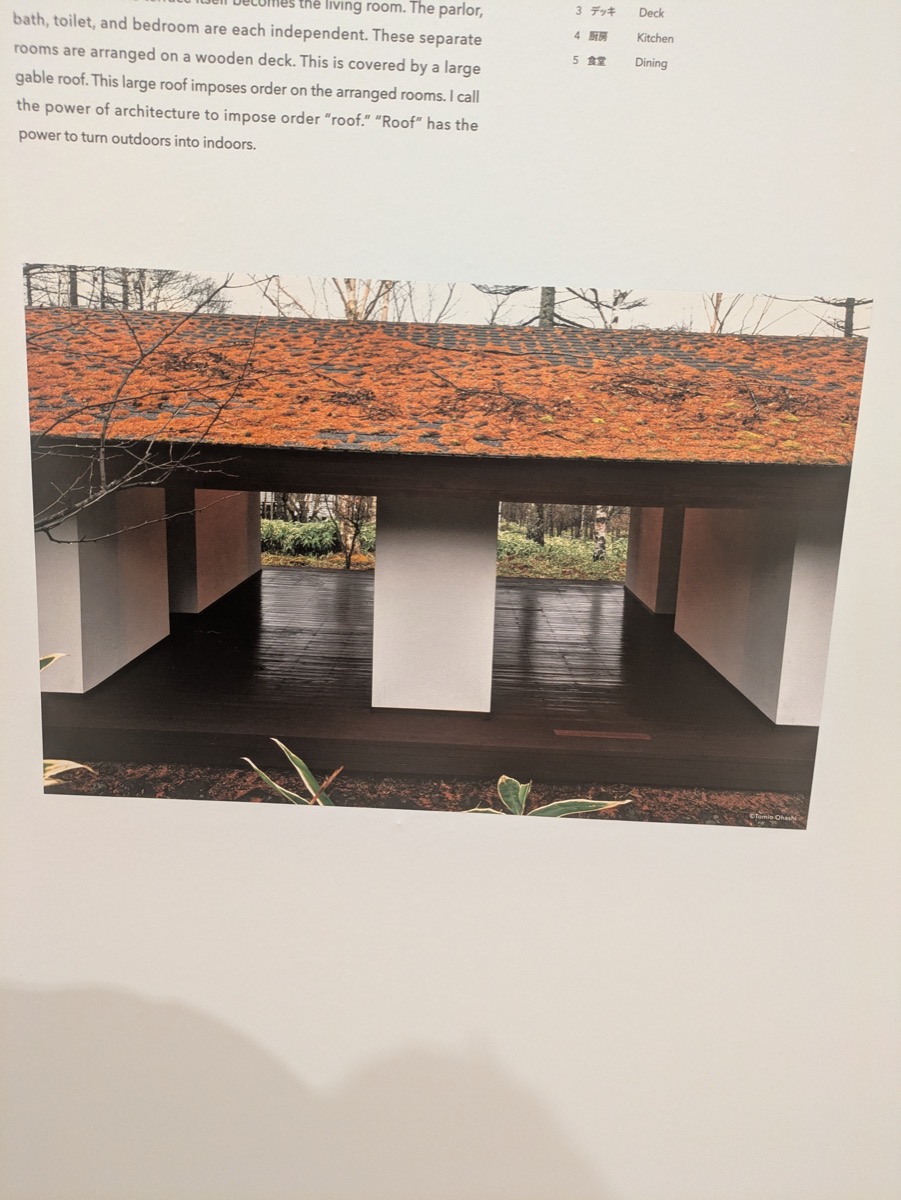
I read that Yamamoto grew up in a machiya-style house where his mother's pharmacy faced the street and the family's living space was behind it. Local people coming and going, family life, work, and everyday community overlapped in the same place.
That early experience seems to have stayed at the center of his architecture.
"Original experiences are powerful," I thought, and went back to the models.
GAZEBO: He Thought This Hard About His Own House?
One model stood out to me.
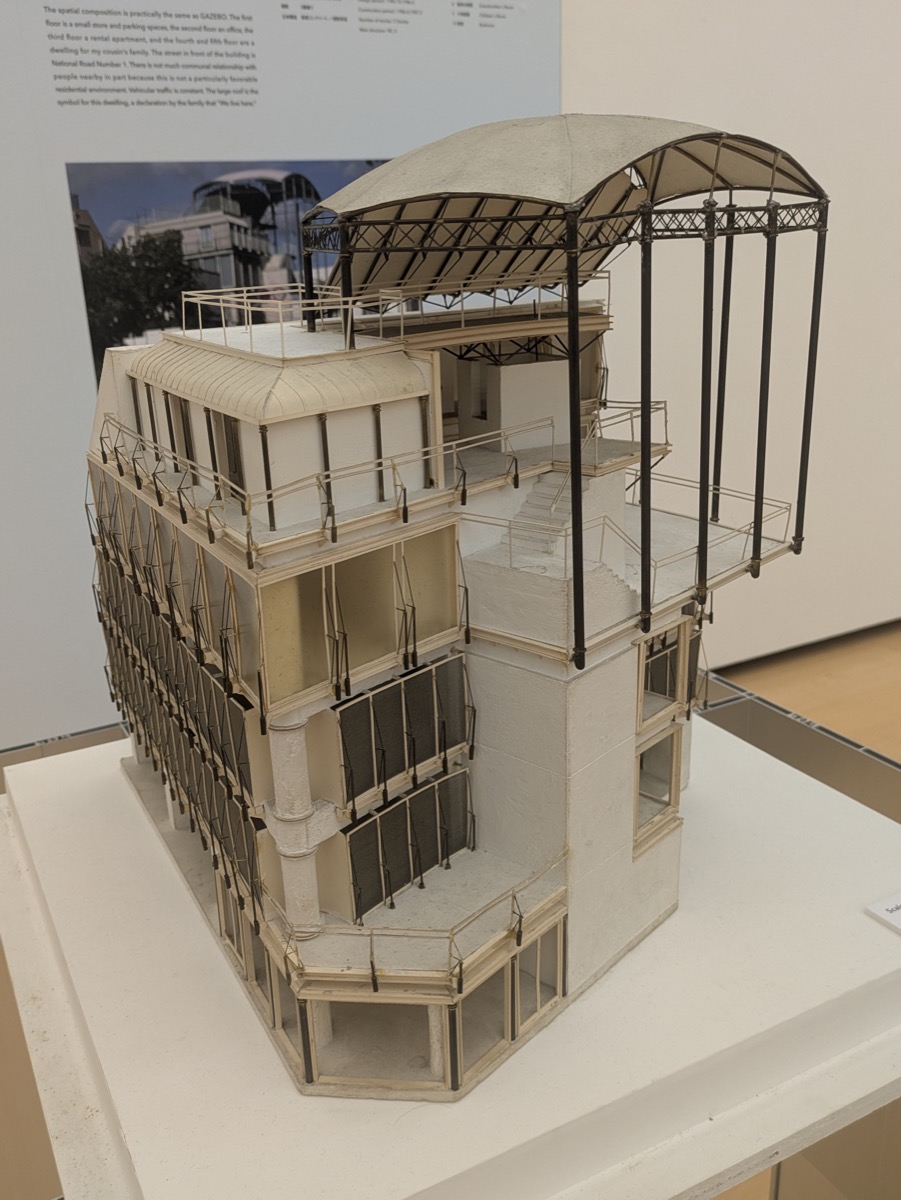
It had a complicated steel-frame structure, almost like a grid.
This was GAZEBO, Yamamoto's own house.
"He thought this hard about his own house?"
The house is in Yokohama, with a rooftop terrace and a membrane roof. Apparently, while taking care of goldfish in the morning, you might make eye contact with someone on a nearby rooftop and say hello. Everyday neighborhood life happens four floors above the ground.
"What an interesting house," I thought.
At the same time, I also thought, "How do you clean that terrace?" But maybe that is part of the idea. You go outside to clean the terrace. When you go outside, you see someone. The building gives you a reason to step out.
There were tiny people inside the model. One stood on the rooftop terrace. Another was near what looked like a goldfish bowl.
"They are actually living here," I thought.

The Models Kept Scaling Up
The exhibition moved from houses to apartment complexes, and then to cities.
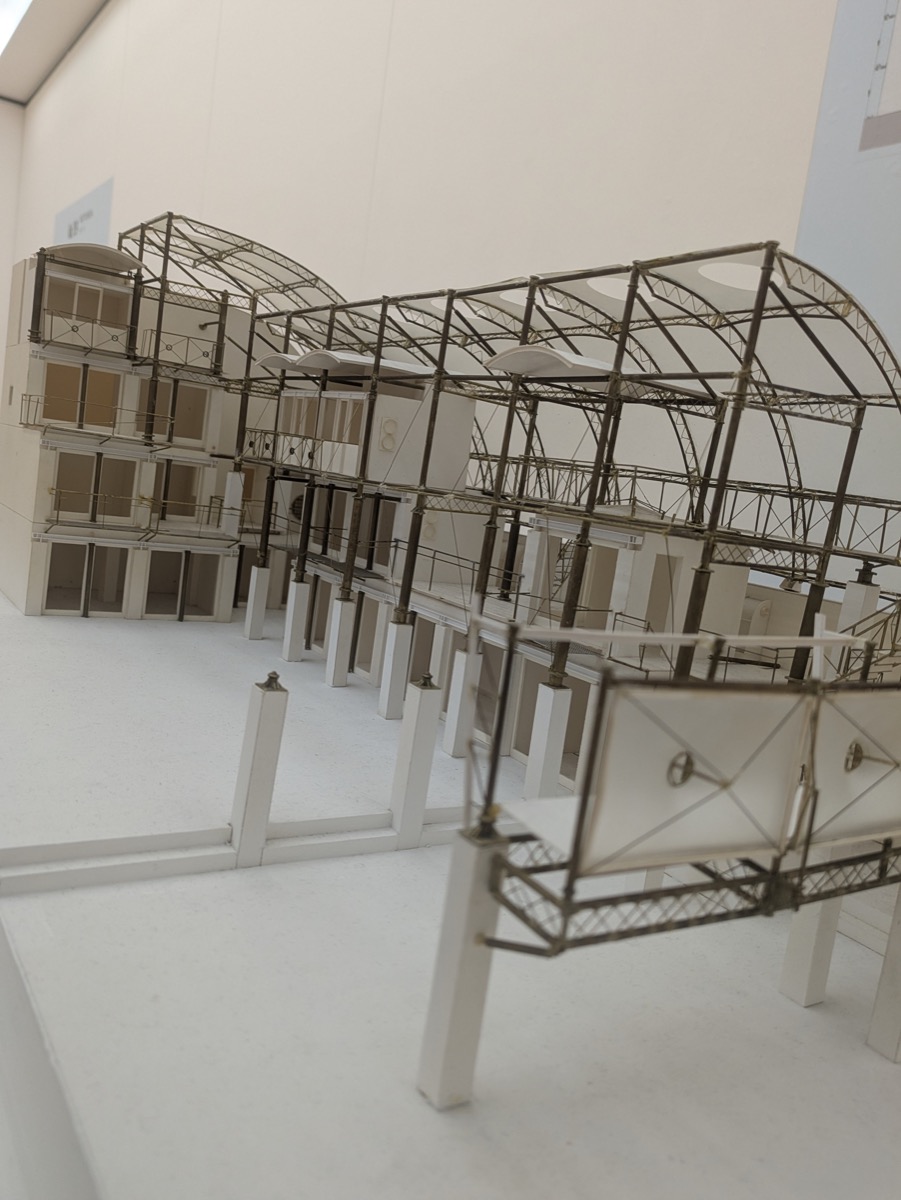
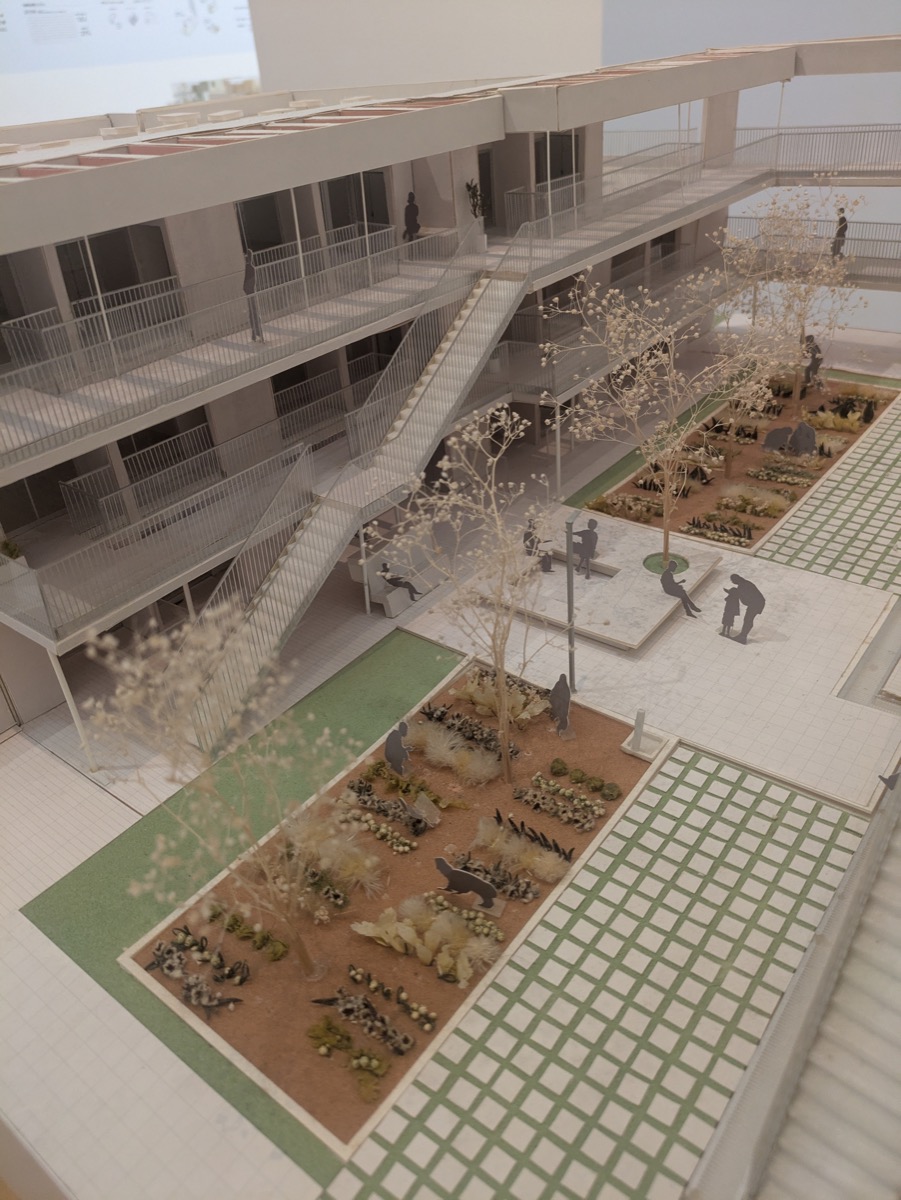
In every housing model, those tiny people were there. Talking in corridors. Gathering in courtyards. Hanging around in places that were not quite private and not quite public.
There was a model of Hotakubo Housing in Kumamoto, a housing complex for 110 families.
At first, I thought, "It's just an apartment complex."
But this model felt different. It looked, somehow, fun.
The homes were arranged so that each unit became a kind of gate to the central courtyard. To enter the inside area, you had to pass in front of someone's home. Tiny people gathered in the courtyard.
"That distance feels just right," I thought.
In the Korean housing models, each unit had a space called Shiki, something like a veranda or threshold, and decks connected the homes on the second floor.
An apartment building, but designed so people can meet.
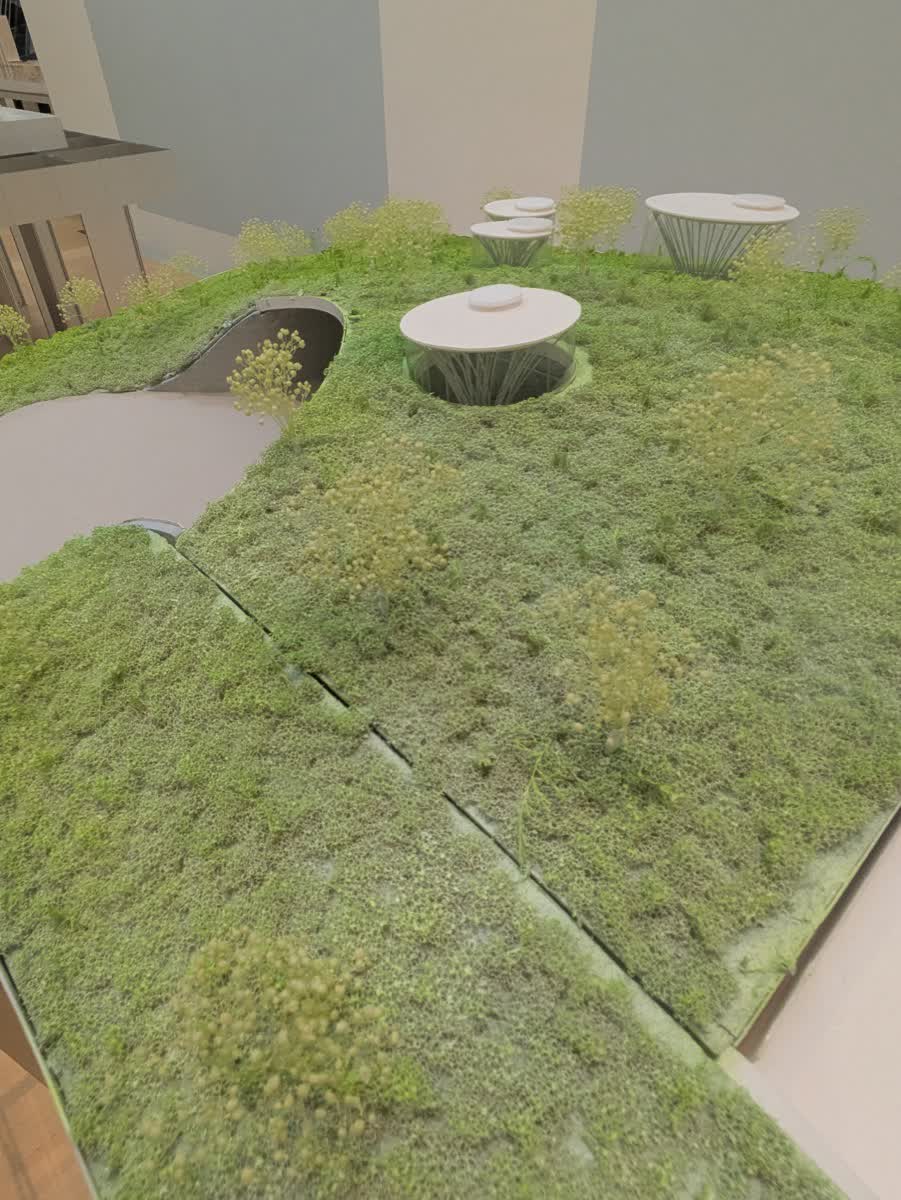
At the city scale, the models showed green patches scattered through the urban fabric. A proposal for communities of roughly 400 to 700 people sharing common spaces.
It felt like the story of someone who kept questioning the assumption that one home always equals one family.
The man who had walked in thinking, "Architecture is just a place to live, right?" was now looking at an apartment complex model and thinking, "That looks enjoyable."
Yamamoto had slowly got me.
Before I knew it, an hour had passed.
My wife came back. "You're still here?"
Yes. I was with the two-centimeter people.

After Leaving the Museum, I Finally Understood
After finishing the exhibition, I walked through the museum again.
The sea appeared at the end of a corridor. Light entered through round openings in the wall.
I was inside the building, but the outside world kept slipping in.

Then I realized something.
The beautiful view before the entrance. The rooftop floor letting light through. All of it had been part of the setup.
Before the exhibition "showed" me anything, the building had already made me feel it.
Later, I learned that Yokosuka Museum of Art itself was designed by Riken Yamamoto.
The venue was a work, and the work was the venue.
So when I came to an architecture exhibition and kept looking at the scenery, maybe I was being quietly guided by Riken Yamamoto all along.
Well played.
In Closing
After leaving the museum, we walked with Momiji along the seaside.
She sniffed the air happily.
"Sorry for making you wait."
Her tail moved.
I do not know whether she forgave me. But in the direction she was facing, beyond the sea breeze, was the Yokosuka Museum of Art where we had just been.
If I had to sum up what Riken Yamamoto has been doing for fifty years, I would say this:
If there is a small in-between place, people can connect naturally.
A terrace. A veranda. A courtyard. A translucent roof. Those margins become conditions for people to meet.
Maybe this is not only about architecture.
A place at work where people can talk casually. A small flower in front of a doorway. A simple word to someone in an elevator.
Maybe we can make thresholds almost anywhere.
That is what I felt the two-centimeter people in Yokosuka had taught me.
I have also read that Yamamoto still speaks about how Tokyo's redevelopment is damaging the heart of the city.
Even for a man in his 50s who was just staring at models, I feel like I can understand that a little now.
You do not need to know much about architecture to enjoy a museum freely.
You do not have to memorize every title, and you do not have to understand every technical term.
"This feels good."
"This model is incredibly detailed."
"What would it be like to live here?"
Even simple impressions like that are enough to enjoy architecture.
For me, the Riken Yamamoto exhibition was less a time to study architecture and more a time to rethink, just a little, the distance between people.
Yokosuka Museum of Art is currently closed for renovation work until around August 2026.
You can check the location here: Yokosuka Museum of Art on Google Maps.
When it reopens, I would recommend visiting. You do not need to be an architecture expert. In fact, not knowing too much may make it easier to respond honestly to the views, the photographs, and the small human details in the models.
The outside of the museum was especially pleasant. Before even entering, I had already thought, "Maybe this is enough."
Dogs cannot enter the museum, but there is a seaside walking route nearby. Even under an October cloudy sky, it felt good.
Reference: Riken Yamamoto received the Pritzker Architecture Prize in 2024. The official Riken Yamamoto exhibition page describes the exhibition as a broad introduction to his design philosophy. I also checked the museum's official long-term closure notice.
Related Articles
- My Wife Rejected the Zoo, So We Went to Hakone Museum of Art — and the Gardeners Won My Heart
A museum visit where the quiet work of people mattered more to me than the exhibits themselves. - A Peaceful Spring Outing to Kannonzaki with My Wife and Momiji
A gentle seaside walk in Kannonzaki, close to Yokosuka Museum of Art, with my wife and our Shiba Inu. - Zama Serizawa Park: A Quiet Walk Beside a Wartime Underground Factory
Another walk where an ordinary landscape quietly revealed the memory behind it.