Read time: About 7 minutes
Hi, I'm Hiroshi.
Have you ever looked at an unusually well-maintained park and wondered, "Why is this place maintained so carefully?"
No? Fair enough.
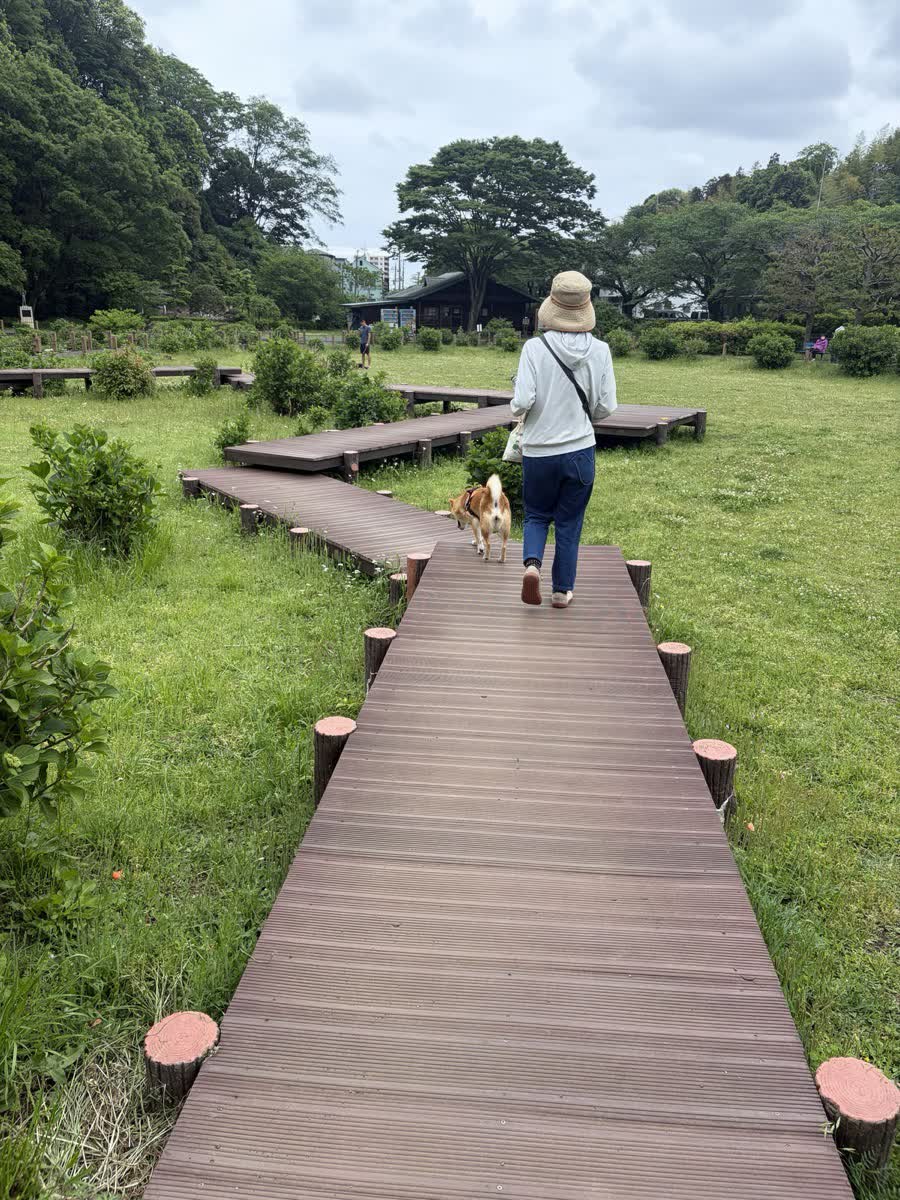
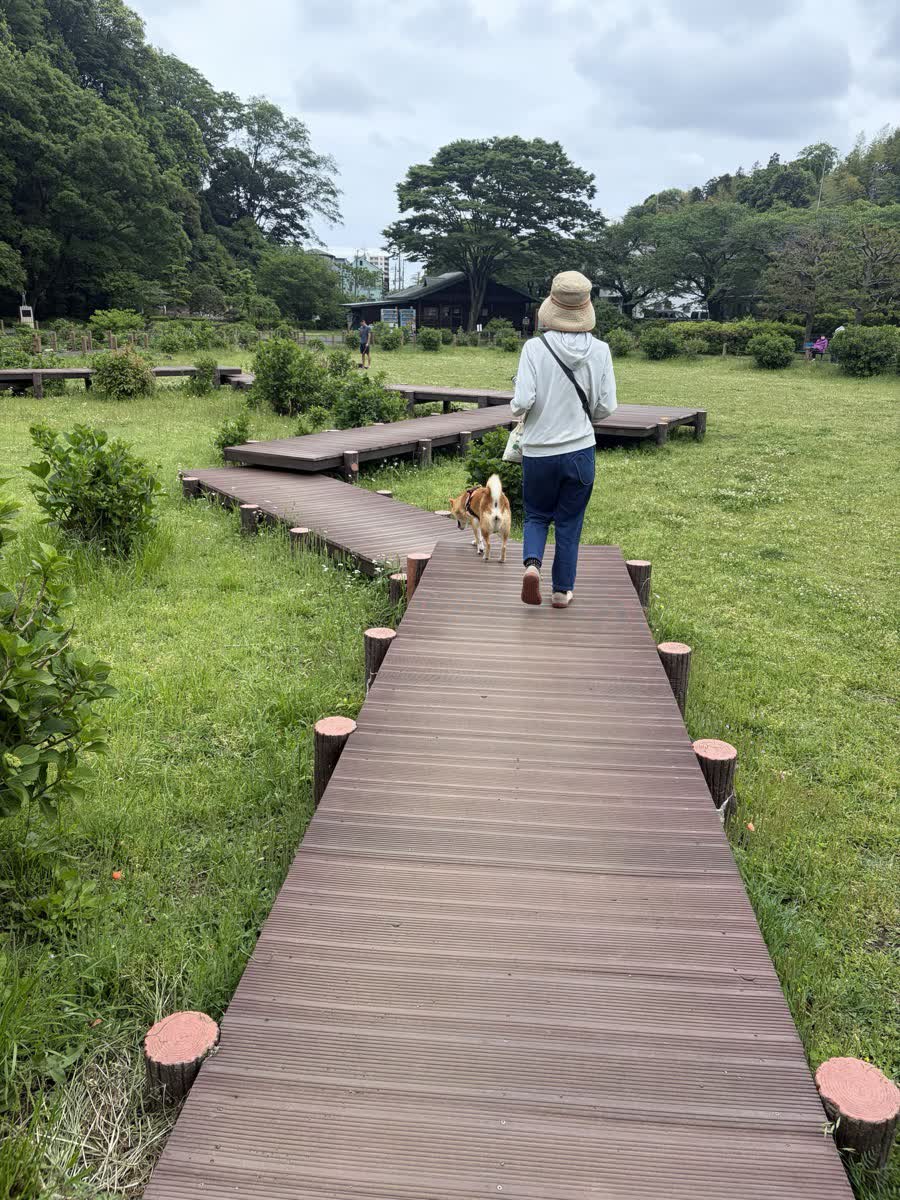
But I did. My wife and I took our Shiba Inu, Momiji, to Serizawa Park in Zama City, Kanagawa Prefecture. From the moment we arrived, aircraft kept passing overhead with a serious roar, the lawns were almost too neat, and the paved paths felt unusually polished for an ordinary city park.
I thought we were just visiting a normal local park.
Then I noticed a sign inside the park.
Who this post is for
- Anyone looking for a dog-friendly walk around Zama or Sobudai
- Parents checking whether Serizawa Park is good for children
- Travelers interested in quiet local history, not only famous tourist sites
- People who like parks where the ordinary and the historical overlap
Bottom line upfront
Serizawa Park is a municipal park managed by Zama City. But part of its path improvement work was funded through a grant from Japan's Ministry of Defense to the city. Beneath the clean lawns and paved paths, there is also the memory of an underground factory from the final months of World War II. And overhead, aircraft noise is still part of the landscape.
Table of Contents
- Parking and Basic Information First
- The Aircraft Noise Was Hard to Ignore
- The 50-Meter Roller Slide Is Actually Long
- Momiji Changed Her Face in the Forest
- The Underground Tunnel Made Me Stop
- Taiwanese Youth Workers and a Statue Called Hope
- The Sign Explained the Mystery: A Defense Ministry Grant
- Momiji Was Fine. The Humans Were Tired.
- Final Thoughts
Parking and Basic Information First
Serizawa Park is located at 2593-1 Kurihara, Zama City, Kanagawa Prefecture. You can open it here on Google Maps. If you are driving, head north from the Higashihara 4-chome intersection on National Route 246, then turn left at the first traffic light. The park appears straight ahead.
According to Zama City's official information, the park has four parking areas: north, east, west, and south, with a total of 173 spaces. North has 72 spaces, east has 81, west has 15, and south has 5. Parking is free.
Parking hours are 8:30 AM to 6:00 PM from May 1 to October 31, and 8:30 AM to 5:00 PM from November 1 to April 30. We parked on the north side before noon on a weekday, and there was plenty of space.
By bus, you can use the Zama City Community Bus and get off at "D-8 Serizawa Park." From Sobudai-mae Station or the north exit of Sagamino Station, take a Kanachu bus and get off at Kurihara Elementary School. From there, it is about a five-minute walk.
There are no restaurants inside the park, so bringing food is the safer choice if you plan to stay a while. There are four vending machine areas, so drinks are easy enough to find.
The Aircraft Noise Was Hard to Ignore
The first thing I noticed after getting out of the car was the aircraft noise.
It wasn't just a faint sound in the distance. It was a proper roar, the kind that makes you look up and think, "There it is again." I asked my wife if she had noticed it too. She had.
I didn't yet know how that sound would connect to the rest of the park, so we started walking.
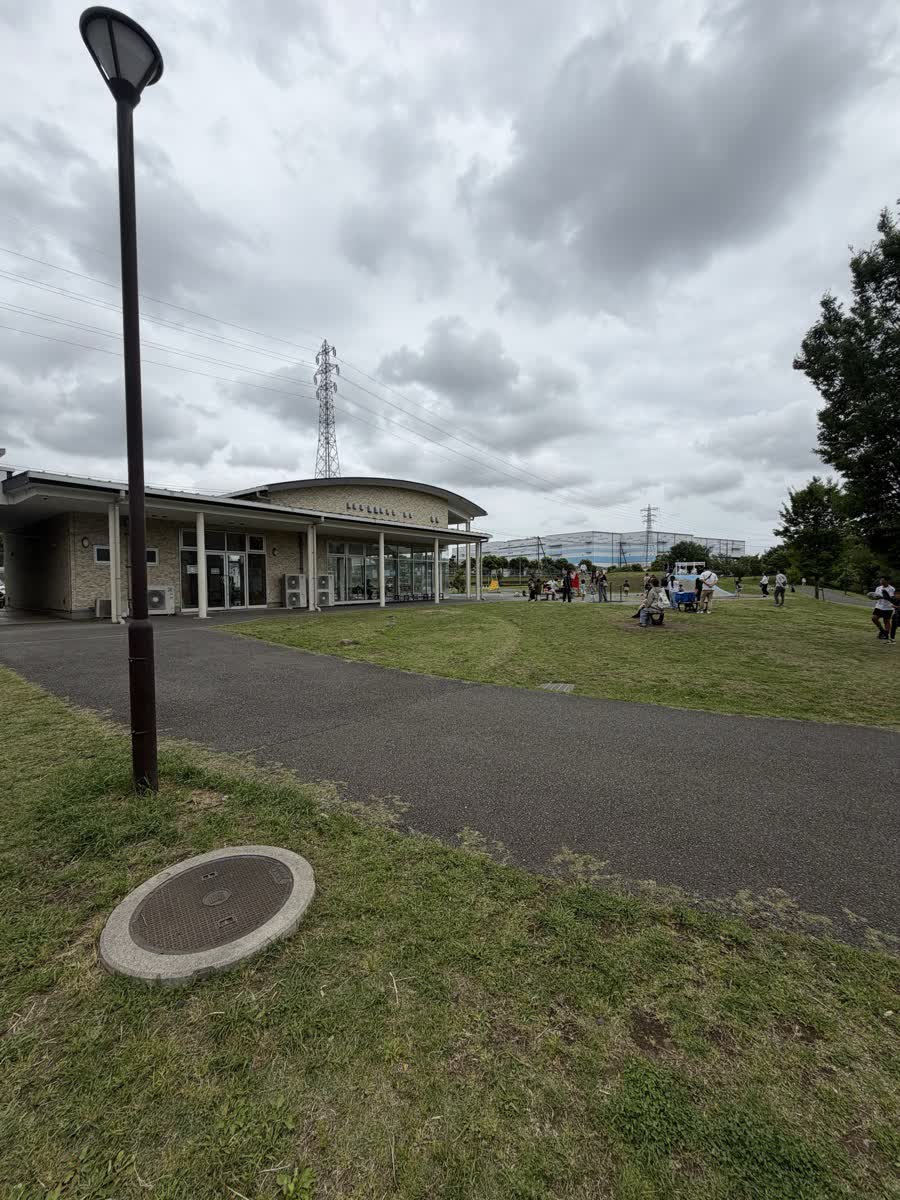
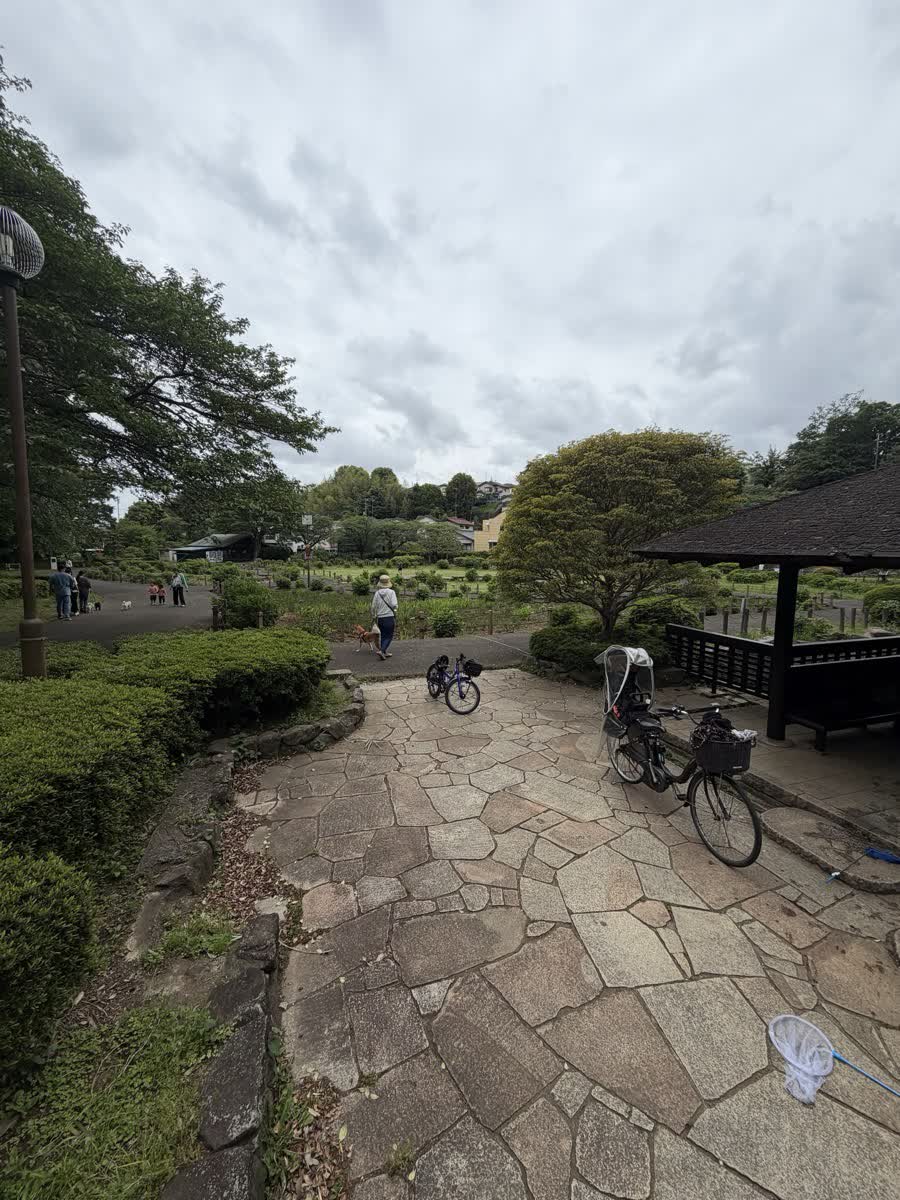
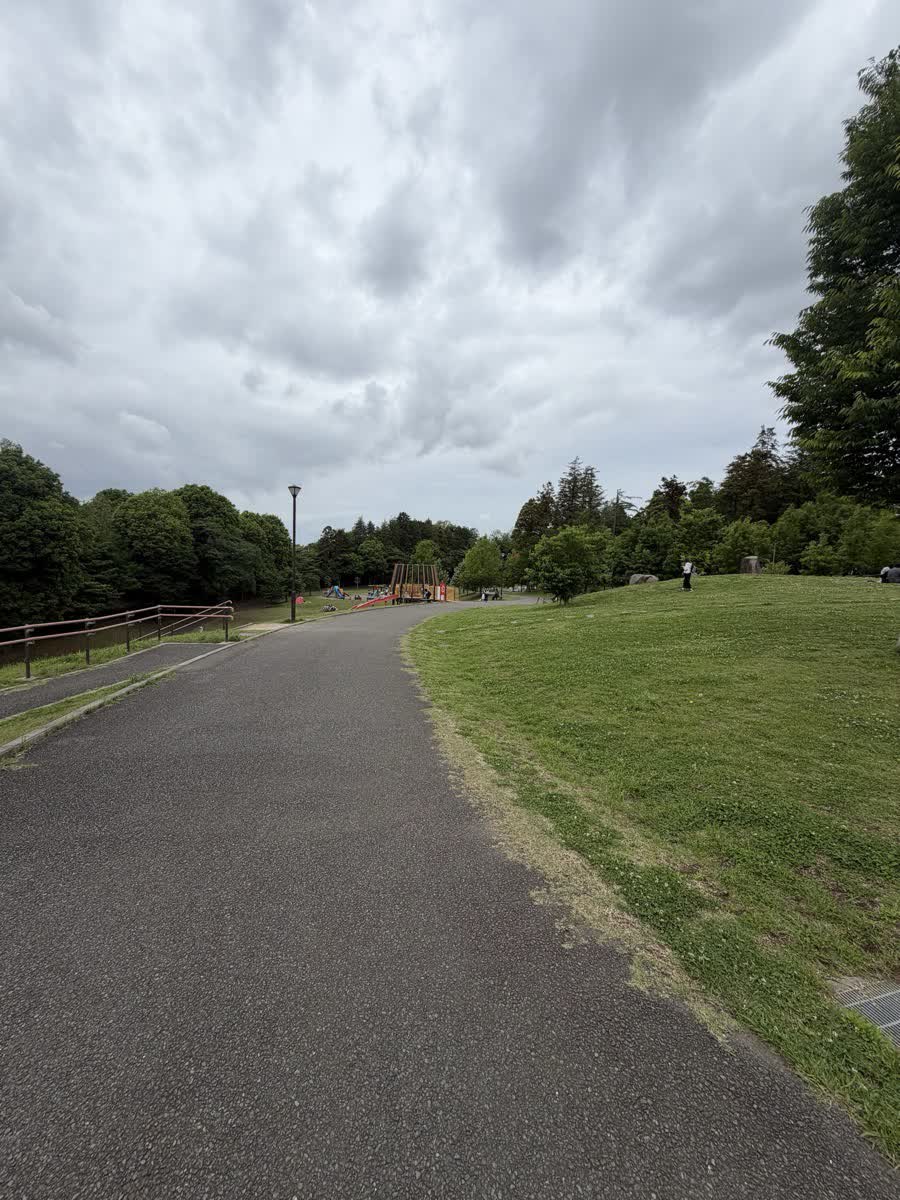
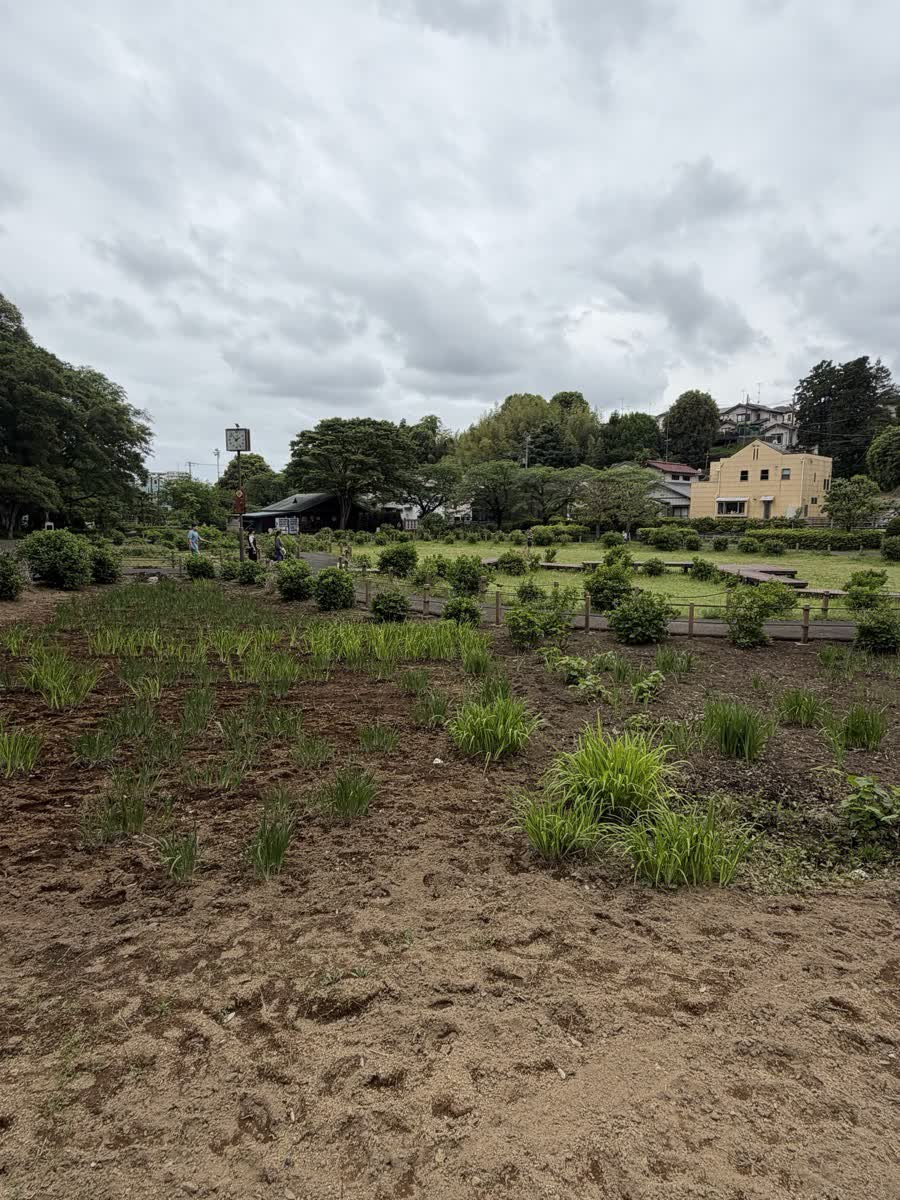
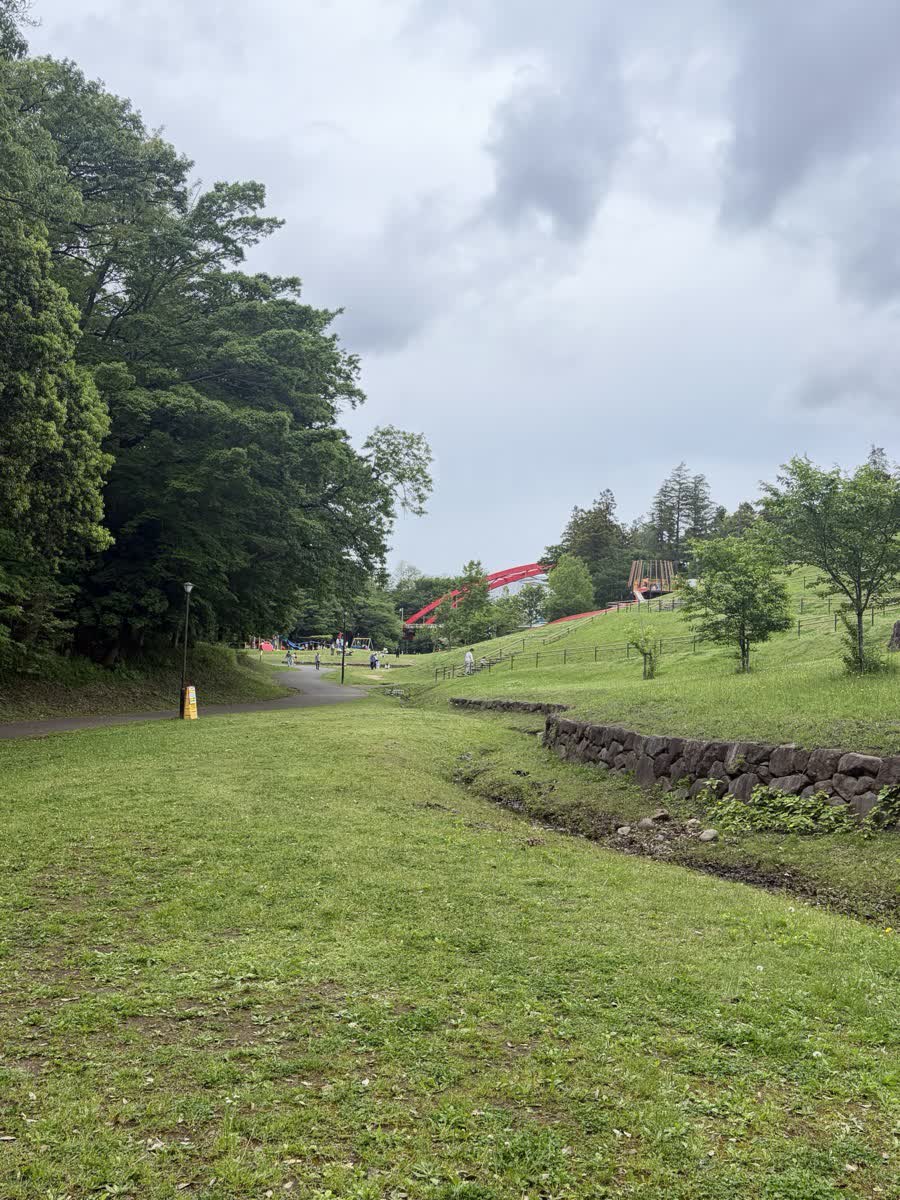
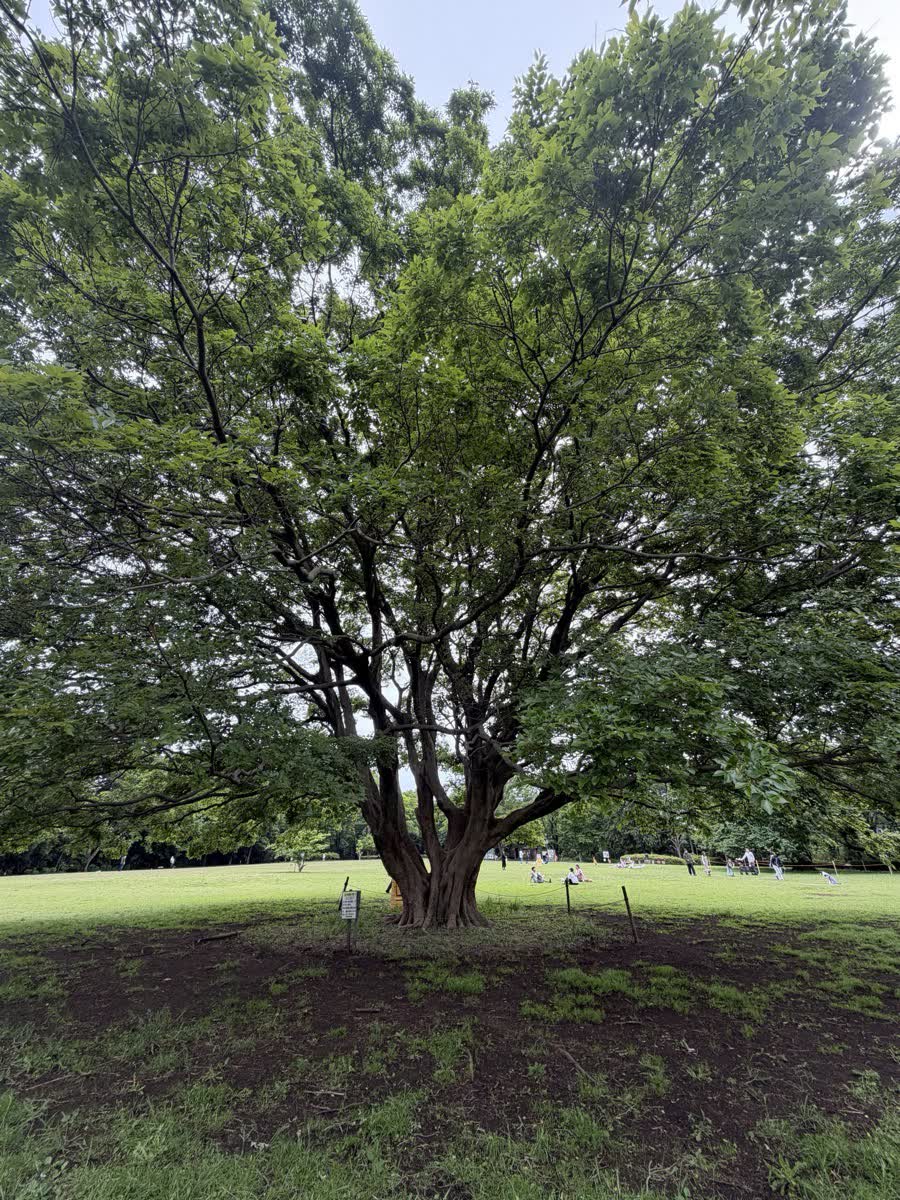
Serizawa Park is listed among Kanagawa's 50 Selected Parks. The grass is neatly cut, the paths are well paved, and the park has four toilets, four water facilities, and four vending machine areas.
It felt almost too well maintained.
At one point, we wondered what kind of budget kept the paths looking this good. That became the quiet question of the day.
The 50-Meter Roller Slide Is Actually Long
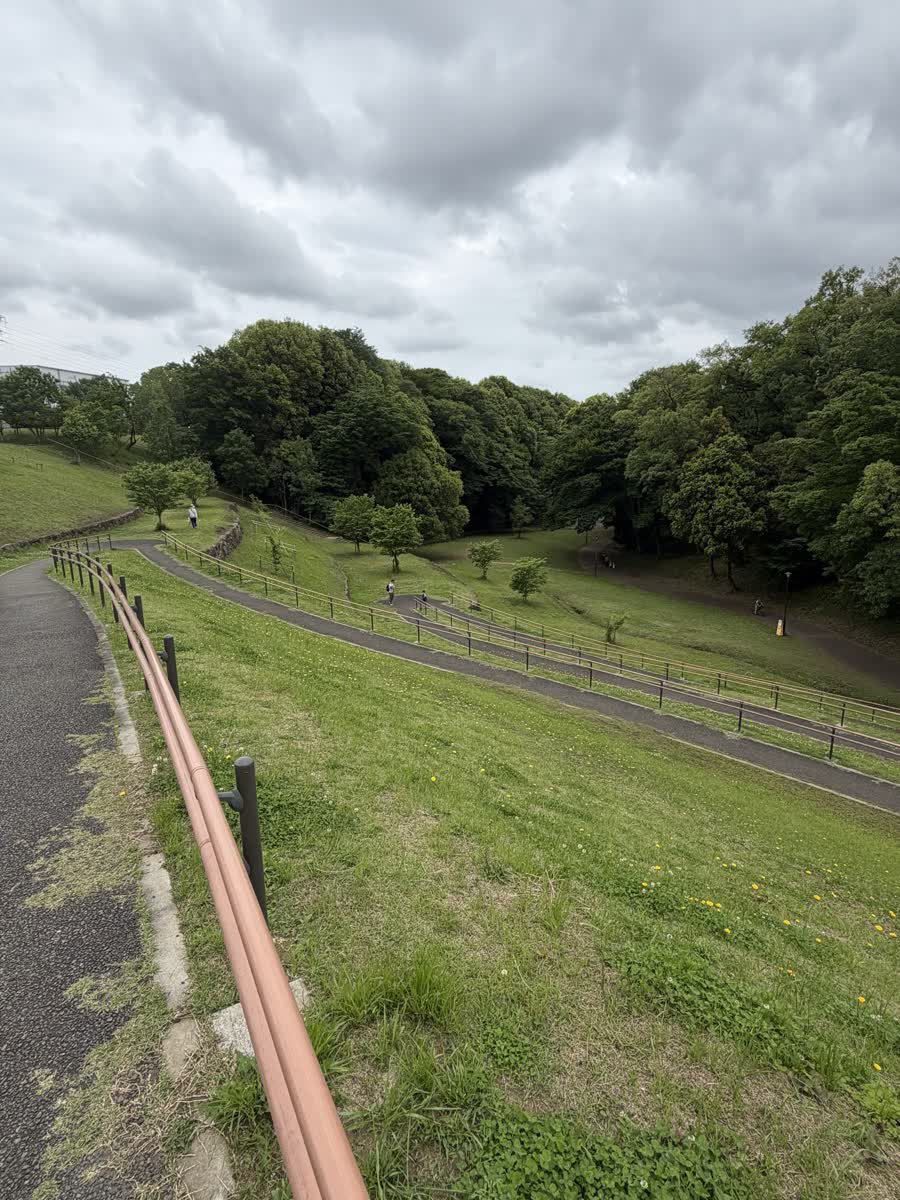
On the north side of the park, there is a roller slide about 50 meters long. Looking down from the top, the red slide stretches along the slope with grass and sky around it. It really does feel long.
Momiji showed no interest whatsoever.
Of course. A roller slide is not exactly a Shiba Inu priority.
The playground area also has combination play equipment, swings, horizontal bars, and other equipment. The paths are wide and smooth enough that families with strollers should have an easy time, especially if they enter from the north side.
Momiji Changed Her Face in the Forest
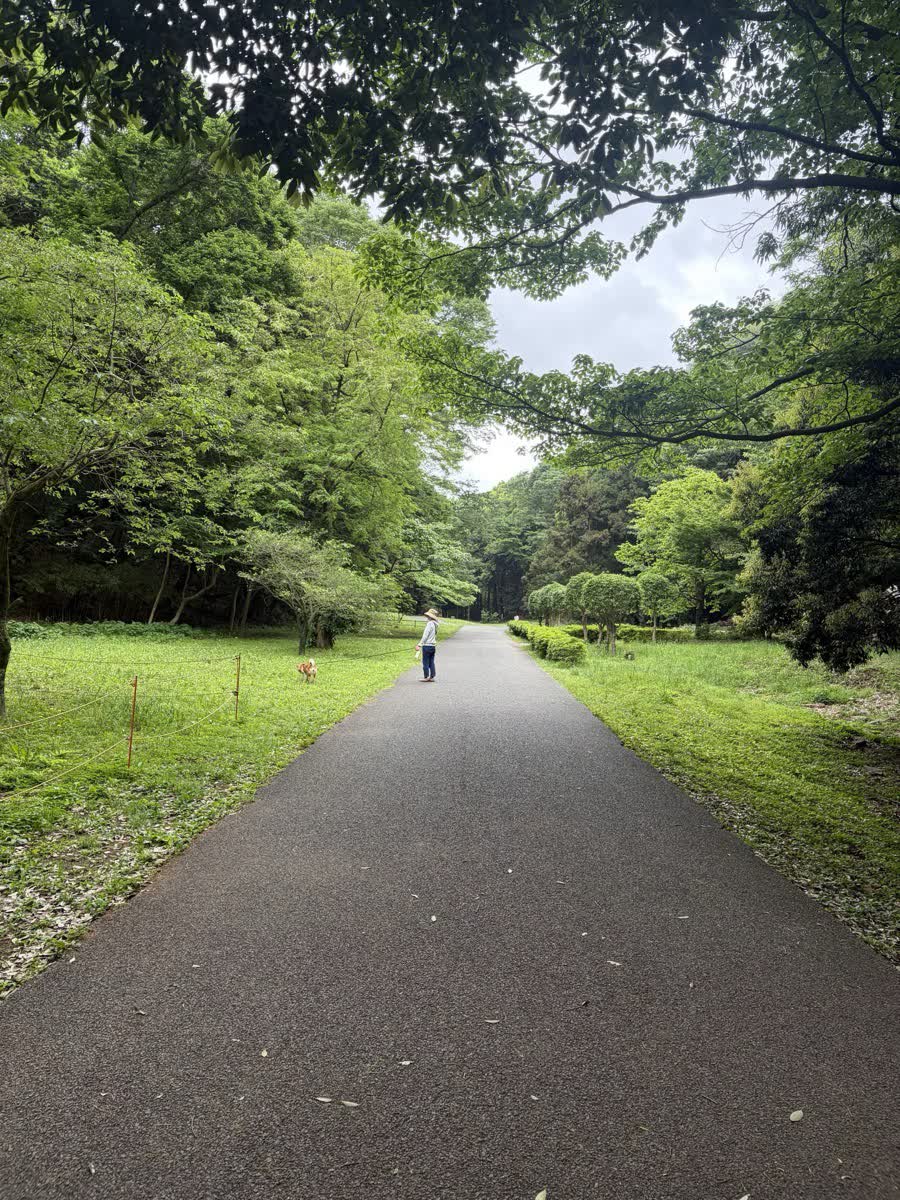
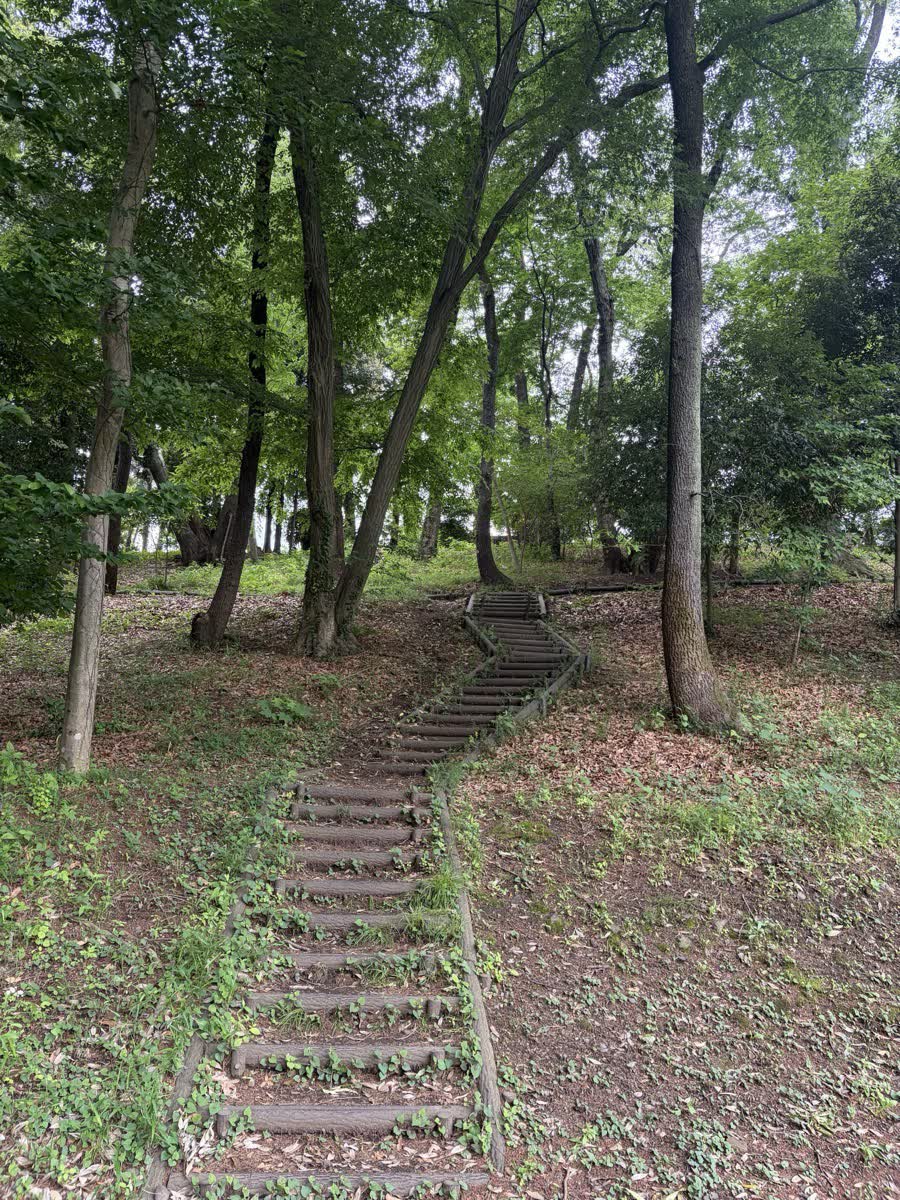
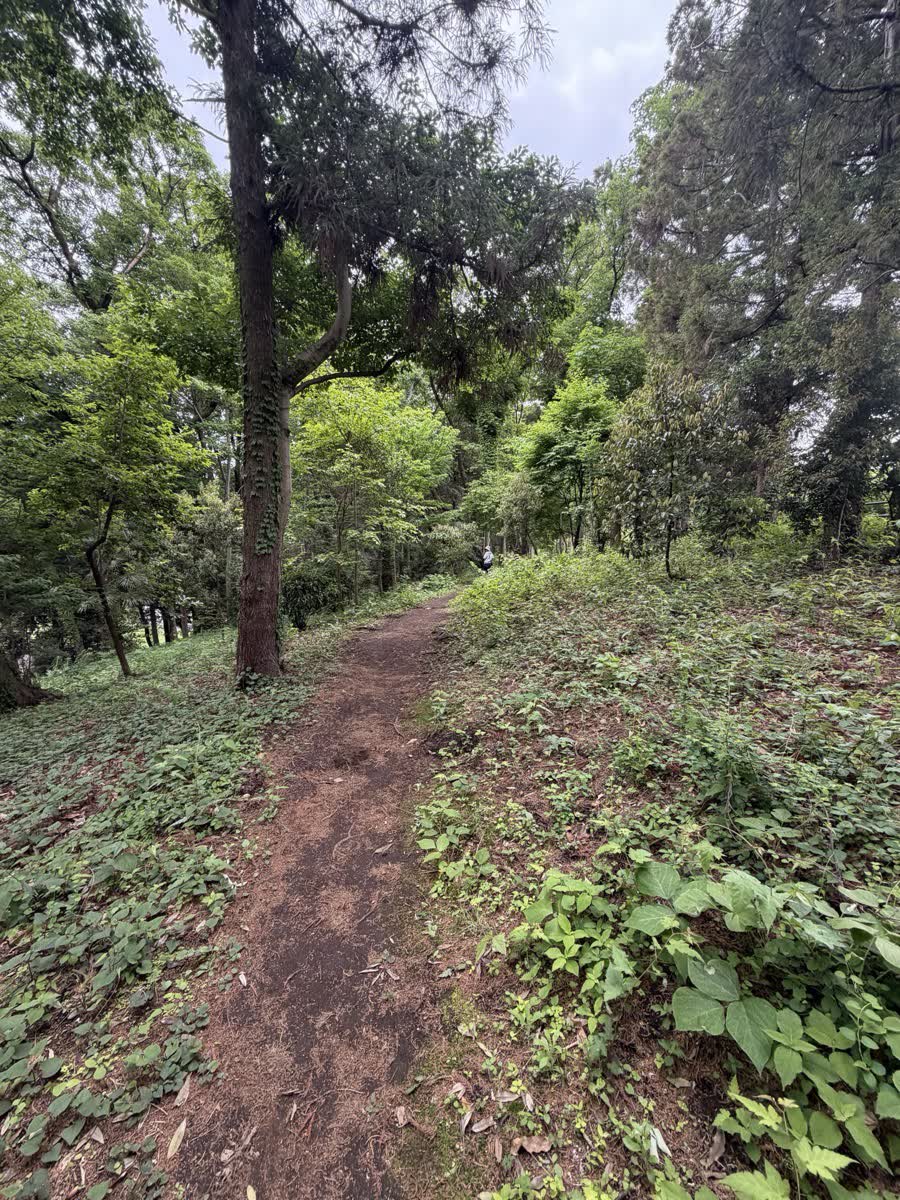
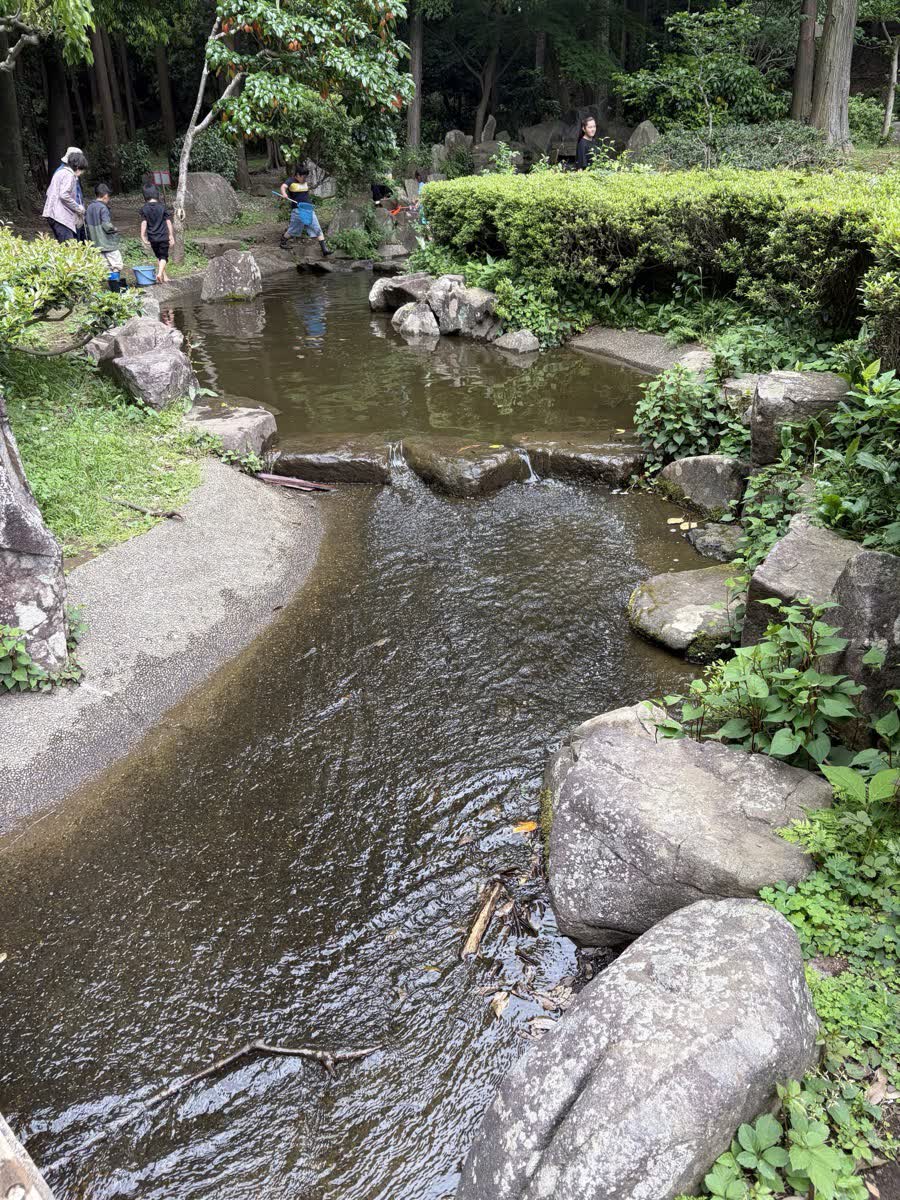
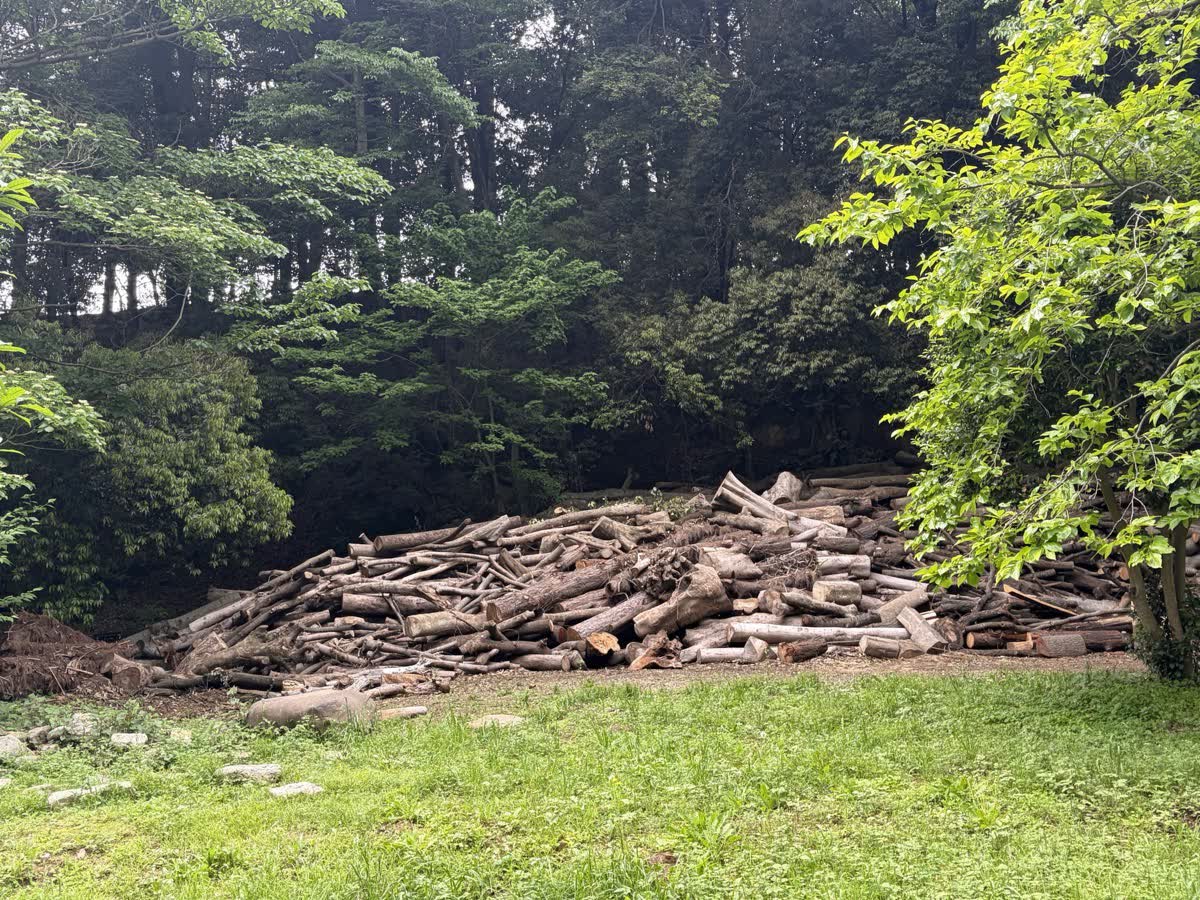
From the east side toward the south side of the park, there is a wooded water source conservation area.
The air changed as soon as we stepped away from the lawn and entered the trees. The leaves blocked the light, fallen leaves covered the ground, and the smell of humus rose from underfoot.
Momiji's face changed completely. She kept sniffing, her stride grew a little wider, and on the wooden boardwalk she stopped still, staring into the distance.
There are moments when you can tell a dog has decided, "This place is good."
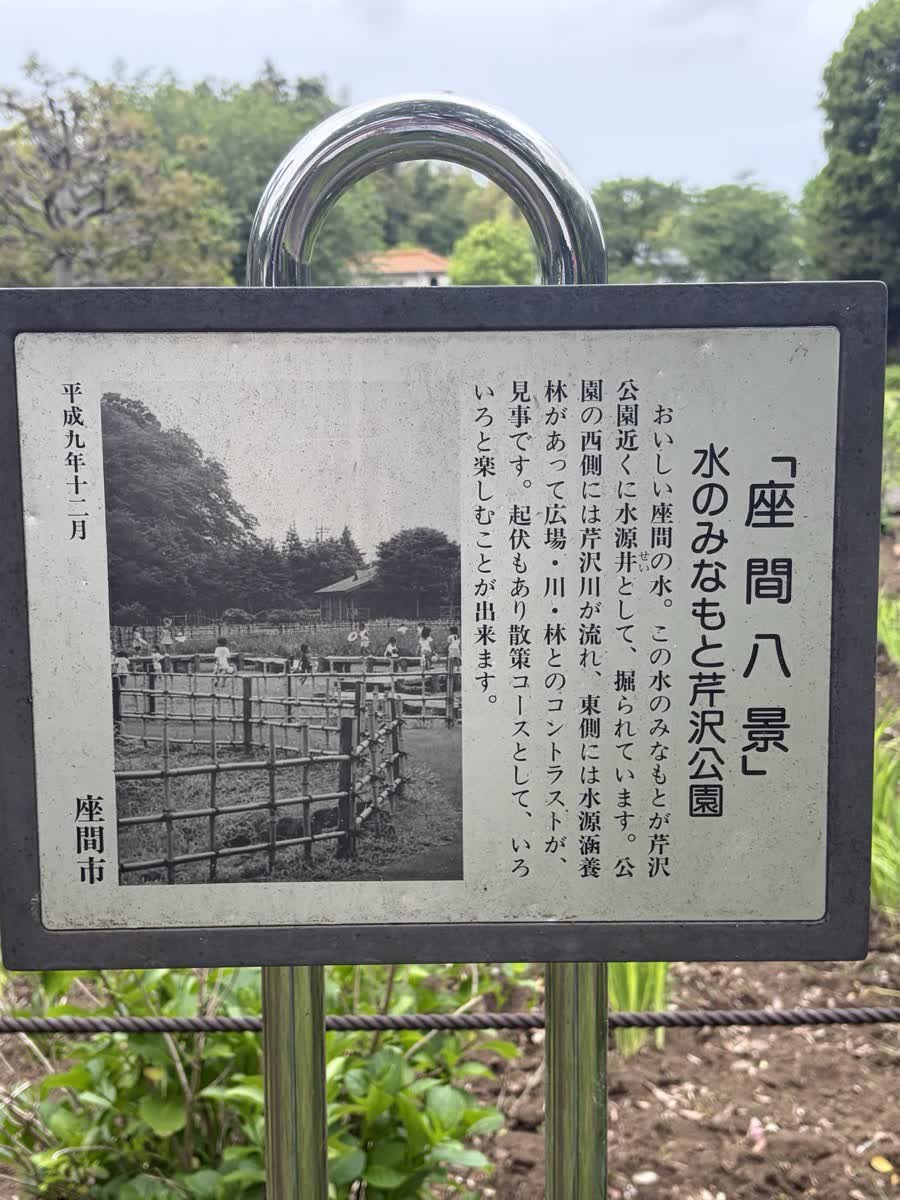
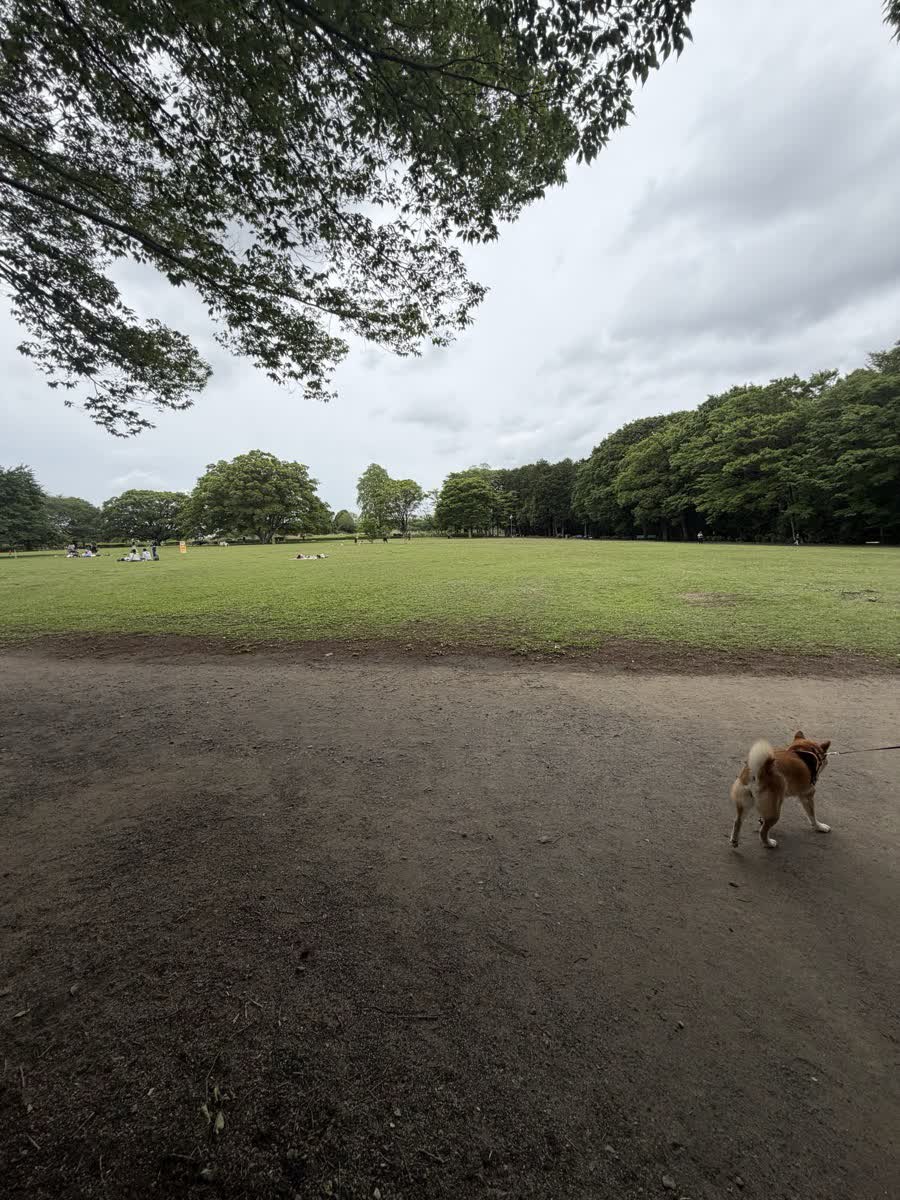
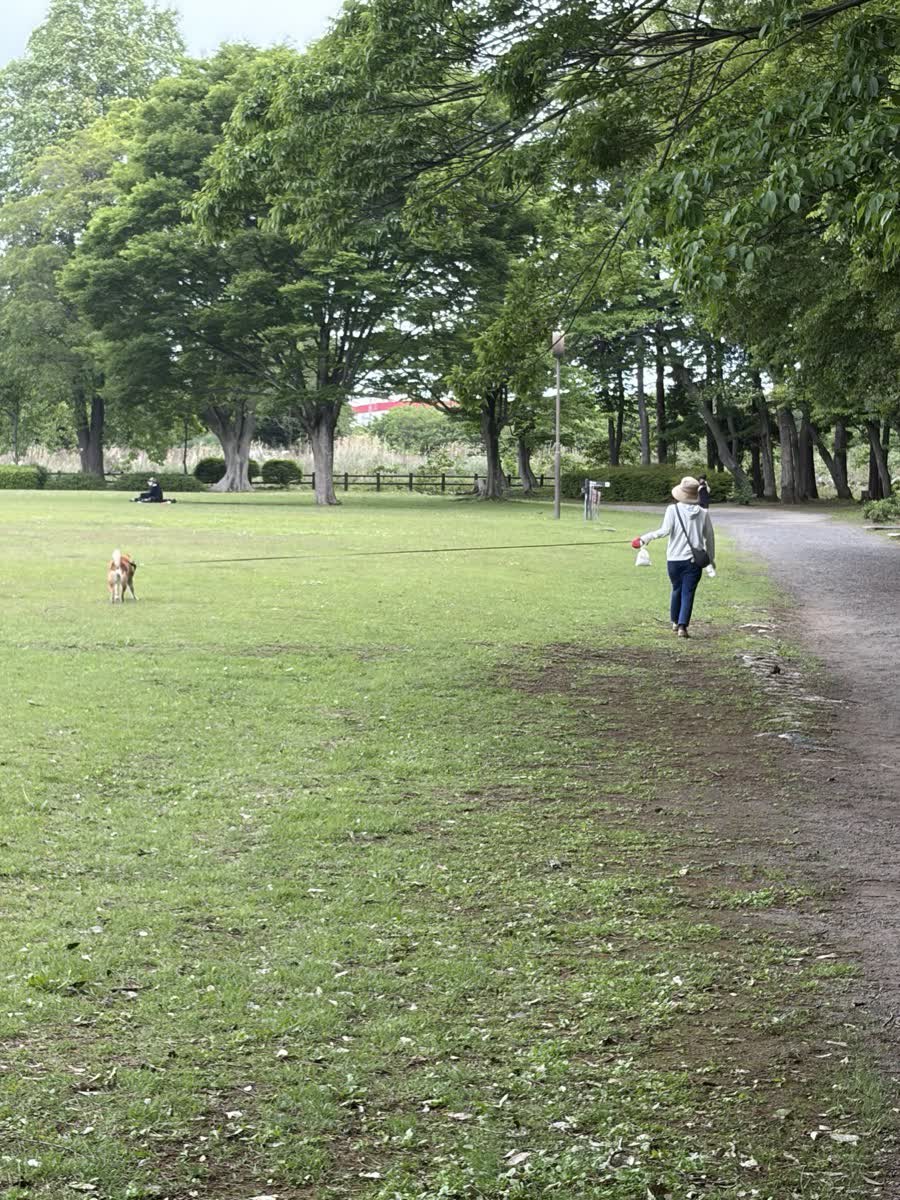
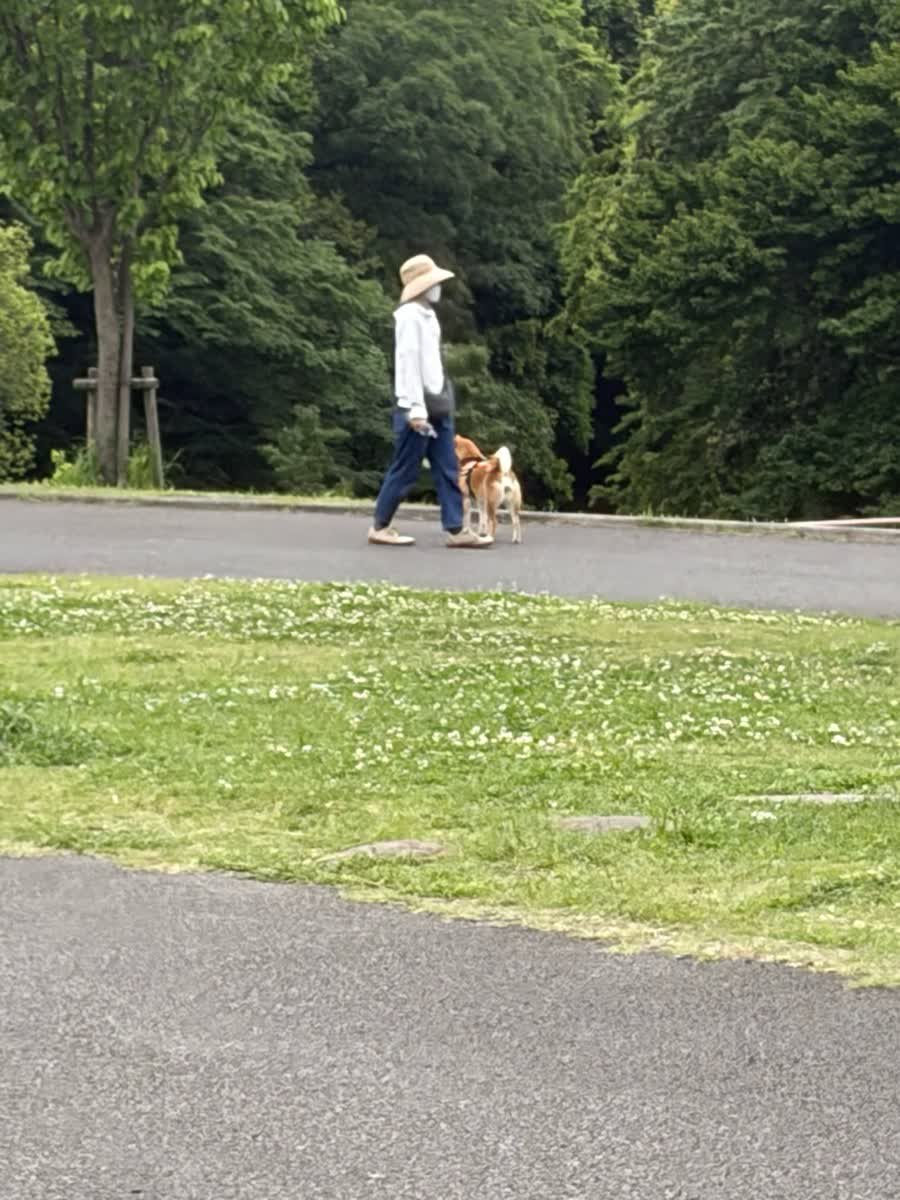
Dogs are allowed in the park, but a leash is required and owners need to take waste home. The playground equipment is for children, not for dogs, so that part is on us humans to handle properly.
The Underground Tunnel Made Me Stop
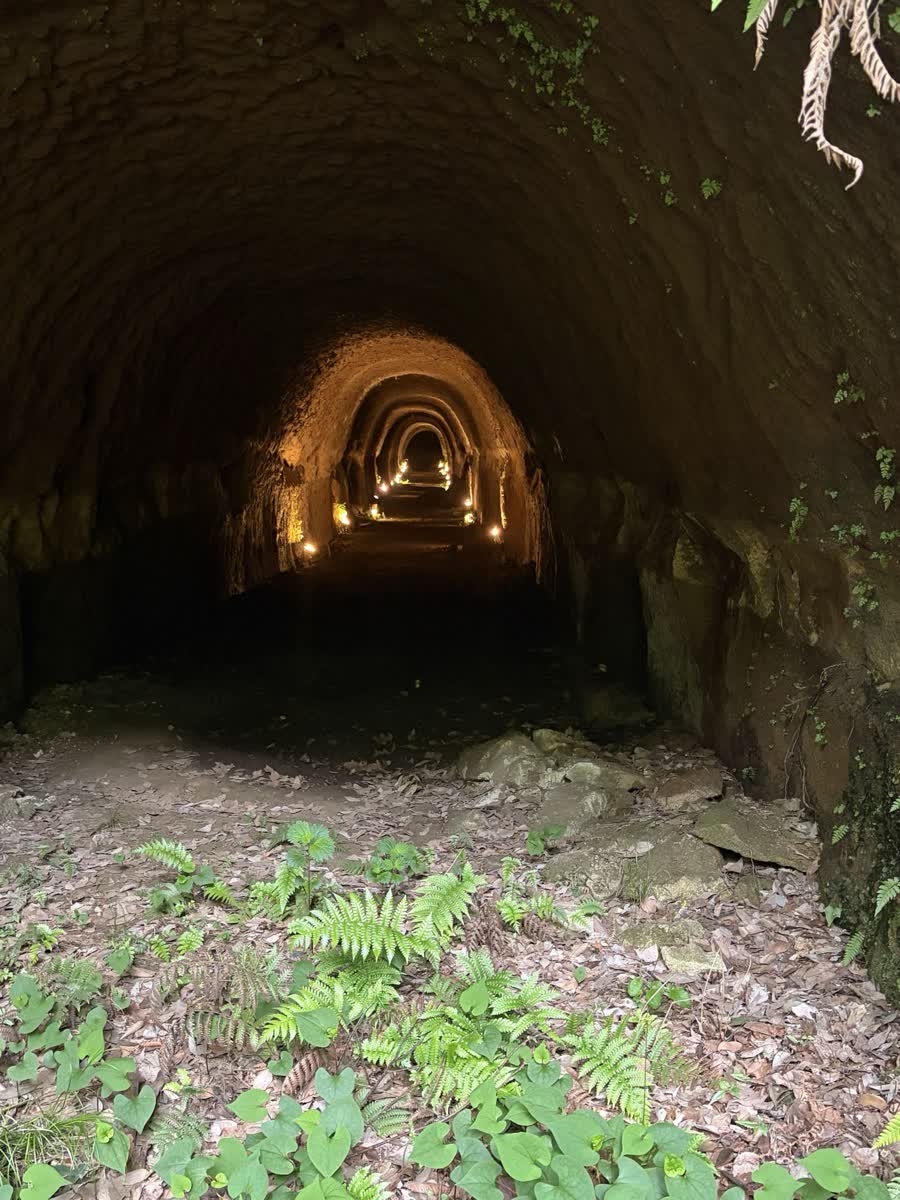
First, the practical note: visitors cannot enter the underground tunnel. You can only look in from behind the fence.
Even so, it was enough.
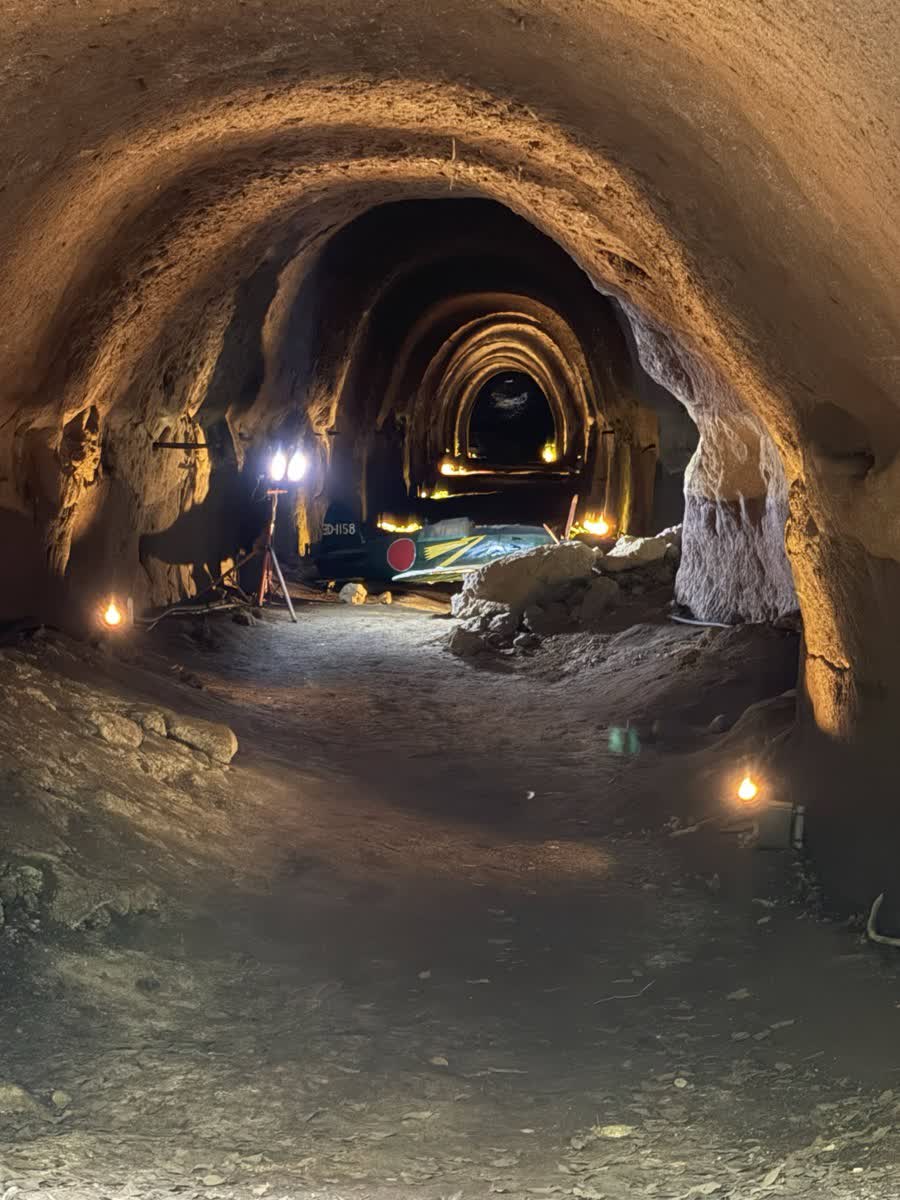
Through the fence, I could see rounded earth walls continuing into the darkness, lit at intervals by warm orange lights. Looking carefully, there is also a model airplane placed inside the tunnel.
My first thought was, "This looks almost magical."
Then I immediately felt that word was wrong.
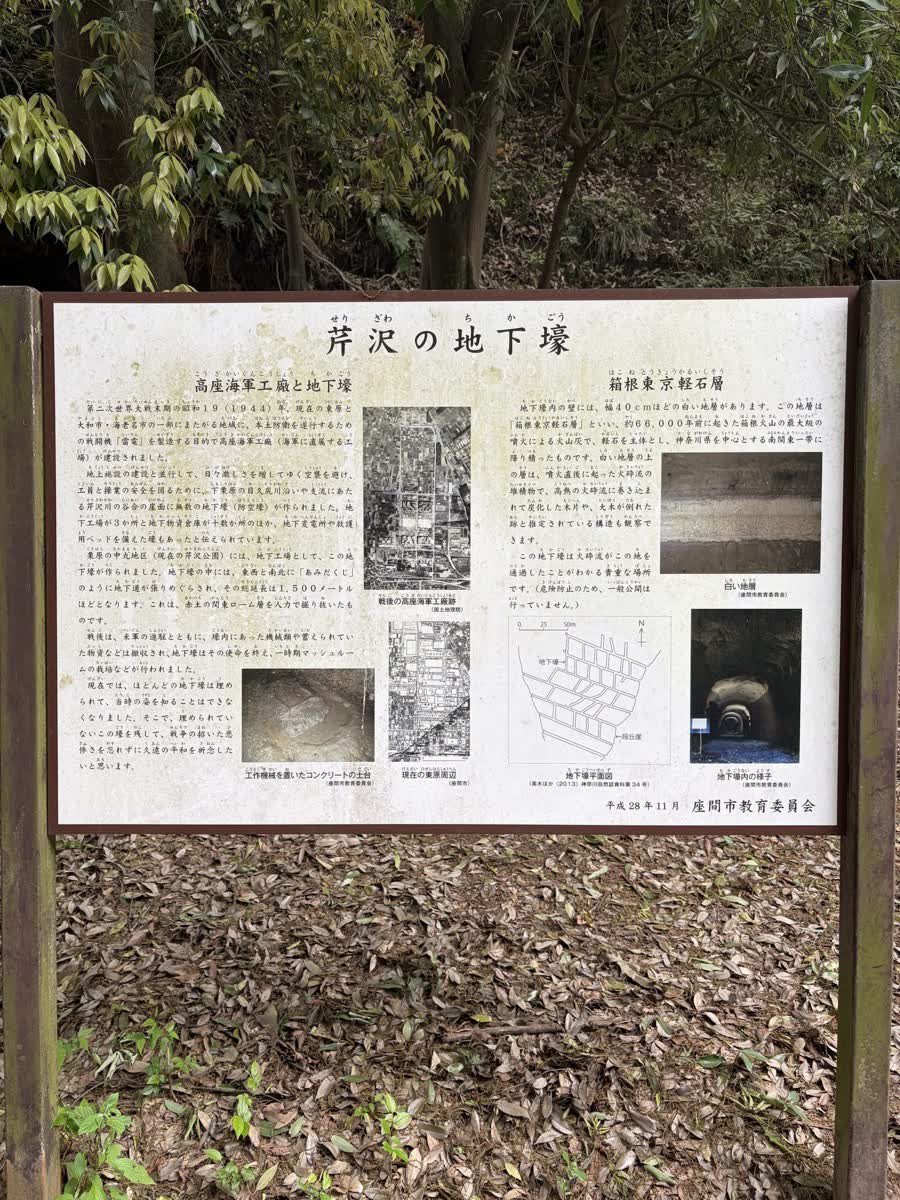
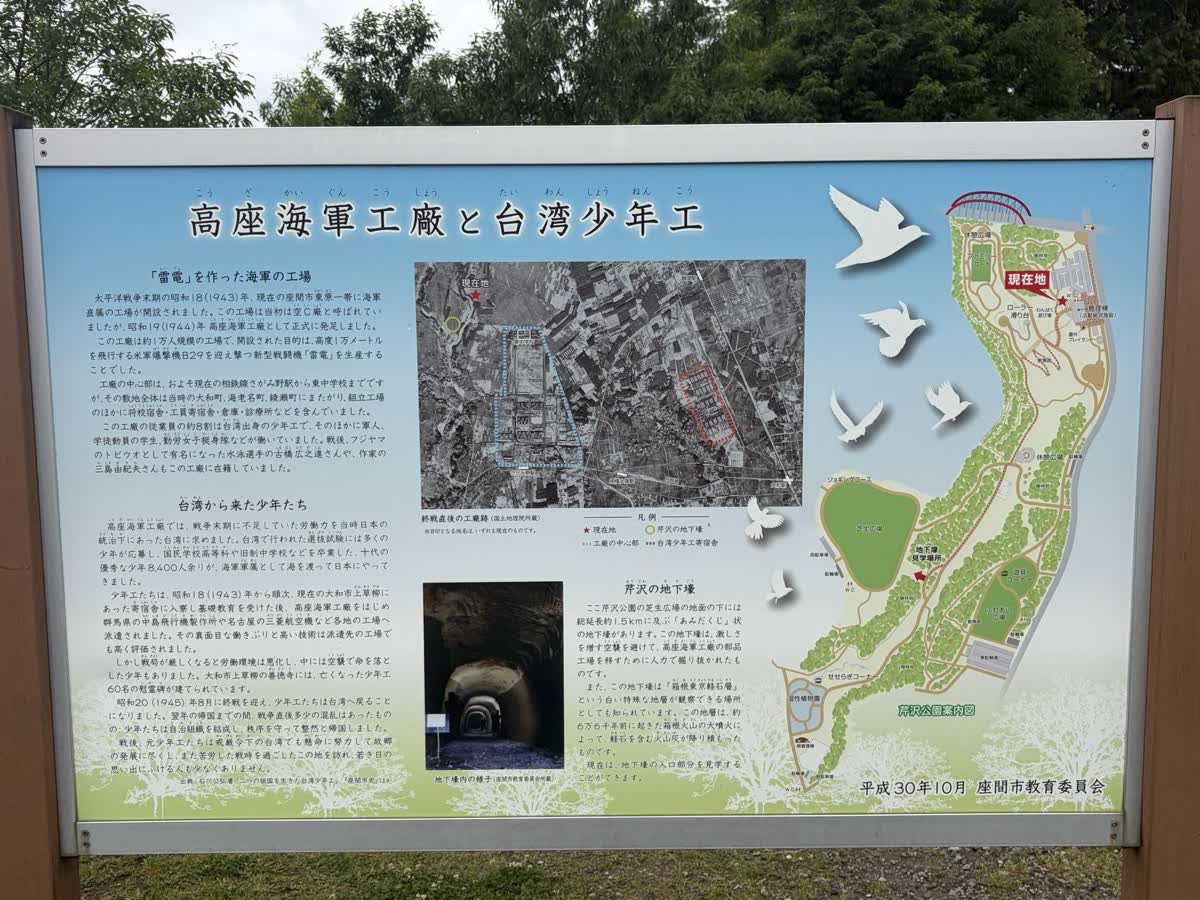
Near the end of World War II, this area was connected to the Koza Naval Arsenal. Tunnels were dug underground to avoid air raids, and the site is associated with the production of fighter aircraft parts. The park's own information boards explain the Koza Naval Arsenal, the Taiwanese youth workers, and the underground tunnel.
The uneven walls, the orange lights, the tunnel disappearing into the back, and the model airplane sitting inside it all made the past feel very close.
Not "magical."
Real.
That was the word that stayed with me. This quiet, well-kept city park has something much heavier preserved inside it.
Taiwanese Youth Workers and a Statue Called Hope
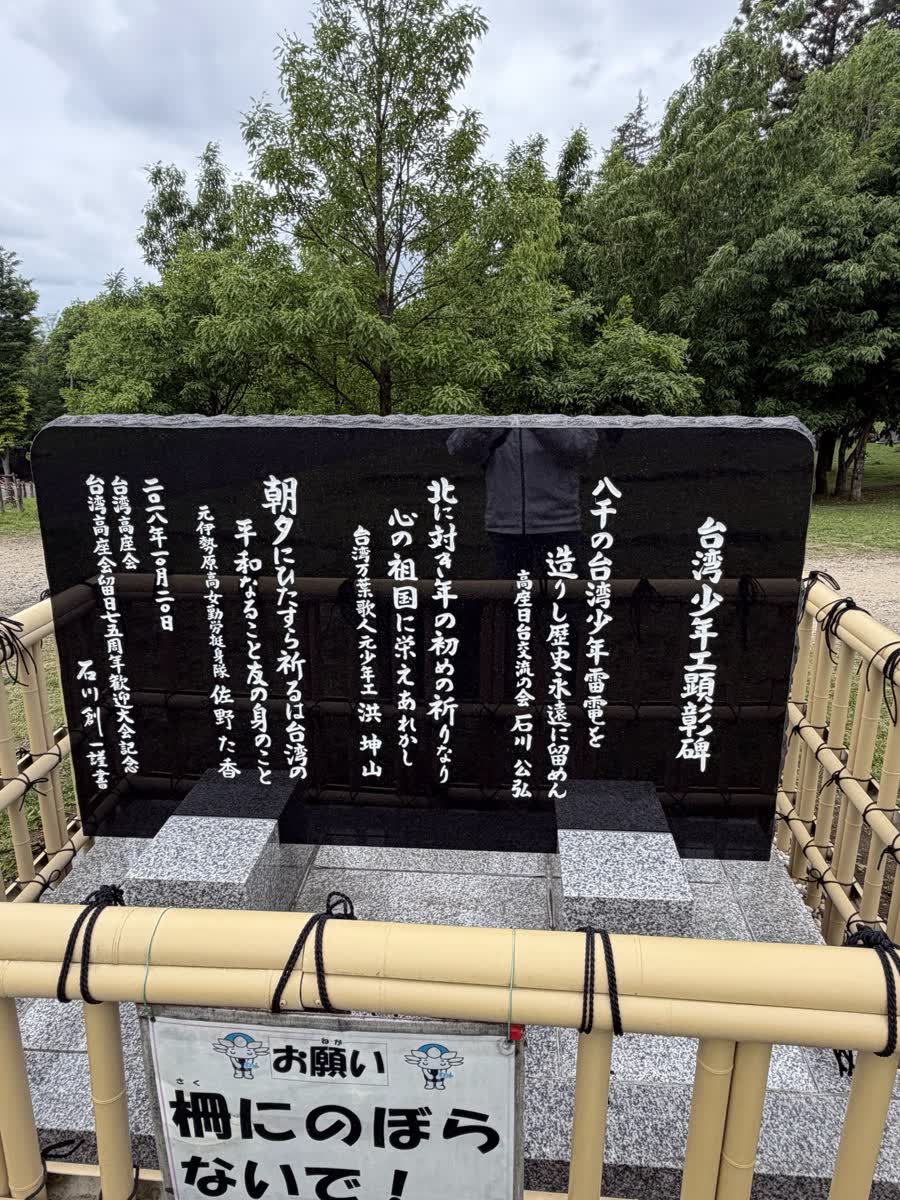
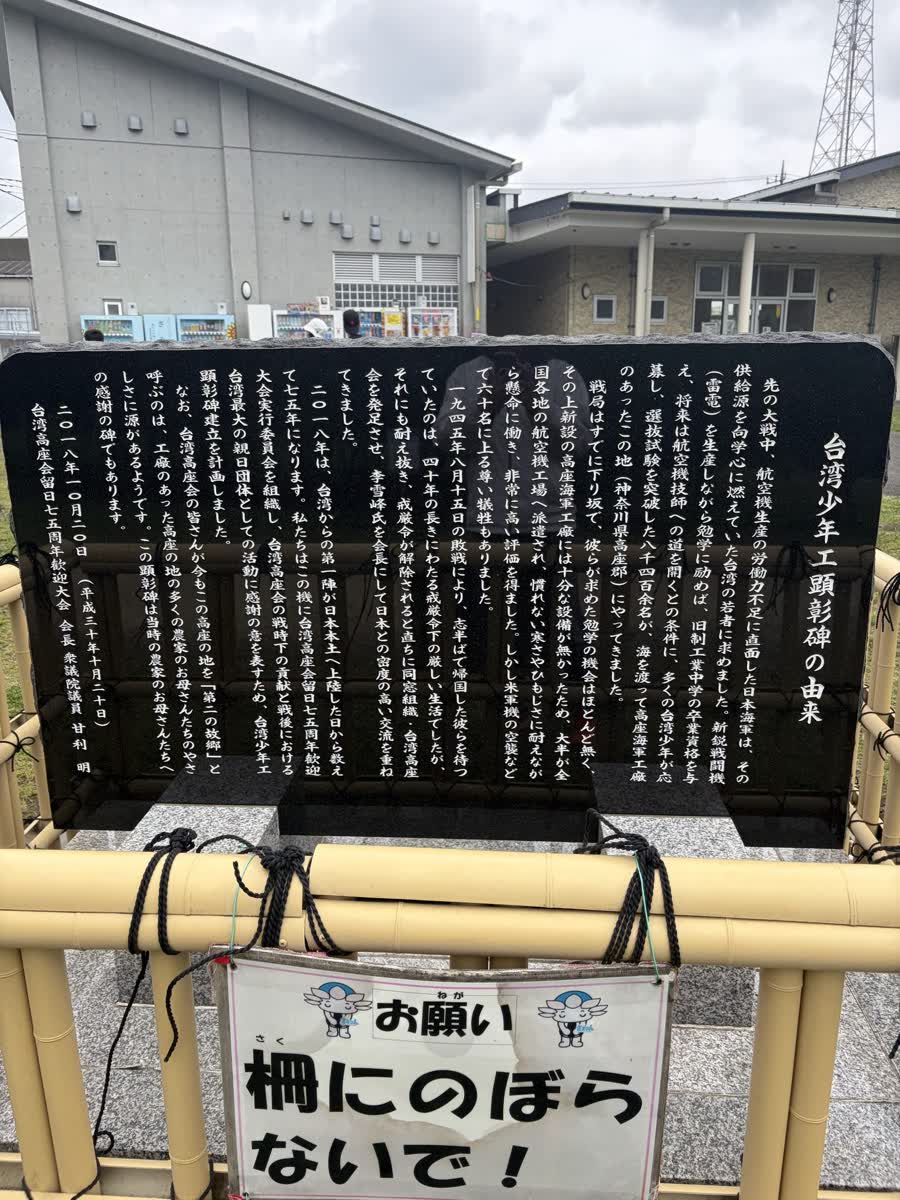
Near the underground tunnel, there is a memorial connected to the Taiwanese youth workers who worked here during the war. The stone monument and explanation board record a history that is not always visible in everyday park scenery.
I stopped there longer than I expected.
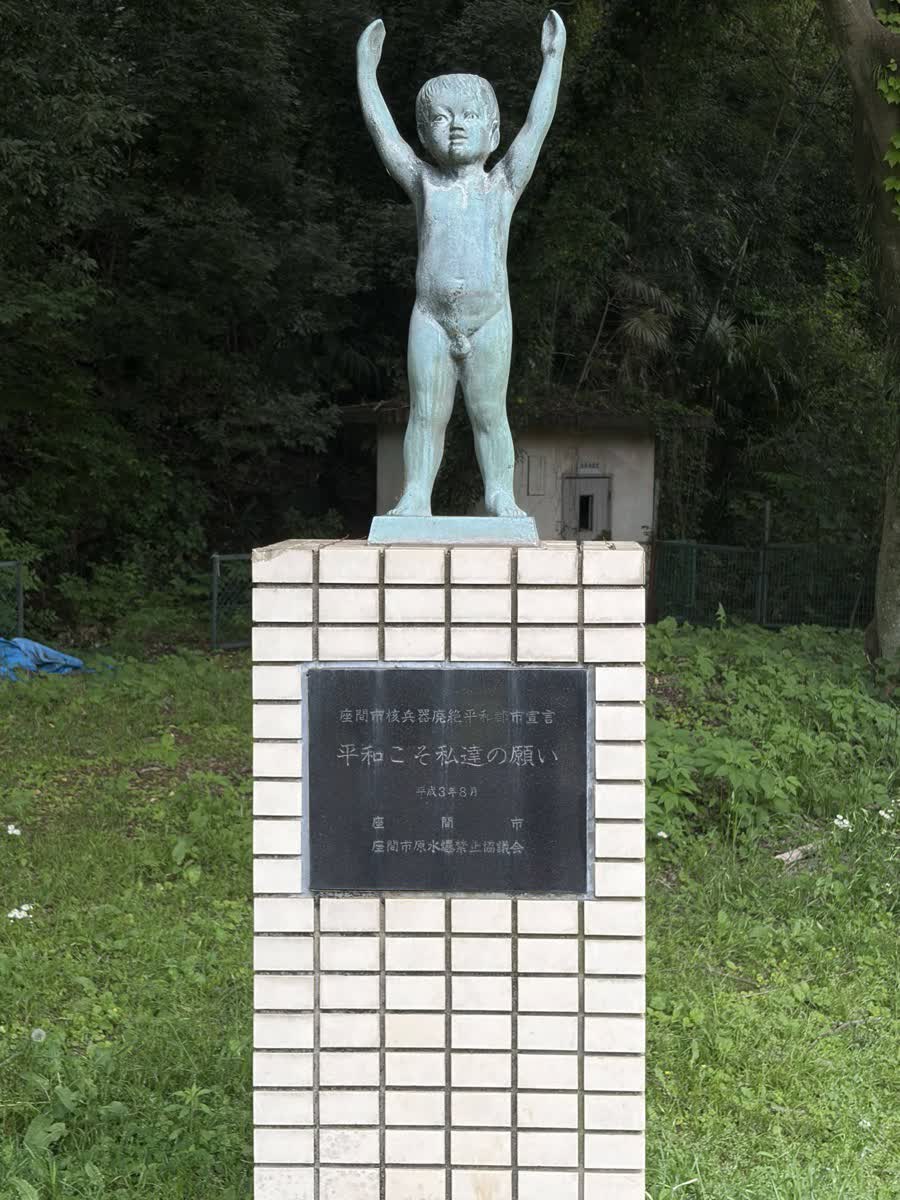
On the south side of the park, there is also a peace monument called "Hope." It shows a child with both arms raised toward the sky. Standing quietly among the greenery, it leaves an impression without needing to shout.
The Sign Explained the Mystery: A Defense Ministry Grant
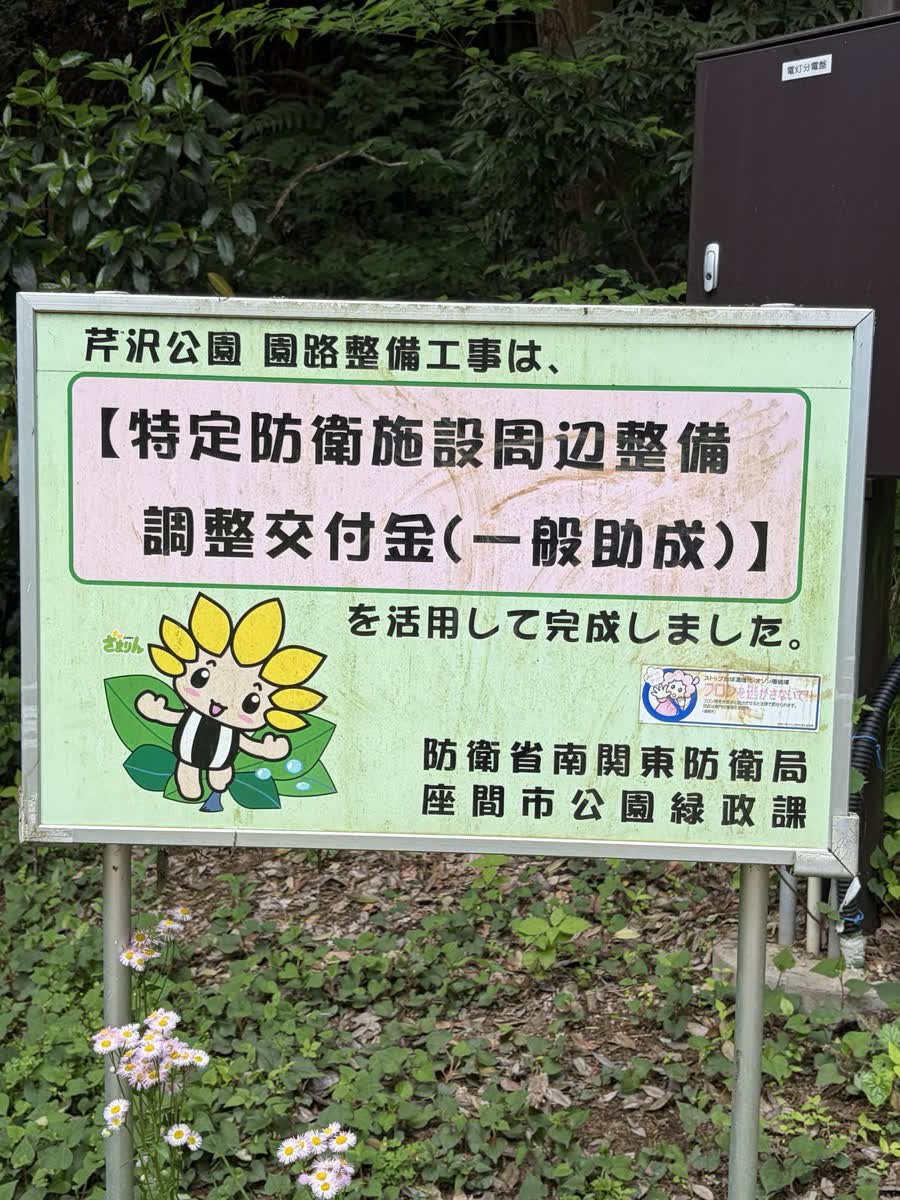
While walking, I noticed a sign about the park path improvement work.
It said that the Serizawa Park path paving project had been completed using the Specific Defense Facilities Surrounding Area Improvement Adjustment Grant.
That was the moment the pieces connected.
The important point is this: Serizawa Park itself is not a Ministry of Defense facility. It is a municipal park owned and managed by Zama City.
But Zama City is home to Camp Zama, a United States Army facility in Japan. Under Japan's system for communities around defense facilities, grants can be provided to municipalities for public facilities and living environment improvements. Zama City's official page lists "Serizawa Park path paving" among the projects funded through this grant in fiscal 2018.
The aircraft noise we noticed from the start. The unusually clean paths. The underground tunnel. The memorial for Taiwanese youth workers. The sign about the Defense Ministry grant.
They were not separate impressions anymore.
They formed one line.
We kept walking like normal, but I found myself thinking about how past and present sit side by side here: a peace monument, a wartime tunnel, a memorial, aircraft overhead, and public park improvements partly supported by a national defense-related grant.
I appreciated that the park did not hide that history. It simply lets it stand there.
Momiji Was Fine. The Humans Were Tired.
Near the end of the walk, my wife slowed down. I asked if she was tired.
"You are too," she said. "It's written all over your face."
Apparently it was.
Momiji, on the other hand, stayed energetic the whole time. Even after leaving the park, her tail was still up.
We had talked about stopping somewhere on the way home, but both humans were tired enough that we went straight back. Sometimes that is how a good walk ends.
Final Thoughts
Serizawa Park was a good park. But it was not only a good park.
That is the honest feeling I brought home.
At first, I almost wanted to describe the underground tunnel as beautiful. But once I remembered what it actually was, that word felt too light. A well-maintained park can make history feel easier to consume, but the history itself is not decoration.
I would like to return in June, when the irises and hydrangeas are said to be in season.
Whether Momiji will care about the flowers is another question. She will probably care more about the smell of the soil.
Serizawa Park Notes
- Location: 2593-1 Kurihara, Zama City, Kanagawa Prefecture (Google Maps)
- Parking: Free, 173 spaces total
- Parking hours: May 1 to October 31, 8:30 AM-6:00 PM; November 1 to April 30, 8:30 AM-5:00 PM
- Dogs: Allowed, leash required, take waste home
- Admission: Free
Official Sources
- Zama City: Serizawa Park
- Zama City: Specific Defense Facilities Surrounding Area Improvement Adjustment Grant
Related Posts