
About 9 minutes
Hi, I am Hiroshi.
My wife went home before me.
That sounds like the beginning of a marital crisis, but the real reason was simpler: the waiting time at the Sagamihara Giant Kite Festival was much longer than we expected. We arrived around 10 a.m., and the main giant kite finally rose at about 2:10 p.m. I waited more than four hours. My wife lasted about two hours, said, "I am heading home first," and left me there on the riverbed. I had forgotten sunscreen. By the time I got home and looked in the mirror, my face was bright red.
Even so, I am glad I went.
I have lived in Sagamihara for a while, but this was my first time actually going to the Giant Kite Festival. I had kept thinking, "It is nearby. I can go anytime." That is exactly how people end up never going. When I was a kid living in Kyoto, I used to wonder why school trips came all the way there. Thirty years after leaving Kyoto, I finally understand how special it was. The Giant Kite Festival was that kind of thing too.
So for anyone thinking of going next year or later, I am writing down everything I learned: the waiting, access, heat, sun protection, and the moment the giant kite finally climbed into the sky.
Who this post is for
- People living in Sagamihara or Kanagawa who have never been to the Giant Kite Festival
- Anyone wondering where to go during Golden Week
- People who have been saying “maybe next year” for years running
- Anyone curious about what a four-hour wait actually looks and feels like
- People in their 50s or 60s who want to experience traditional Japanese culture in person
What I learned (the conclusion)
When something is close, we tend not to go. But once you actually visit, you sometimes realize the weight of what has been there all along. That is what this festival was for me.
Table of Contents
- A 15-Minute Walk from Sobudaishita Station. The Road There Was Already Worth It
- We Arrived Around 10 a.m. The Festival Was Already Moving
- Watching the Giant Kite Being Prepared Was Worth the Trip by Itself
- And Then Came the Four-Hour Wait
- After Setup, the Giant Kite Was Put on Display for the Crowd
- 2:10 p.m. It Finally Rose into the Blue Sky
- My Wife Became Tutankhamun. I Became a Red Tomato
- On the Way Back, I Walked to Harataima Station. My Back Was Done
- A Festival of Nearly 200 Years, and the Reality Facing Local Traditions
- Summary
A 15-Minute Walk from Sobudaishita Station. The Road There Was Already Worth It
This time we went by train and got off at Sobudaishita Station on the JR Sagami Line.
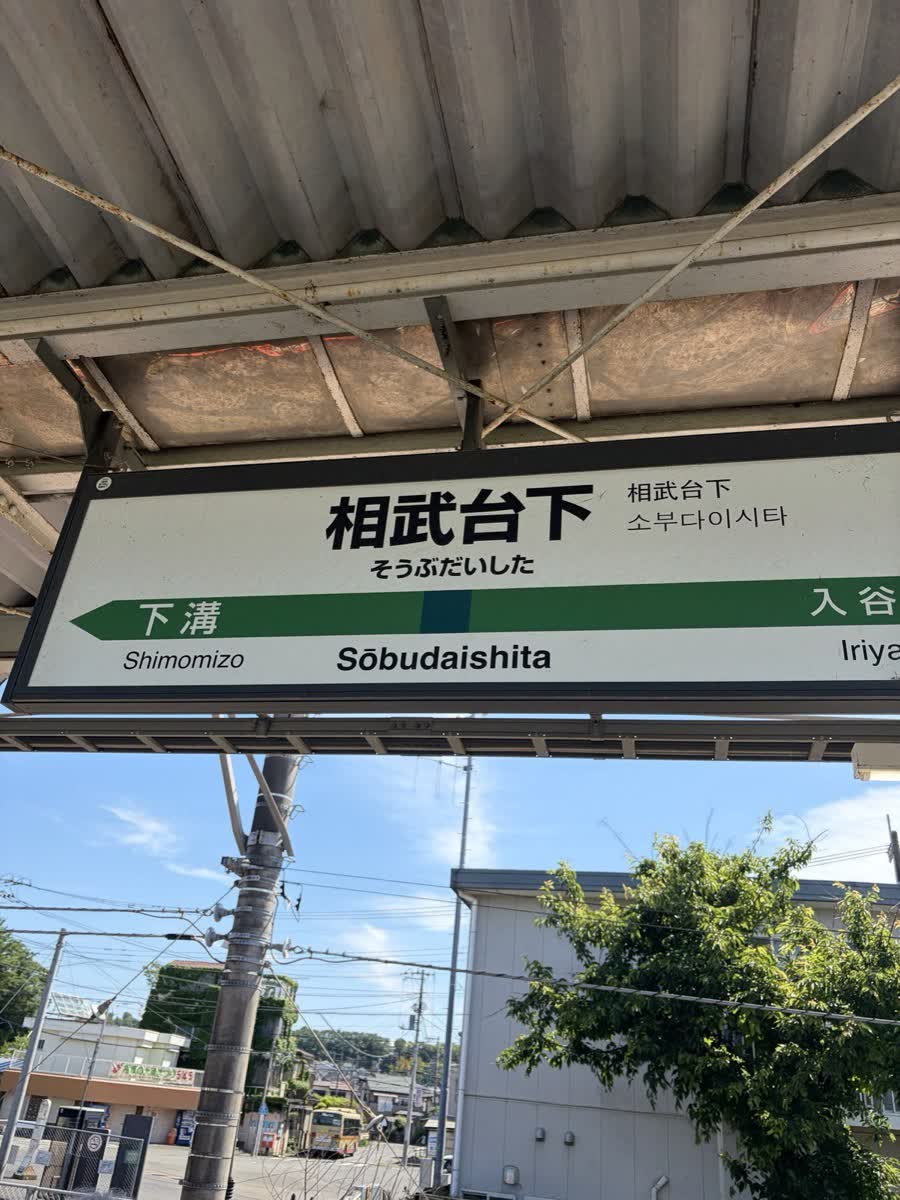
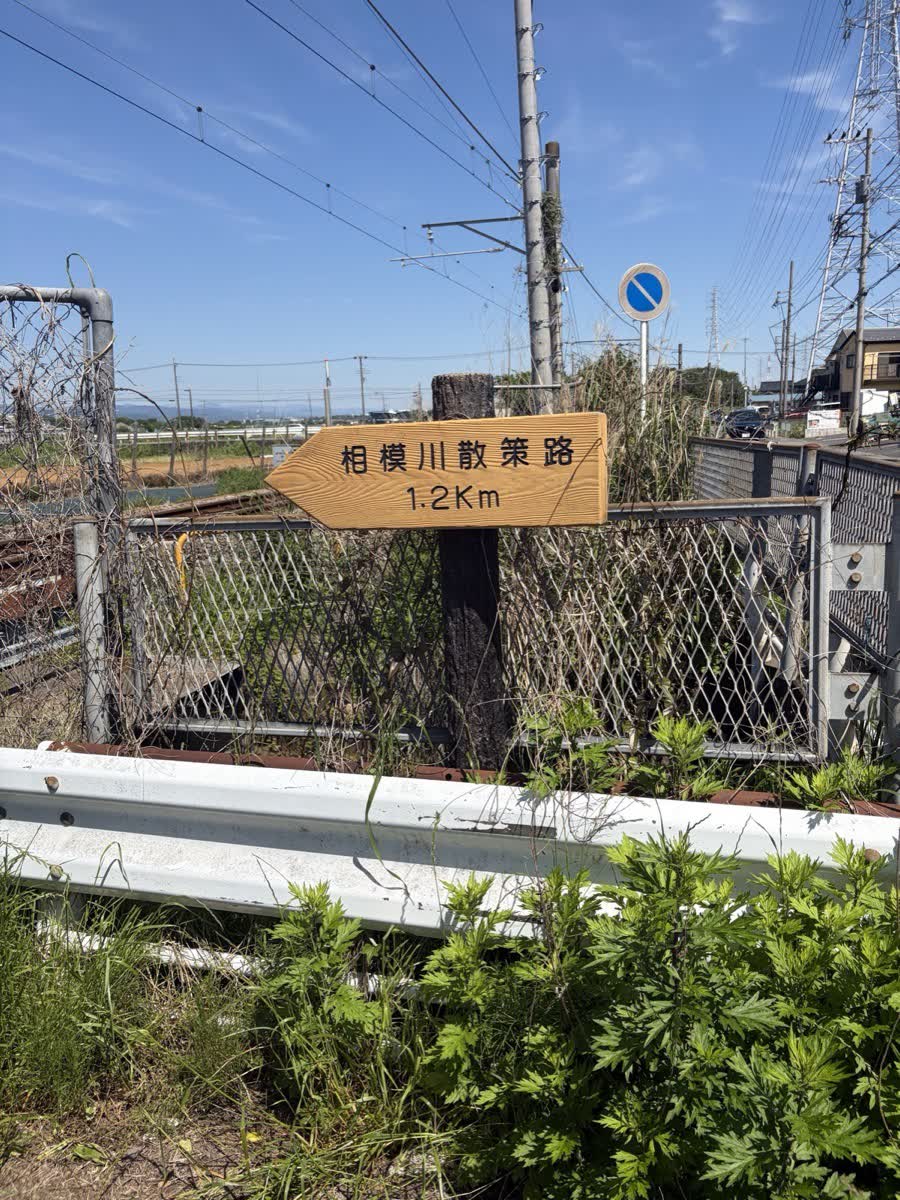
It takes about 15 minutes to walk from the station to the festival grounds. The rice fields open up around you, and Mount Oyama stands clearly in the distance. Walking side by side with my wife felt good. At that point, we had no idea what was coming. I definitely did not imagine I would be standing for four hours afterward.
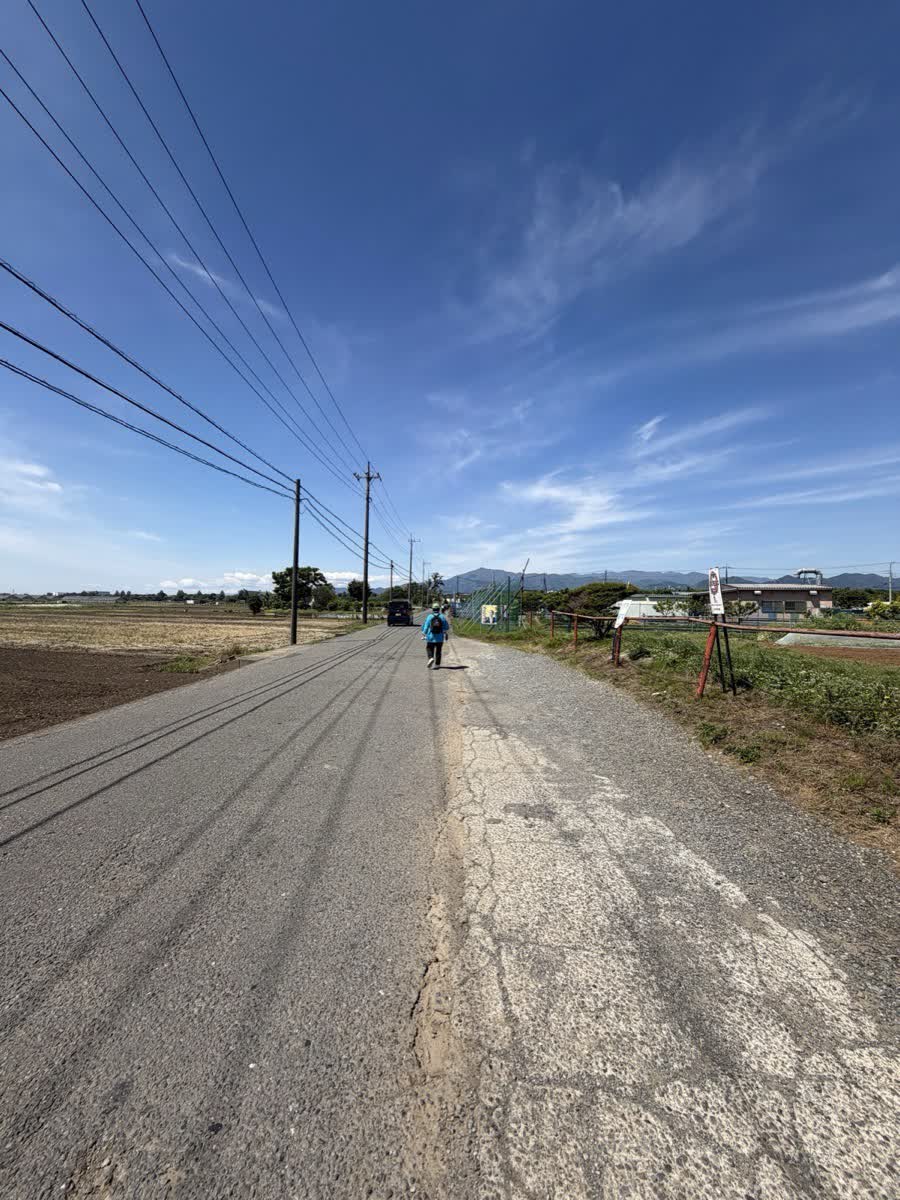
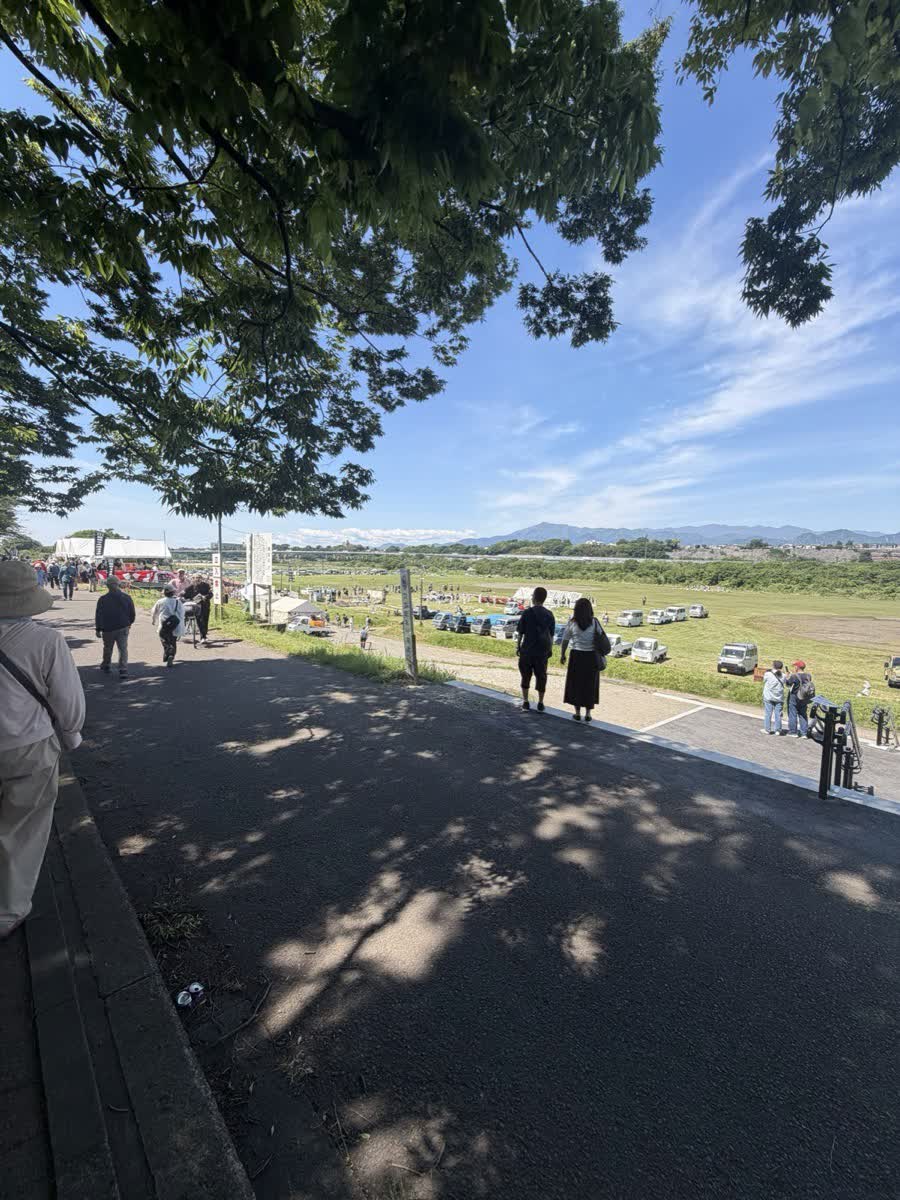
By the way, walking this road again on the way back was tough. If you are not confident in your stamina, I strongly recommend going by motorcycle or car.
We Arrived Around 10 a.m. The Festival Was Already Moving
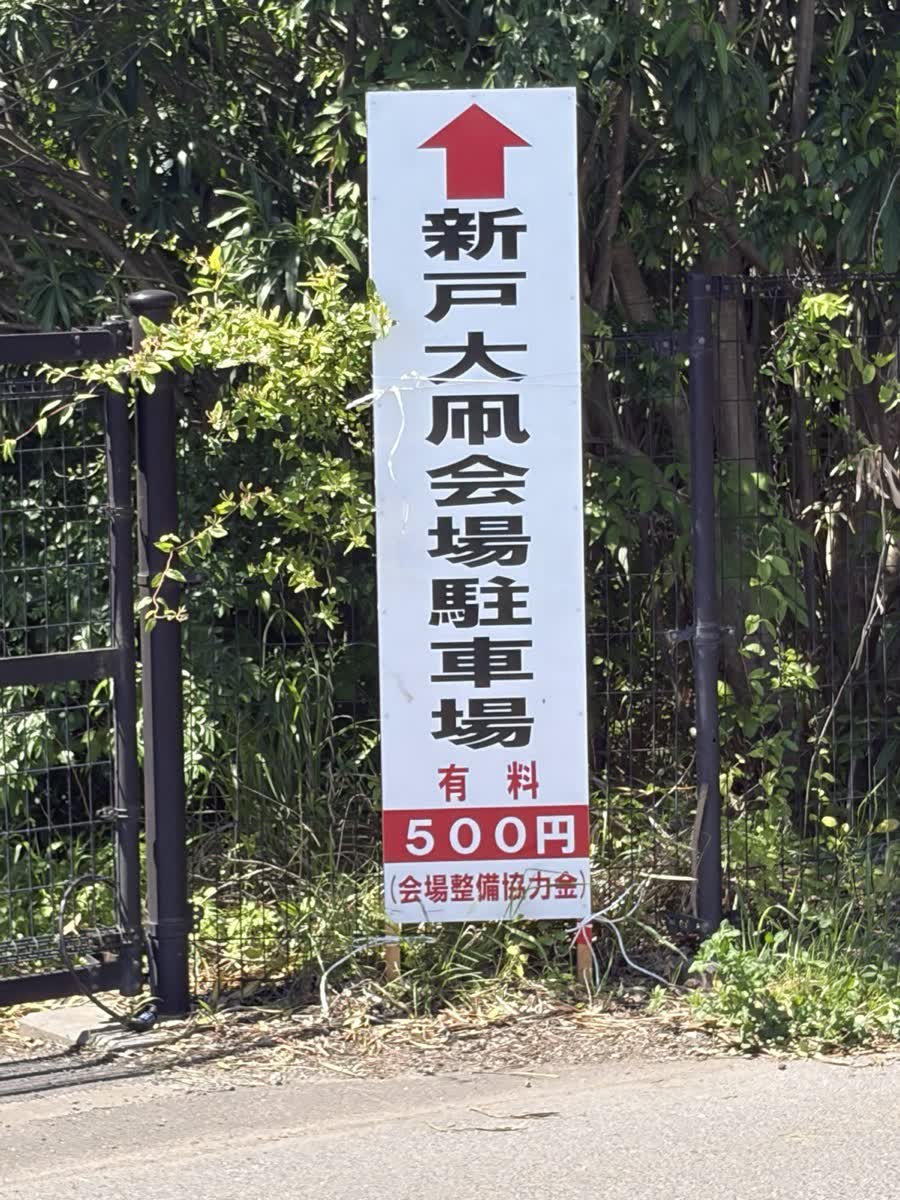
We reached the venue around 10 a.m. The parking lot was already about half full. It was 500 yen this year, though that may change depending on the year. If you are coming by car, arriving early is probably the safer choice.
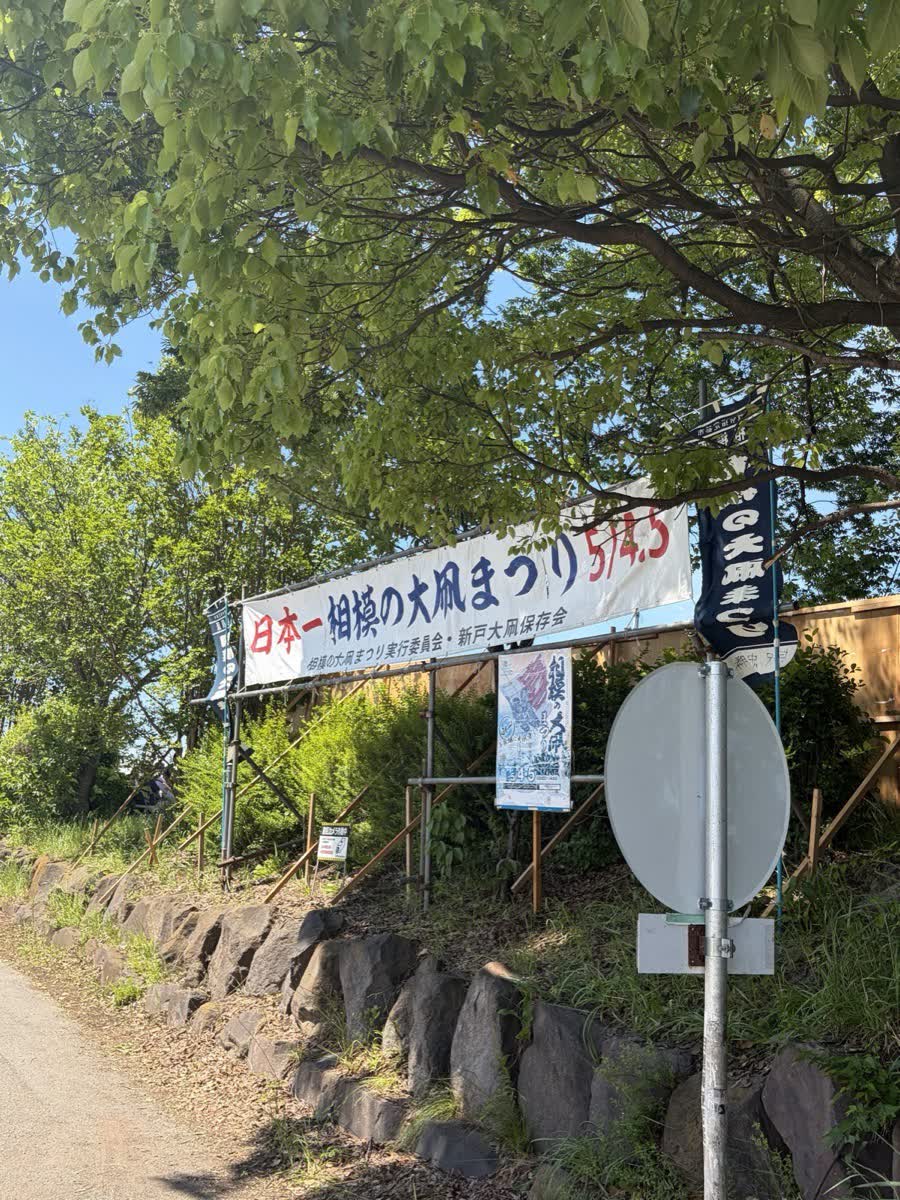
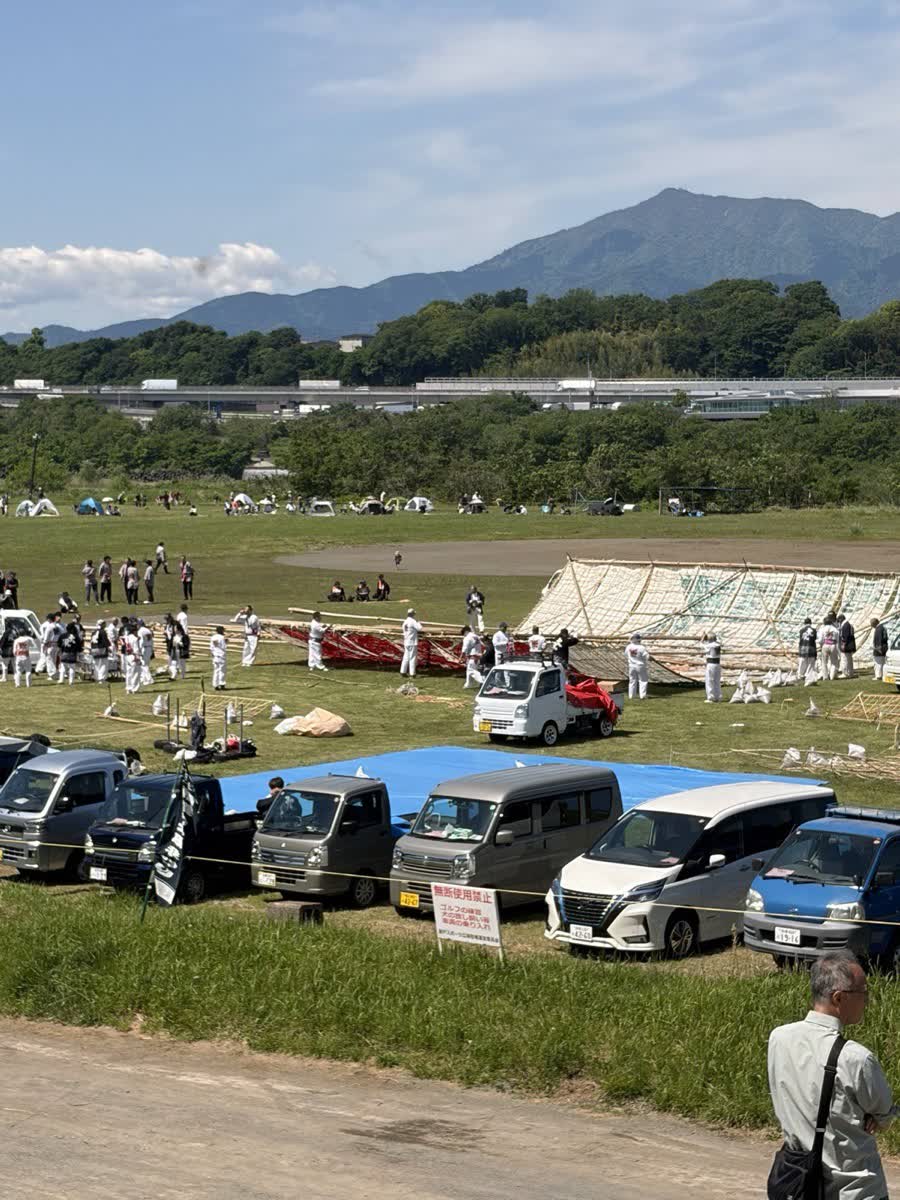
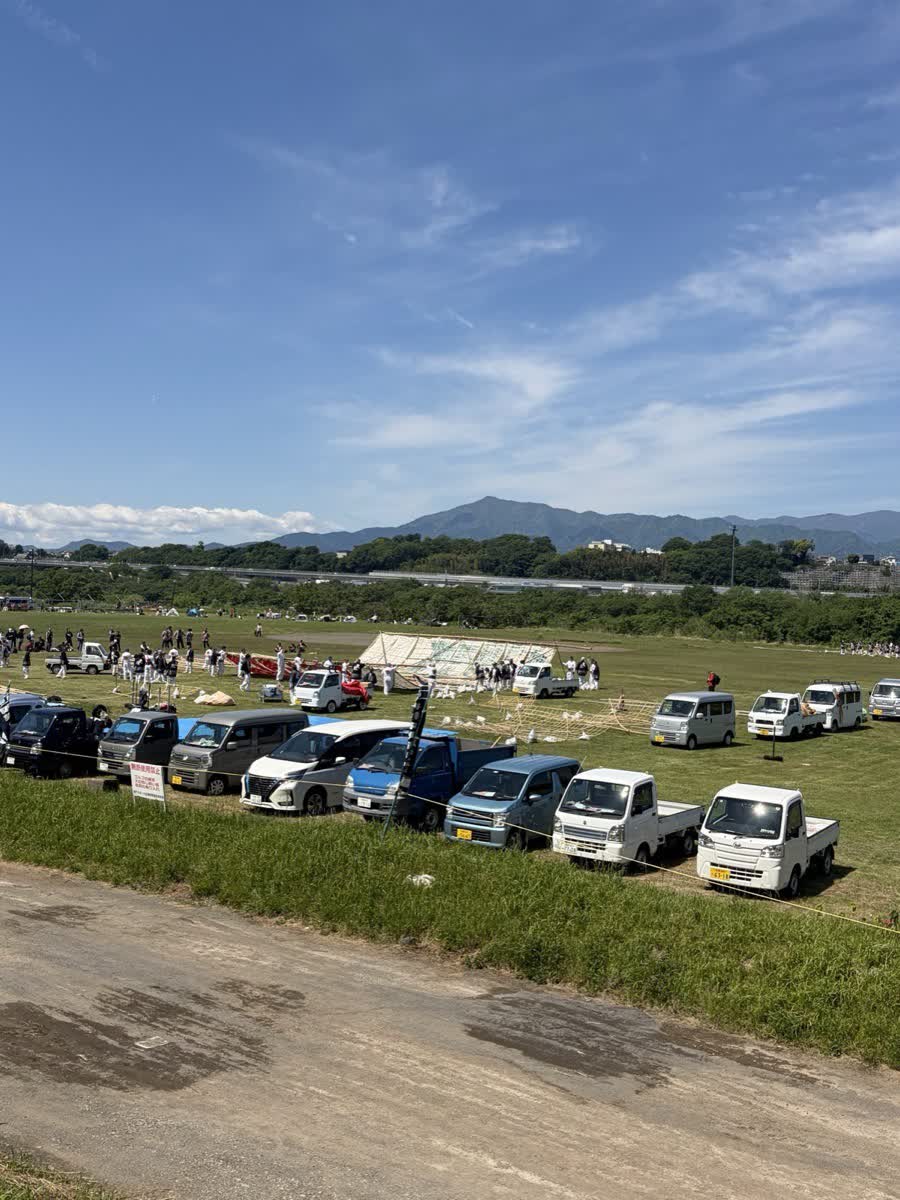
Drums echoed across the site, food stalls lined the path, and the sky was clear. It felt exactly like a Golden Week festival should feel. If you arrive in the morning, you can enjoy the whole festival from the start: the setup work, the drums, and the smaller kite flying before the main event.
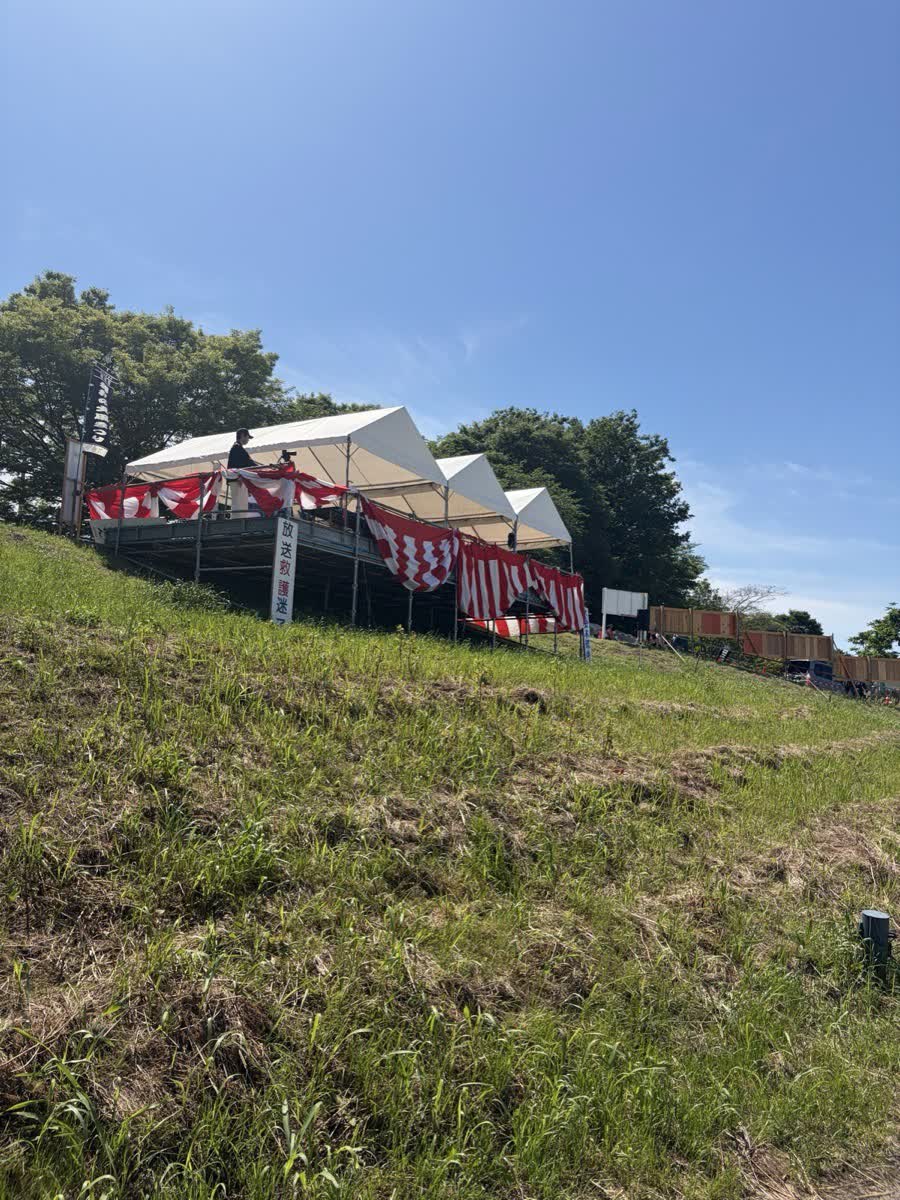
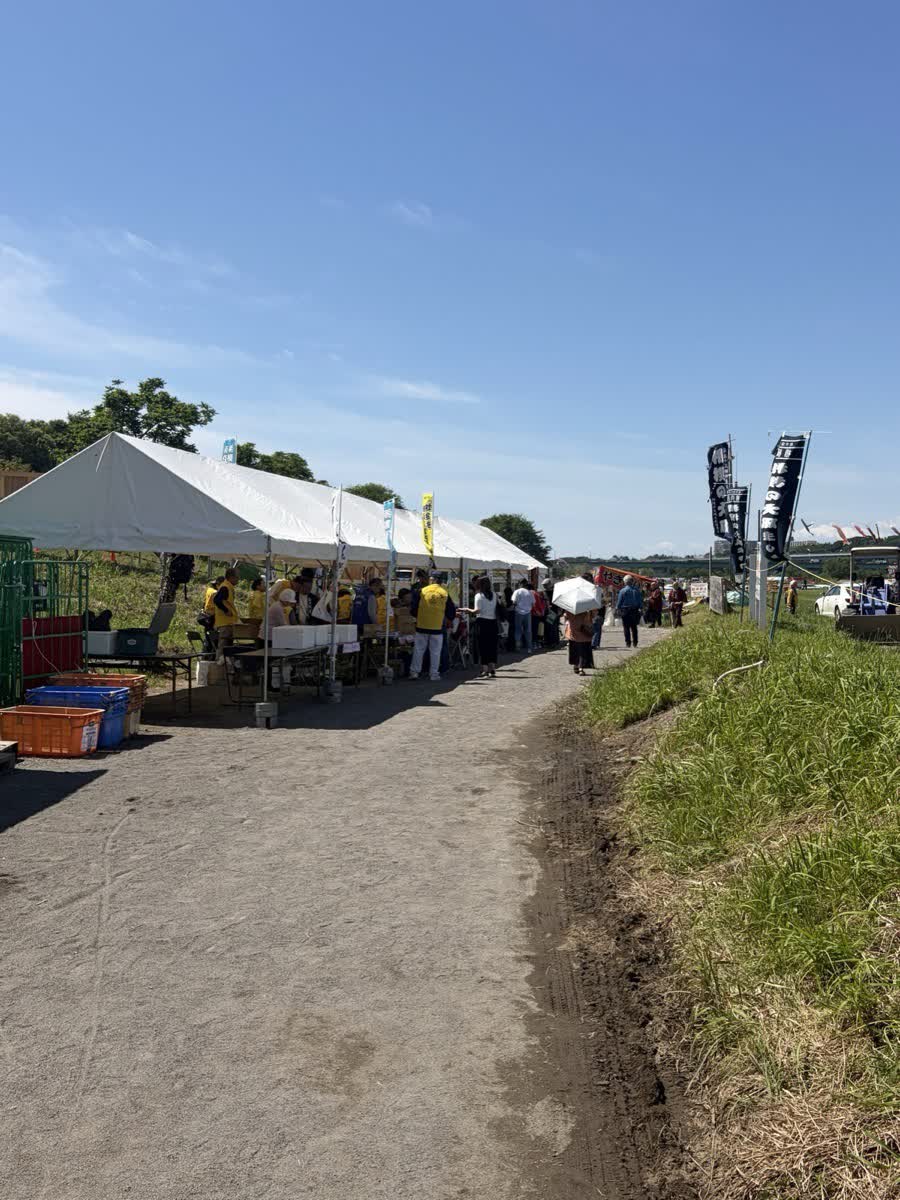
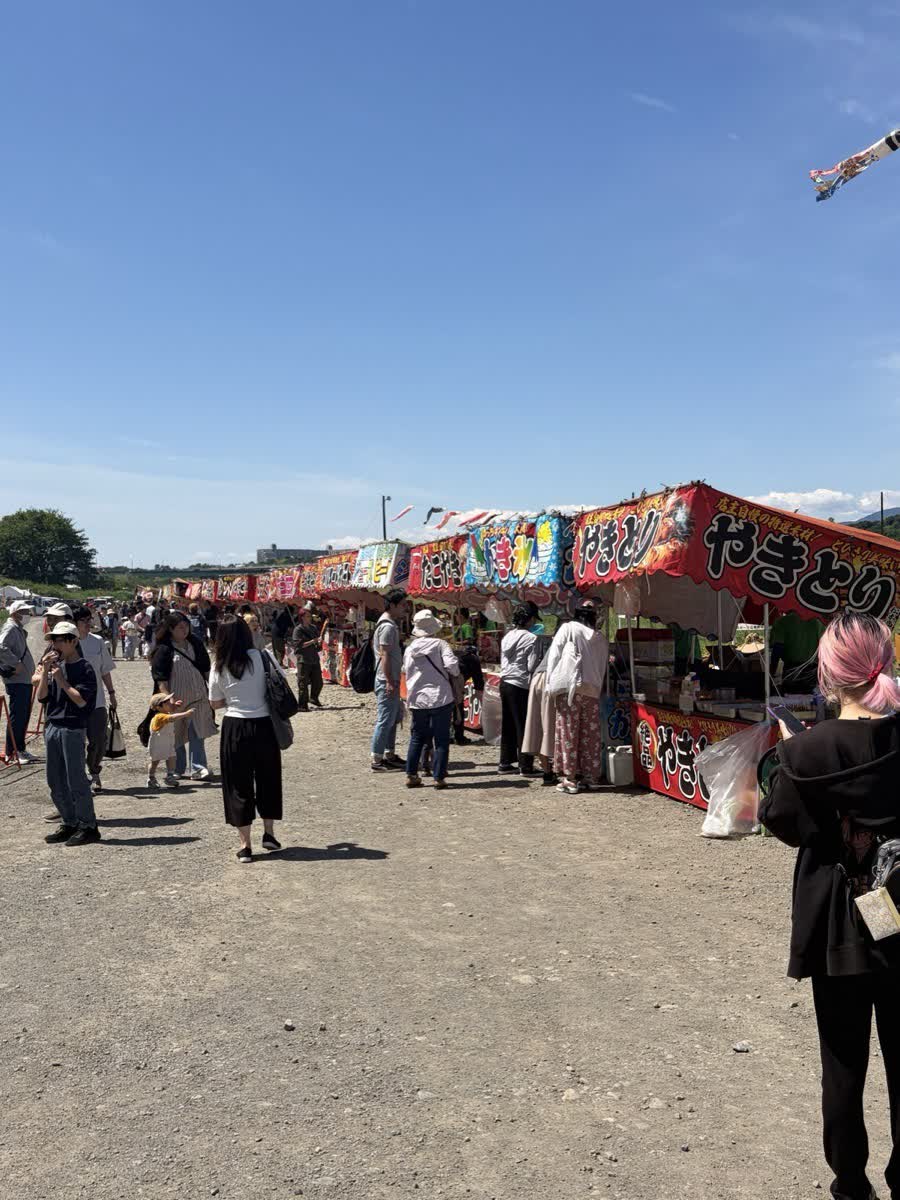
The drums had real power. This is better seen in video than described in words.
There was also smaller kite flying before the main event. That alone was fun to watch.
Watching the Giant Kite Being Prepared Was Worth the Trip by Itself
Members of the local preservation group, dressed in white, spread out the huge kite and assembled the bamboo frame. The kite is said to be about the size of 100 tatami mats. Just watching the process was impressive.
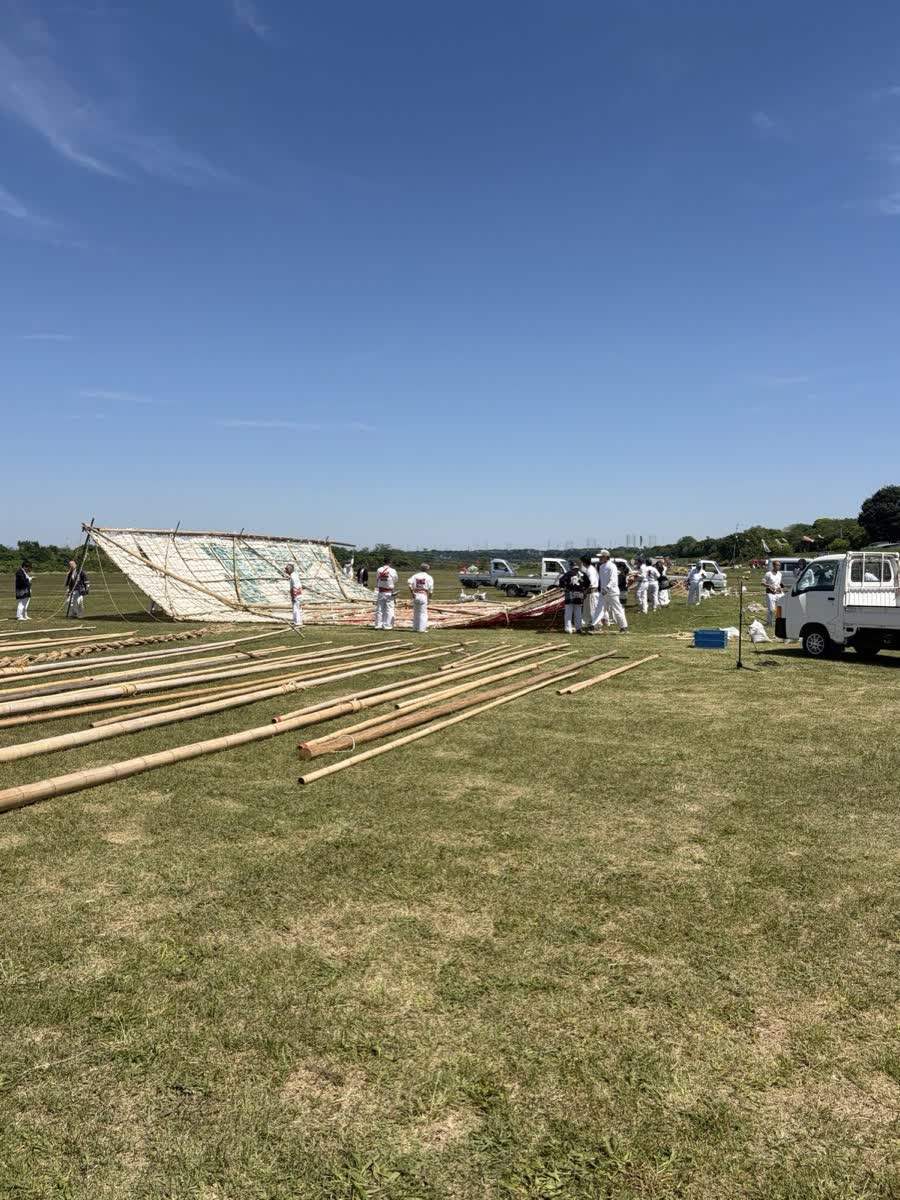
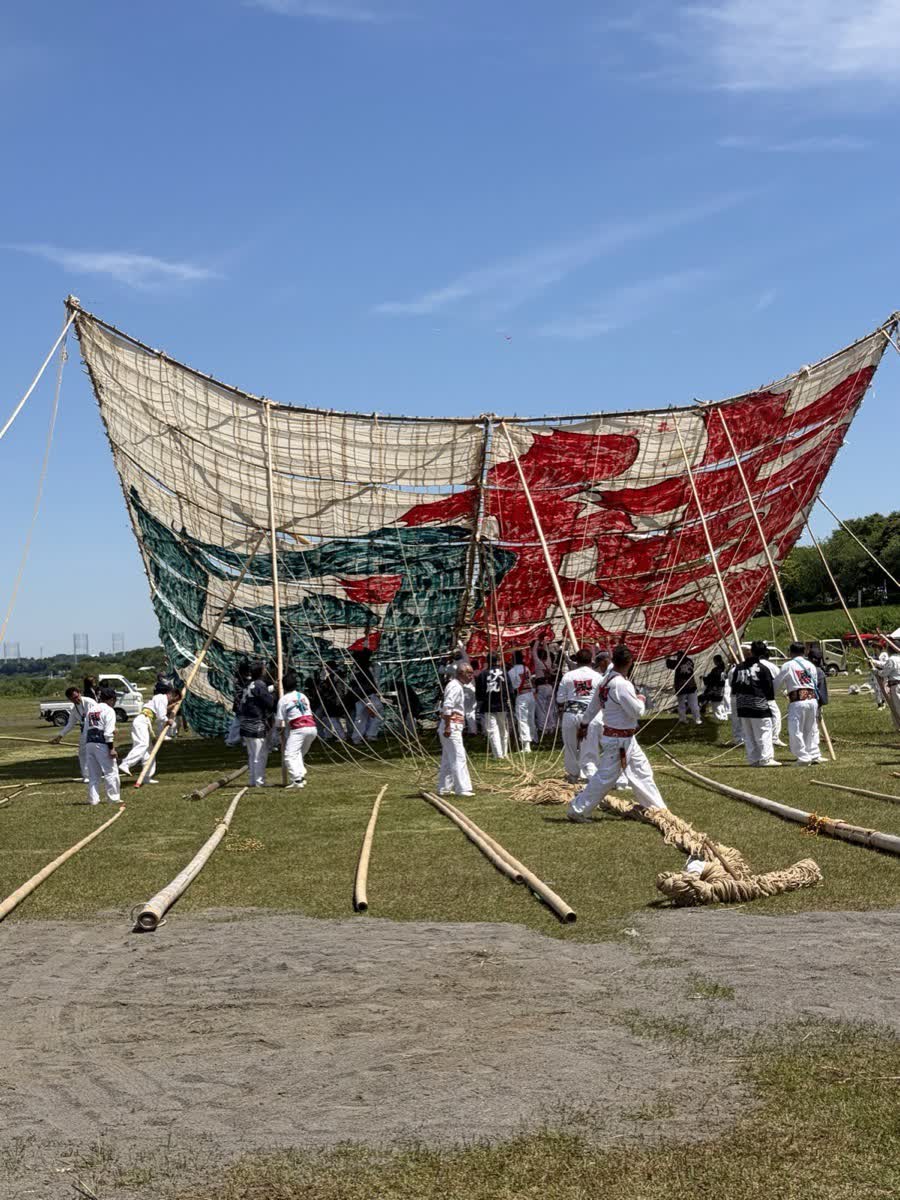
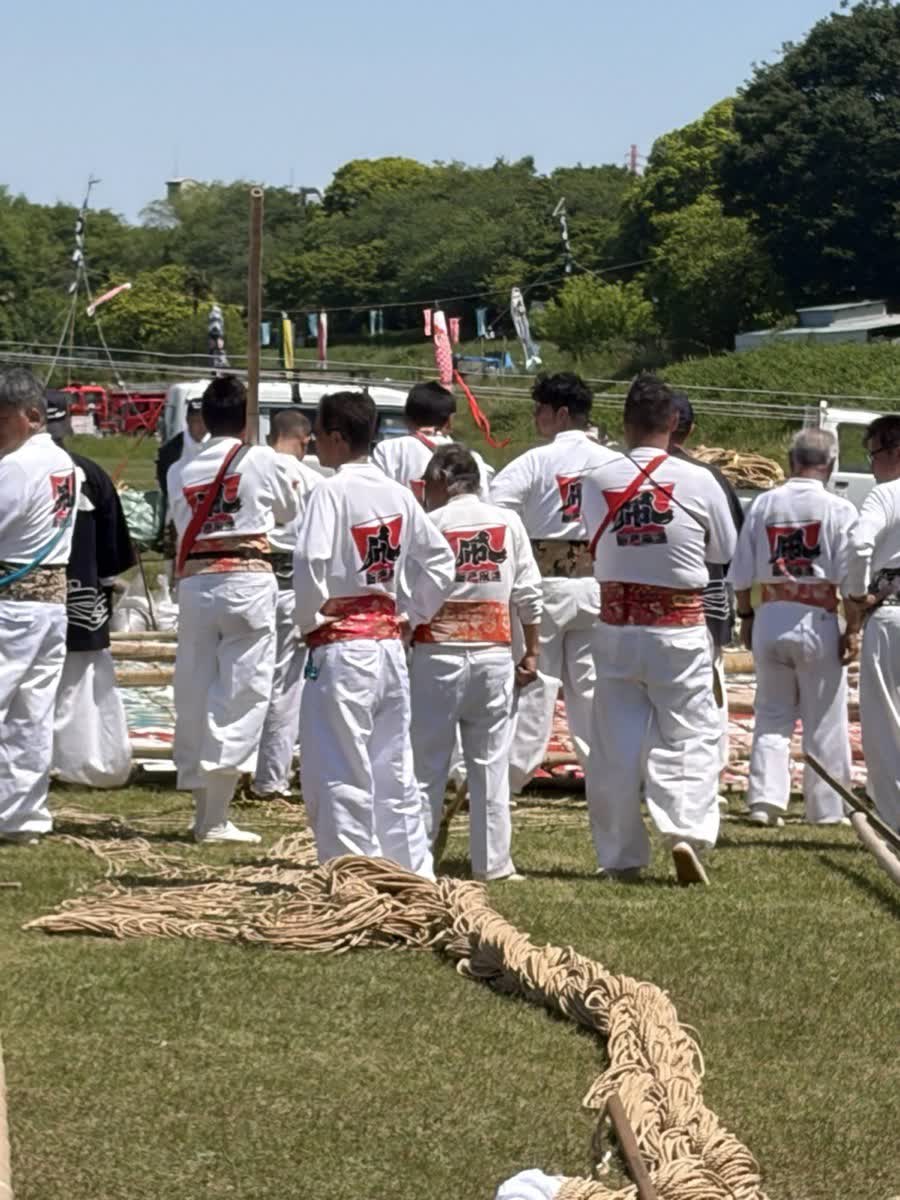
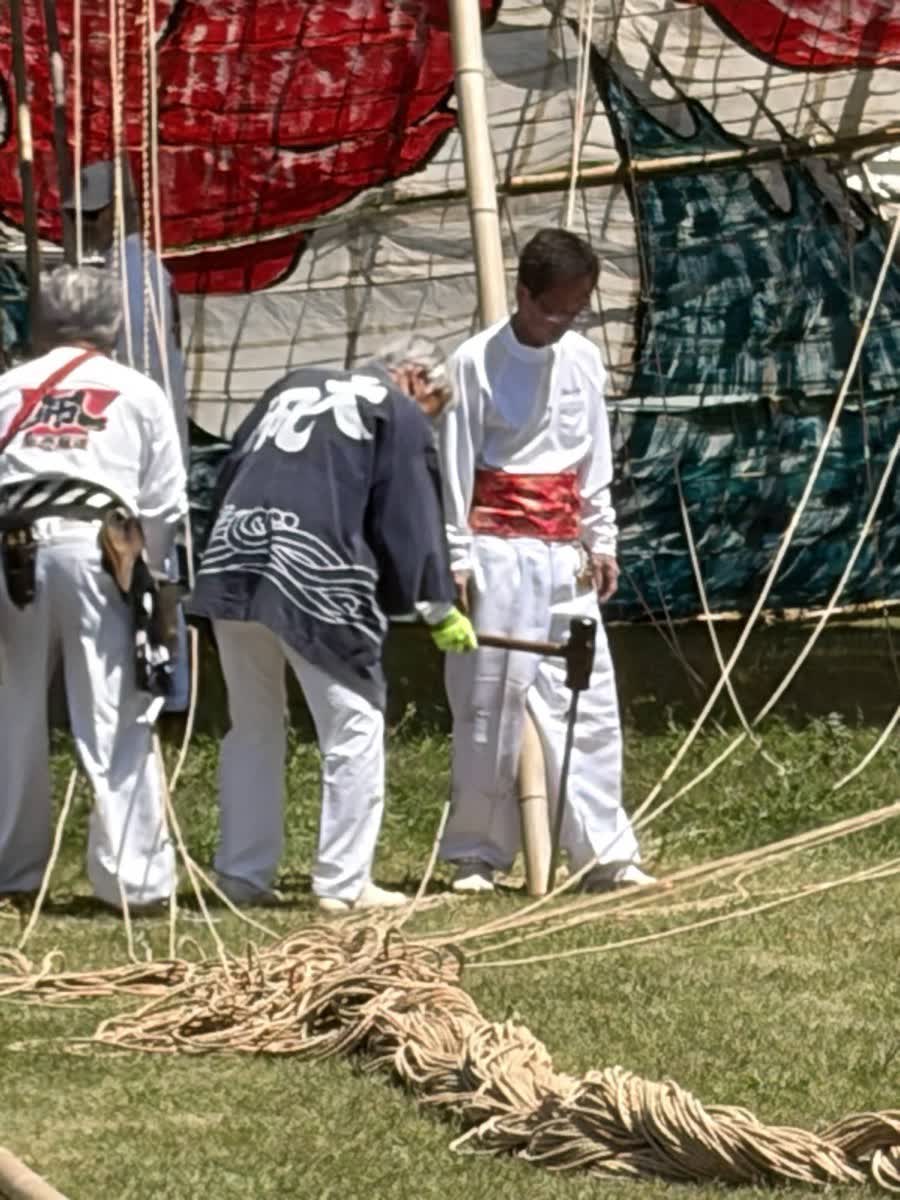
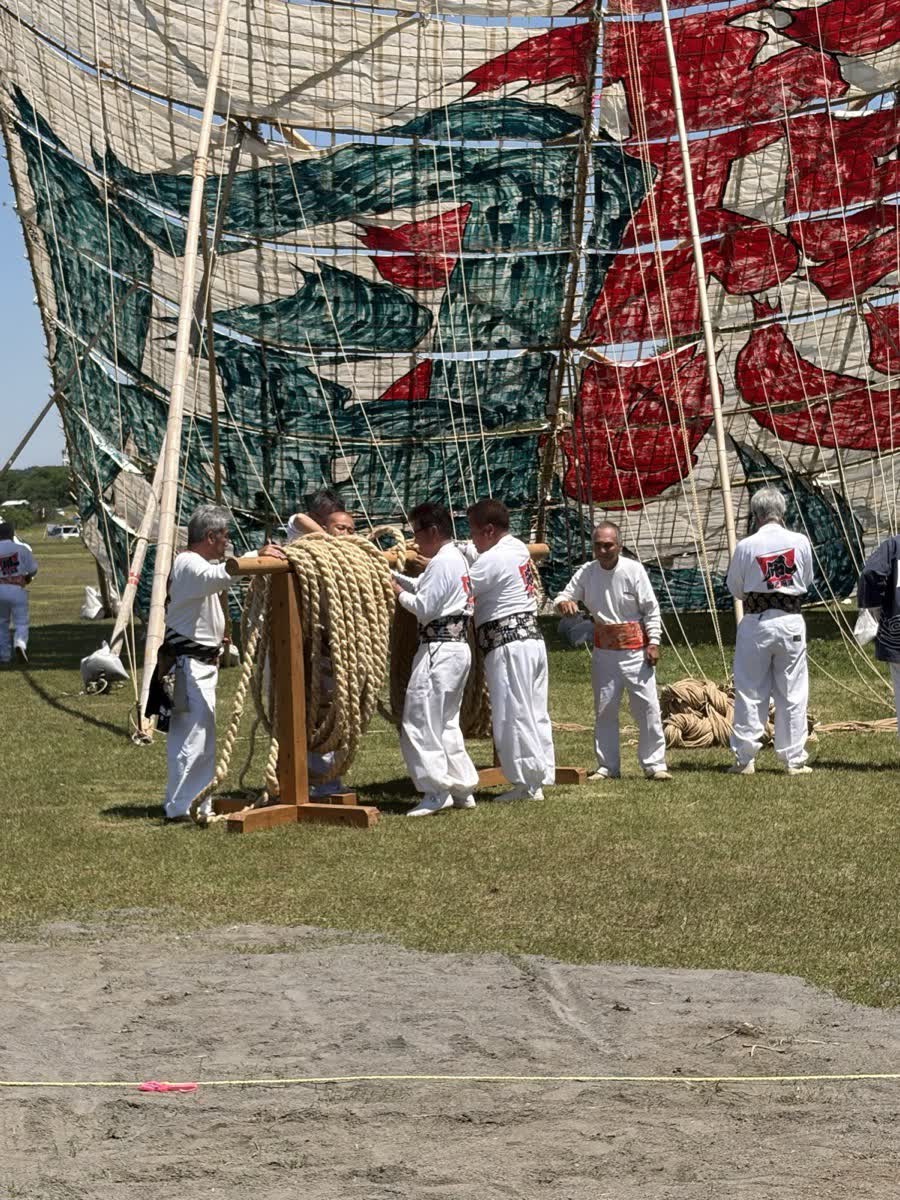
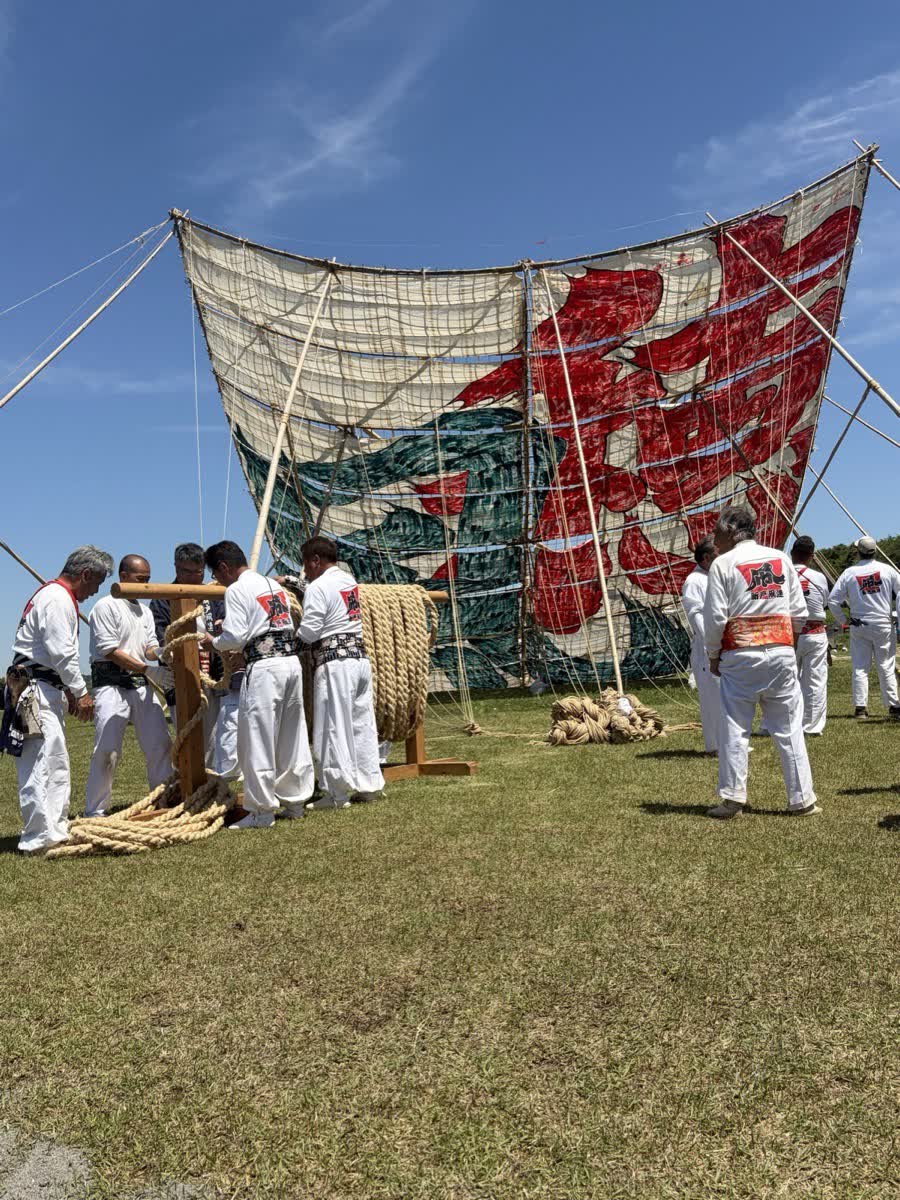

The people in white quietly lined up in front of the thick rope. They have kept this tradition alive for nearly 200 years. Standing there, I felt a little of that weight.
And Then Came the Four-Hour Wait
I had heard that giant kite flying depends entirely on the wind.
I understood that in theory. But honestly, I still assumed it would go up at some reasonable time.
I was naive.
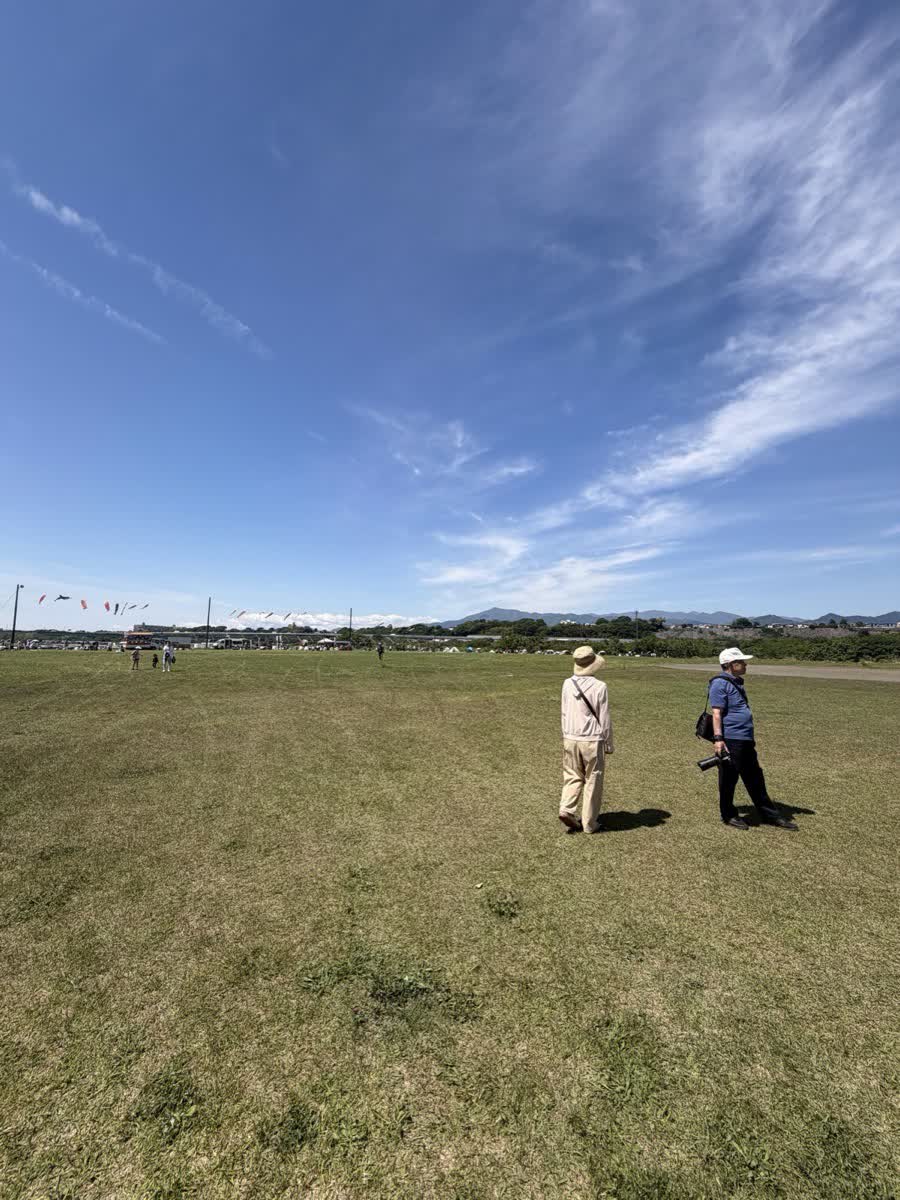
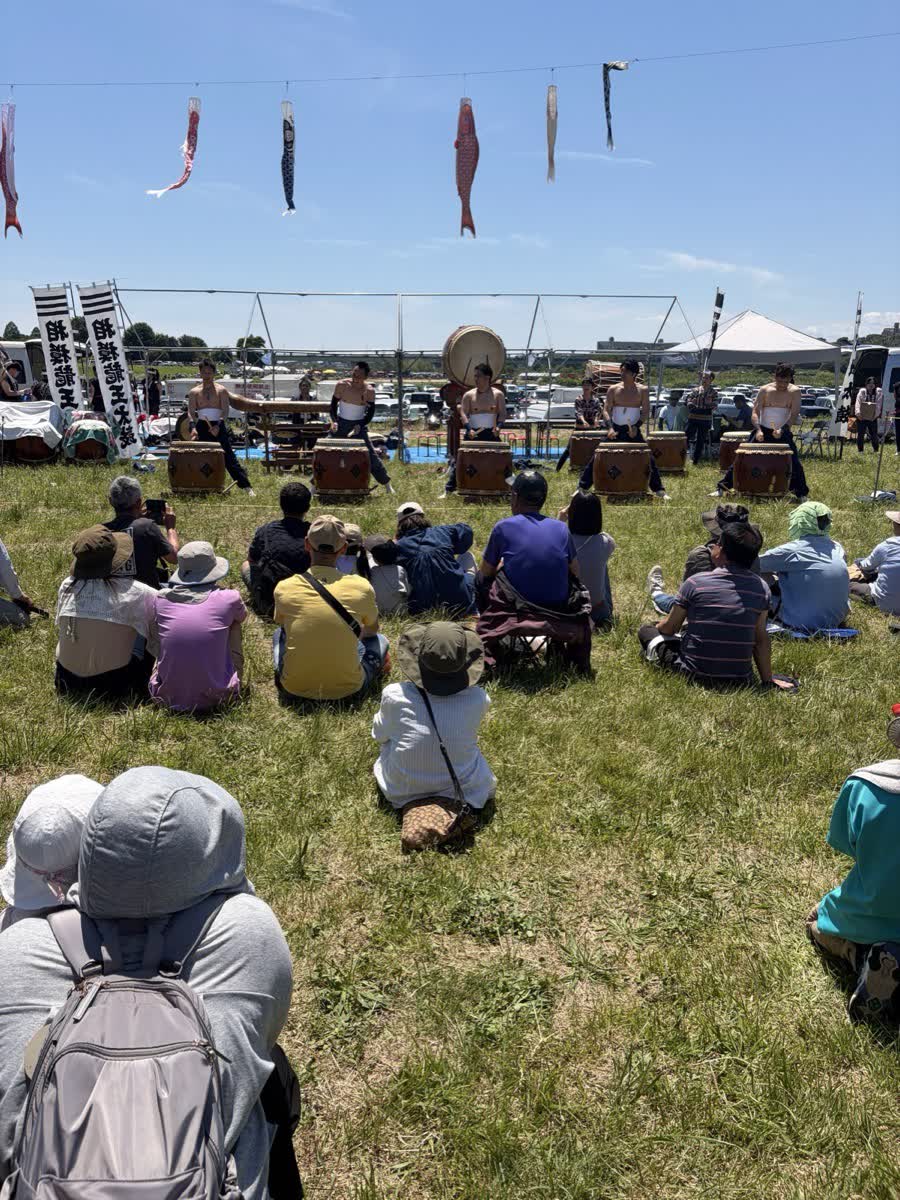
The riverbed is wide open, with almost no shade. A clear May day feels wonderful, but the ultraviolet rays are not joking around. Standing for hours, my lower back slowly started to complain. After noon, the thought "I want to go home" came and went several times.
After about two hours, my wife said, "I am heading home first," and left.
Honestly, that was the correct decision.
I stayed. Why? Because I had already come this far, and I wanted to see the kite fly. There was no logic to it. Even in your 50s, humans still make decisions like this.
Here is one important note for anyone going next time. This year, the main giant kite rose at around 2:10 p.m. This is only one year's experience, but if you only want to see the main kite, arriving around 1:30 p.m. may still be enough. You may not need to arrive at 10 a.m. That said, the kite depends on the wind, so there are no guarantees. If you come early, you get the setup, drums, smaller kite flying, and the whole festival atmosphere. Choose based on your stamina.
After Setup, the Giant Kite Was Put on Display for the Crowd
After the setup work was finished, the giant kite was first put on display for the crowd. Supported by poles and ropes, it stood there so everyone could see the completed kite up close.
At this point, it was not yet at the starting position for the actual flight. This was the display stage: a chance for visitors to take in the size, structure, and artwork before the flying attempt began.
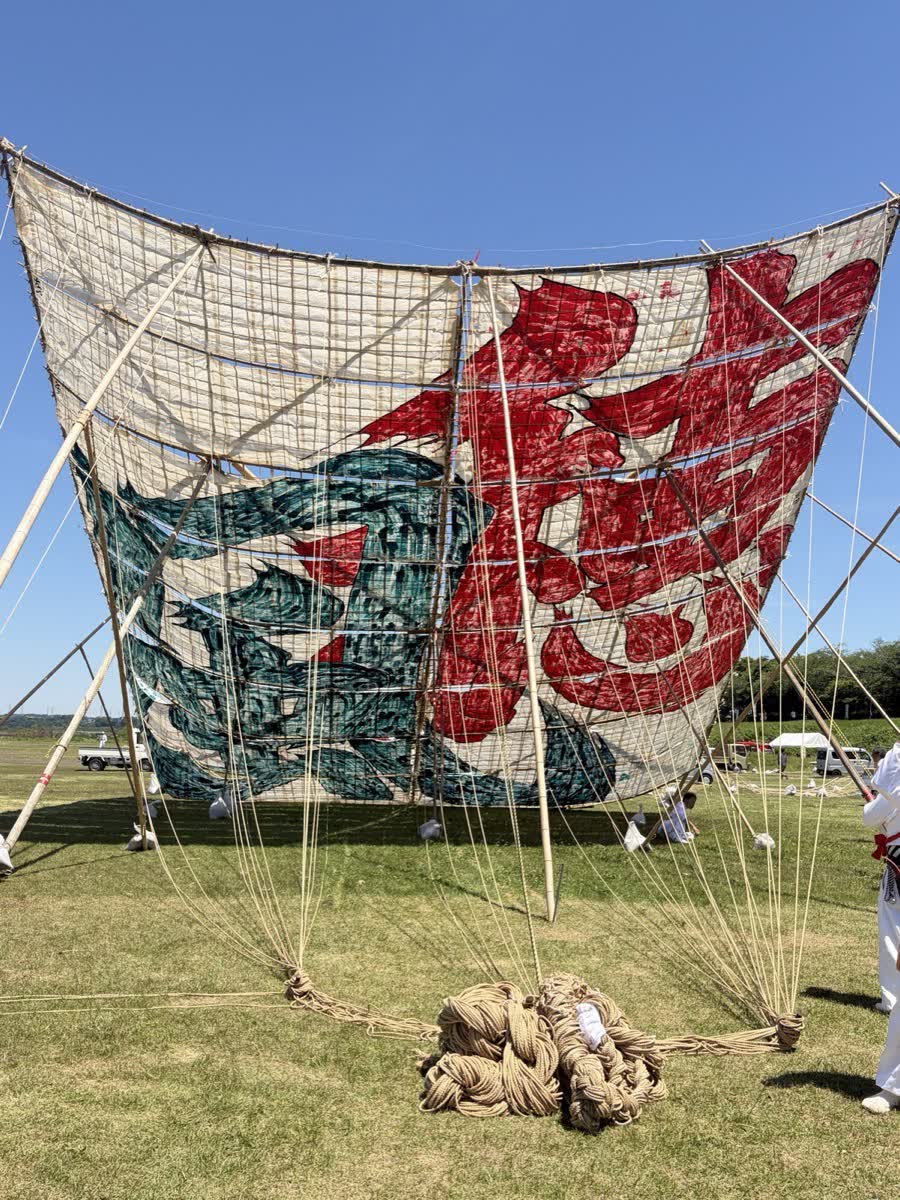
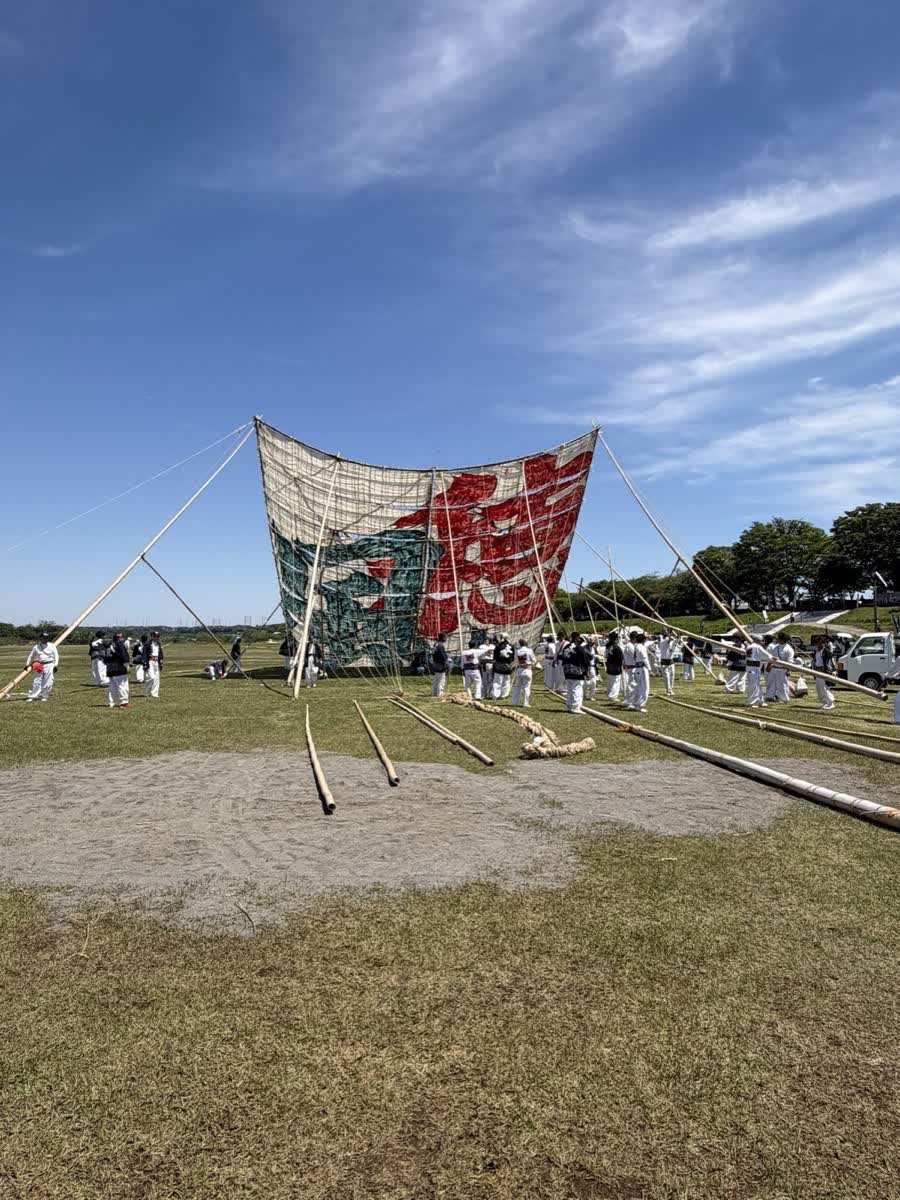
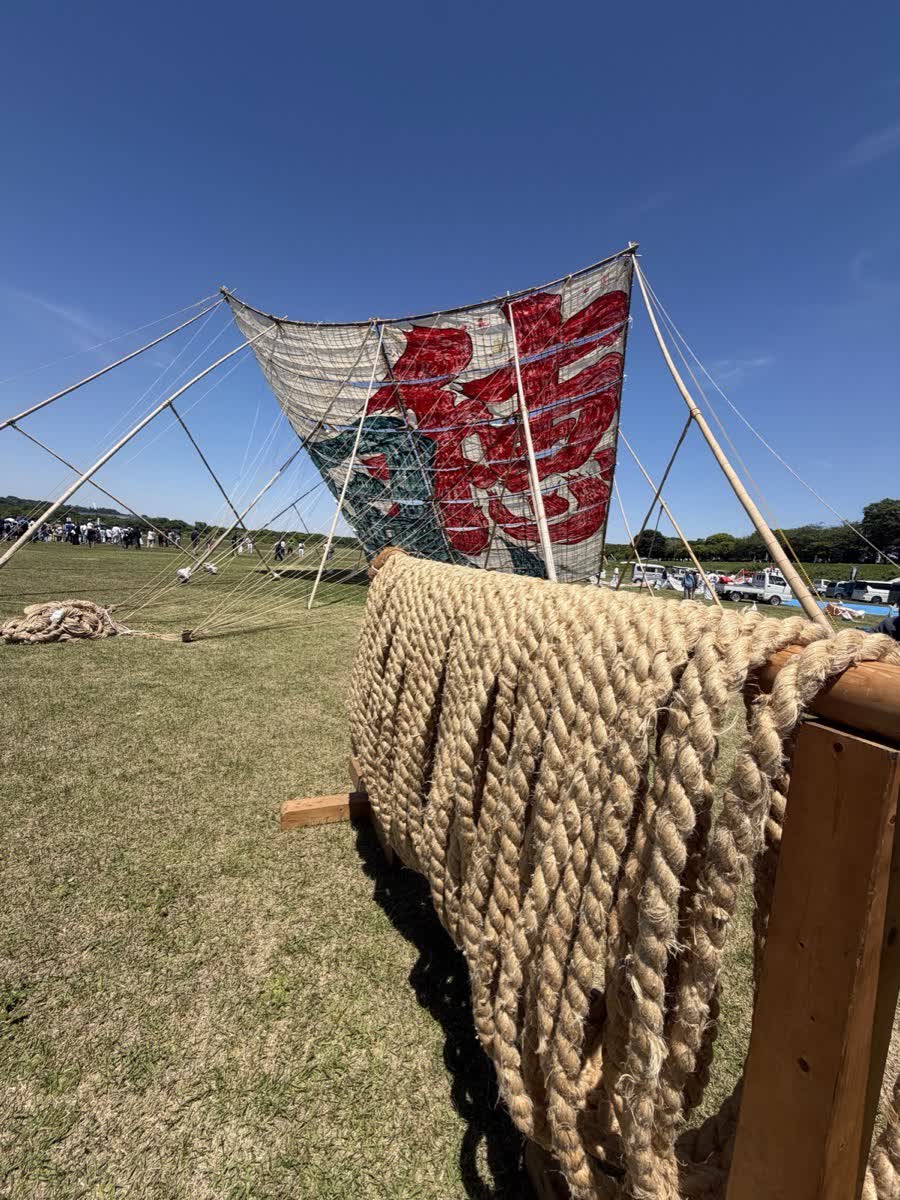
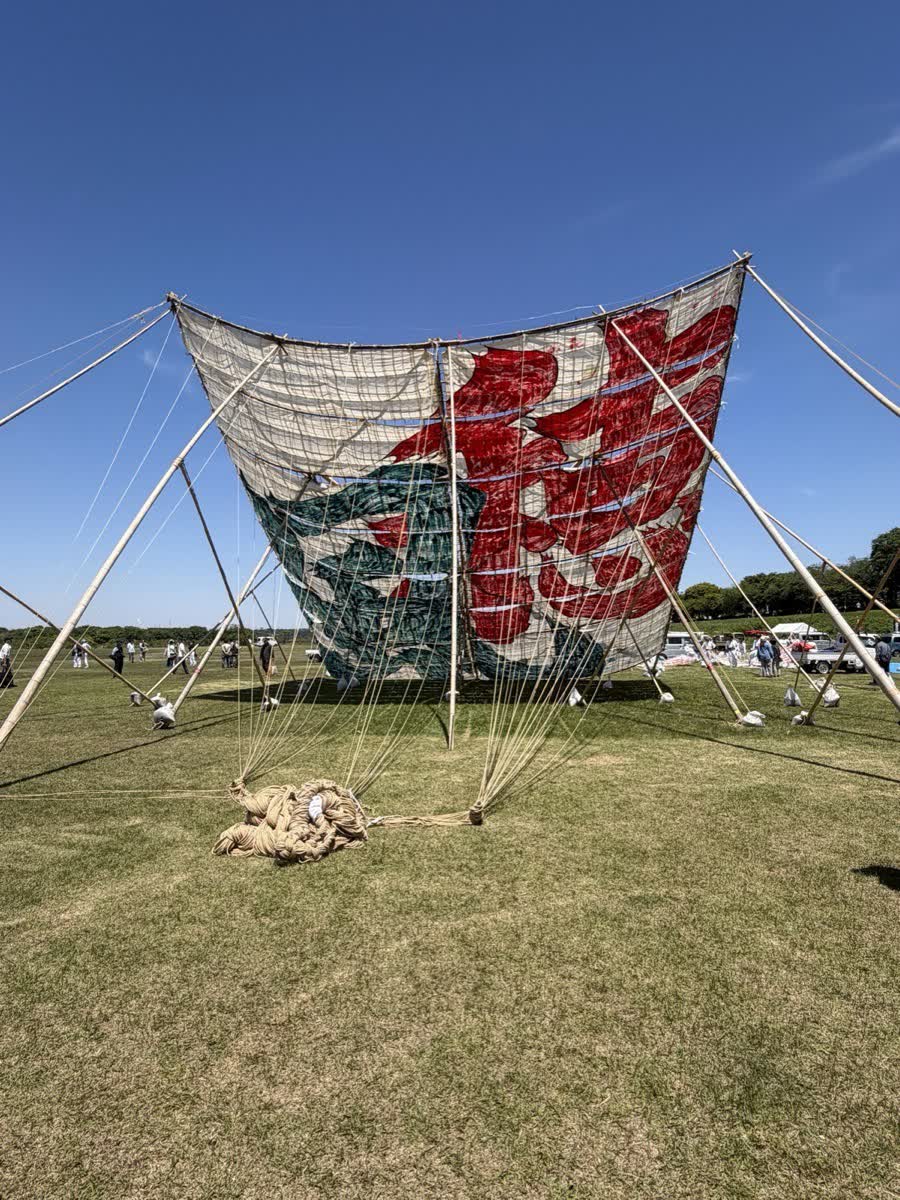
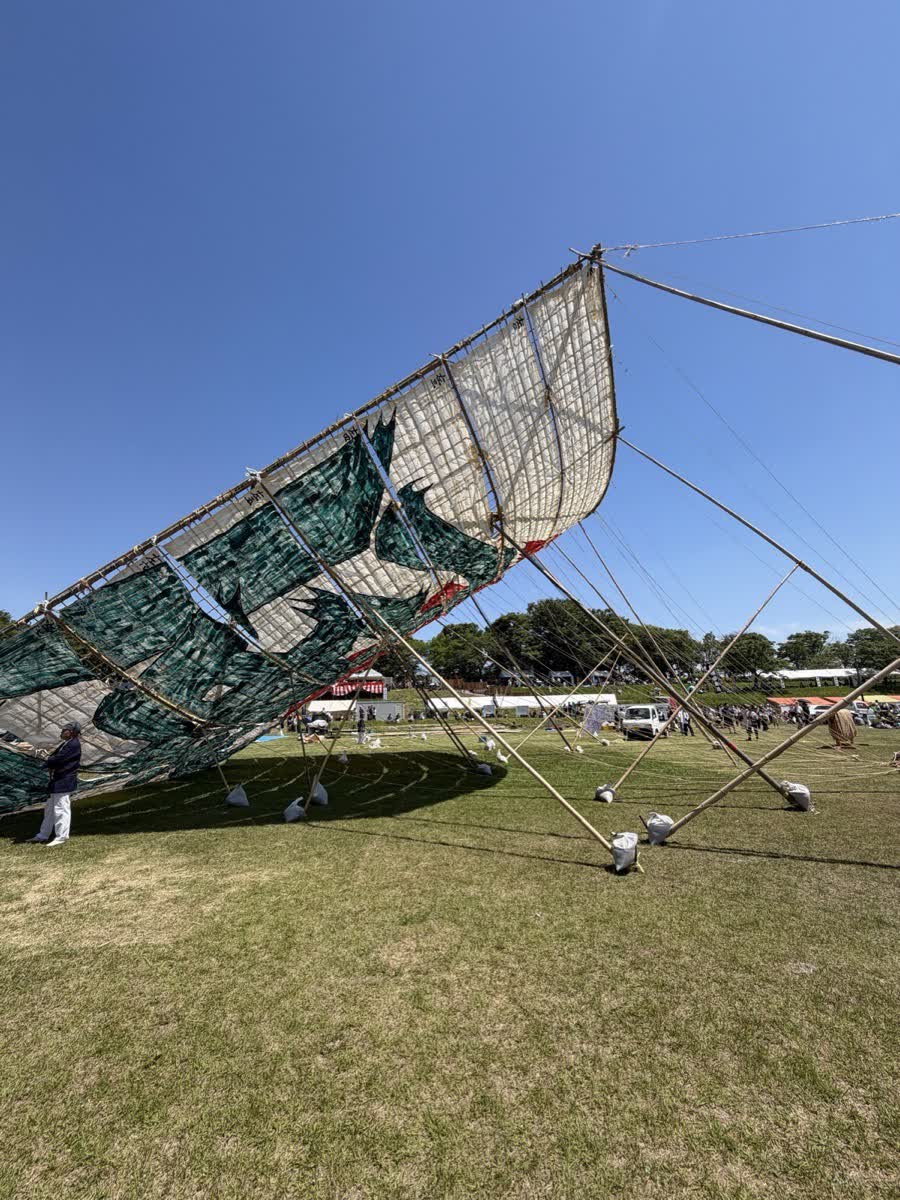
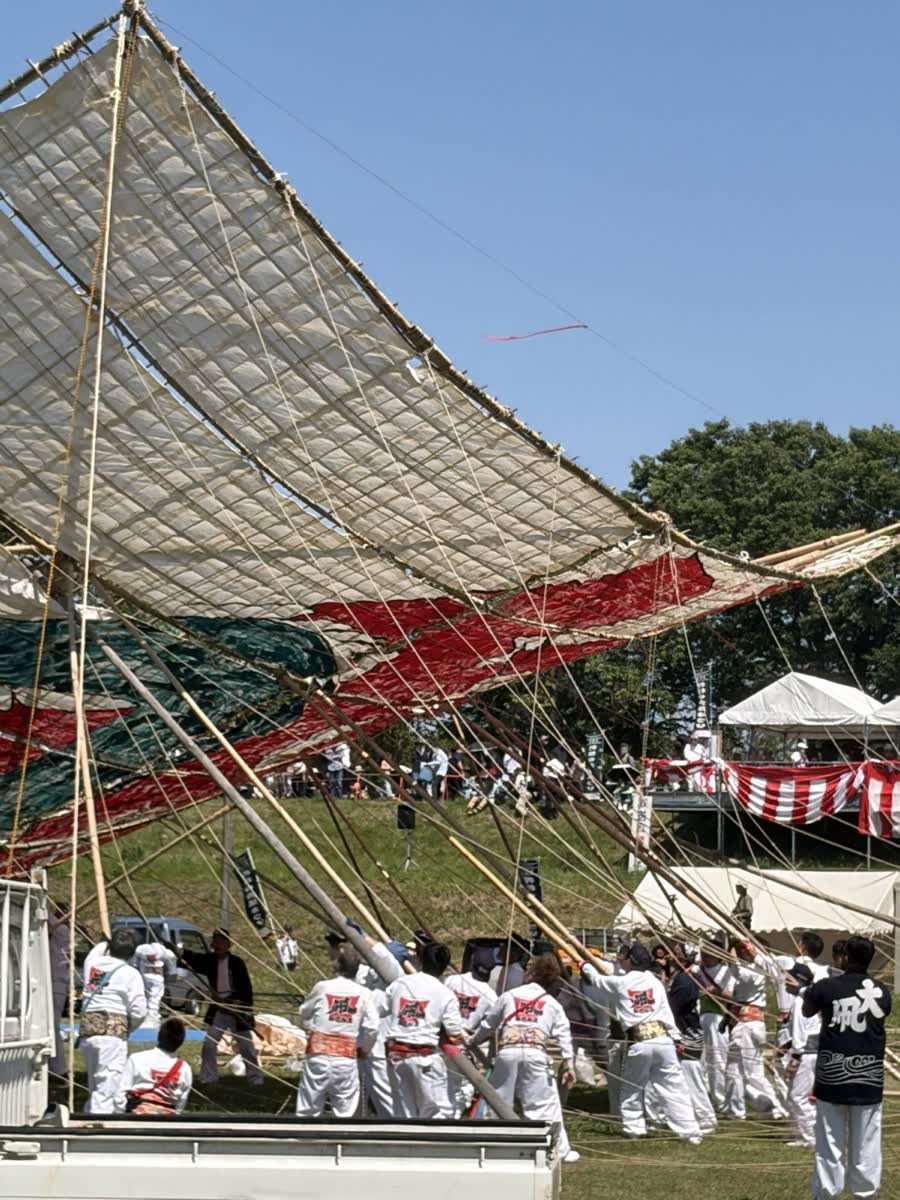
Around 1:30 p.m., the giant kite was lowered back to the ground. Then it was carried to the starting point for the actual attempt to launch it into the sky.
Seeing it standing on display was already impressive, but watching people move it by hand toward the place where it would catch the wind made me realize how much planning and skill supports this festival. It is not just a big kite going up. It is a whole local operation.
After it was moved to the starting point, the pullers finally began working the rope together. Here is that scene.
And then it lost momentum and came down. That, too, is part of the real Giant Kite Festival.
2:10 p.m. It Finally Rose into the Blue Sky
After several failed attempts, the giant kite finally climbed into the sky.

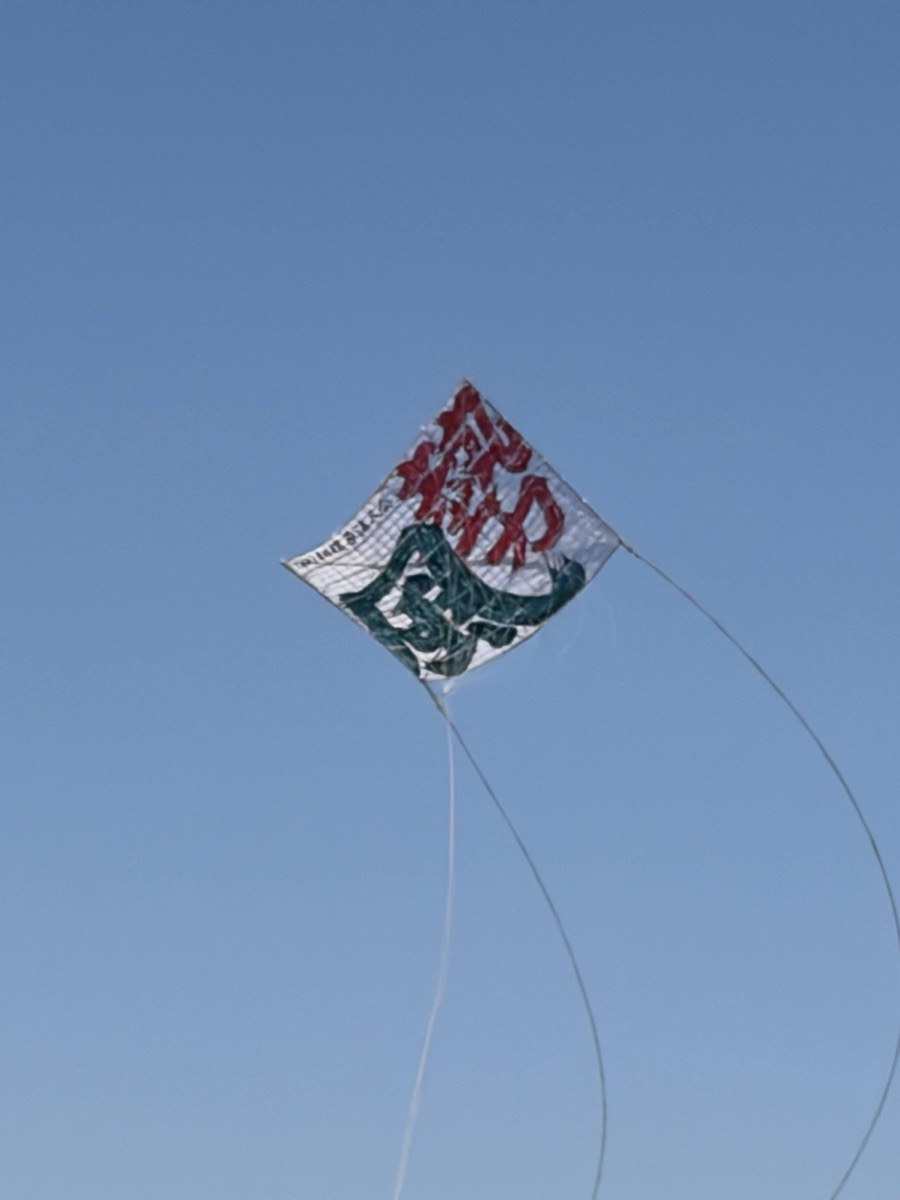
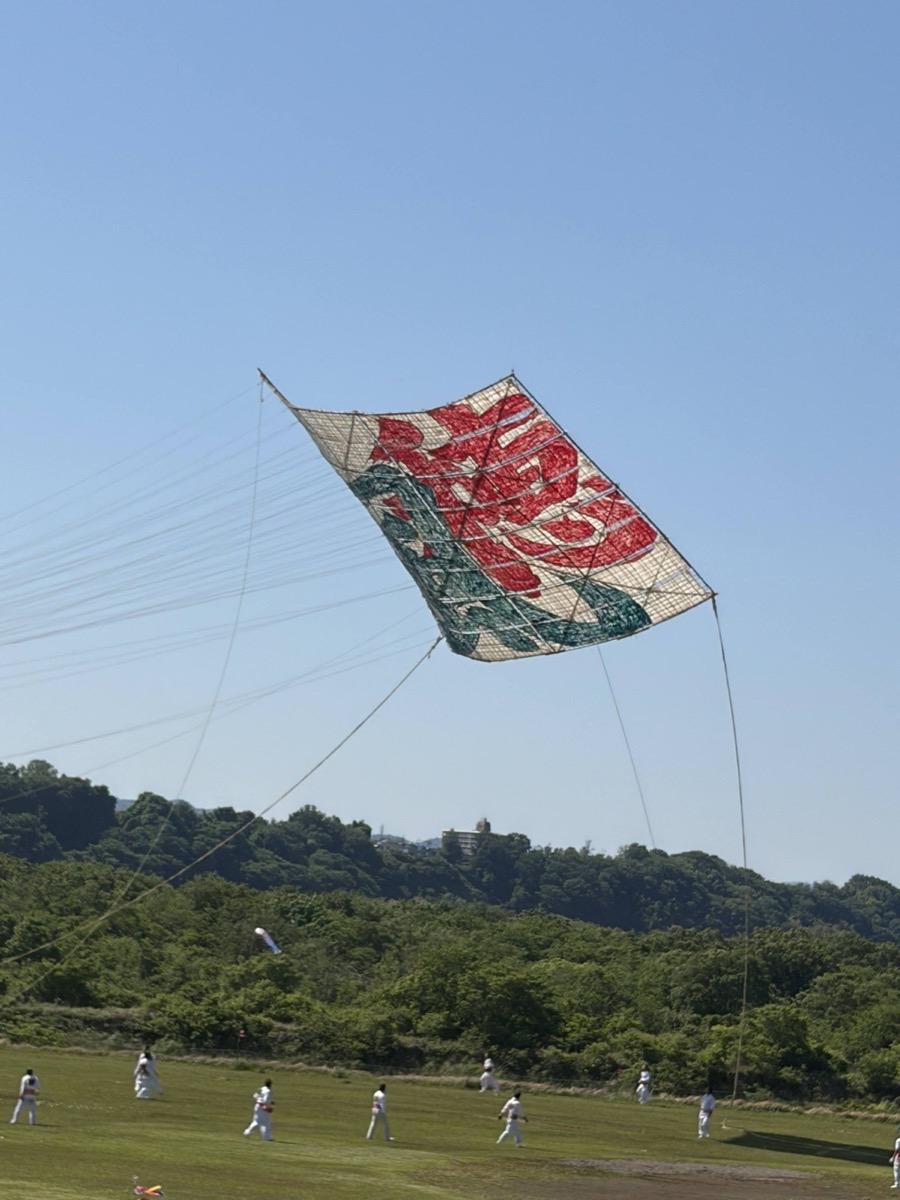
I thought, "Yes. That was worth the wait."
Because I had watched it fail several times, the moment it finally rose felt even better. If it had flown smoothly from the start, I do not think I would have felt the same emotion. The waiting, the failed attempts, the heat, all of it was part of the festival.
The smaller kite also flew beautifully in the blue sky.

My Wife Became Tutankhamun. I Became a Red Tomato
Let me explain my wife's outfit that day.
Hat, mask, arm covers, long sleeves. She was covered from face to arms. I secretly call this her "Tutankhamun mode."
My equipment?
Nothing special.
There is nothing to block the sun on the riverbed. A clear day in May has strong ultraviolet rays. After standing in that sun for four hours, I looked in the mirror at home and thought, "Oh, I got sunburned." Except it was much redder than a casual "oh" could handle.
My wife said, "I told you." I do not remember being told. Or maybe I do not want to remember.
For anyone going, this is not just a funny story. Bring a hat, sunscreen, and arm covers. Bring plenty of water too. You do not want to learn how scary heatstroke can feel on an open riverbed. Beer improves your mood, but it is not hydration. The beer I had on the way home seemed to ease my back pain, but that was probably imagination.
On the Way Back, I Walked to Harataima Station. My Back Was Done
On the way home, I walked to Harataima Station. Honestly, that was my limit.
Four hours of standing, sunburn, and then more walking. My lower back was complaining the whole way. I had one beer along the route and somehow survived.
Near the venue, I noticed what looked like parking space for motorcycles and bicycles. There still seemed to be some room. Next time, I am definitely coming by motorcycle. It would make access much easier and solve the problem of the painful walk home. The location and conditions of parking may change by year, so check before going.
A Festival of Nearly 200 Years, and the Reality Facing Local Traditions
While I was watching, I overheard someone involved with the festival talking nearby.
"The number of people is going down every year."
I also heard someone say, "This may be the last year for the giant kite flown in the Shimomizo area."
This is not official information about the entire Sagami Giant Kite Festival. It is only something I overheard at the site, and it seemed to refer to the Shimomizo-area kite. Please take it as a personal note from the day.
Fewer people, fewer hands, local events changing little by little. Maybe that is unavoidable, but it still feels sad. The people in white, lining up, assembling a huge kite, and pulling against the wind have supported this festival for generations.
I hope this festival continues. I hope the children who were there today will one day bring their own children to this riverbed and look up at the same blue sky.
Summary
The moment a giant kite rises into the sky cannot be fully captured in photos or videos. The scale and the tension of relying on the wind are things you only understand by standing there on the riverbed.
For anyone going next year: if you do not want to wait four hours, arriving around 1:30 p.m. may be enough, since this year's main kite rose at 2:10 p.m. But that is only a rough guide. The kite depends on the wind. If you come early, you can enjoy the setup, drums, smaller kites, and the whole festival atmosphere. Think about your stamina. Sun protection is not optional. If your back is not strong, bring a folding chair or a picnic sheet. It will make the waiting much easier.
When something is too close, we tend not to go. But once you actually visit, you sometimes realize the weight of what has been there all along. For me, the Sagamihara Giant Kite Festival was exactly that kind of festival.
I am going again next year. By motorcycle, with sunscreen done properly.
About a month before this festival, I walked along the Sagami River with my Shiba Inu and stumbled upon Japan's largest kite being assembled on the ground. That was the moment I decided I had to see the real thing. → I Took My Shiba Inu to the Sagami River and Found Japan's Largest Kite Being Built
If you enjoy walking in Kanagawa and want a view that stops you in your tracks, Mt. Ono is worth the trip. Easy trail, stunning Mt. Fuji panorama, and beginner-friendly all the way. → Mt. Ono Hiking in Kanagawa: Easy Trail with Stunning Mt. Fuji Views for Beginners
For a quieter kind of outdoor day, Izumi no Mori in Yamato is a hidden gem — free to enter, dog-friendly, and full of old Japan atmosphere. → Izumi no Mori, Yamato: A Free Dog-Friendly Walk Where Old Japan Eased My Mind