Reading time: about 7 minutes
Hi, I'm Hiroshi — a 50-something blogger living near Sagamihara, Japan.
Last summer I wrote about how swimming with waterproof headphones made me feel like an astronaut. This is the follow-up.
After nearly a year of faithful service at the pool, the right side of my headphones started crackling. Time was up. So I bit the bullet and upgraded — and the new pair turned out to be better than I expected.
In this post, I'll share what you need to know before buying swimming headphones, based on actually using two different models.
Who this post is for:
- You want music at the pool but don't know which headphones to buy
- You're wondering if your regular Bluetooth earbuds will work underwater
- You're not sure whether public pools in Japan allow headphones at all
The short answers:
- Bluetooth does not work underwater. The 2.4GHz radio waves get absorbed by water within inches. Swimming headphones must have built-in storage (MP3 playback) — you load your music onto the device itself.
- The three specs that matter: bone conduction × built-in MP3 × IPX8 (IP68) waterproofing. I chose the Kemeskin (about $34, rated 4.2 from 397 reviews). If battery life is your priority, the Tayogo (up to 15 hours) is also solid. Full comparison table below.
- Public pools in Japan each have their own rules. Electronics were traditionally banned outright, but more and more pools now allow bone-conduction headphones specifically, because they leave your ears open. Check the rules and give the lifeguard a heads-up first.
Why Bluetooth Earbuds Don't Work Underwater
Before we get to the upgrade story, here's the single most important thing.
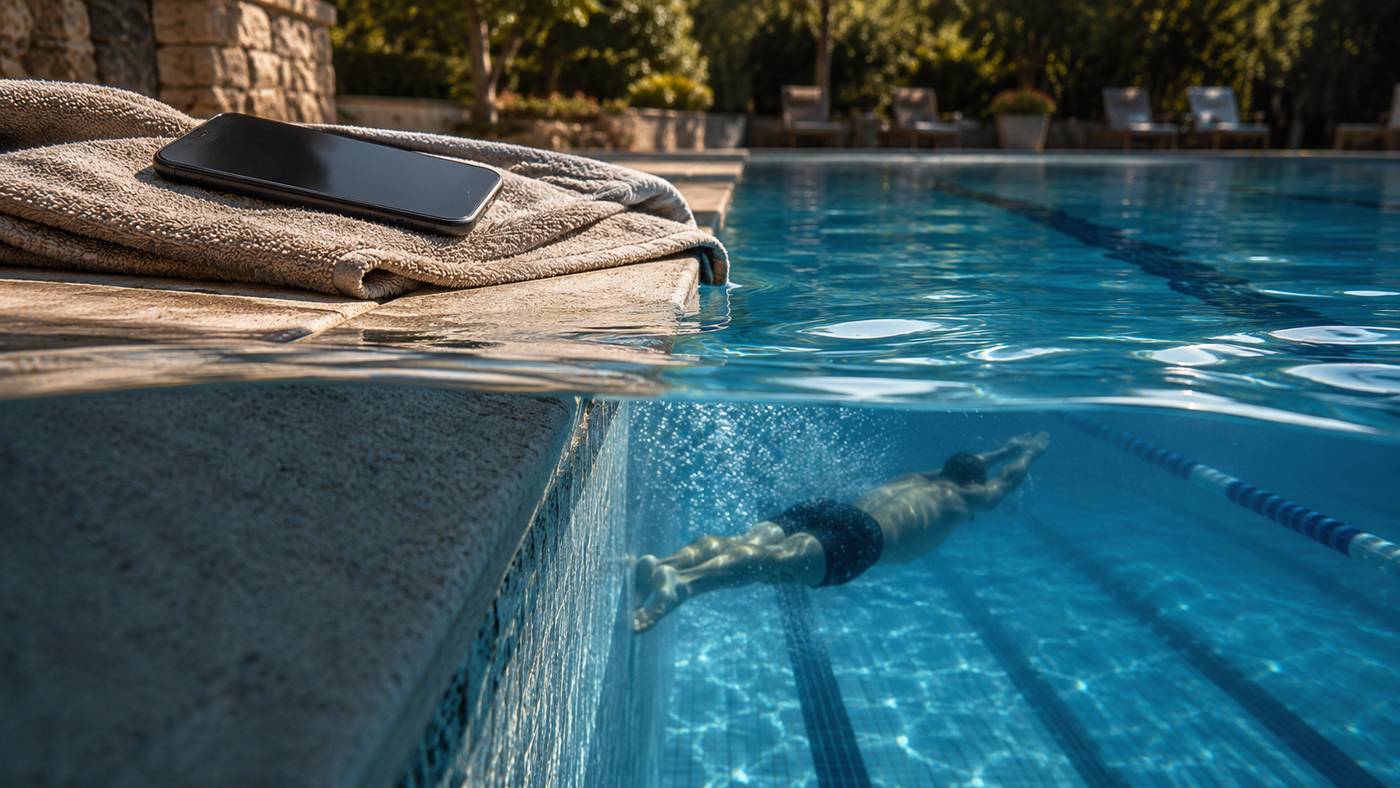
You might think: "Can't I just put my wireless earbuds in a waterproof case and leave my phone on the poolside?" Physically impossible, I'm afraid.
Bluetooth uses the 2.4GHz band, and that frequency is absorbed by water extremely fast. A signal that travels 30 feet on land dies within a couple of inches underwater. The moment your head goes under, the music stops. It's not a waterproofing problem — it's physics.
That's why every swimming headphone on the market works the same way: you store music files (MP3, etc.) on the device itself and play them standalone. You connect it to your computer and transfer your playlist. For a guy who grew up with a Walkman, it's actually nostalgic.
Most current models are dual-mode: Bluetooth on land, built-in memory playback in the water. Mine is this type, with 32GB of storage — up to 8,000 songs. I don't think the day I need 8,000 songs will ever come.
Tayogo vs. Kemeskin: Comparing Both as an Owner
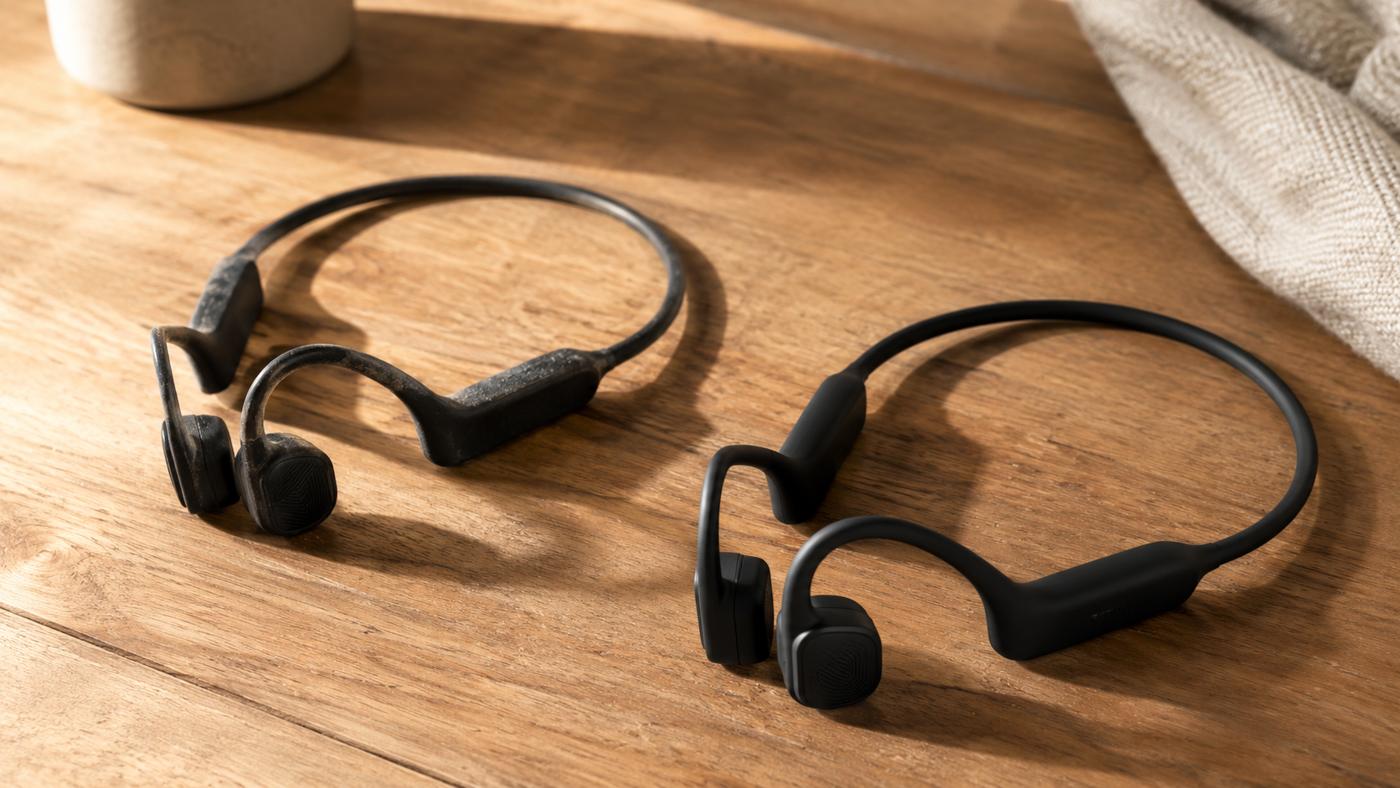
My first pair was a Tayogo bone-conduction headset (Amazon Japan). It kept me company at the pool for about a year — until the right side started crackling.
Honestly, my first thought was: "As long as I can hear something underwater, do I really need a new one?" Then my credit card points piled up, the mental hurdle collapsed, and I clicked "Buy Now." Even in your fifties, the excuses you make at the checkout button never change.
The replacement: a Kemeskin bone-conduction headset (Amazon Japan). Here's the comparison after using both:
| Spec | Tayogo (1st pair) | Kemeskin (2nd pair) |
|---|---|---|
| Price | from about $31 | about $34 |
| Amazon rating | 4.0 (94 reviews) | 4.2 (397 reviews) |
| Recent sales | 50+/month | 400+/month |
| Waterproofing | IPX8, rated to 3m depth | IP68, rated to 2m depth |
| Built-in memory | 32GB | 32GB (up to 8,000 songs) |
| Battery | up to 15 hours | up to 8 hours |
| Weight | 35g | 32g |
| Underwater playback | Bluetooth unstable — MP3 recommended | MP3 only underwater |
My verdict: if in doubt, go Kemeskin. More reviews, higher rating, more purchases — the "harder to regret" choice.
But if battery life matters most, pick the Tayogo. Fifteen hours is nearly double the Kemeskin, it comes with a one-year warranty, and the 3m depth rating is reassuring. The price difference is small, so it comes down to how you swim.
👉 Check the Kemeskin bone-conduction headphones on Amazon Japan (the one I bought)
👉 Check the Tayogo bone-conduction headphones on Amazon Japan (for battery life)
First Swim with the New Pair: Freed from Max Volume

So, how was the actual swim?
It genuinely feels like an upgrade. The sound comes through clearly underwater.
With the old pair, the music sometimes got drowned out by the water noise, so I always swam with the volume maxed out. Not anymore. It's clear without maxing anything — and no crackling, of course.
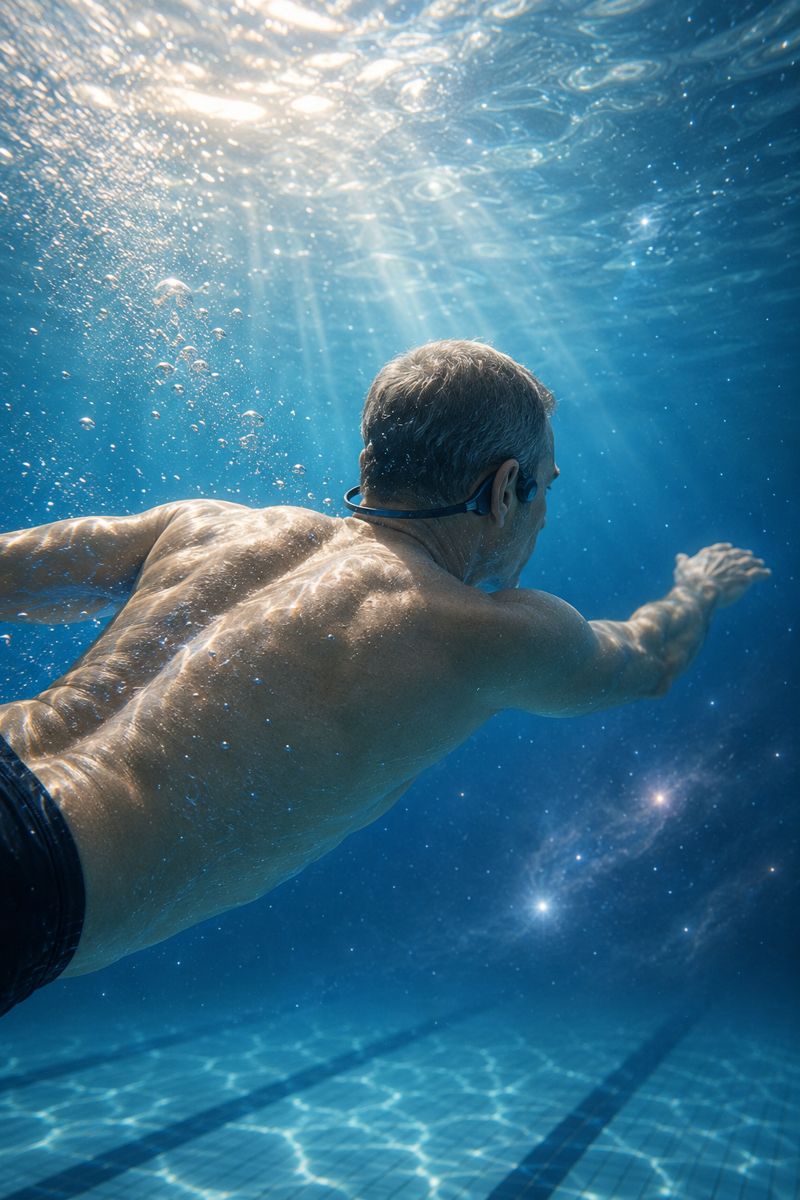
And that feeling came back. Space. Just the weightlessness of the water and the music. In the previous post I called it "feeling like an astronaut" — turns out when your gear gets an upgrade, so does your universe. It feels amazing.
There's actual science behind the immersion, by the way. Bone conduction leaves your ear canals open and sends vibrations through your skull directly to the inner ear, so water getting in your ears doesn't muffle the sound. Use the included earplugs and the slosh of the water disappears — the music feels like it's playing inside your head. Research also suggests that music during exercise syncs your rhythm and makes the effort feel easier.
I can vouch for that last part. Swimming lap after lap in silence is honestly tough. With music, "I guess I'll go again today" comes naturally. This is what keeps the habit alive.
For exercise in your fifties, swimming is easy on the body and gentle on the joints — which I appreciate more every year. As I wrote in my post about becoming a weekday-pool regular, the whole game is lowering the barrier to keep going. For me, music turned out to be one of the answers.
No buyer's remorse on this impulse click. One of my best purchases this year.
Do Public Pools in Japan Allow Headphones?
One thing to check before you buy.
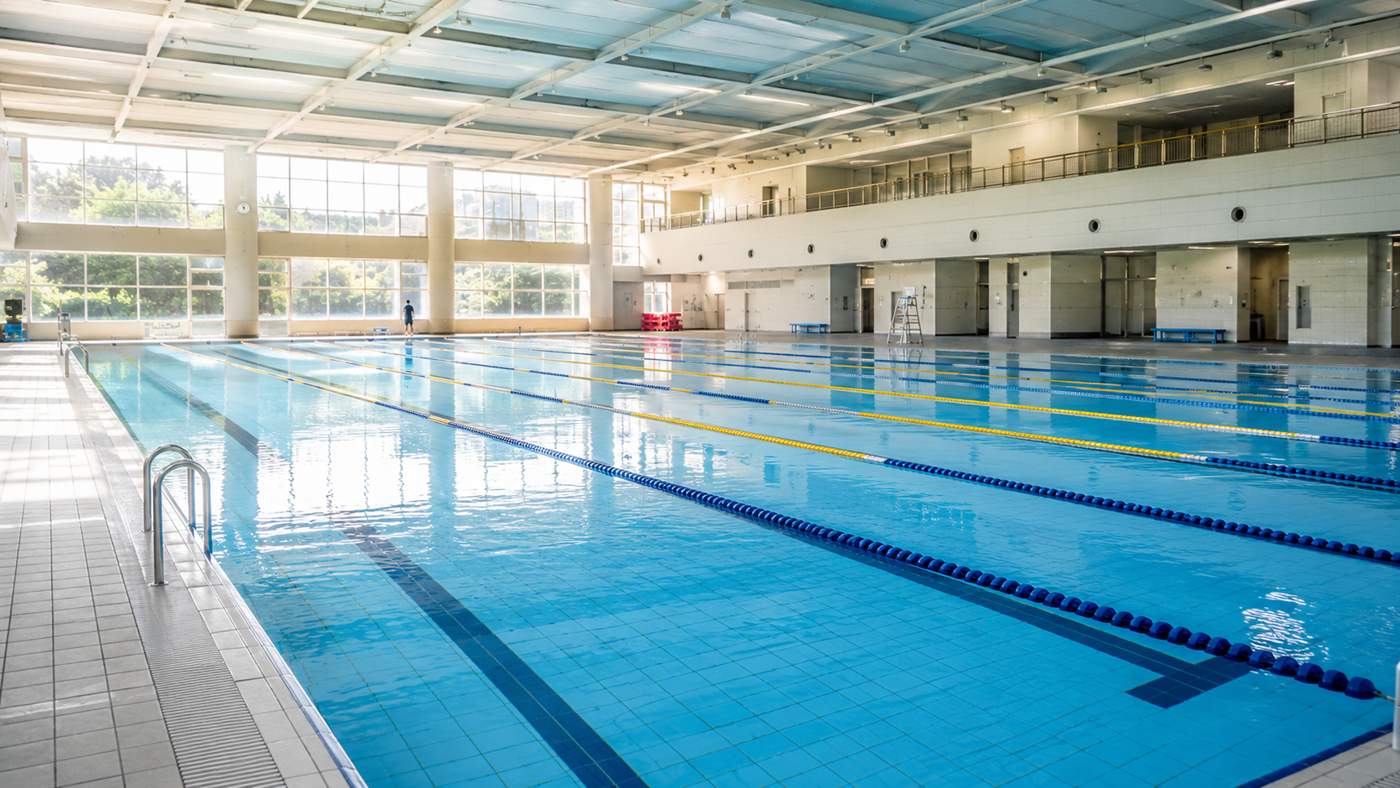
Japanese public and municipal pools have traditionally banned "watches, jewelry, wearables, and all electronic devices" outright — due to collision injuries, breakage hazards, and camera-privacy concerns.
But the tide is turning. More pools now allow smartwatches with protective covers, and for headphones, a growing number of facilities have adopted this rule: "In-ear (canal-type) earphones are not allowed, but bone-conduction headphones that leave your ears open are permitted." Some public pools in Tokyo now explicitly allow waterproof bone-conduction headphones only.
The reason is the design itself. With your ear canals open, you can still hear the lifeguard's whistle and other swimmers approaching. That satisfies the safety requirements.
That said, rules genuinely vary from pool to pool. Check the posted rules or the facility's website, and give the lifeguard a quick heads-up before you swim. If you're at a base pool, the rules will be different again — a quick question to the staff saves the disappointment of new gear you can't use.
Final Thoughts
My year-old headphones started crackling, my credit card points gave me the push, and the world underwater got a little better.
Three things to remember when buying swimming headphones: Bluetooth doesn't work underwater, so get a built-in MP3 model. Make it bone conduction with IPX8 (IP68) waterproofing. And check your pool's rules first.
Exercise in your fifties isn't about pushing hard — it's about not stopping. The silent water is honestly lonely, but the moment the music starts, the pool becomes outer space.
I'll keep swimming.
👉 Kemeskin bone-conduction headphones on Amazon Japan
👉 Tayogo bone-conduction headphones on Amazon Japan
Related posts