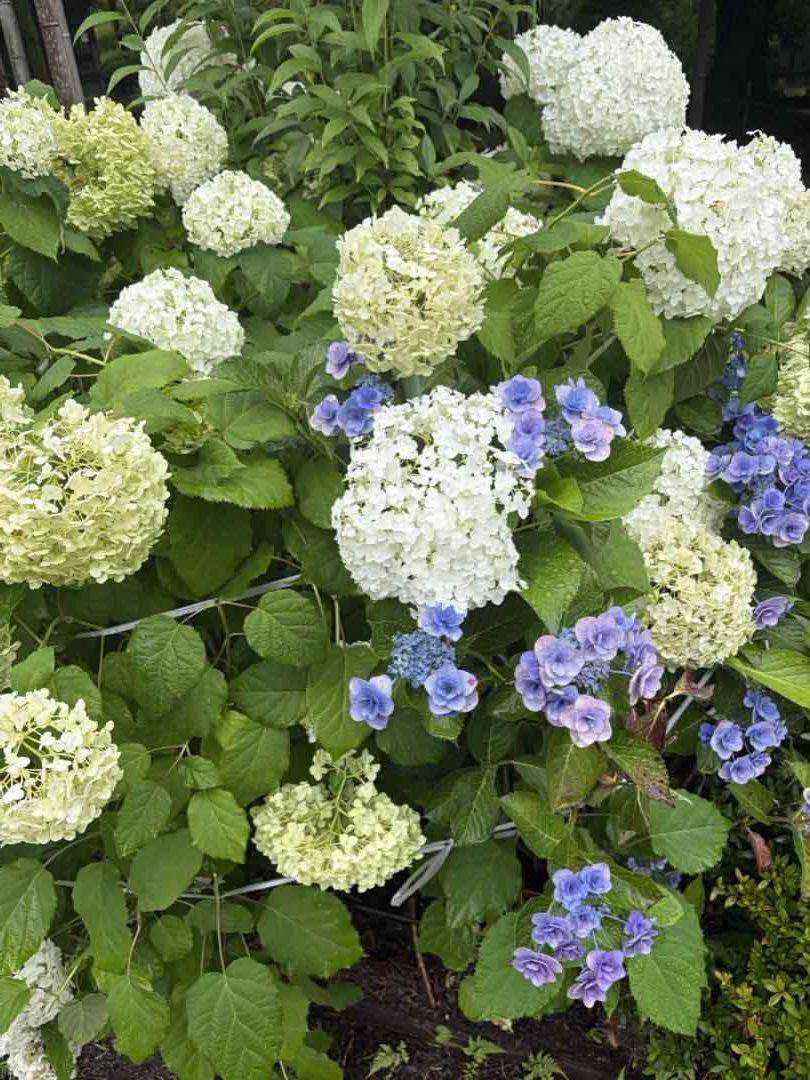
Reading time: about 9 minutes
Hello, this is Hiroshi from "Ramen, Beer, and Sometimes a Blog."
The other day, on a rainy weekday, I went to Yakushiike Park (Yakushi-ike) in Machida, Tokyo. Its full name is "Machida Yakushiike Park, Shikisai no Mori," and the pond is its centerpiece.
I'll be honest: my main goal that day wasn't a walk. I run a small BGM (background-music) video channel on the side, and I went to film footage of the rain and of the old water wheel. That's why my Shiba Inu, Momiji, stayed home this time — I didn't want her getting soaked, and I didn't yet have a dog raincoat. (I fixed that as soon as I got home. More on that at the end.)
Walking around with an umbrella in one hand, the thing that struck me was this: a rainy day at Yakushiike is a real hidden gem. In this post I'll focus on what people actually want to know before visiting: is it worth going in the rain, when do the hydrangeas and lotus peak, and the parking / hours / time needed / dog rules.
Who this is for
- Anyone wondering whether to visit Yakushiike Park in the rain or during the rainy season
- People who want to know when the hydrangeas and Ohga lotus peak, and how crowded it gets
- Anyone needing parking fees, opening hours, and whether dogs are allowed
The short answers
- A rainy day is actually the best time. On a rainy weekday I practically had the pond to myself. The air was cool, and — bliss — no mosquitoes. The water was mirror-still and the photos came out beautifully.
- Hydrangeas peak in late June — white "Annabelle" blooms mixed with blue and purple, gorgeous in the rain. The Ohga lotus (an ancient variety) is just starting; its peak is from mid-July (the early-morning "lotus viewing" event is in July too). In late June you'll mostly see buds and big leaves, with the odd early bloom.
- Free admission. Parking holds 457 cars (first hour free, max ¥800/day). Open 6:00–18:00 (until 19:00 in June–August). Plan about 1–1.5 hours for a loop plus the flowers. Dogs are allowed on the walking paths on a leash, but some areas (the lawn, the wildflower garden) are off-limits to pets.
Contents
- A rainy day is actually the best time | quiet, cool, no mosquitoes
- Hydrangeas peak in late June | white Annabelle and shades of blue
- The Ohga lotus peaks from mid-July | late June is buds and early blooms
- The water wheel and the Yakuimon gate | rain-soaked countryside
- Parking, hours, time needed, dogs (the practical info)
- One last thing | the dog raincoat
- Summary
A rainy day is actually the best time | quiet, cool, no mosquitoes
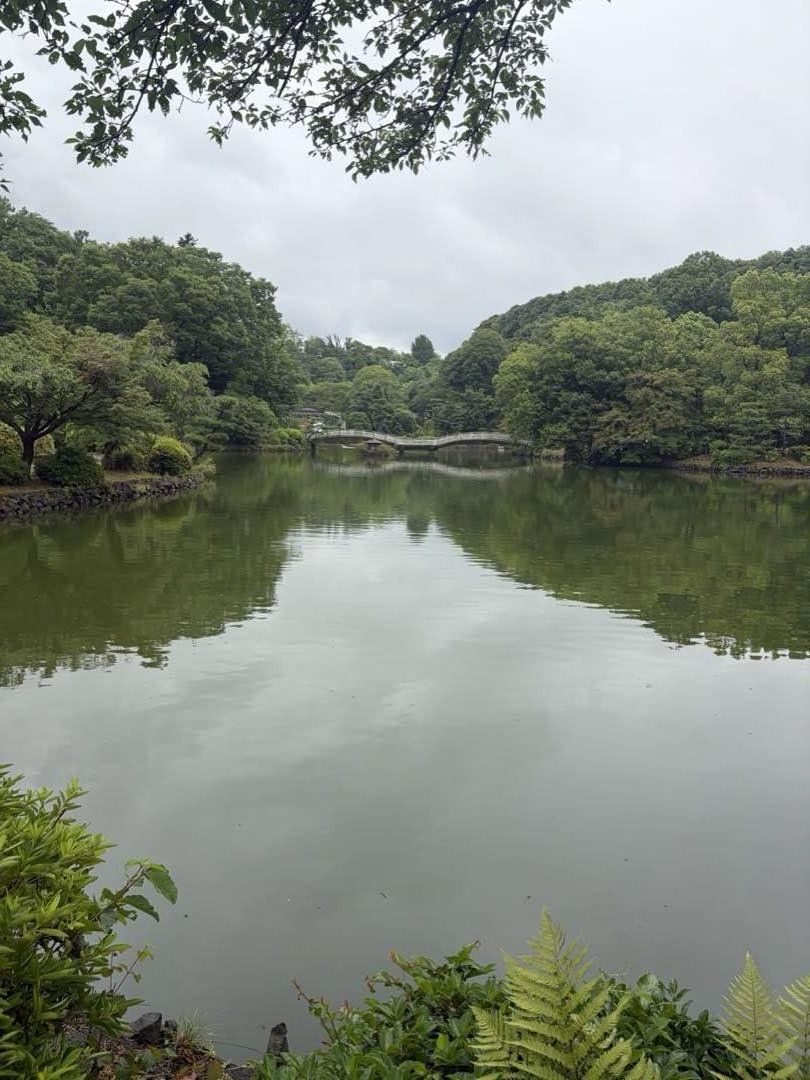
I parked at the West Garden (Nishien) as usual and headed for the pond with an umbrella. Within a minute I thought, "I picked a good day."
First, almost nobody was there. A weekday, in the rain — not many people decide to visit Yakushiike on a day like that. So I had the whole loop to myself. No waiting for people to clear the frame, no strangers wandering into shots. The still water mirrored the forest and the arched bridge — it looked like an ink-wash painting.
Second, it was cool. I'd braced for the muggy heat you expect in late June, but the rain kept the temperature down, so I wasn't drenched in sweat. Best of all, the mosquitoes left me alone. They don't seem to fly in the rain — a huge win for someone like me who hates them.
You might think "a park in the rain? no thanks," but Yakushiike during the rainy season has a stillness and a sense of having the place to yourself that you never get on a sunny day. Hydrangeas and lotus are flowers that come alive in the wet. With an umbrella, a rainy day is honestly the smart choice.
Hydrangeas peak in late June | white Annabelle and shades of blue
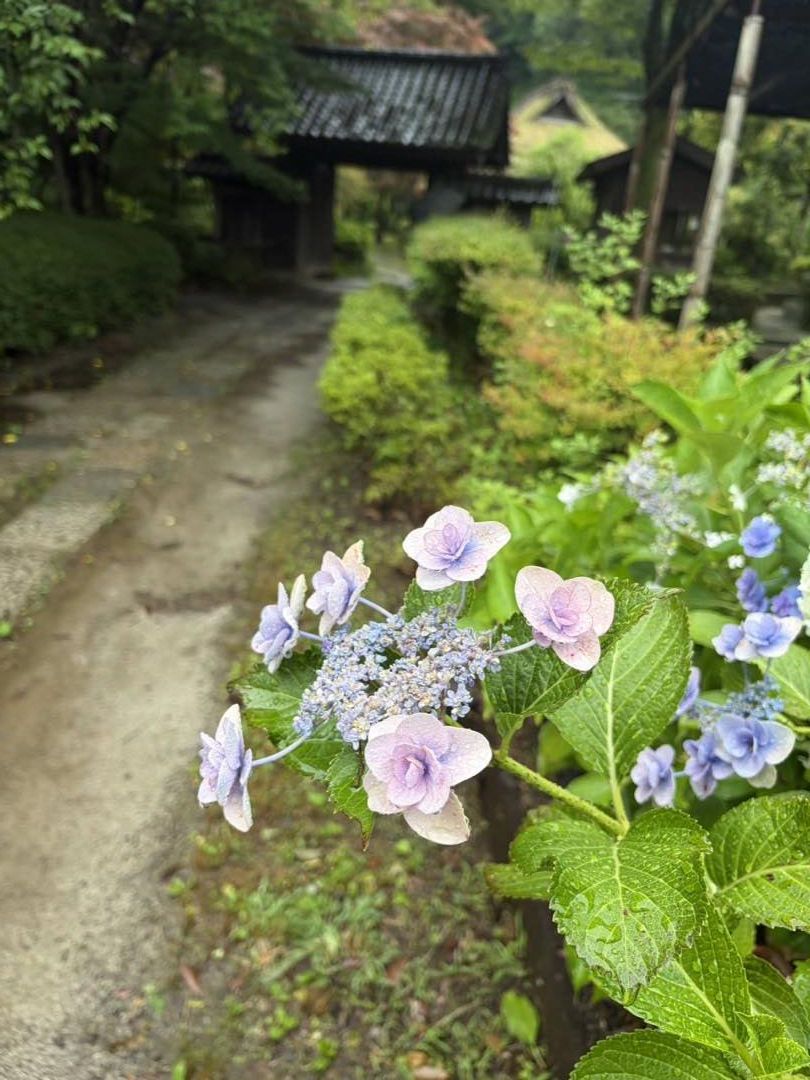
The thing that most made the trip worth it was the hydrangeas. Late June is right in the sweet spot.
Round white Annabelle blooms cluster together, with blue and purple hydrangeas woven in between. Petals holding raindrops glow with deeper color than they ever do in the sun. The pale pink-purple lacecaps looked almost translucent in the wet. Hydrangeas really are "rain flowers."
They aren't packed into one big "hydrangea garden" here — instead they're scattered around the pond and near the water wheel, so you keep coming across them as you walk. Turning each corner in the rain to find a new color is part of the charm of this park.
If you like the "rain + hydrangeas" combination, I also wrote about the hydrangea walk at Azamizo Park in Sagamihara.
The Ohga lotus peaks from mid-July | late June is buds and early blooms
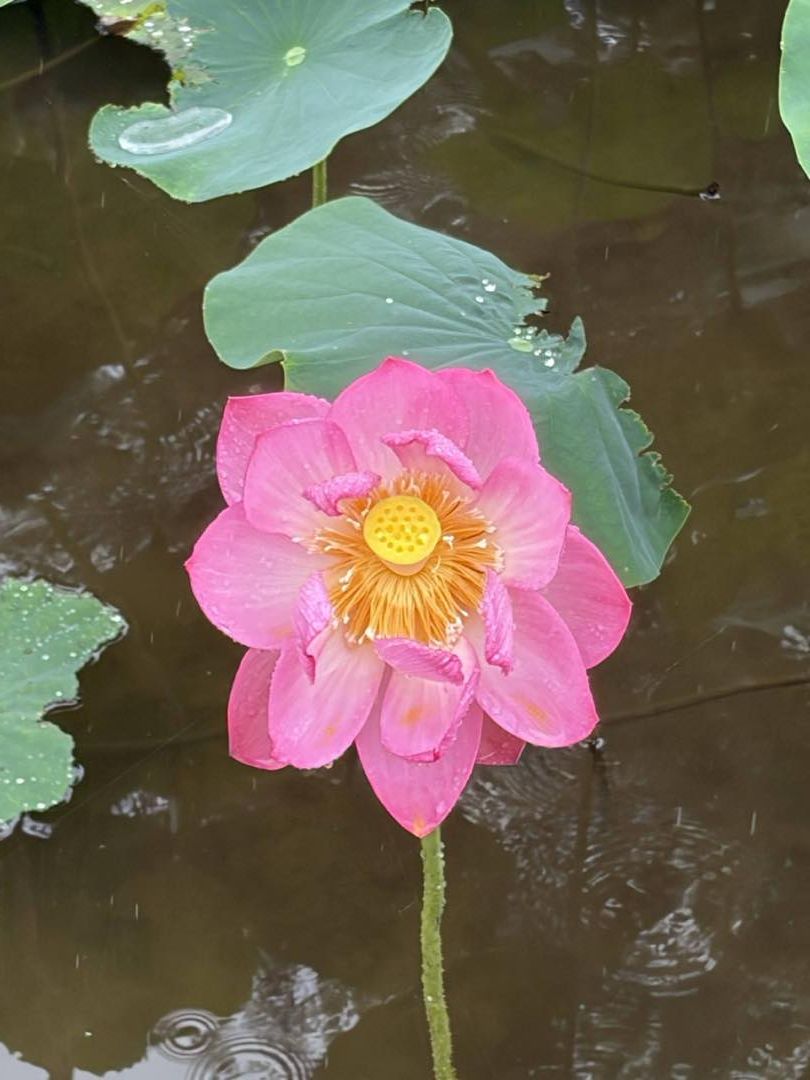
The other star of Yakushiike is the Ohga lotus — an "ancient lotus" grown from seeds found in a roughly 2,000-year-old layer of soil. The lotus paddy here is a real local highlight.
But let me be straight with you: in late June it was only just starting. The paddy was full of big green leaves, but only a few flowers. One early bloom stood in the rain, and it was lovely — but if you come expecting a sea of lotus flowers, this is a touch early.
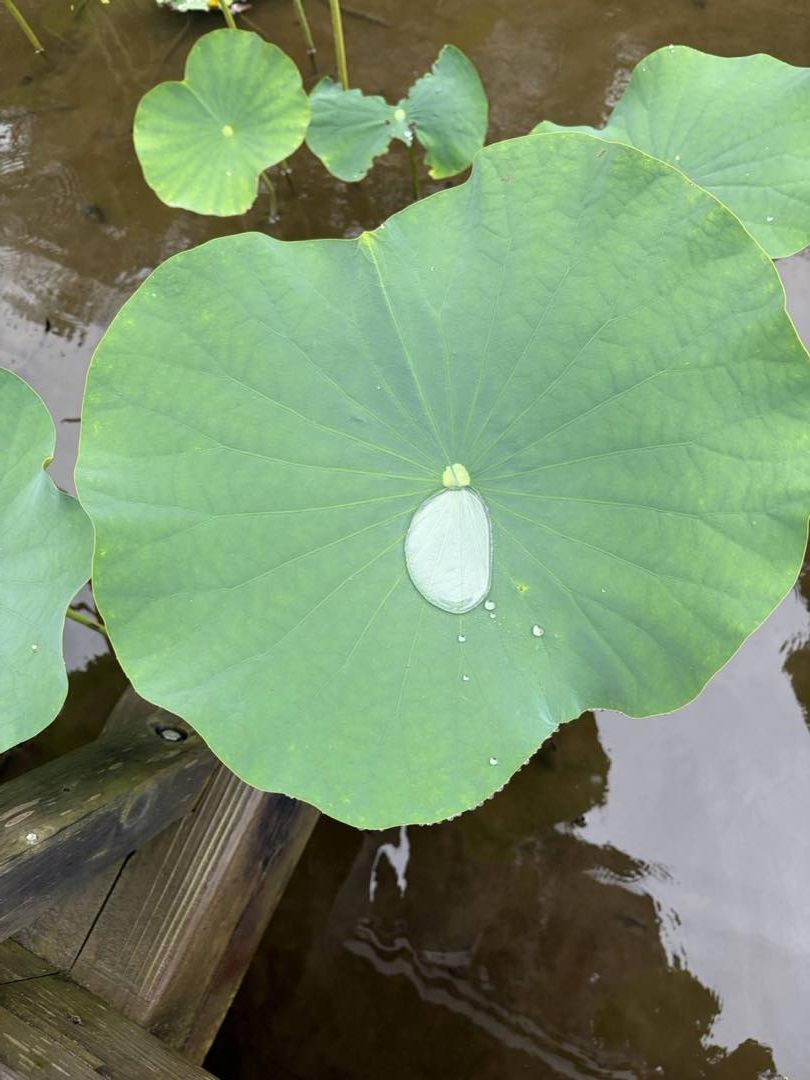
The Ohga lotus peaks from mid-July. The early-morning "lotus viewing" event is held in July, with the park opening at 7:00 a.m. Lotus flowers open in the morning and close by midday, so to catch the blooms, aim for early morning from mid-July onward.
That said, the lotus paddy is worth seeing in the rain even without flowers. Rainwater gathers into a single bead in the middle of each giant leaf, rolling like mercury when the wind shifts. That's a sight you only get on a wet day.
The water wheel and the Yakuimon gate | rain-soaked countryside
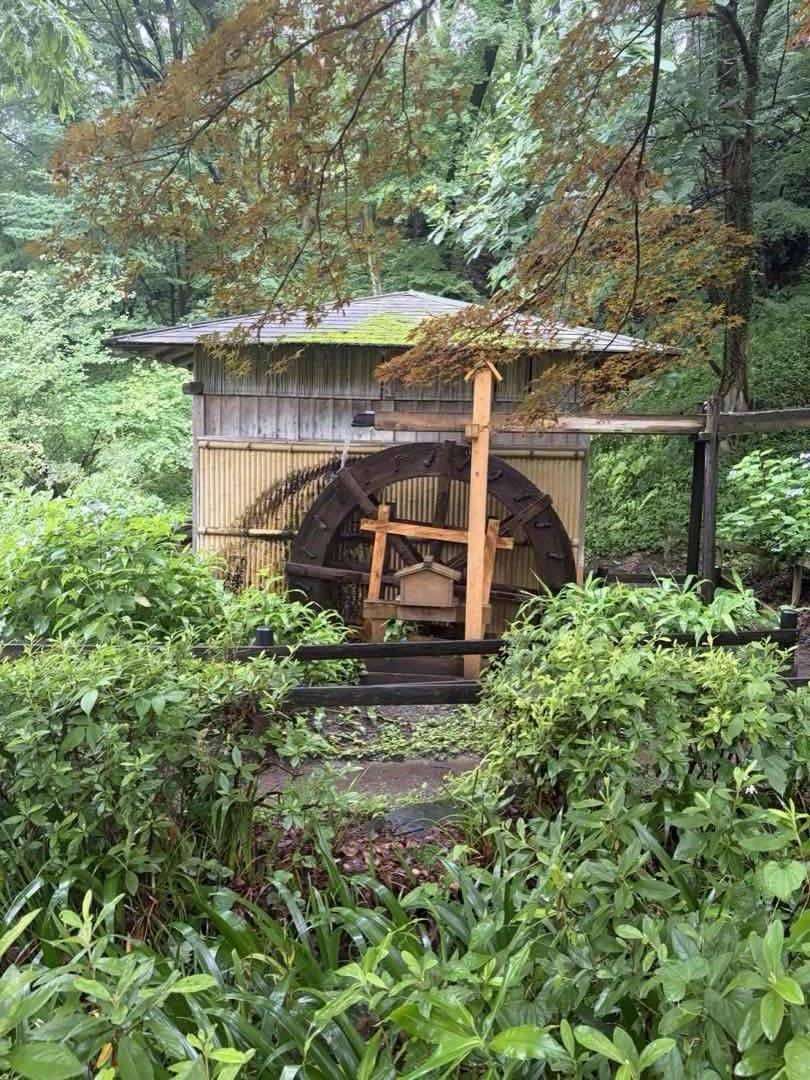
One of my filming targets that day was this water wheel. A small thatched hut tucked into the greenery, moss on the rain-darkened roof — it had real character. The creak of the turning wheel mixed with the sound of the rain made a stillness I could have stood in forever. Pure Japanese countryside, perfect for a BGM video.
Around the pond, Yakushiike also has the Yakuimon gate and old farmhouses (the former Nagai and Ogino residences). It's less a plain park than a preserved slice of pre-modern rural Japan — stone-paved paths, a teahouse, mixed woodland. The old wood and stone take on a quiet, settled color in the rain, and just walking calms you down.
The name "Yakushi-ike" comes from the neighboring Nozuta Yakushido temple hall. The park opened in 1976 and is designated a Scenic Spot of Tokyo. History, countryside, and flowers all in one place — a generous little park.
Parking, hours, time needed, dogs (the practical info)
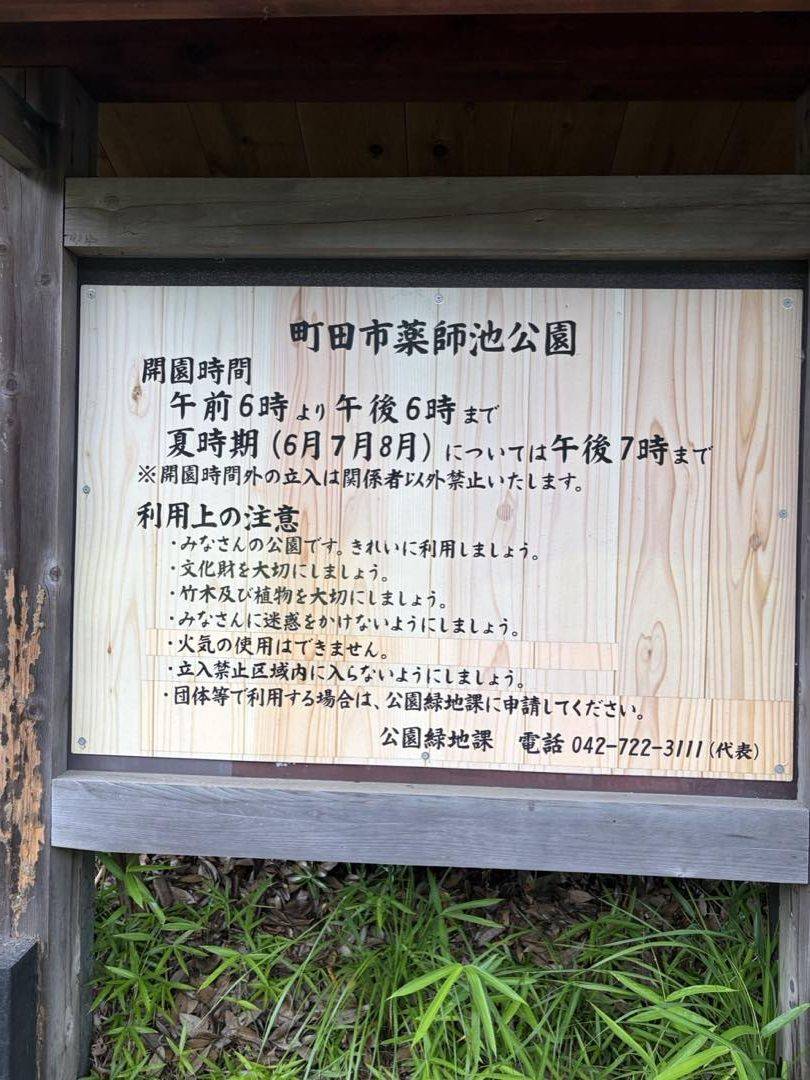
Here's the practical info for your visit (fees can change, so do double-check the official site before you go).
| Name | Machida Yakushiike Park, Shikisai no Mori (Yakushi-ike) |
| Address | 3270 Nozuta-machi, Machida, Tokyo |
| Hours | 6:00–18:00 (until 19:00 in June–August) |
| Admission | Free |
| Parking | 457 cars total (North 144, East-1 156, East-2 27, West 130). Open 5:00–22:00. First hour free, ¥100 up to 1.5 hours, then ¥50 per 30 min, max ¥800/day |
| Access | About 25–30 min by Kanachu bus from Machida Station North Exit; get off at "Yakushi-ike" |
| Time needed | About 1–1.5 hours for a loop plus the flowers |
| Dogs | Allowed on walking paths on a leash; some areas (lawn, wildflower garden) are off-limits to pets |
| Restrooms | 3 within the park |
Parking tip: entrances are split between North, East, and West. For the hydrangeas and pond, the East lots are closest; for the squirrel garden, plum grove, and West-Garden course, use the West lot. Rainy days and weekdays are rarely crowded, but weekends during the plum, hydrangea, and autumn-foliage seasons fill up, so take public transit then.
About dogs: I left Momiji home this time, so she doesn't appear in these photos. But from past family visits, you can walk a dog on the paths on a leash. The lawn and the wildflower garden are off-limits to pets, so watch for the signs. I wrote more on dog-walking here in my visit at year-end → A Surprisingly Quiet Sunday at Year-End: A No-Regret Walking Guide to Machida Yakushiike Park
One last thing | the dog raincoat
As I said at the start, I left Momiji home because I didn't want her getting soaked. But as I walked, I kept thinking, "I wish I'd shown her this rainy Yakushiike."
The still water, the rain-soaked hydrangeas, the empty paths — this is exactly the kind of place a dog would love. So the moment I got home, I ordered a dog raincoat. Now the next rainy day, Momiji can come too. I hope to write "Momiji and a rainy Yakushiike" next time.
(The dog raincoat I bought → Dog raincoat on Amazon)
Summary
A rainy day at Yakushiike Park means few people, cool air, and no mosquitoes — a rainy-season hideaway where you can have the still water and the hydrangeas to yourself.
- A rainy day is the smart choice — on a rainy weekday you'll have the pond to yourself, cool and mosquito-free.
- Hydrangeas peak in late June; the Ohga lotus from mid-July (for the blooms, aim for a July morning).
- Free admission, 457 parking spaces (first hour free, max ¥800), open 6:00–18:00 (19:00 in summer). Allow 1–1.5 hours; dogs allowed on the paths on a leash.
Grab an umbrella and take a slow walk around a rainy Yakushiike. You'll find a quieter side of Machida than any sunny day will show you.
Related posts